-
 #190 /100
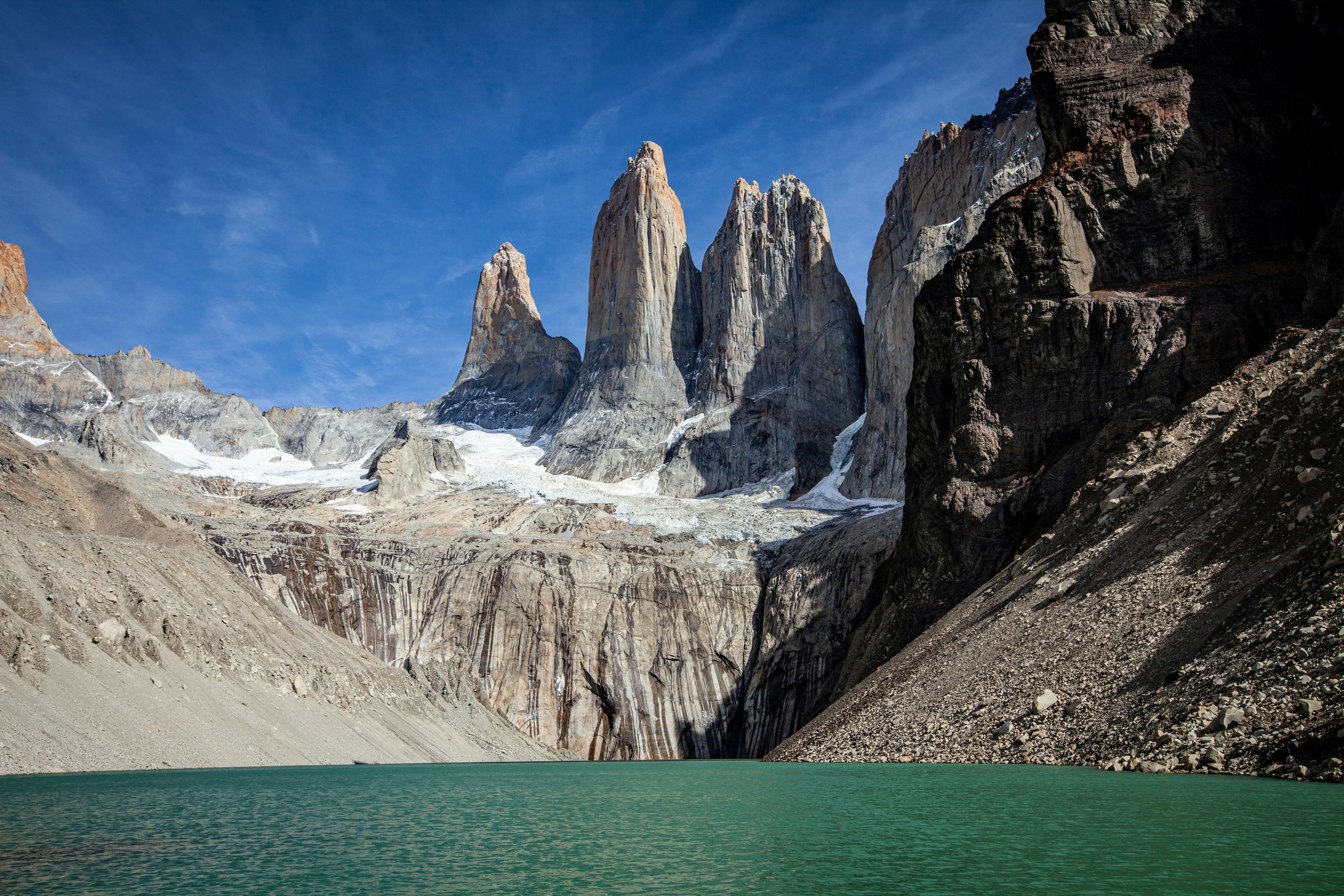
Three granite towers punch straight up out of Chilean Patagonia, reflected in turquoise glacial lakes that change colour with the light.
The full W trek links the towers with glaciers, wind-battered forests and the vivid blue of the Grey Glacier over several days.
Even a single day at the base-of-the-towers viewpoint delivers one of South America's most dramatic landscapes.
How does it rate
CrowdsRomanceCash RequiredDangerAccessibilityWhy you should go
Three granite spires over turquoise glacial lakes - Patagonia's single most iconic view.
Why you shouldn't go
Patagonian wind is relentless and can shut down trails or make photography genuinely difficult.
Plan your visit
Best time to visitNovember-March, the Southern Hemisphere summer.Best time of dayEarly morning, when the wind is calmest and the towers often clear of cloud.Getting thereFly to Punta Arenas, bus to Puerto Natales, then park shuttle to Torres del Paine.Entry costPark entry fee, roughly $35-45 for foreign visitors.Time needed3-5 days for the W trek; 1 day for the base viewpointBookingBook ahead →Insider tip — Base yourself near the park for a pre-dawn start on the Base Towers trail - the final viewpoint is worth reaching before the day's cloud builds. -
 #288 /100
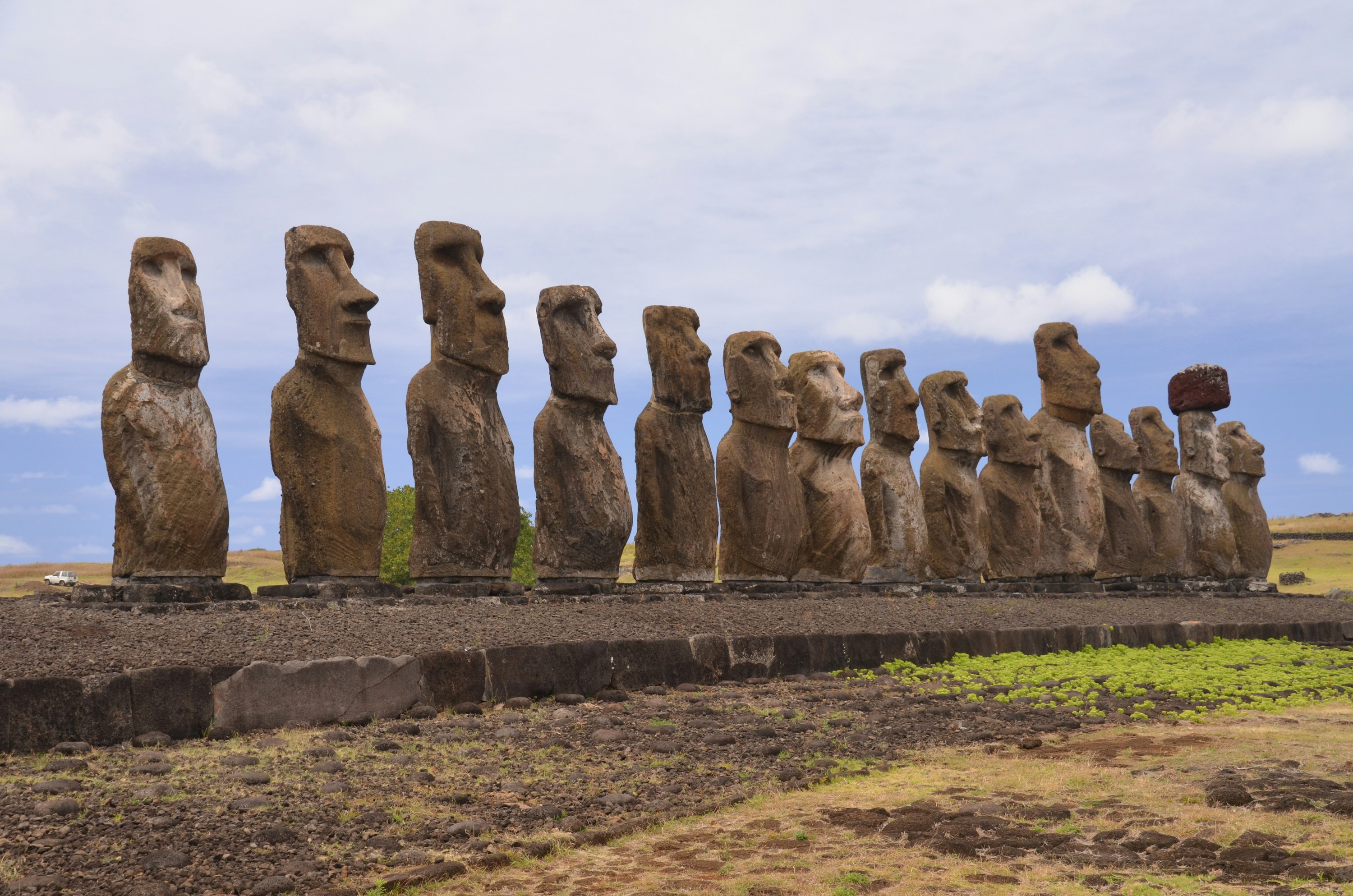
Roughly 900 moai, the monumental stone figures carved by the Rapa Nui between the 13th and 16th centuries, are scattered across this small volcanic island 3,700km from mainland Chile.
The best-known cluster, fifteen restored moai at Ahu Tongariki, catches the sunrise directly behind it.
Elsewhere, the Rano Raraku quarry has dozens of unfinished statues still half-buried in the hillside where their carvers left them.
How does it rate
CrowdsRomanceCash RequiredDangerAccessibilityWhy you should go
Hundreds of monumental stone figures scattered across a landscape found nowhere else on Earth.
Why you shouldn't go
Getting there costs a small fortune and eats up two travel days each way for what's usually a 3-4 day stay.
Plan your visit
Best time to visitYear-round, mild climate; December-March is driest and warmest.Best time of daySunrise at Ahu Tongariki, when the fifteen moai are lit from behind.Getting thereFly to Mataveri Airport (IPC) from Santiago, about 5 hours; only a handful of flights operate each week.Entry costRapa Nui National Park pass ~US$80, valid 10 daysTime needed3-4 daysInsider tip — Hire a local guide for at least one day - many lesser-known ahu and petroglyph sites are unmarked and easy to walk straight past without one. -
 #385 /100
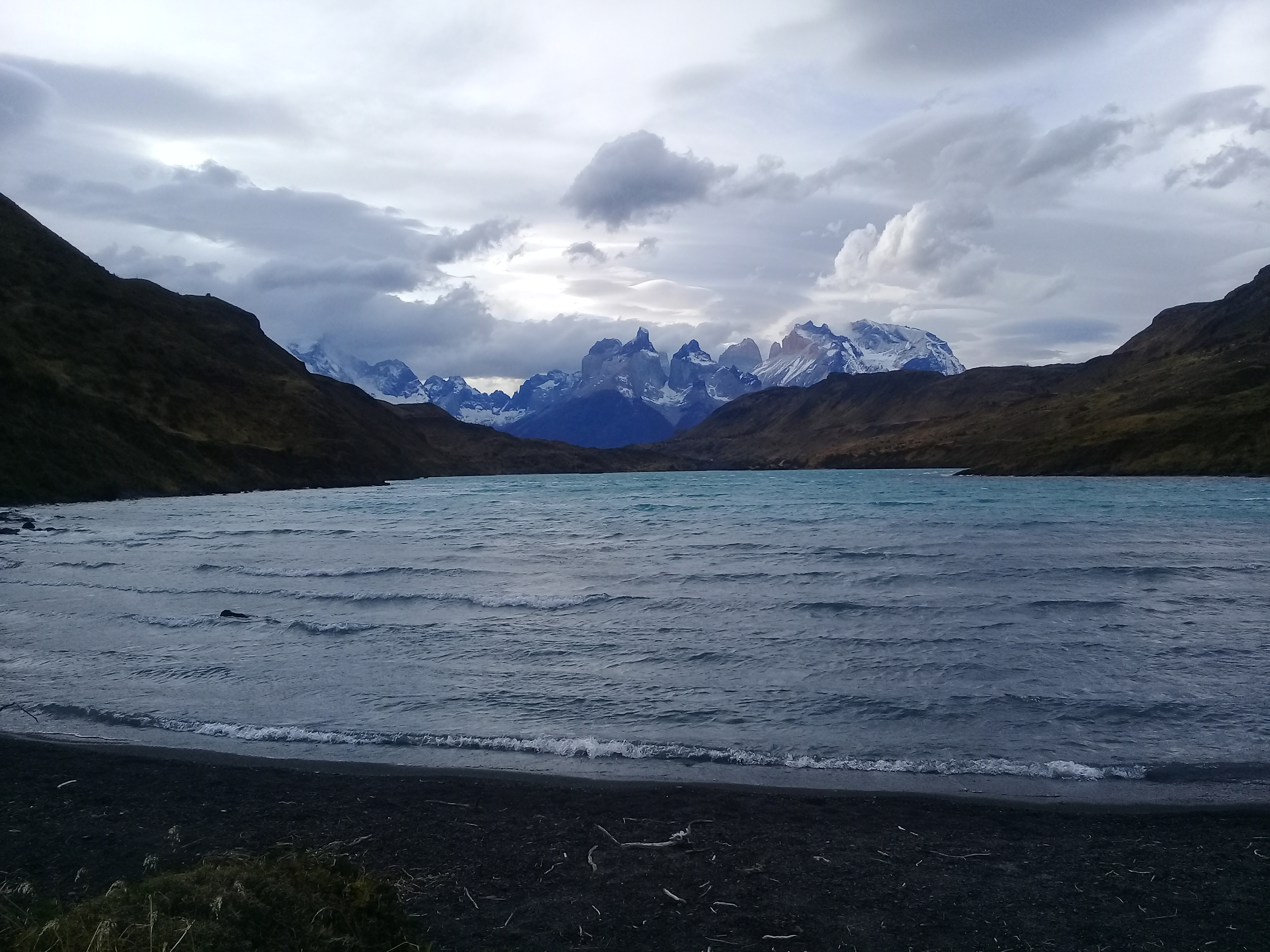
A 4-5 day traverse of Torres del Paine's signature sights: the granite Torres themselves, the sheer Cuernos horns, French Valley's hanging glaciers, and Grey Glacier's blue ice.
Refugios and campsites break the route into manageable days, though Patagonian wind can turn brutal without warning.
The reward is one of the most consistently spectacular multi-day trails in South America, from lenga forest to turquoise glacial lakes.
How does it rate
CrowdsRomanceCash RequiredDangerAccessibilityWhy you should go
Four straight days of the Cuernos, Grey Glacier and the Torres themselves without a single dull stretch.
Why you shouldn't go
Notorious Patagonian wind and rain can stall a day's hike entirely, and refugio spots must be booked far ahead.
Plan your visit
Best time to visitNovember-March (Southern Hemisphere summer), when trails and refugios are open.Best time of dayEarly morning at the Base Torres viewpoint, before afternoon cloud hides the towers.Getting thereFly to Punta Arenas; bus (about 3-5 hours) to Puerto Natales, then a shuttle to the park.Entry costPark entry about $49 USD; refugio and camping packages from roughly $600-1,500.Time needed4-5 daysBookingBook ahead →Insider tip — Book refugios the moment the season opens (around April-May) - popular ones sell out for peak months first. -
 #480 /100
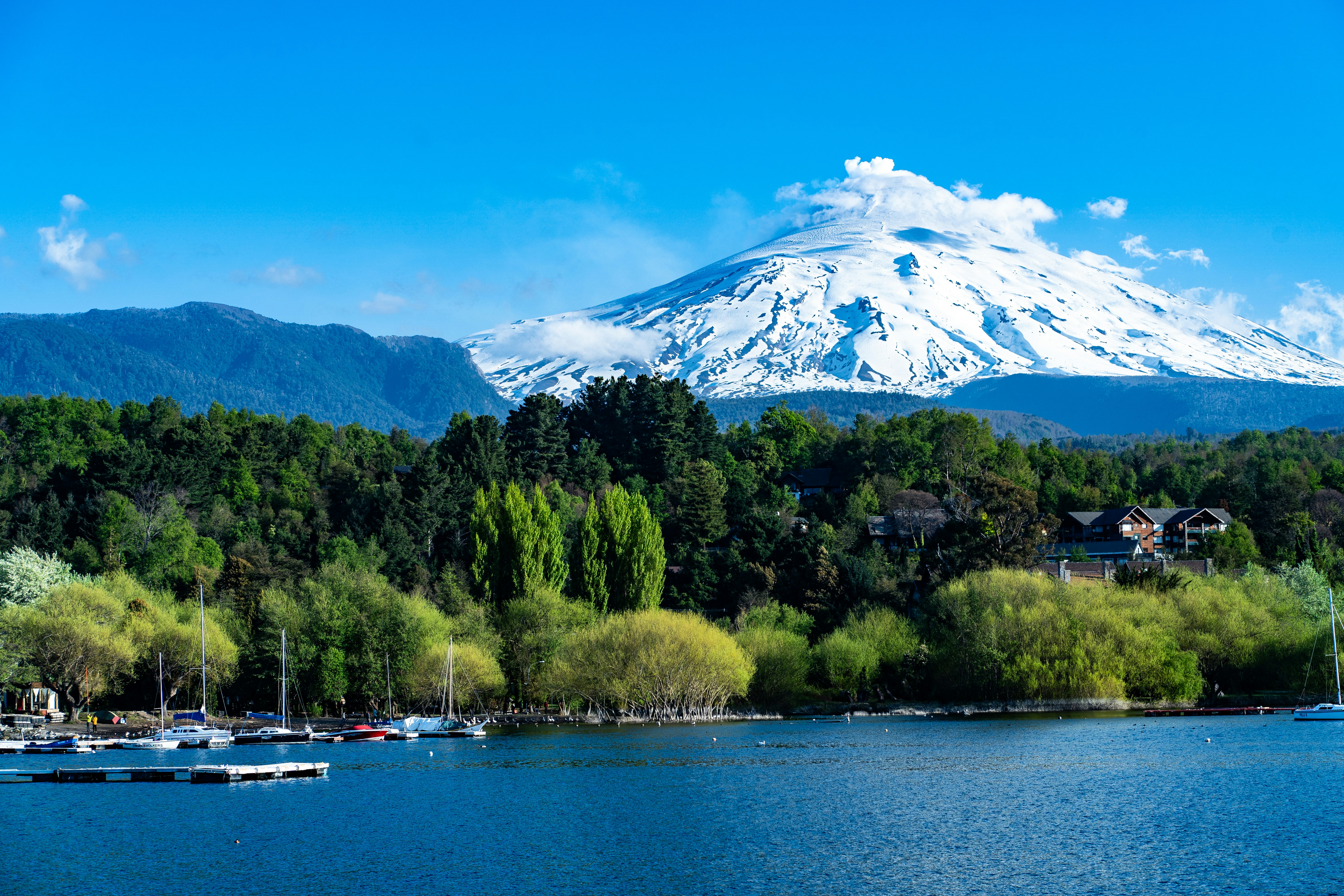
One of South America's most active volcanoes, a near-perfect snow-capped cone above the lakeside town of Pucon, with a permanently active lava lake sometimes visible glowing from the crater rim on clear nights.
A full-day guided climb in crampons reaches the summit for a look directly into the smoking crater, while at night the volcano's silhouette glowing faintly red is visible from town.
Ski slopes cover its lower flanks in winter, an unusual pairing of active volcanism and alpine sport.
How does it rate
CrowdsRomanceCash RequiredDangerAccessibilityWhy you should go
A near-perfect active volcanic cone with a summit crater you can climb to and, on clear nights, watch glow from town.
Why you shouldn't go
The summit climb is a genuinely strenuous full-day trek in crampons, and eruptive activity periodically closes it entirely.
Plan your visit
Best time to visitDecember-March (Southern Hemisphere summer) for the best summit-climbing conditions.Best time of dayEarly morning start for the summit climb; after dark from Pucon for the glow, if activity is visible.Getting thereFly to Temuco, then a 1-hour drive to Pucon, the main base town.Entry costGuided summit climb tours typically run USD150-200 per person, gear included.Time neededA full day for the summit climb.Insider tip — Check with local guides on current crater visibility before booking - during periods of higher activity, tours turn back before the true summit. -
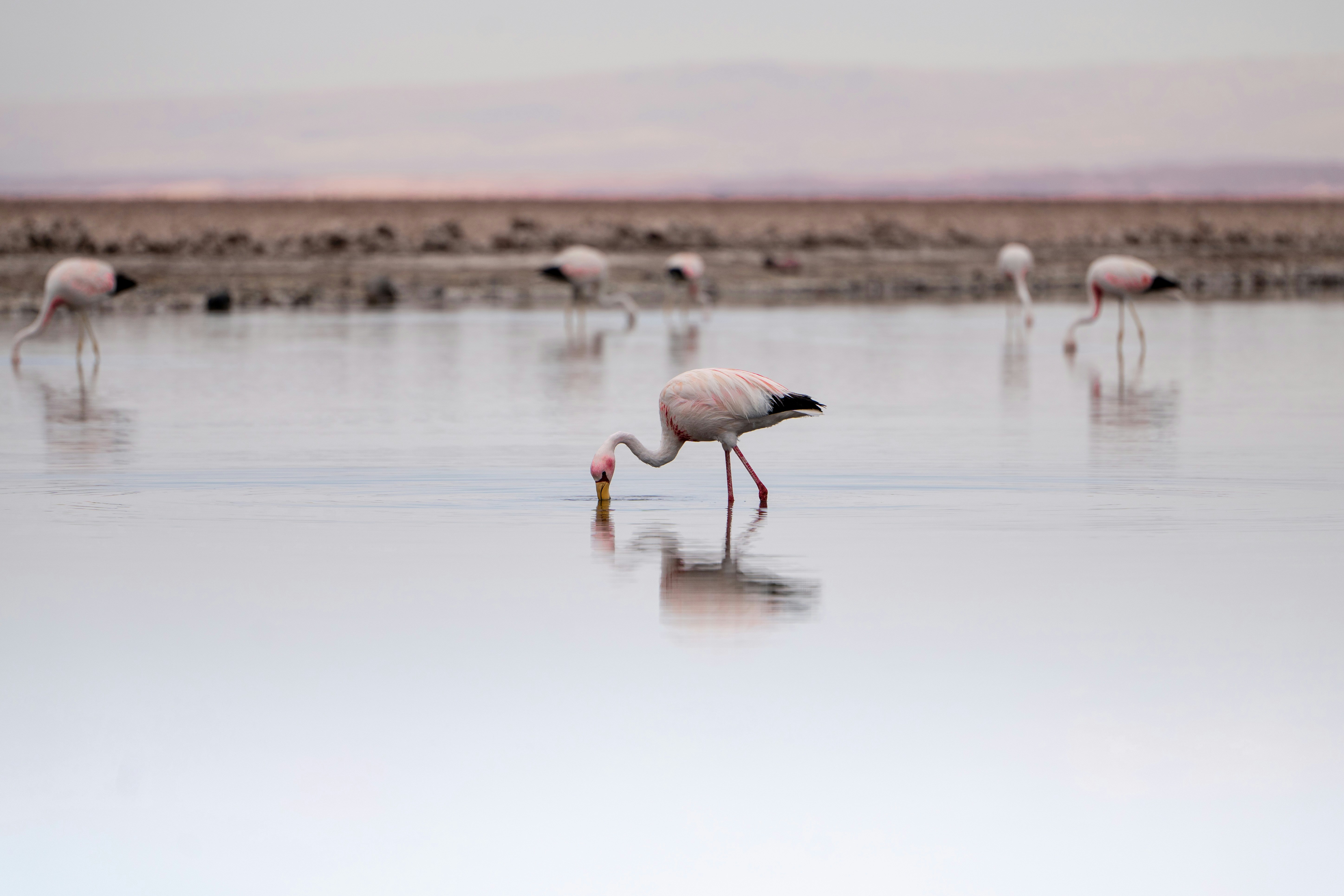 #579 /100
A vast basin of white salt crust and brine lagoons mirrors the Andes, with flamingo colonies wading in mineral-pink pools.
Otherworldly geology in the driest non-polar desert on Earth, with almost no vegetation, cracked salt crust underfoot, and only the wind and distant volcanoes for company.
How does it rate
CrowdsRomanceCash RequiredDangerAccessibilityWhy you should go
Vast white salt basin with flamingo-pink brine lagoons in the world's driest desert.
Why you shouldn't go
Extremely remote with sparse facilities; requires high-altitude driving; intense sun and altitude exposure.
Plan your visit
Best time to visitOctober–April (dry season) for flamingo breeding activity; winter rain can close roads.Best time of daySunrise and sunset for the strongest color shifts on the lagoons.Getting thereFly to Calama, then 1.5–2 hour drive south from San Pedro de Atacama.Entry costGuided tours $50–80 USD per person, includes reserve entry fee.Time neededHalf day to full day with a guide.Insider tip — Book with a local guide who knows the safe salt-crust routes; bring sunscreen, a hat, and high-SPF lip balm, and acclimatize in San Pedro (2,400m) before heading out. -
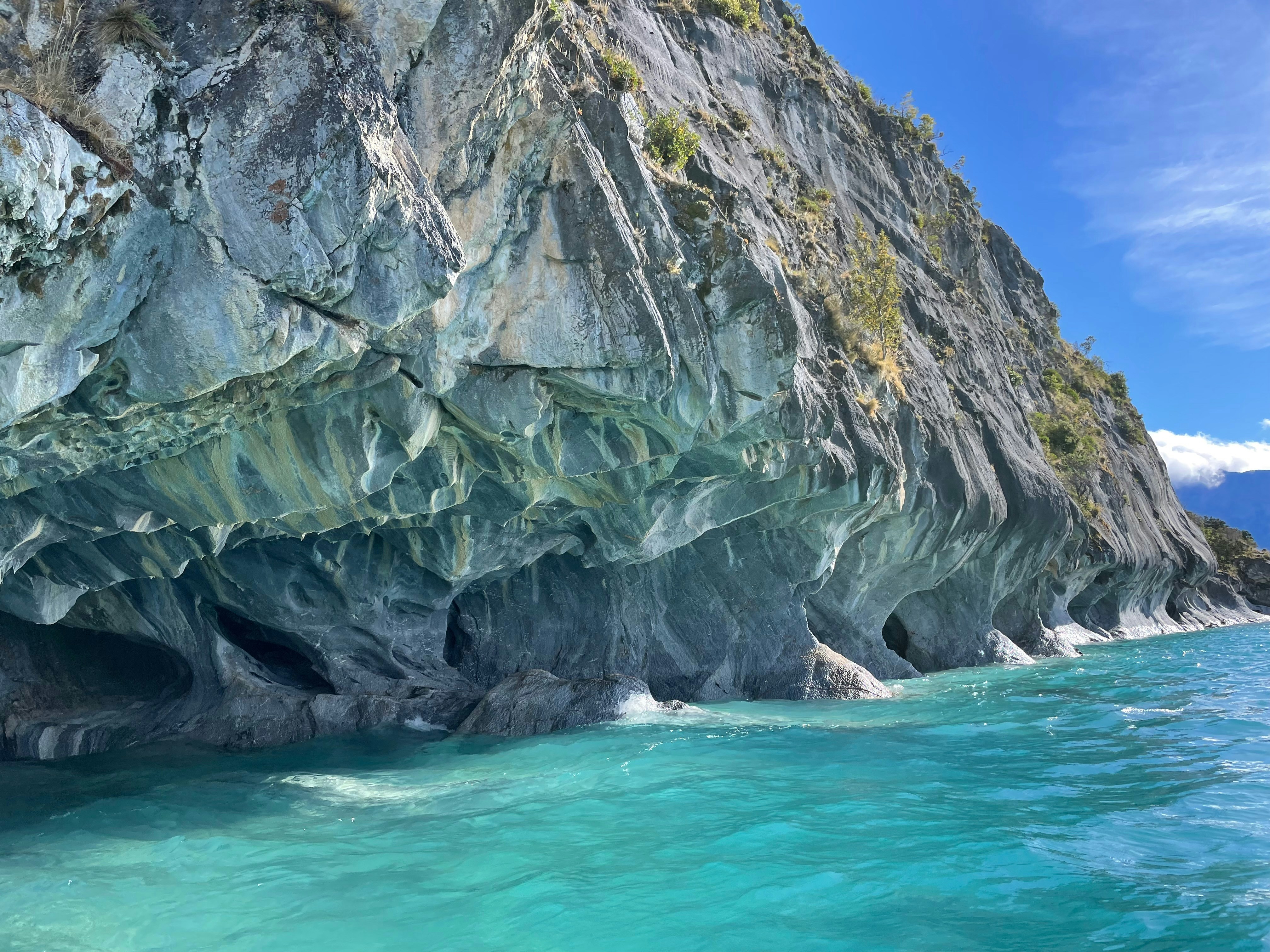 #678 /100
A labyrinth of marble caverns carved by wave action into a peninsula on Lake General Carrera, forming swirled chambers and arches in white, grey, and cobalt blue.
Accessible only by small boat, with the water's color and the marble's pattern shifting dramatically with the season and light.
How does it rate
CrowdsRomanceCash RequiredDangerAccessibilityWhy you should go
Swirling marble caverns carved into a lake peninsula, with cathedral-like chambers reachable only by boat.
Why you shouldn't go
Access depends on lake conditions and can be cancelled in high winds; the remote location adds significant travel time and cost.
Plan your visit
Best time to visitDecember–February for the lake's lowest water levels, when the caves and swirling patterns are most vivid.Best time of dayMidday sun lights the interior of the caves best; the water is often calmer in early morning.Getting thereDrive the Carretera Austral to Puerto Río Tranquilo, then a short boat tour to the caves.Entry costGuided boat tours roughly CLP 25,000–35,000 (~$28–40 USD).Time needed1.5–2 hours.Insider tip — Go early to avoid afternoon winds that can churn up the lake and cancel tours. A kayak tour, where available, gets you closer to the rock than the larger tour boats. -
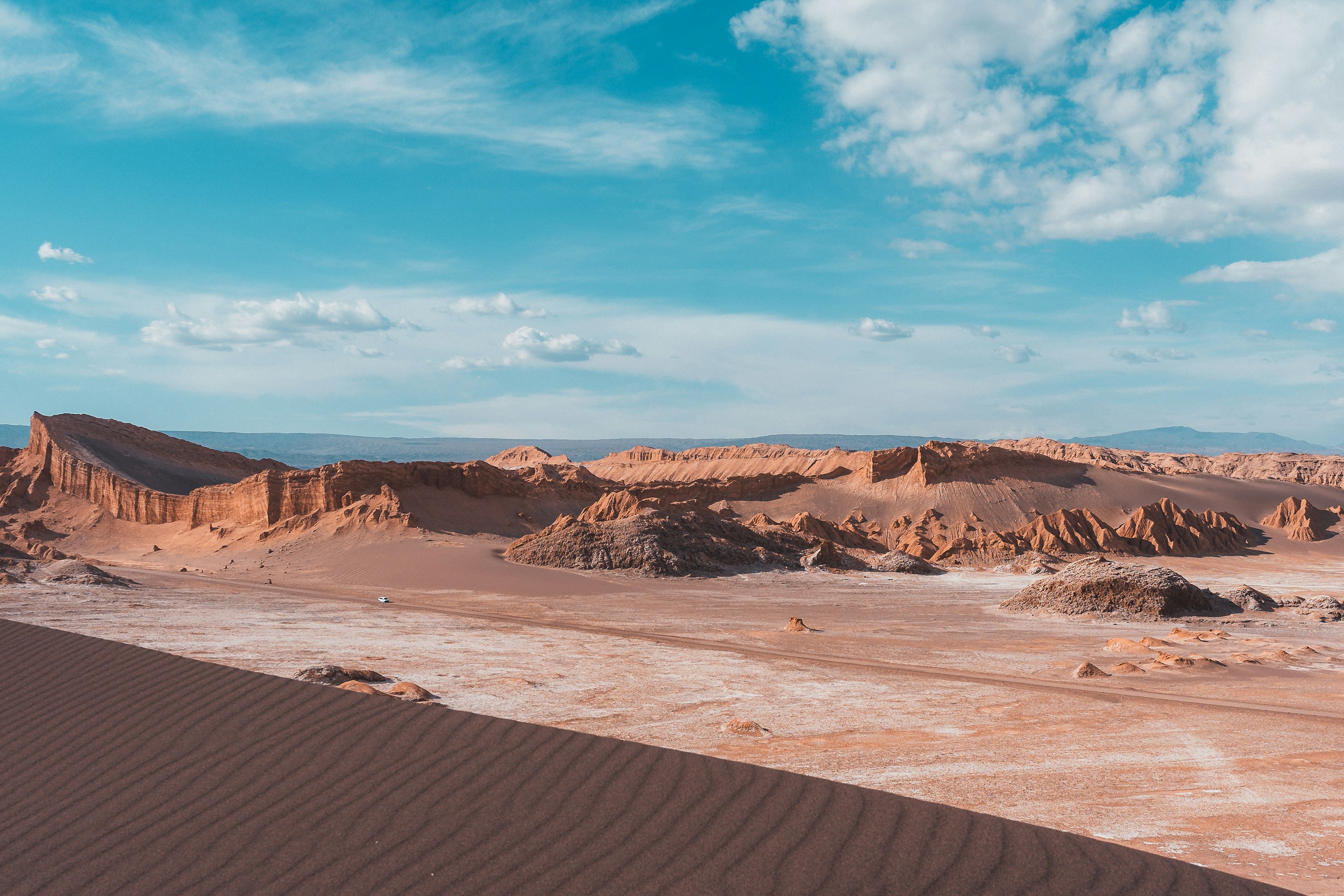 #777 /100
Wind and ancient salt deposits have carved this stretch of the Atacama Desert into ridges, dunes and a natural amphitheatre that genuinely resembles a lunar landscape, 13km from San Pedro de Atacama inside the Los Flamencos National Reserve.
At sunset the salt-crusted rock turns deep red and violet, drawing every tour van in town to the same handful of viewpoints.
By day it's simply one of the driest, starkest places on Earth.
How does it rate
CrowdsRomanceCash RequiredDangerAccessibilityWhy you should go
Sunset turns the salt ridges and dunes a deep red that genuinely looks otherworldly.
Why you shouldn't go
Every tour and rental car in San Pedro converges on the same viewpoints for the same sunset window.
Plan your visit
Best time to visitYear-round (desert climate); clearest skies May-August.Best time of dayLate afternoon into sunset.Getting thereFly to Calama, then about 1.5 hours to San Pedro de Atacama; the valley is a further 13km by rental car or tour van.Entry cost~CLP 8,000-11,000 (~US$10) reserve entrance, per personTime needed2-3 hoursInsider tip — Skip the packed main viewpoint and walk 10 minutes further along the ridge for the same sunset colour with far fewer people. -
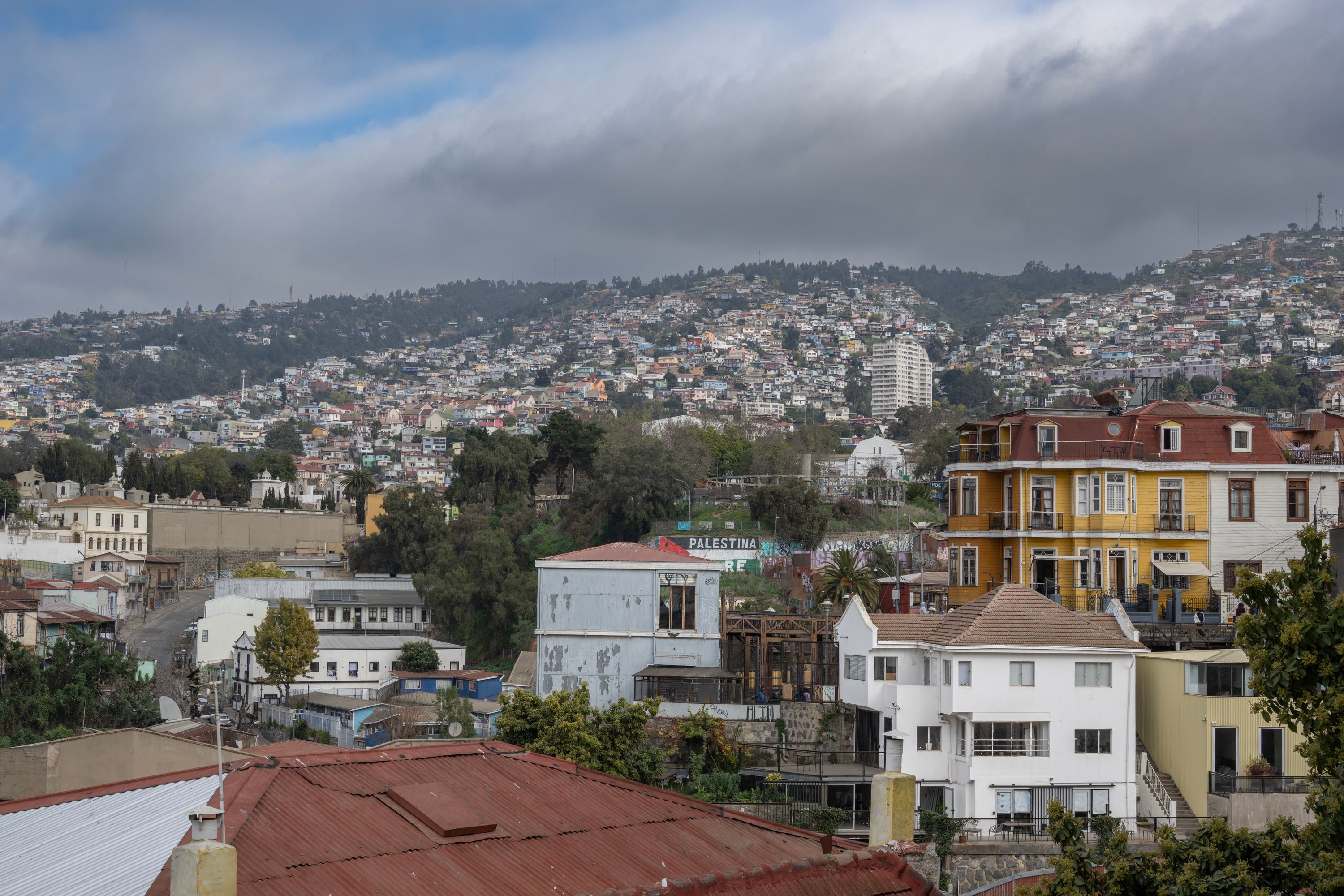 #875 /100
Chile's main historic port climbs steep hills above the Pacific, linked by century-old funiculars and dense with painted houses and street art.
UNESCO listed the old quarter for its unplanned layout, and wandering the stairways of Cerro Alegre and Cerro Concepción, plus Pablo Neruda's clifftop house La Sebastiana, is the main activity.
Parts of the city have visibly declined, and the port is still working, not polished.
How does it rate
CrowdsRomanceCash RequiredDangerAccessibilityWhy you should go
A maze of hillside stairways, funiculars and street art with no real equivalent elsewhere in Chile.
Why you shouldn't go
Parts of the city have declined and pickpocketing is a real risk - stick to the touristed hills after dark.
Plan your visit
Best time to visitSeptember-November or March-May, for mild weather and thinner crowds than summer.Best time of dayDaytime for exploring the hills; sunset from Paseo Gervasoni or Paseo Atkinson.Getting thereFly to Santiago, then about a 90-minute bus or drive west to Valparaíso.Entry costFree to explore; funiculars ~CLP 300-800 each wayTime neededHalf a day to a full dayInsider tip — Ride the Ascensor Concepción, Chile's oldest funicular, up to Paseo Gervasoni for the classic hillside-and-harbour view, then walk down through Cerro Alegre. -
 #973 /100
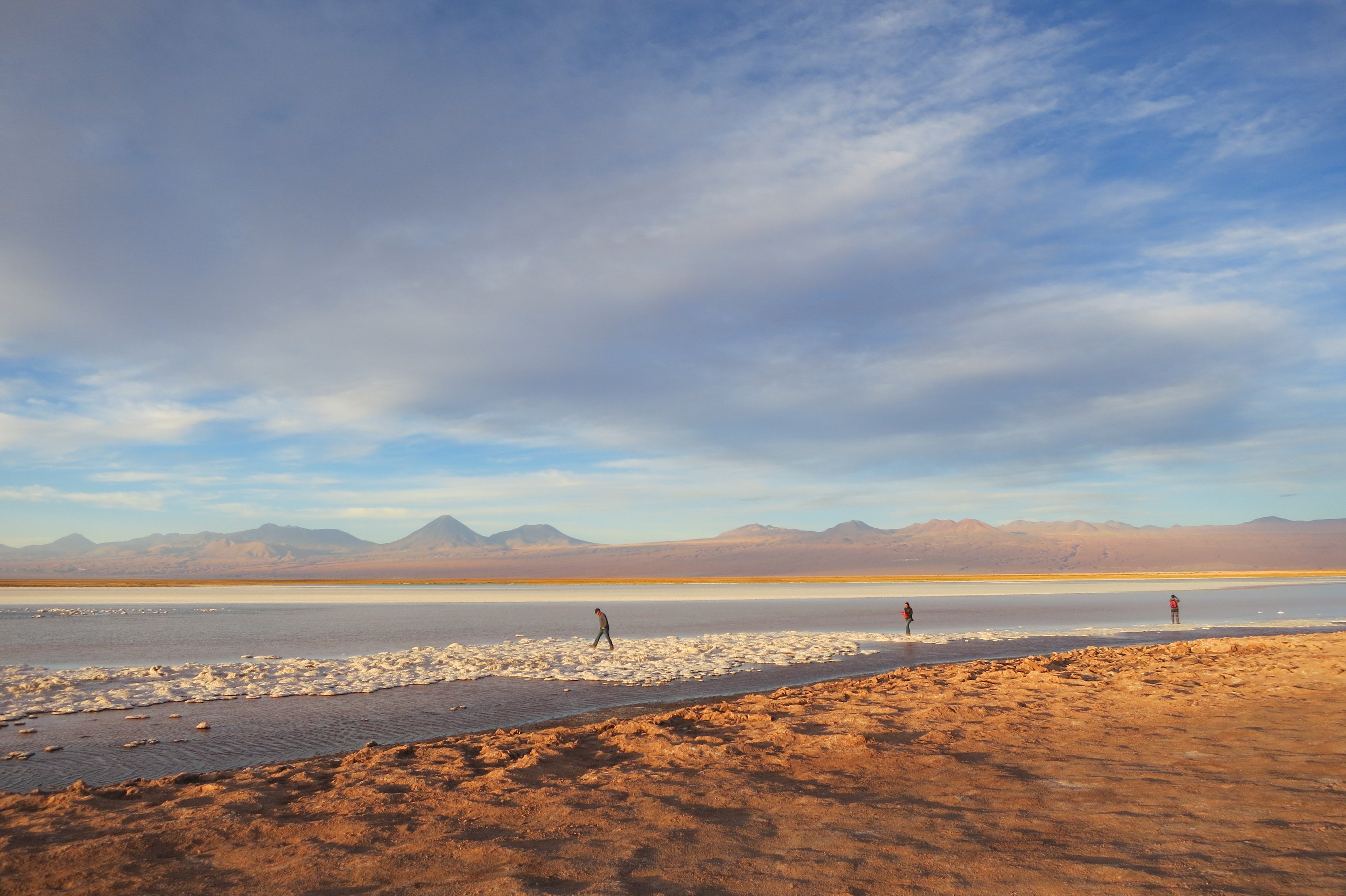
A hypersaline lagoon in the Atacama salt flat, dense enough with dissolved minerals that swimmers float effortlessly, Dead Sea-style.
Ringed by pale salt crust and distant volcanoes, it's a strange, buoyant swim in one of the driest places on Earth, best paired with a freshwater rinse straight after.
How does it rate
CrowdsRomanceCash RequiredDangerAccessibilityWhy you should go
A hypersaline lagoon where you float effortlessly, ringed by salt crust and desert emptiness.
Why you shouldn't go
Popular with tour groups despite the remote setting; the salt water stings any small cuts or irritates eyes; strong midday sun.
Plan your visit
Best time to visitOctober–April (dry season); visit outside the busiest midday tour window if possible.Best time of dayLate afternoon for softer light and slightly thinner crowds.Getting thereTours depart from San Pedro de Atacama, roughly a 40-minute drive.Entry costIncluded in guided tour price, typically $40–60 USD.Time needed3–4 hours including transport.Insider tip — Bring a swimsuit and old clothes — the brine is hard on fabric. Freshwater rinse-off pools are available right next to the lagoon. -
 #10
#10Rated #10 of 11
Vina del Mar International Song Festival
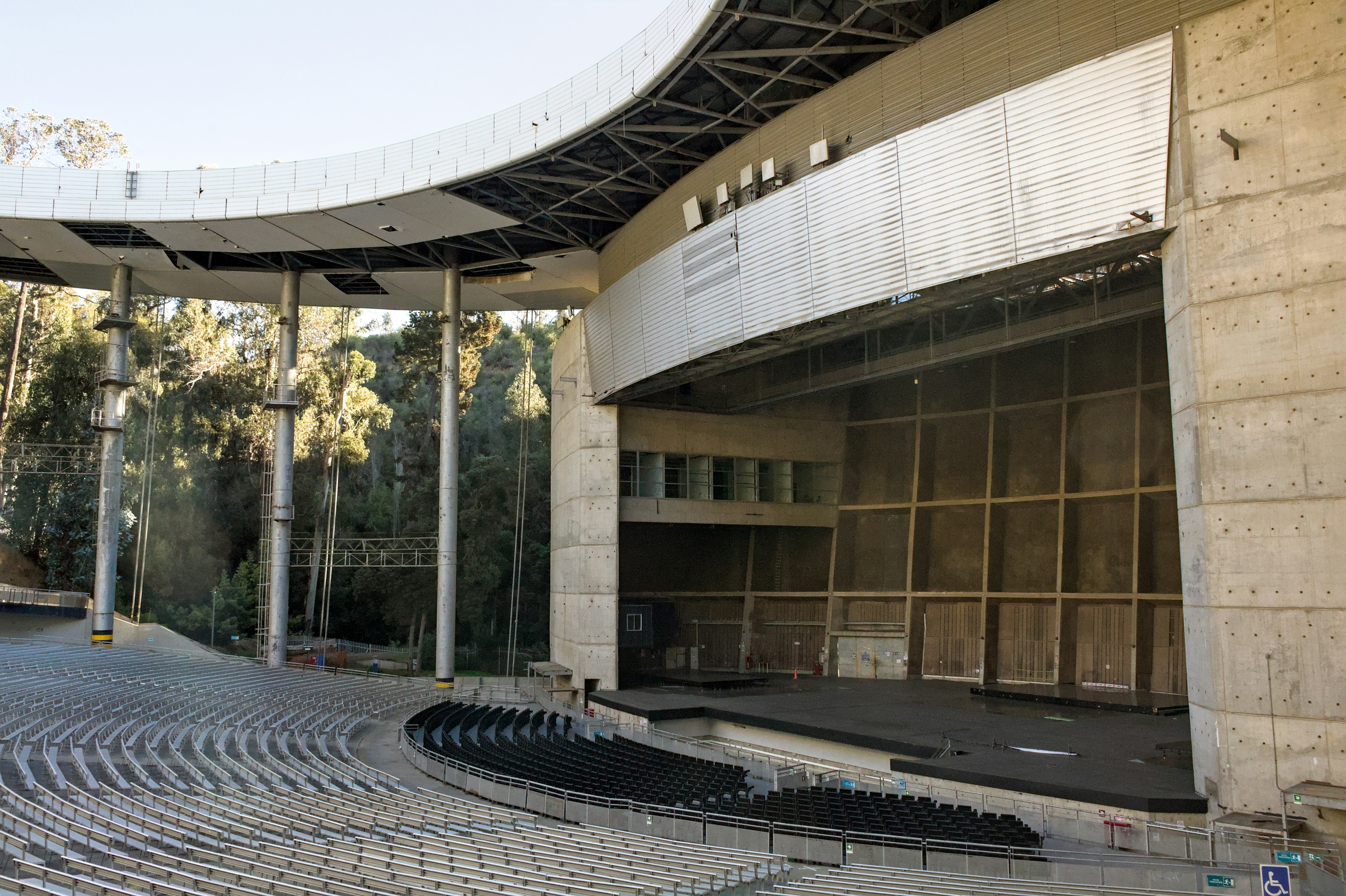
#vinadelmarinternationalsongfestival ◆ Music Festivals73 /100Running since 1960, this is Latin America's oldest and largest music festival, staged each February in the open-air Quinta Vergara amphitheatre and broadcast live to millions across the region.
Beyond the competing new songs it's named for, its nightly bill of major Spanish-language headliners has made it a career-defining stage, alongside a notoriously blunt audience known for booing acts off stage.
How does it rate
CrowdsRomanceCash RequiredDangerAccessibilityWhy you should go
Latin America's oldest music festival, broadcast live to millions from an open-air amphitheatre since 1960.
Why you shouldn't go
The famously tough crowd at the Quinta Vergara has booed underprepared acts off stage on live television more than once.
Plan your visit
Best time to visitThe last week of February each year.Best time of dayEvening, when the nightly televised concerts run.Getting thereFly into Santiago and take a bus or car roughly 90 minutes to Vina del Mar on the coast.Entry costTickets range from roughly USD30 for upper seating to several hundred for front rows.Time neededOne evening covers a full night's programme; the festival runs five to six nights total.Insider tip — Book Quinta Vergara seating well in advance online - queuing at the venue on the night rarely finds anything but the cheapest, farthest seats. -
 #11
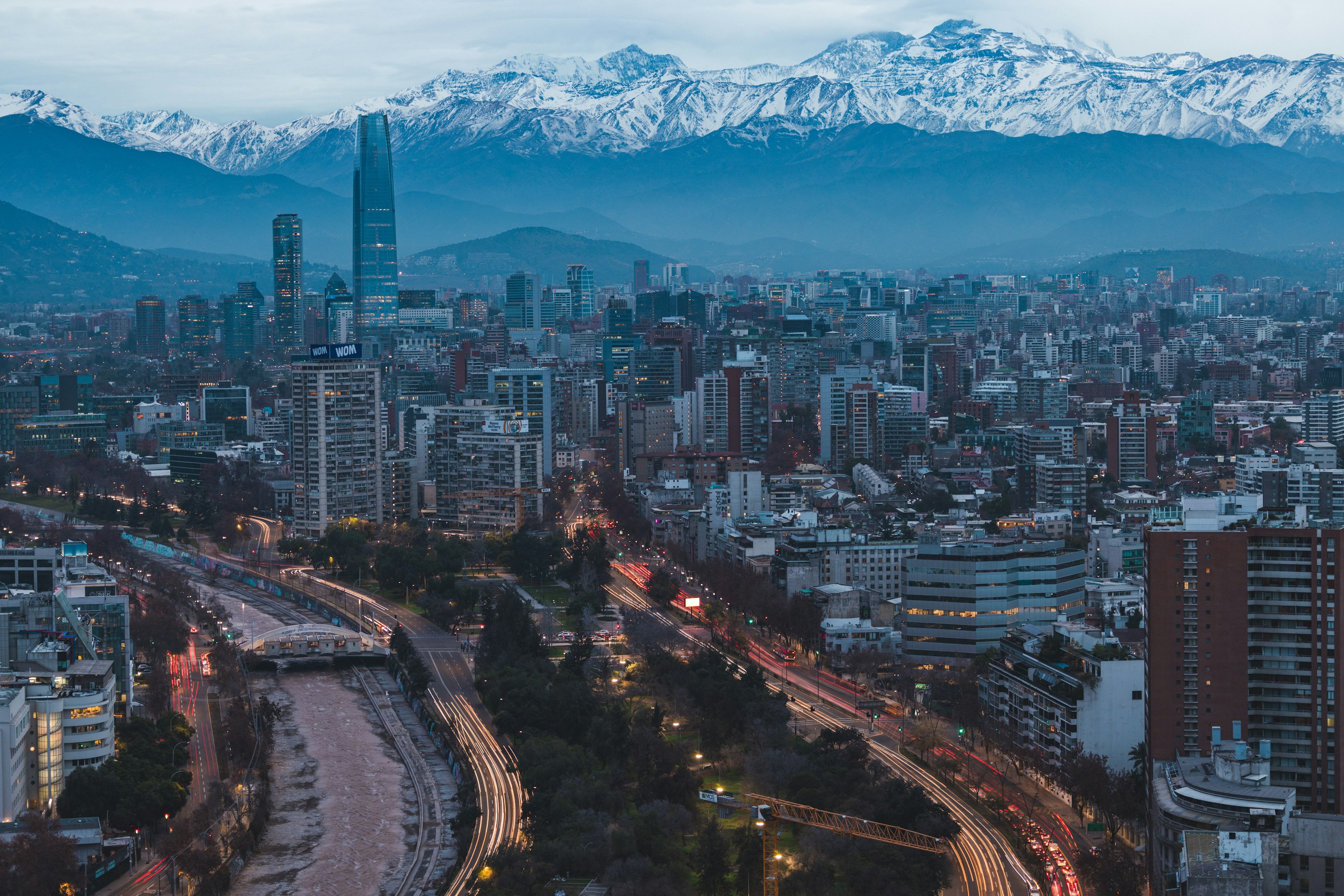
#11Chile's capital sits in a wide valley with the snow-capped Andes rising directly behind its skyline, a backdrop few capitals can match on a clear day.
The colonial core around Plaza de Armas, the funicular up Cerro San Cristóbal, and the restaurants of Bellavista give it a couple of solid days' worth of things to do.
Most travellers treat it as a stopover before Atacama or Patagonia rather than a destination itself.
How does it rate
CrowdsRomanceCash RequiredDangerAccessibilityWhy you should go
The Andes rise straight up behind the skyline, one of the most dramatic urban backdrops in South America.
Why you shouldn't go
Winter smog inversions can hide the mountain view for days, and most visitors only stay a night or two.
Plan your visit
Best time to visitOctober-April, for clearer skies and warmer weather; winter (Jun-Aug) brings smog inversions.Best time of dayClear mornings, for the best Andes visibility before afternoon haze builds.Getting thereArturo Merino Benítez International Airport (SCL) is Chile's main international gateway; the metro reaches most of the centre.Entry costFree to explore the city; Cerro San Cristóbal funicular ~CLP 3,000Time needed1-2 daysInsider tip — Take the funicular, not the cable car, up Cerro San Cristóbal in late afternoon - it's cheaper and the summit holds the light longer.


How a score is built
One score out of 100, five criteria behind it
Every place is rated 1–5 on each of the criteria below, then combined into a single score out of 100. It's calculated by us, the same way every time — not an average of traveller reviews or social votes.
Crowds
How many people you'll be sharing it with, and at what time of day.
Romance
How well it suits a couple, a proposal, or a quiet moment together.
Cash required
Entry fees, permits, guides, rentals — what it actually costs to do it.
Danger
Physical risk involved, from a slippery viewpoint to genuine hazard.
Accessibility
How far off the beaten path it is, and how hard it is to actually reach.