-
 #193 /100
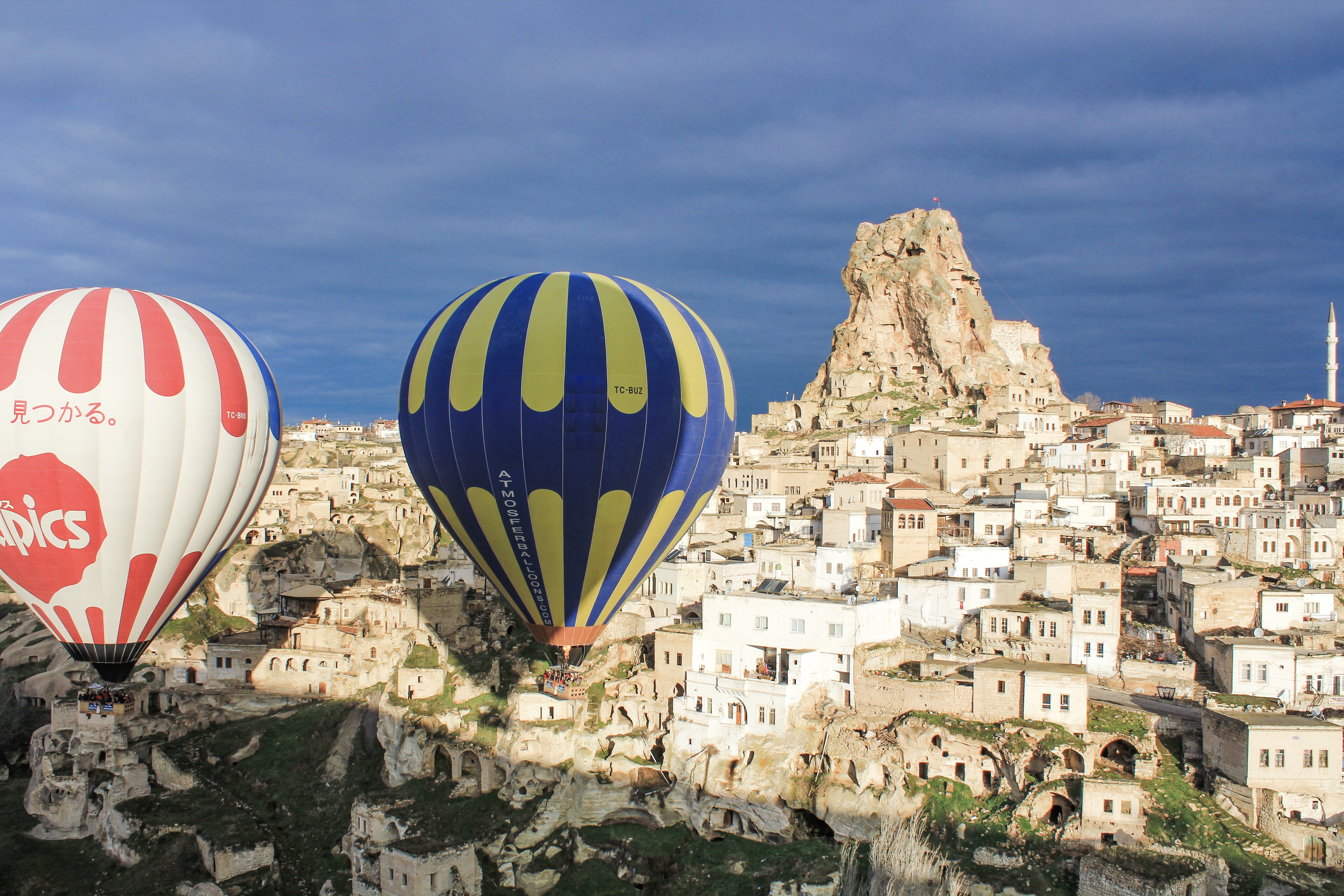
Cappadocia in central Turkey is a landscape of extraordinary volcanic rock formations called fairy chimneys — tall, thin spires of soft volcanic tuff capped with harder basalt.
Thousands of years of habitation have added cave churches with Byzantine frescoes, underground cities, and rock-cut monasteries to an already extraordinary natural canvas.
How does it rate
CrowdsRomanceCash RequiredDangerAccessibilityWhy you should go
The experience of drifting over the fairy chimneys and cave valleys in a hot air balloon at sunrise, with hundreds of other balloons around you, is one of the world's most extraordinary travel moments.
Why you shouldn't go
The hot air balloon flights are expensive and are cancelled at short notice due to weather; the main town of Goreme has become increasingly developed and commercialised.
Plan your visit
Best time to visitApril-June or September-NovemberBest time of daySunrise for the hot air balloons filling the skyGetting thereFly to Nevsehir or KayseriEntry costBalloon ride ~$150-250Time needed2-3 daysInsider tip — Book a hotel room or rooftop with a balloon-view terrace; sunrise balloon photos are the whole point of visiting -
 #290 /100
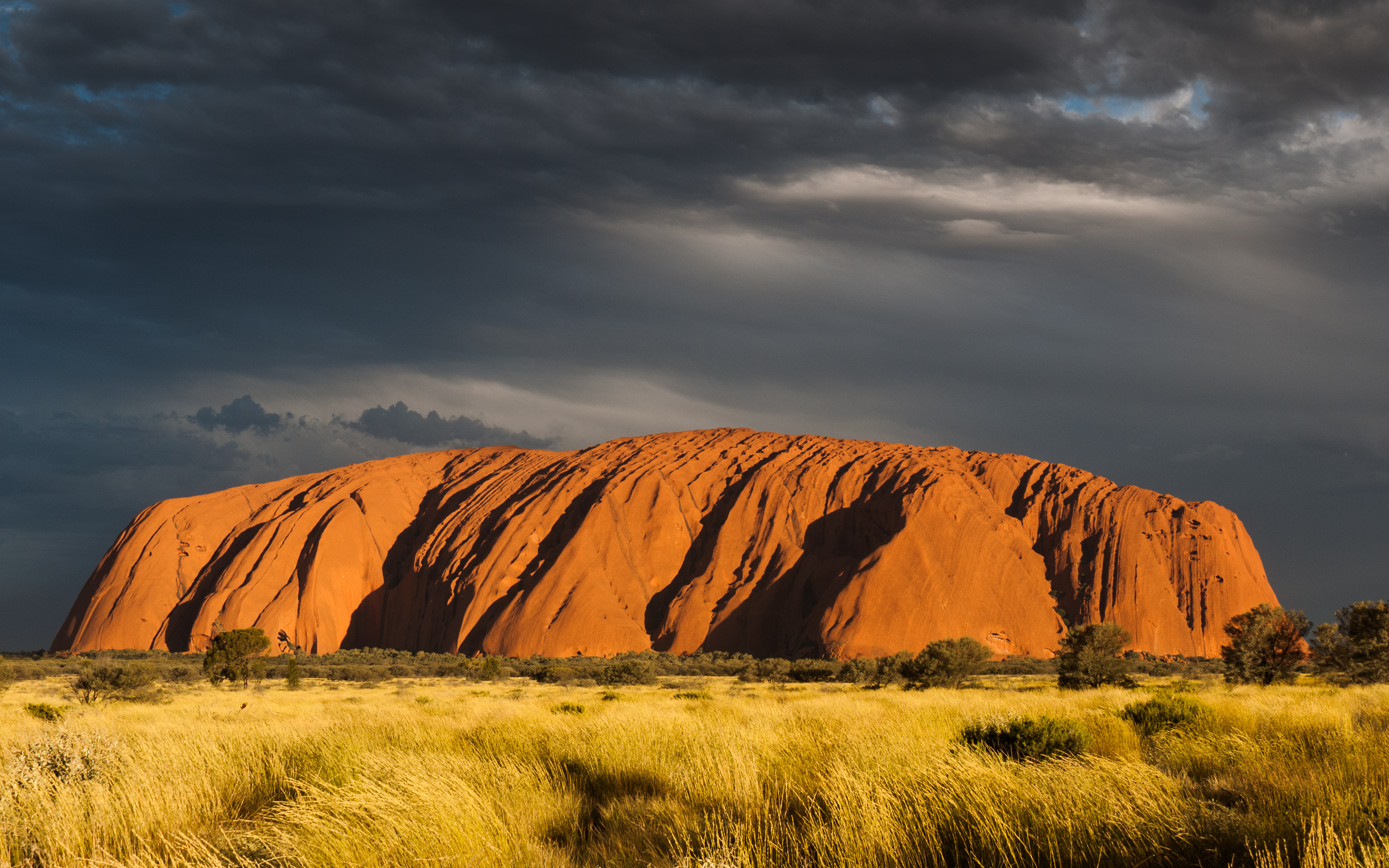
Uluru is a 348-metre monolith of rust-red sandstone rising sheer out of the Central Australian desert, sacred to the Anangu people.
It performs twice daily, smouldering orange at dawn and deepening to violet after sunset, and the colour show alone justifies the pilgrimage.
Up close, the base walk reveals waterholes, rock art and lush pockets of desert life.
How does it rate
CrowdsRomanceCash RequiredDangerAccessibilityWhy you should go
The dawn and dusk colour changes on the rock are a genuinely moving natural spectacle.
Why you shouldn't go
It's a long, expensive trip into deep desert heat, and summer temperatures are brutal.
Plan your visit
Best time to visitMay-September for bearable desert temperaturesBest time of daySunrise and sunset from the designated viewing areasGetting thereFly to Ayers Rock Airport (Yulara); the park is a 20-minute driveEntry costPark entry A$38 for 3 daysTime needed1-2 daysBookingBook ahead →Insider tip — Do the 10km base walk at first light - you get the colour show plus the rock art galleries before the heat and the buses -
 #389 /100
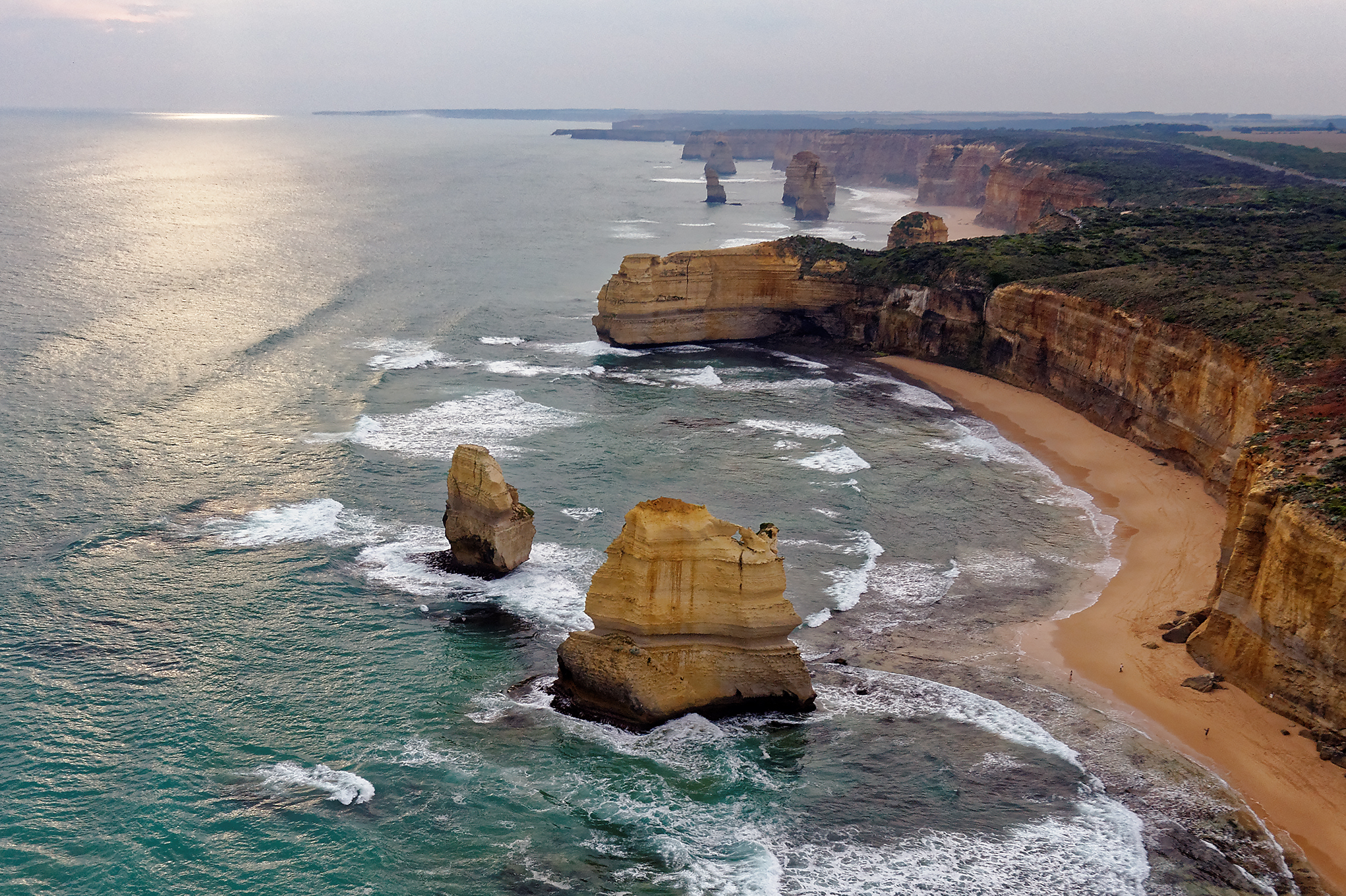
The Twelve Apostles are a collection of limestone stacks rising up to 45 metres from the Southern Ocean off the Port Campbell National Park on the Great Ocean Road.
Carved from the cliffs by erosion over millennia, they are most spectacular at sunrise and sunset when the low light turns the limestone golden.
How does it rate
CrowdsRomanceCash RequiredDangerAccessibilityWhy you should go
The Twelve Apostles at sunrise, when the limestone pillars glow golden and the surrounding sea is often calm, offer some of Australia's most dramatic coastal photography.
Why you shouldn't go
Despite the name, only eight stacks are currently standing as erosion continues to reshape them; helicopter flights provide the best overall view but are expensive.
Plan your visit
Best time to visitMarch-May or September-NovemberBest time of daySunrise, when the limestone stacks glow orange and coach tours have not arrivedGetting thereAlong the Great Ocean Road, ~3hrs from MelbourneEntry costFreeTime needed1-2 hoursInsider tip — Sunrise is dramatically quieter than sunset here, since most coach tours run the road in the afternoon -
 #489 /100
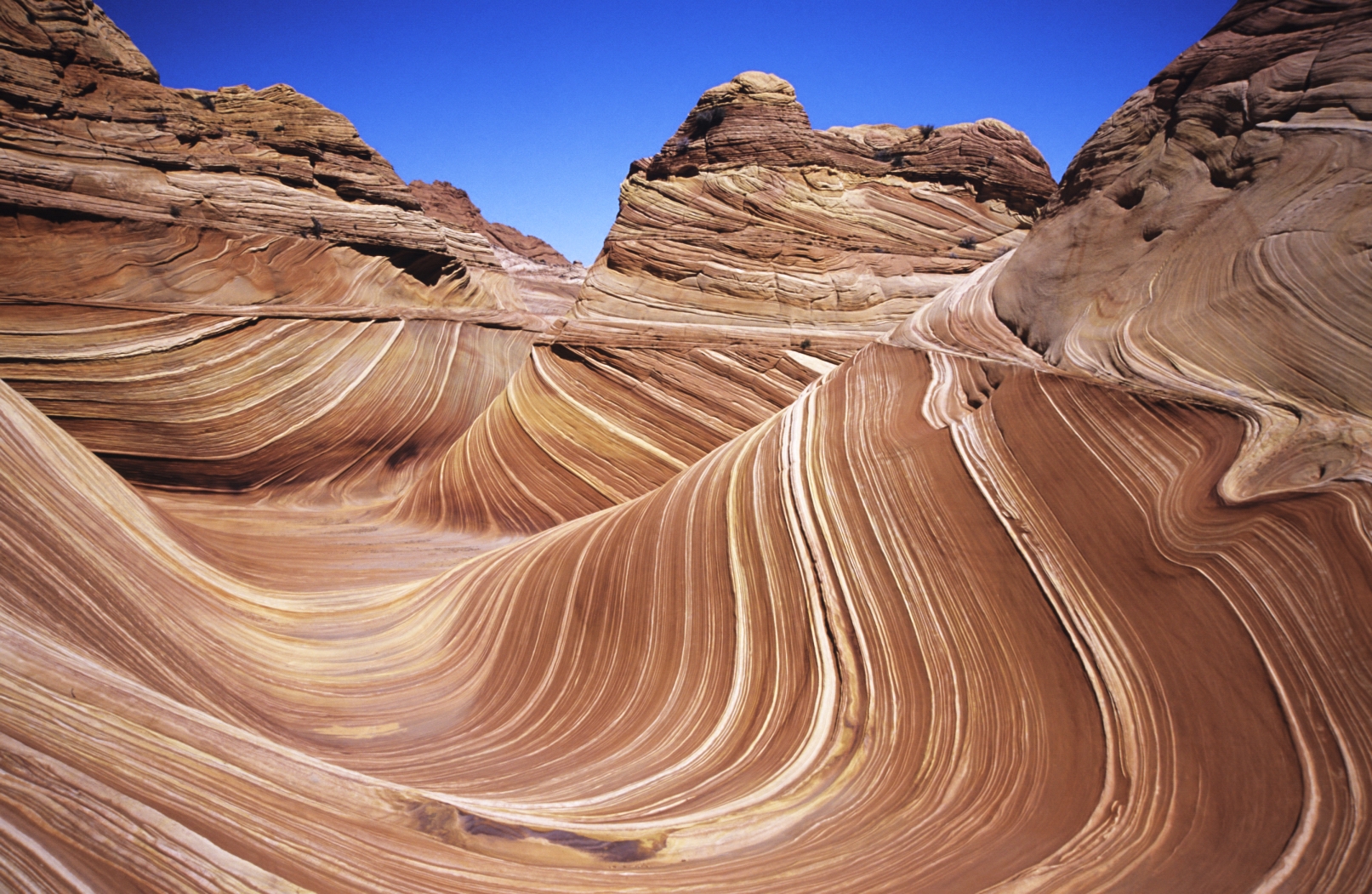
The Wave is a sandstone rock formation in the Coyote Buttes area of the Paria Canyon-Vermilion Cliffs Wilderness in Arizona, famous for its colourful, undulating forms created by 190-million-year-old Jurassic sand dunes.
The swirling bands of red, orange, and pink sandstone make it one of the world's most extraordinary geological formations.
How does it rate
CrowdsRomanceCash RequiredDangerAccessibilityWhy you should go
The Wave's swirling, almost liquid-looking sandstone surface is genuinely unlike anything else on earth; photographed in good light it is one of nature's most abstract landscapes.
Why you shouldn't go
Entry is strictly limited by lottery — only 64 people per day are permitted — and most applicants do not win; the terrain requires navigation skills and has no trail markers.
Plan your visit
Best time to visitMarch-May or September-NovemberBest time of dayMidday for the light bringing out the sandstone coloursGetting thereRemote trailhead near Kanab, Utah; permit requiredEntry costPermit lottery, small feeTime needed5-6 hours round trip hikeInsider tip — Permits are extremely limited via a daily lottery; apply months ahead online -
 #588 /100
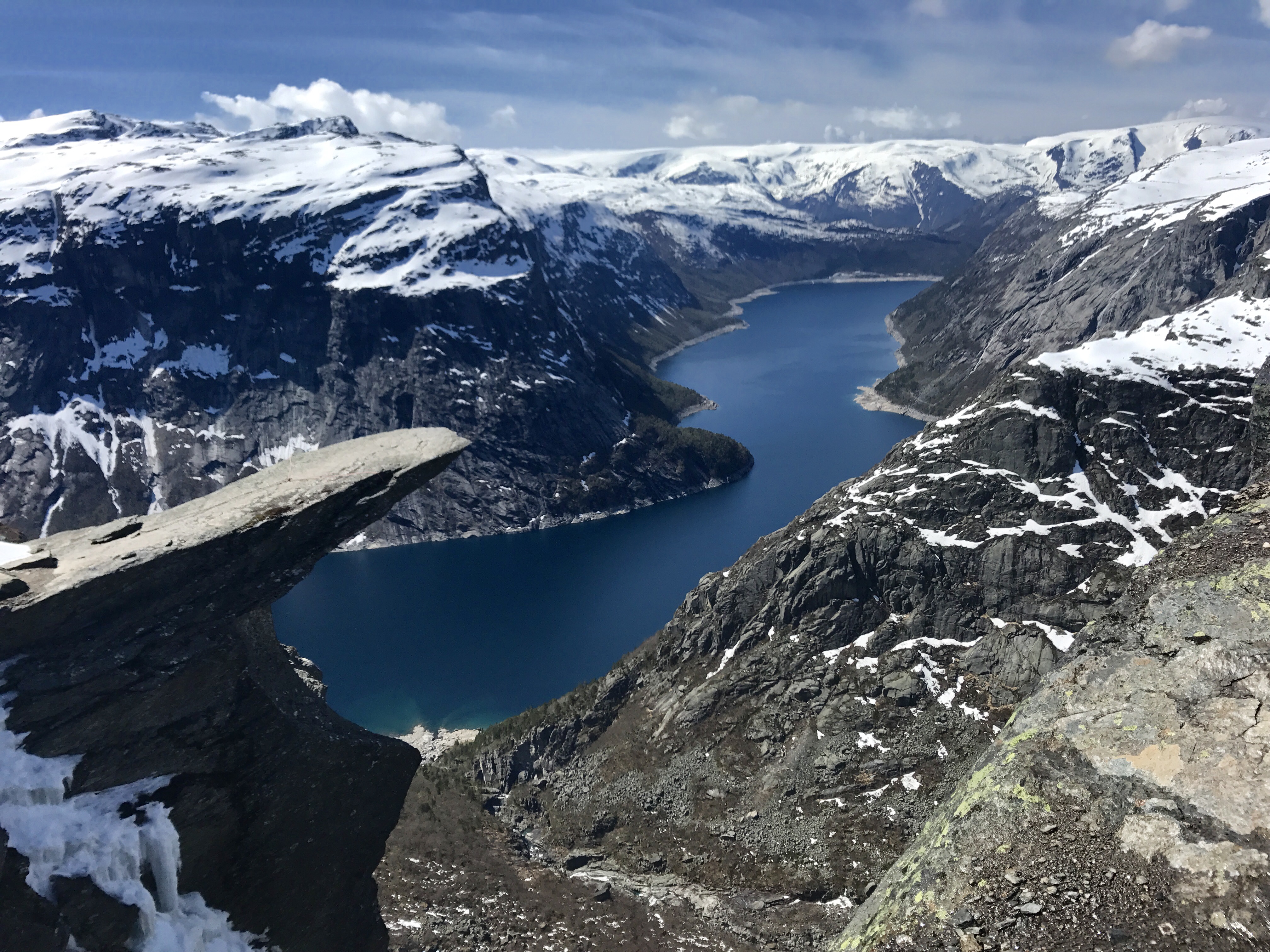
Trolltunga, meaning Troll's Tongue, is a spectacular horizontal rock formation that juts 700 metres above Lake Ringedalsvatnet in western Norway.
The 27-kilometre return hike to reach it passes through some of Norway's most dramatic fjord landscape, ascending over 1,000 metres in elevation.
How does it rate
CrowdsRomanceCash RequiredDangerAccessibilityWhy you should go
The view from the edge of Trolltunga, with the lake far below and Norwegian mountains stretching to the horizon, is one of Scandinavia's most dramatic vistas.
Why you shouldn't go
The hike is 27 kilometres return with 1,000 metres of elevation gain and takes 10-12 hours; the trail is only open from June to September and weather can change rapidly.
Plan your visit
Best time to visitJune-September (trail closed/dangerous outside this window)Best time of dayEarly morning start essential; it is a long hikeGetting there~4-5hr drive from Bergen to Skjeggedal trailheadEntry costFree; parking fee appliesTime needed10-12 hours round trip hikeInsider tip — Start by 6am; this is a genuinely strenuous full-day hike, not a quick photo stop -
 #687 /100
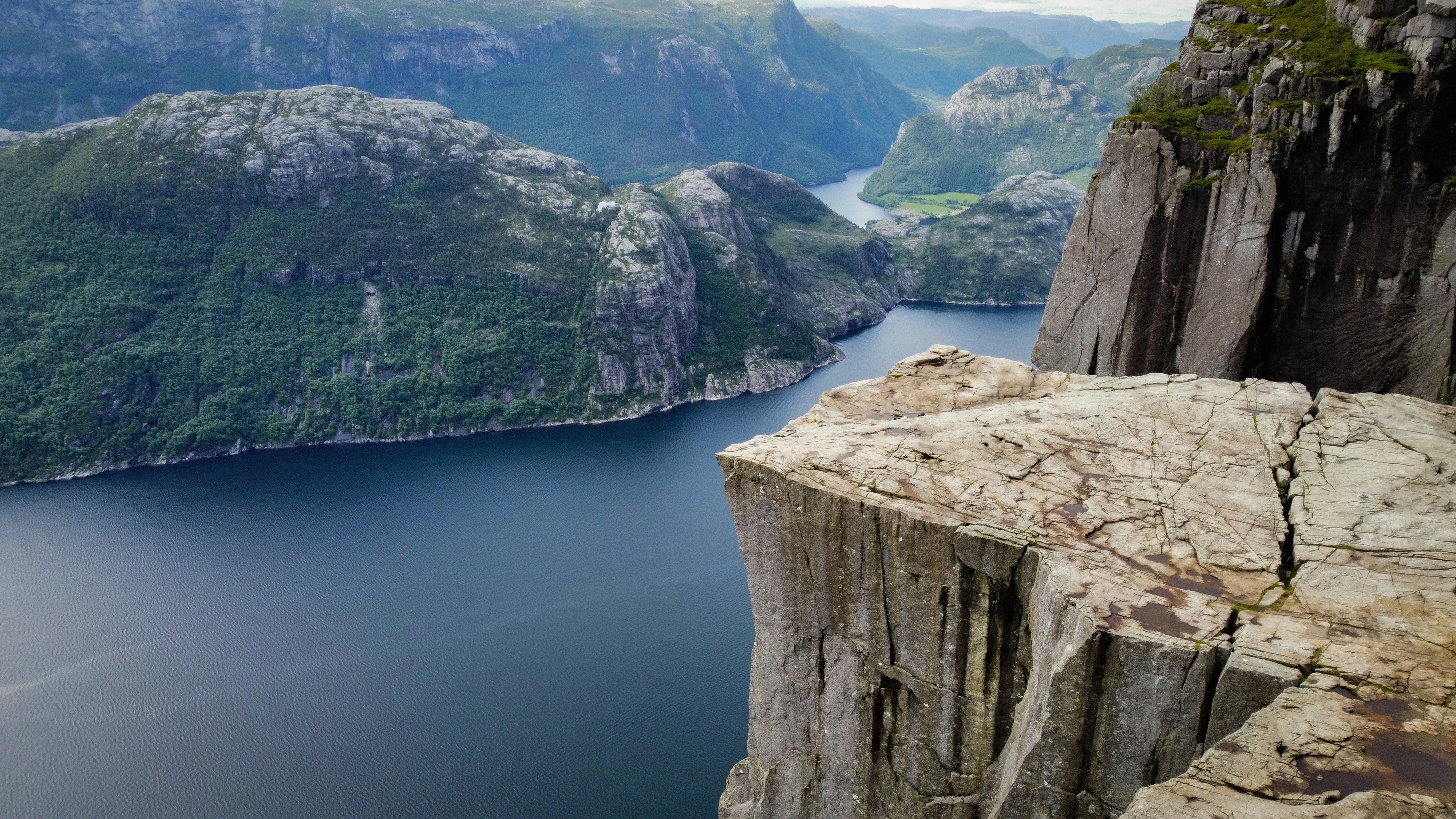
A flat granite plateau juts out 604 metres above the Lysefjord, ending in a sheer drop with the fjord stretching away beyond it.
The hike climbs around 350 metres over four kilometres, steep and rocky in places but manageable for most reasonably fit walkers in a few hours.
Nothing about the scale of the drop registers properly until you are standing at the edge of it.
How does it rate
CrowdsRomanceCash RequiredDangerAccessibilityWhy you should go
A flat-topped cliff 604 metres straight above a fjord, reachable on a half-day hike.
Why you shouldn't go
There's no railing at the edge, and the plateau gets genuinely crowded in peak summer.
Plan your visit
Best time to visitMay-September, when the trail is snow-free.Best time of dayEarly morning or evening, avoiding the midday tour-group peak.Getting thereFerry from Stavanger to Tau, then bus or drive to the Preikestolen trailhead.Entry costFree hike; parking fee at the trailhead.Time needed4-5 hours round tripInsider tip — Start the hike before 8am - by midday the summit plateau is packed with cruise-ship tour groups from Stavanger. -
 #784 /100
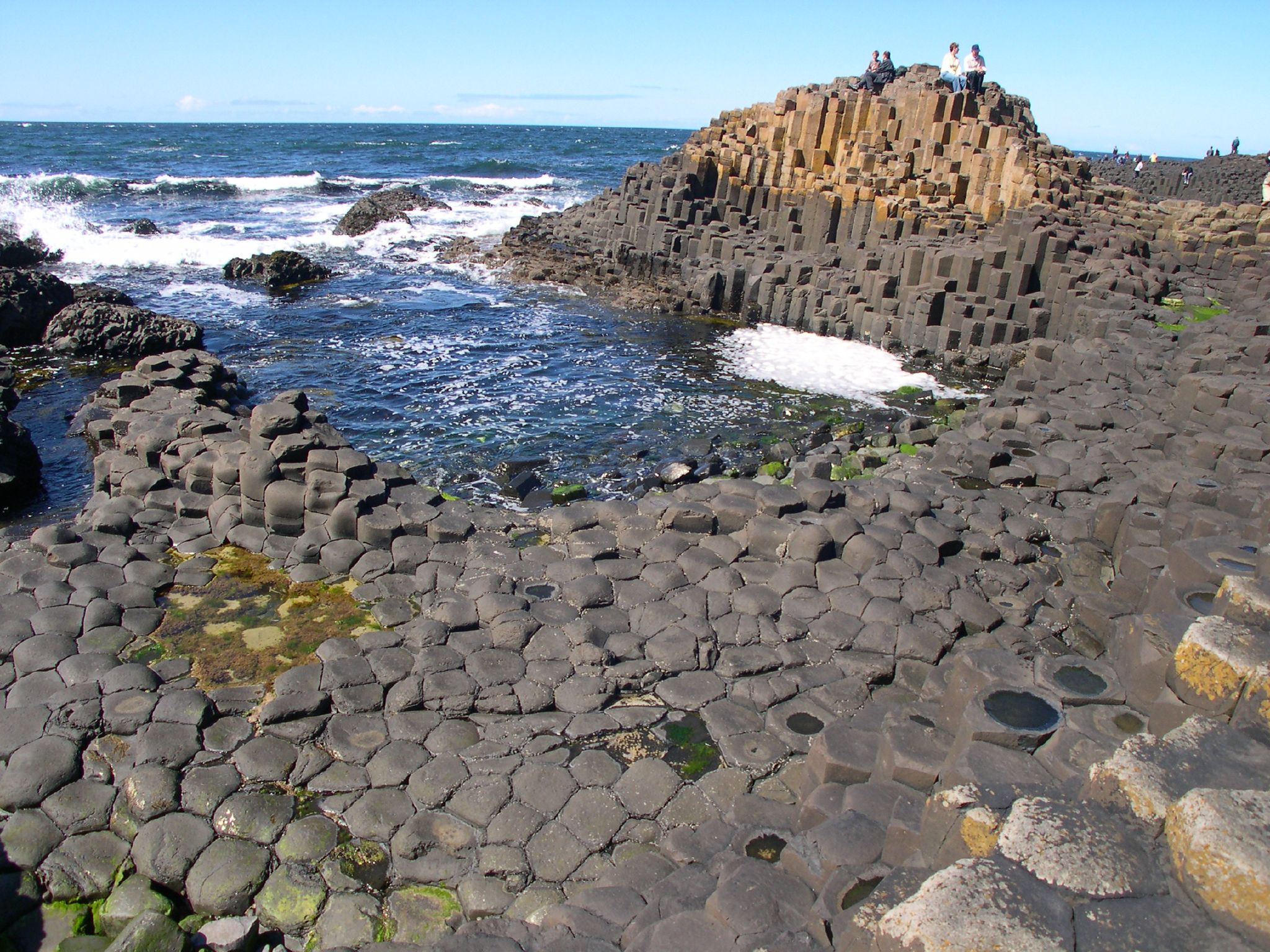
The Giant's Causeway is an area of approximately 40,000 interlocking basalt columns on the Antrim coast of Northern Ireland, formed by an ancient volcanic fissure eruption.
The hexagonal columns, which fit together with extraordinary geometric precision, were created around 50-60 million years ago and have inspired countless legends.
How does it rate
CrowdsRomanceCash RequiredDangerAccessibilityWhy you should go
The perfectly interlocking hexagonal basalt columns look so geometrically precise they seem man-made; the coastal setting and the legends surrounding them add to the atmosphere.
Why you shouldn't go
The site can be very crowded and the National Trust visitor centre charges for parking; the columns themselves are best appreciated on a bright day.
Plan your visit
Best time to visitSpring or autumnBest time of dayGolden hour, especially with a stormy skyGetting there~1hr drive from BelfastEntry costFree to the causeway itself; visitor centre chargesTime needed1.5-2 hoursInsider tip — Skip the visitor centre if on a budget; the causeway stones are freely accessible via the coastal path -
 #883 /100
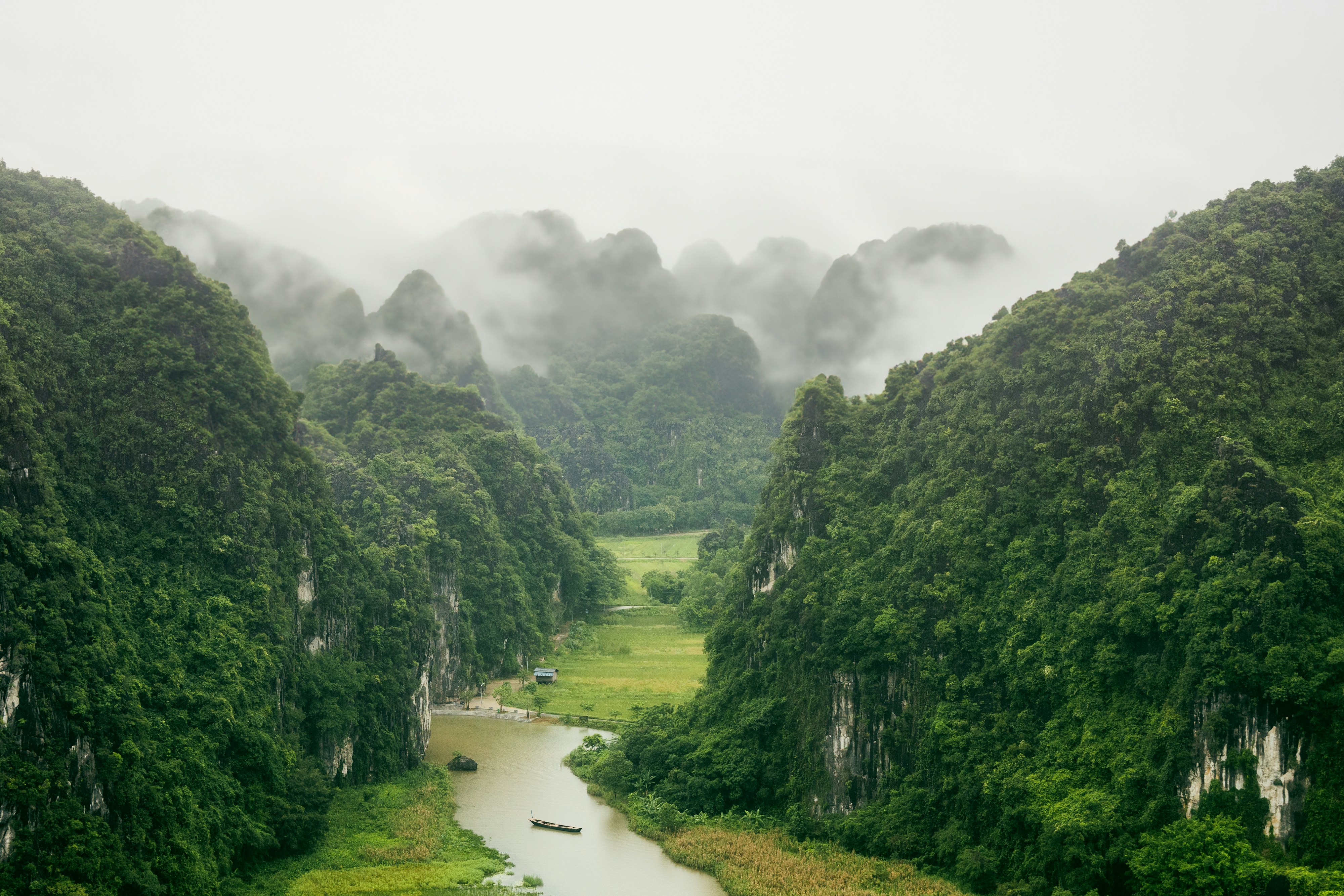
Limestone karst towers rise straight out of flooded rice paddies along the Ngo Dong River, toured by small rowboats often paddled with the feet.
Rowers guide boats through low limestone caves where the ceiling nearly touches the water, then back out into open paddy fields ringed by peaks.
It's frequently billed as Halong Bay on land and delivers a similarly dramatic skyline at a fraction of the cost.
How does it rate
CrowdsRomanceCash RequiredDangerAccessibilityWhy you should go
Halong Bay's dramatic limestone skyline, recreated on a quiet river through rice paddies.
Why you shouldn't go
Rowers commonly expect a tip on top of the ticket price, which isn't always made clear upfront.
Plan your visit
Best time to visitMay-June, when the rice paddies are vivid green; September-October for the golden harvest.Best time of dayEarly morning, for calm water and soft light on the karsts.Getting thereDrive or bus from Hanoi (about 2 hours) to Ninh Binh, then to the Tam Coc boat dock.Entry costBoat tour ticket, typically $10-15 per person.Time needed2-3 hoursInsider tip — Go on a weekday morning - weekend boat queues at the dock can run well past an hour. -
 #981 /100
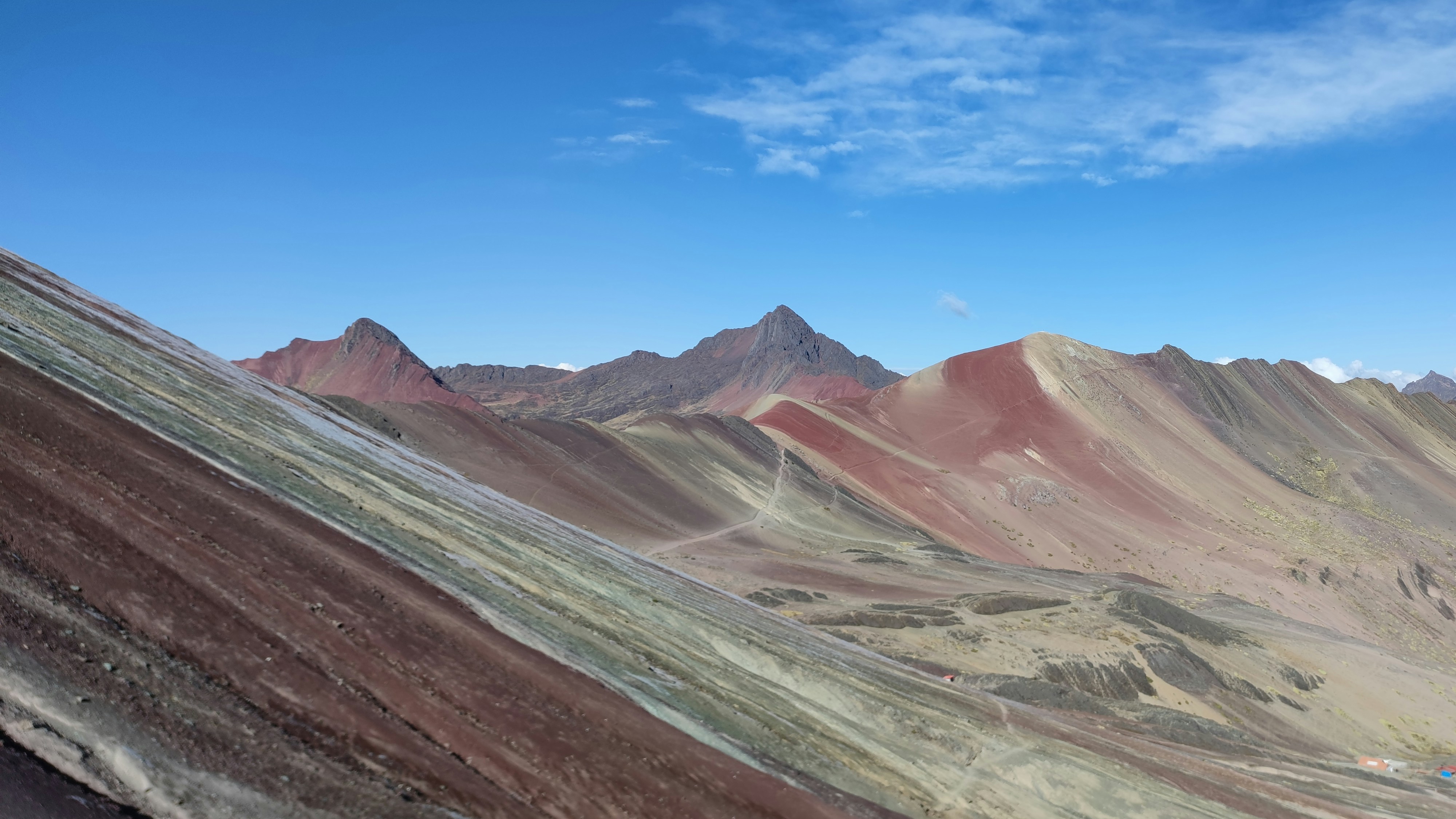
Mineral bands of red, gold, turquoise and lavender stripe this Andean ridge, exposed by erosion after centuries of livestock trampling stripped the surface soil.
Sitting above 5,000 metres, the colours are more vivid in person than in most photos, especially just after rain.
Its rapid rise from local secret to must-see spot in under a decade has brought heavy foot traffic to a genuinely fragile landscape.
How does it rate
CrowdsRomanceCash RequiredDangerAccessibilityWhy you should go
Naturally striped mineral bands across an entire mountainside, unlike anywhere else nearby.
Why you shouldn't go
The altitude (over 5,000m) makes the short final walk far harder than it looks, and crowds start early.
Plan your visit
Best time to visitMay-September, the dry season, for the clearest colour and driest trail.Best time of dayEarly morning departure (around 3am from Cusco) to beat both crowds and afternoon cloud.Getting thereDrive roughly 3 hours from Cusco, then a 1-2 hour hike (or horse) to the viewpoint.Entry costCommunity entry fee, around $10-15, usually included in tour prices.Time neededFull day, including transport from CuscoInsider tip — Spend a day or two acclimatising in Cusco first - altitude sickness at 5,000m ruins more visits here than bad weather does. -
 #1080 /100
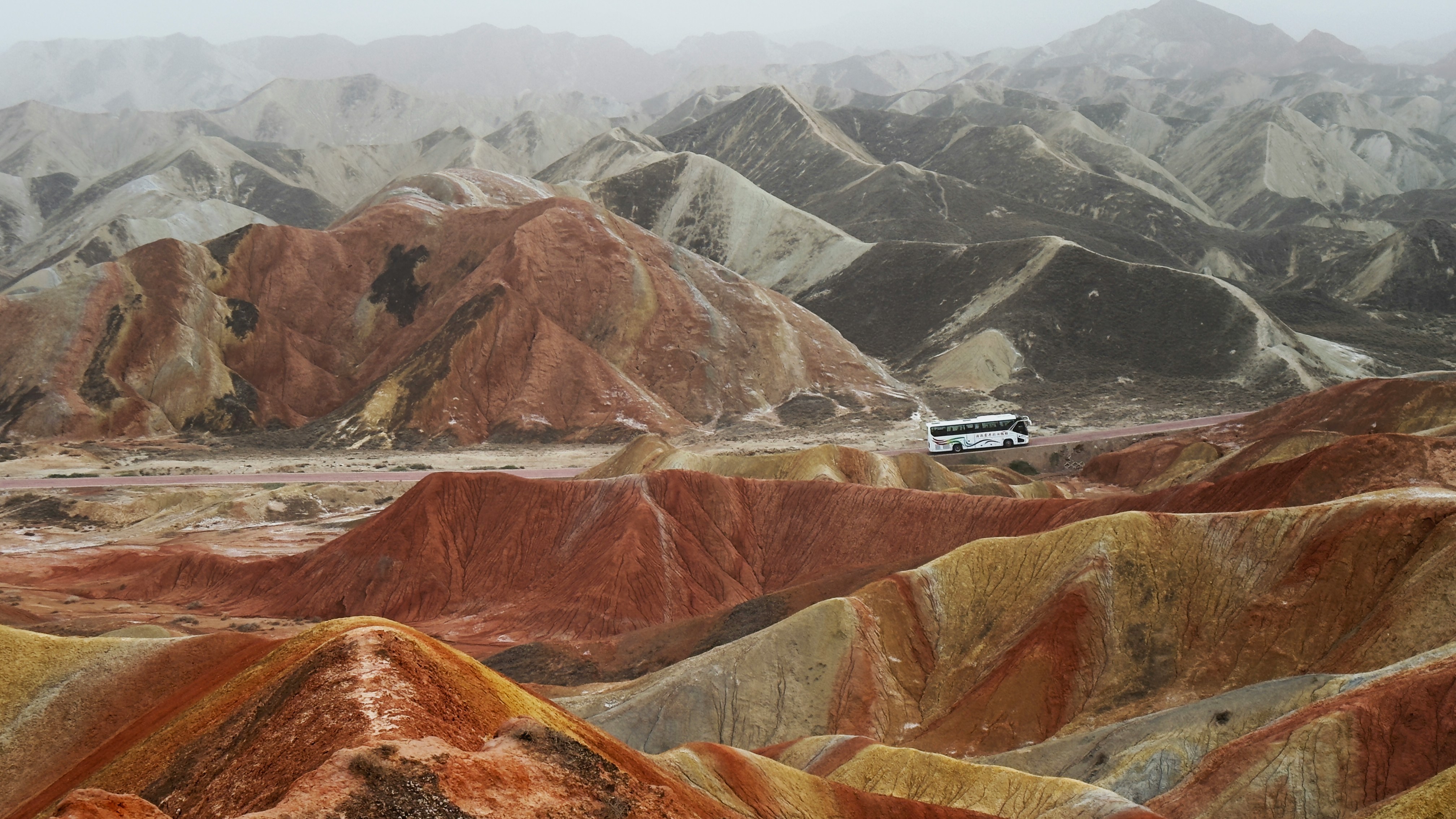
Striped mountains in shades of red, yellow, and blue layer across the landscape like abstract art, the result of mineral-rich sandstone deposited and folded over 24 million years.
Raised boardwalks at four numbered viewing platforms let visitors take in the full rainbow effect.
How does it rate
CrowdsRomanceCash RequiredDangerAccessibilityWhy you should go
Rainbow-striped mountains with layers of red, yellow, and blue sandstone, unlike anywhere else on Earth.
Why you shouldn't go
Colors are muted in flat midday light or haze; visitors are confined to boardwalks and viewing platforms, no off-trail access.
Plan your visit
Best time to visitJune–September or October for the clearest skies; a shuttle bus links the viewing platforms.Best time of daySunrise or sunset cast warm, low-angle light that intensifies the colors.Getting thereFly to Zhangye Ganzhou Airport, then a 40-minute drive or shuttle to the geopark entrance.Entry costRMB 74 (~$10) entrance, plus RMB 20 mandatory shuttle bus.Time needed3–4 hours.Insider tip — Platform 4 is generally considered the best sunset viewpoint. Bring a telephoto lens — the shuttle keeps visitors at a set distance from the formations. -
 #1179 /100
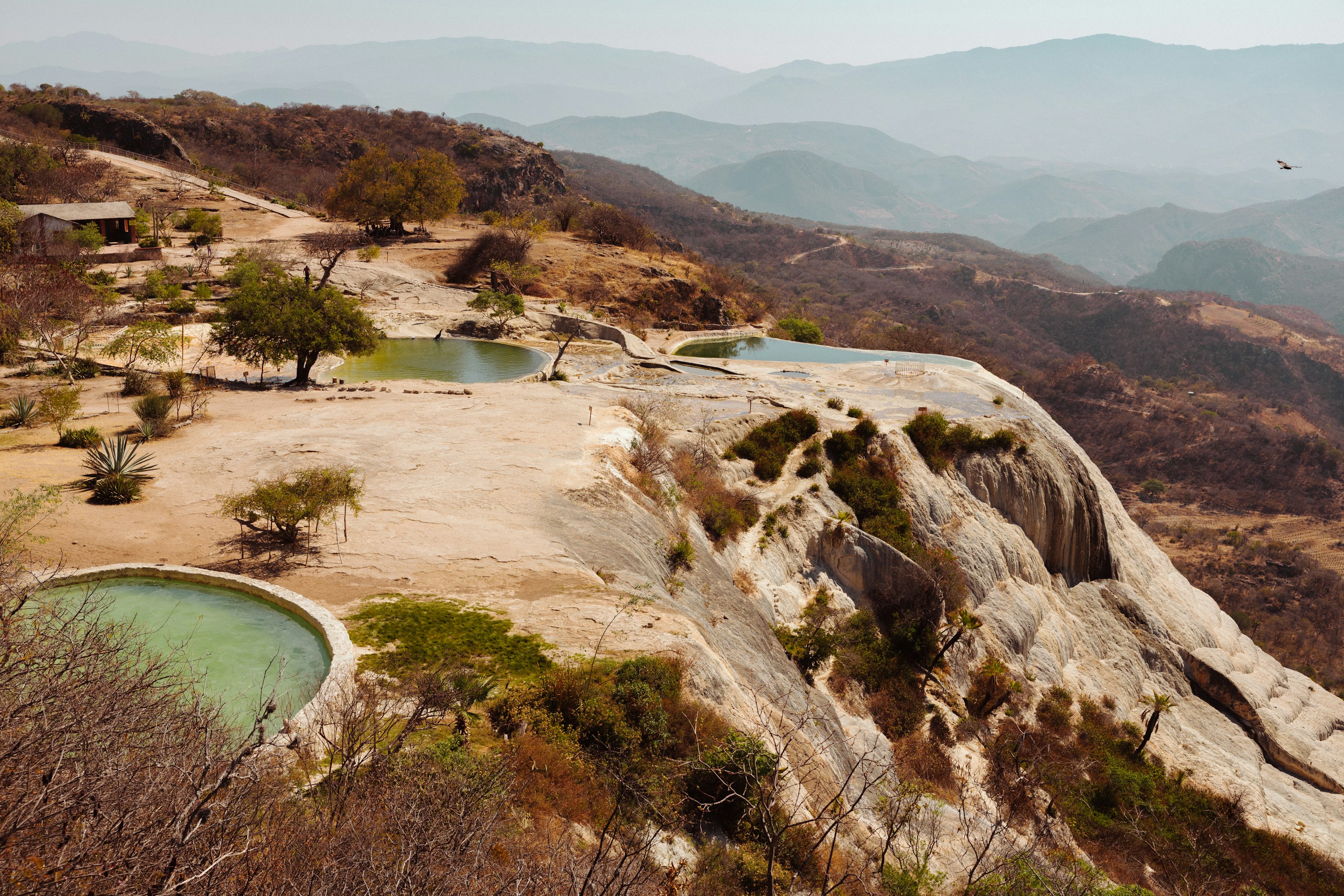
Hierve el Agua is a set of mineral-rich springs in the hills outside Oaxaca that have calcified over thousands of years into cliffside formations resembling frozen waterfalls.
Two natural infinity pools sit right at the cliff edge, letting swimmers look out over the valley below.
The site is far quieter than Mexico's beach and pyramid destinations, reachable only by a bumpy mountain road.
How does it rate
CrowdsRomanceCash RequiredDangerAccessibilityWhy you should go
Swimming in a natural infinity pool at a cliff edge that looks like a petrified waterfall is unlike anything else in Mexico.
Why you shouldn't go
The access road is rough and the pools' water level can drop noticeably in the dry season.
Plan your visit
Best time to visitNovember–April, dry season, for the fullest pools and easiest road access.Best time of dayMid-morning, arriving before tour groups from Oaxaca City build up through the afternoon.Getting thereFly to Oaxaca City; roughly 1.5–2-hour drive southeast on mostly unpaved mountain roads.Entry costSmall community entry fee, paid locally.Time needed2–3 hoursInsider tip — Combine the trip with the mezcal villages of Santiago Matatlán and San Baltazar Chichicápam along the same road. -
 #1277 /100
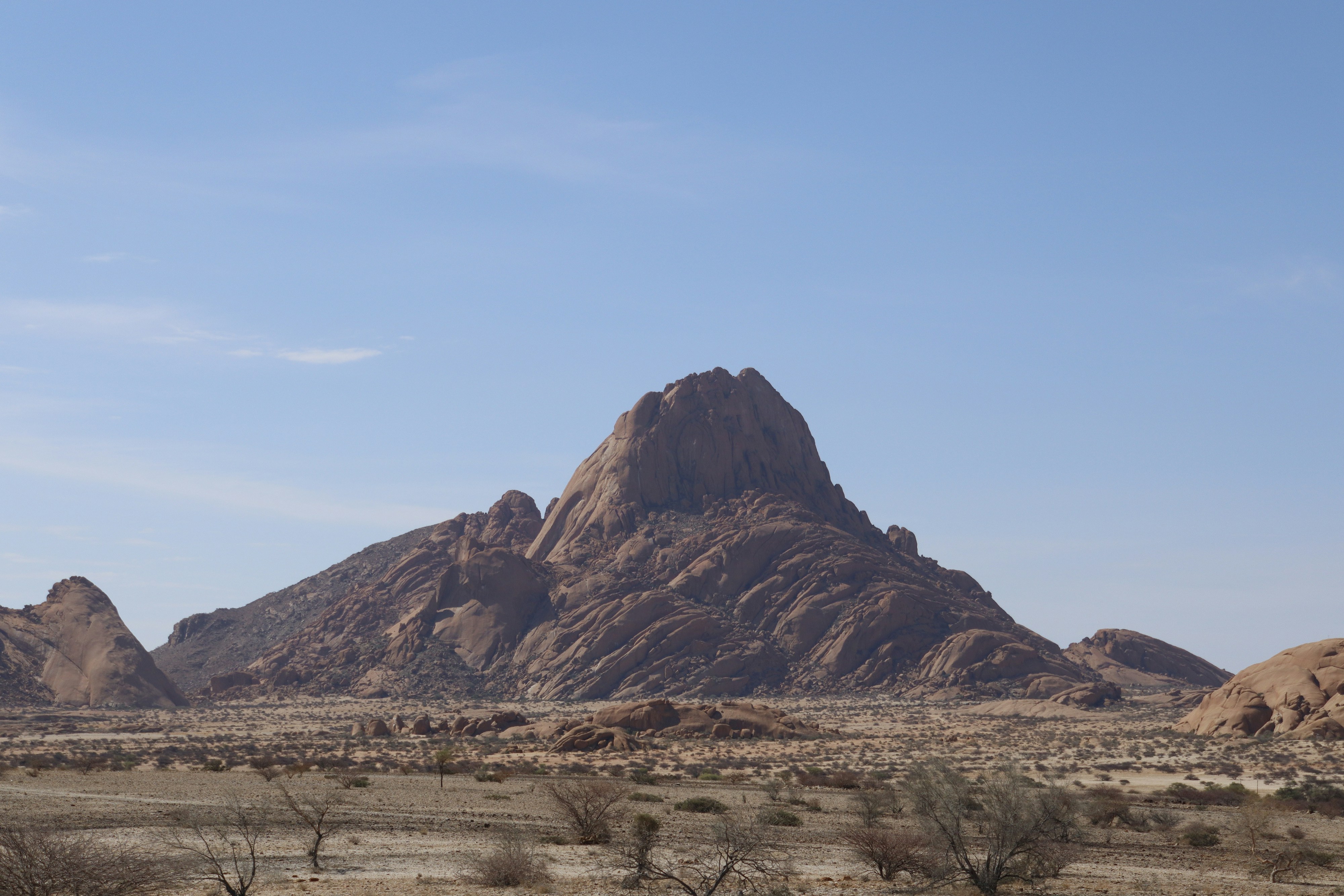
A bald granite inselberg rises abruptly out of flat Namibian desert, earning it the nickname the Matterhorn of Africa.
Natural rock arches, San rock paintings and easy scrambling routes over the surrounding boulders fill a day, and with almost no light pollution for hundreds of kilometres the night sky is extraordinary.
Facilities amount to a basic community-run campsite and little else.
How does it rate
CrowdsRomanceCash RequiredDangerAccessibilityWhy you should go
A solitary granite peak in empty desert, with some of the darkest night skies in Africa.
Why you shouldn't go
There's little shade and no facilities beyond a basic campsite - bring your own water and supplies.
Plan your visit
Best time to visitMay-September, the cooler, drier months.Best time of daySunset for the silhouette; after dark for star photography.Getting thereSelf-drive from Windhoek (about 3.5 hours) or Swakopmund (about 2.5 hours).Entry costSmall community conservancy entry fee, paid at the gate.Time neededHalf a day; overnight for stargazingInsider tip — Camp overnight at the community campsite - the Milky Way over the rock arch is the shot most day visitors miss entirely. -
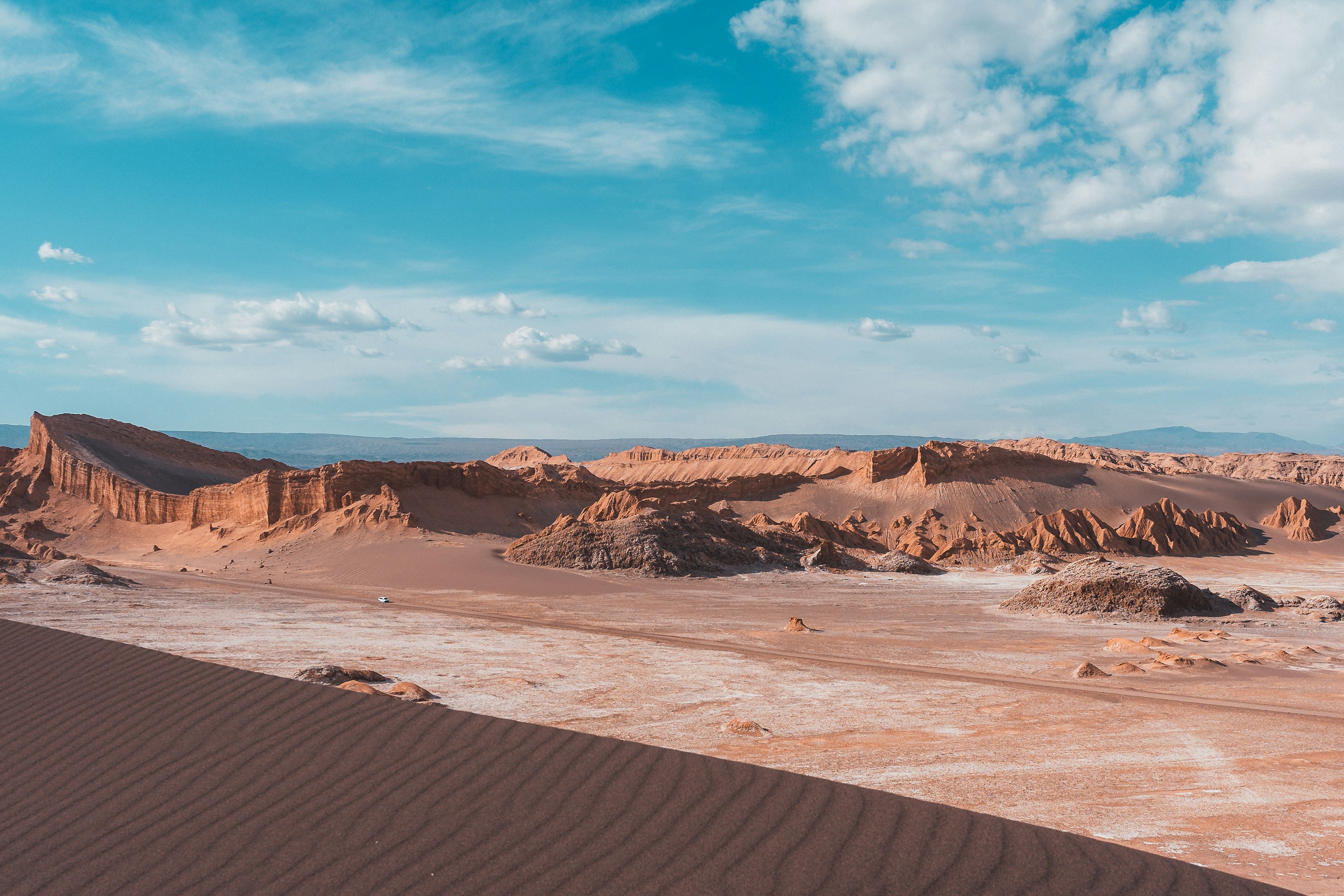 #1377 /100
Wind and ancient salt deposits have carved this stretch of the Atacama Desert into ridges, dunes and a natural amphitheatre that genuinely resembles a lunar landscape, 13km from San Pedro de Atacama inside the Los Flamencos National Reserve.
At sunset the salt-crusted rock turns deep red and violet, drawing every tour van in town to the same handful of viewpoints.
By day it's simply one of the driest, starkest places on Earth.
How does it rate
CrowdsRomanceCash RequiredDangerAccessibilityWhy you should go
Sunset turns the salt ridges and dunes a deep red that genuinely looks otherworldly.
Why you shouldn't go
Every tour and rental car in San Pedro converges on the same viewpoints for the same sunset window.
Plan your visit
Best time to visitYear-round (desert climate); clearest skies May-August.Best time of dayLate afternoon into sunset.Getting thereFly to Calama, then about 1.5 hours to San Pedro de Atacama; the valley is a further 13km by rental car or tour van.Entry cost~CLP 8,000-11,000 (~US$10) reserve entrance, per personTime needed2-3 hoursInsider tip — Skip the packed main viewpoint and walk 10 minutes further along the ridge for the same sunset colour with far fewer people. -
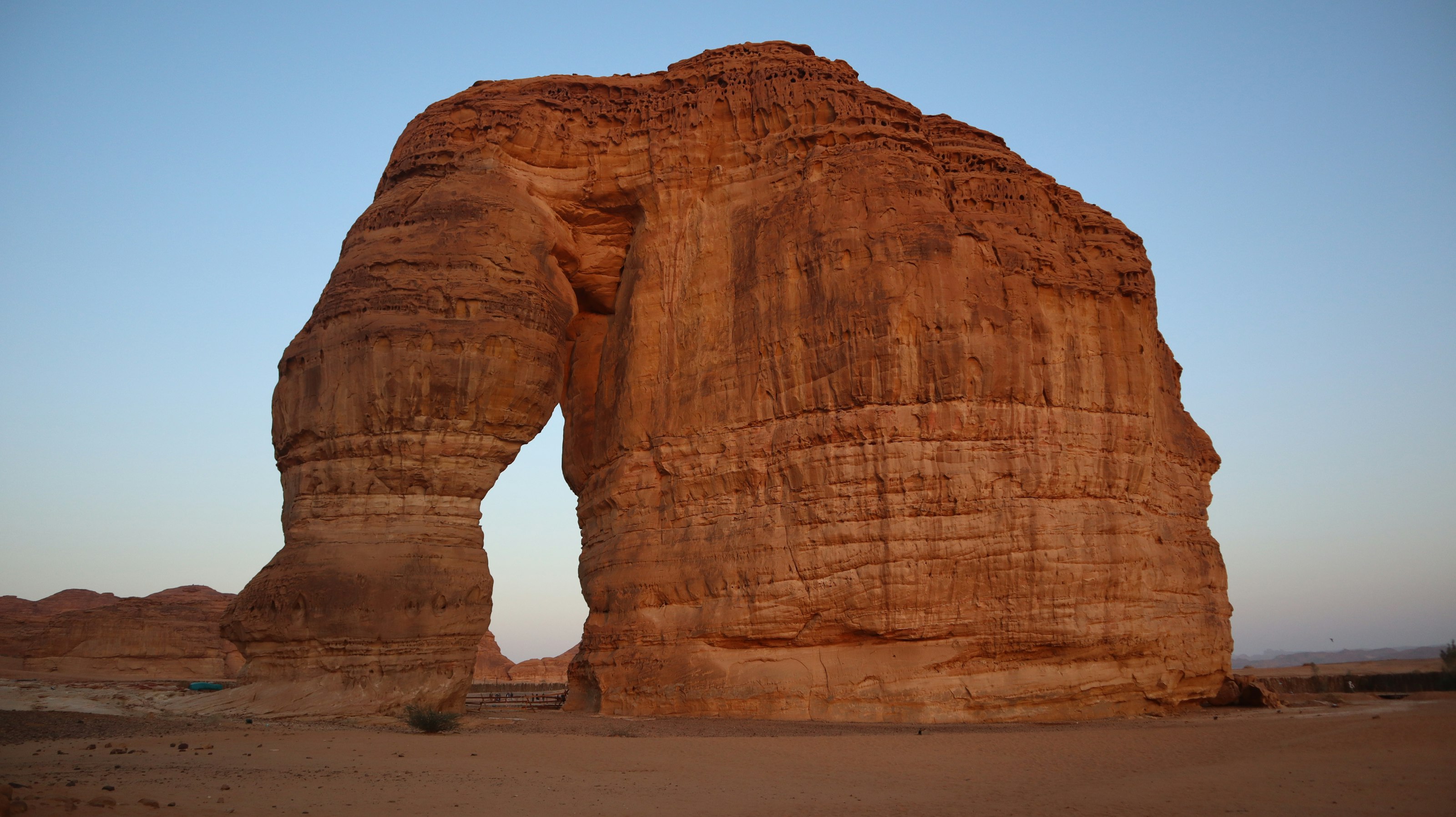 #1476 /100
Jabal AlFil, or Elephant Rock, is a sandstone formation carved by wind erosion into the unmistakable shape of an elephant with its trunk lowered to the desert floor.
It's one of the most recognisable landmarks of the AlUla region, set in an open desert valley that turns gold and red as the sun drops, with a small amphitheatre of seating built facing the rock for evening visitors.
How does it rate
CrowdsRomanceCash RequiredDangerAccessibilityWhy you should go
A short, free stop with one of the most striking natural rock formations in the country, especially as sunset colours the sandstone.
Why you shouldn't go
There's little else at the site itself beyond the rock and desert view, so it's a quick visit rather than a half-day outing.
Plan your visit
Best time to visitNovember–March, avoiding the extreme heat of the Arabian summer.Best time of daySunset, when the sandstone turns deep gold and red.Getting thereFly to AlUla's own airport; roughly 30-minute drive from AlUla Old Town.Entry costFree entry.Time needed1 hourInsider tip — Bring a chair or blanket and arrive an hour before sunset — the seating area fills up but the desert floor around it has plenty of room. -
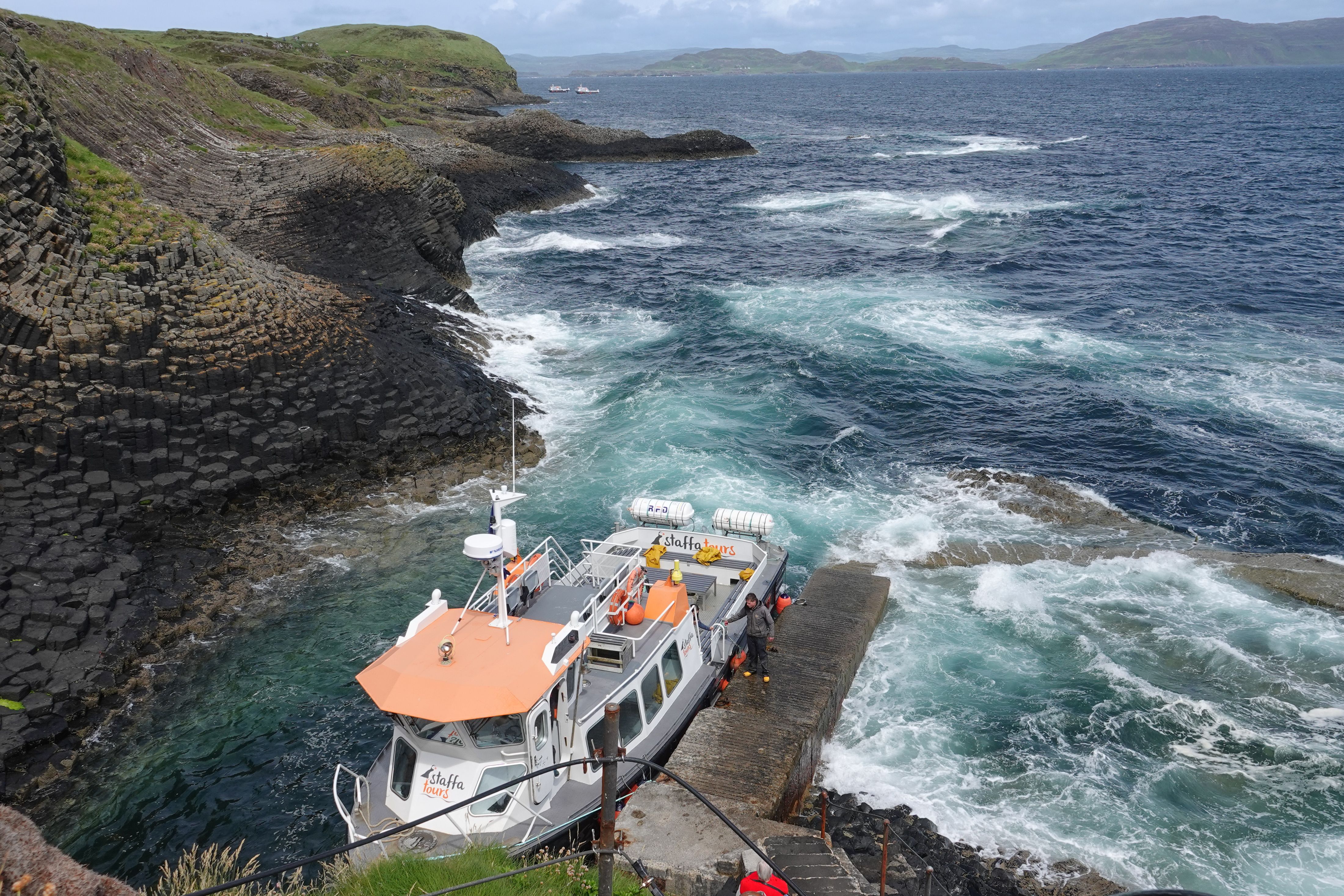 #1576 /100
Hexagonal basalt columns, formed the same way as the Giant's Causeway, arch into a natural sea cave on the uninhabited island of Staffa.
The cathedral-like interior, with waves echoing off the columned walls, inspired Mendelssohn's Hebrides Overture.
Reaching it requires a boat crossing through open water, which keeps the cave far quieter than its Northern Irish cousin.
How does it rate
CrowdsRomanceCash RequiredDangerAccessibilityWhy you should go
A natural basalt-column sea cave dramatic enough to have inspired a symphony.
Why you shouldn't go
Boat access depends entirely on weather and sea conditions - trips are cancelled often.
Plan your visit
Best time to visitApril-September, when boat tours run most reliably.Best time of dayMidday, for the best light penetrating the cave's interior.Getting thereFerry to Mull, then a boat tour from Fionnphort or Iona out to Staffa.Entry costBoat tour fare, typically $35-50.Time neededHalf a day, including the boat crossingInsider tip — Book an afternoon sailing when possible - calmer seas later in the day mean a better chance of actually landing rather than just circling. -
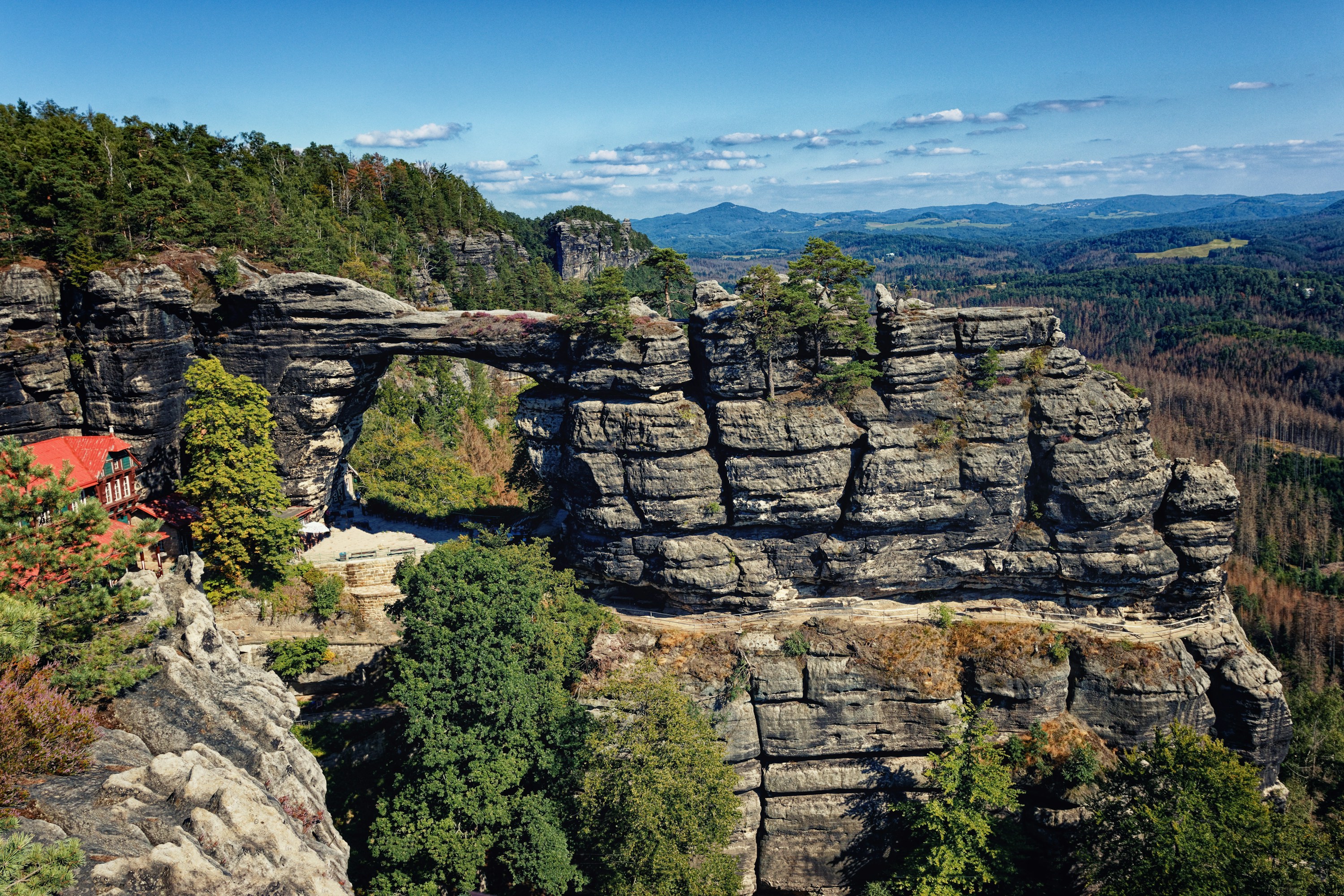 #1670 /100
Pravčická brána is the largest natural sandstone arch in Europe, a 16-metre stone bridge rising from the forested plateau of Bohemian Switzerland National Park near the German border.
Closed to walkers since 1982 to halt erosion, it's instead viewed from three platforms and the 19th-century Sokolí hnízdo chalet built into the rock beneath it.
Reaching it means a steady uphill hike from Hřensko.
How does it rate
CrowdsRomanceCash RequiredDangerAccessibilityWhy you should go
The largest natural sandstone arch in Europe, framed by a historic chalet restaurant built right beneath it.
Why you shouldn't go
The arch itself is off-limits to walk on, and the approach hike is steep enough to rule out a casual visit.
Plan your visit
Best time to visitApril-October for reliable trail conditions; the path can be icy or closed after snow.Best time of dayEarly morning to beat weekend crowds on the narrow viewing platforms.Getting thereTrain or bus to Děčín, then a local bus to Hřensko, followed by a 1-1.5 hour uphill hike (or a longer loop from Mezní Louka).Entry cost75 CZK adult, 25 CZK concession, for the viewpoint areaTime needed3–4 hours round trip including the hikeInsider tip — The classic view is from the lower platform looking up through the arch; climb to the upper terrace by the chalet for the wider valley panorama instead.


More from The World
-
How a score is built
One score out of 100, five criteria behind it
Every place is rated 1–5 on each of the criteria below, then combined into a single score out of 100. It's calculated by us, the same way every time — not an average of traveller reviews or social votes.
Crowds
How many people you'll be sharing it with, and at what time of day.
Romance
How well it suits a couple, a proposal, or a quiet moment together.
Cash required
Entry fees, permits, guides, rentals — what it actually costs to do it.
Danger
Physical risk involved, from a slippery viewpoint to genuine hazard.
Accessibility
How far off the beaten path it is, and how hard it is to actually reach.

