-
 #1
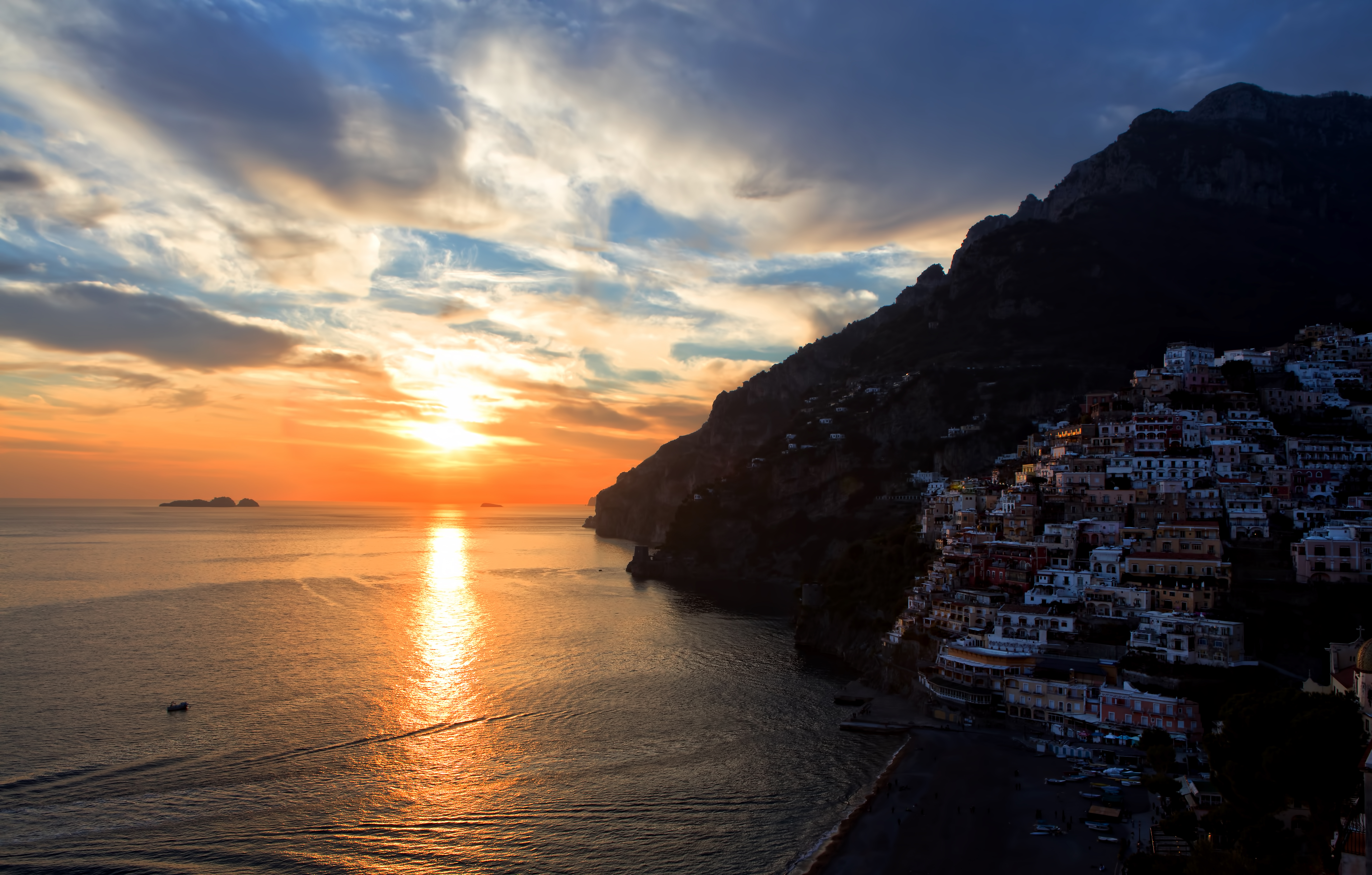
#1Positano is the Amalfi Coast's poster child: a wall of peach, rose and terracotta houses stacked impossibly steeply between the cliffs and a dark-sand beach.
The classic view, the whole town glowing above Spiaggia Grande, is best from the coast path or from the ferry pulling out.
Below the view it's all lemon groves, boutiques and long seafood lunches.
How does it rate
CrowdsRomanceCash RequiredDangerAccessibilityWhy you should go
The stacked pastel townscape above the beach is one of the Mediterranean's defining views.
Why you shouldn't go
Everything is steps, hundreds of them, and summer prices and crowds are ferocious.
Plan your visit
Best time to visitMay, June or September - warm seas without August's crushBest time of dayGolden hour, when the west light sets the facades glowingGetting thereFly to Naples; ferry from Salerno or Sorrento beats the coast road in summerEntry costFree to wander; beach clubs and parking cost plentyTime needed1-2 daysInsider tip — Arrive by ferry rather than road - the approach from the water is the photo, and you skip the SS163 traffic -
 #290 /100
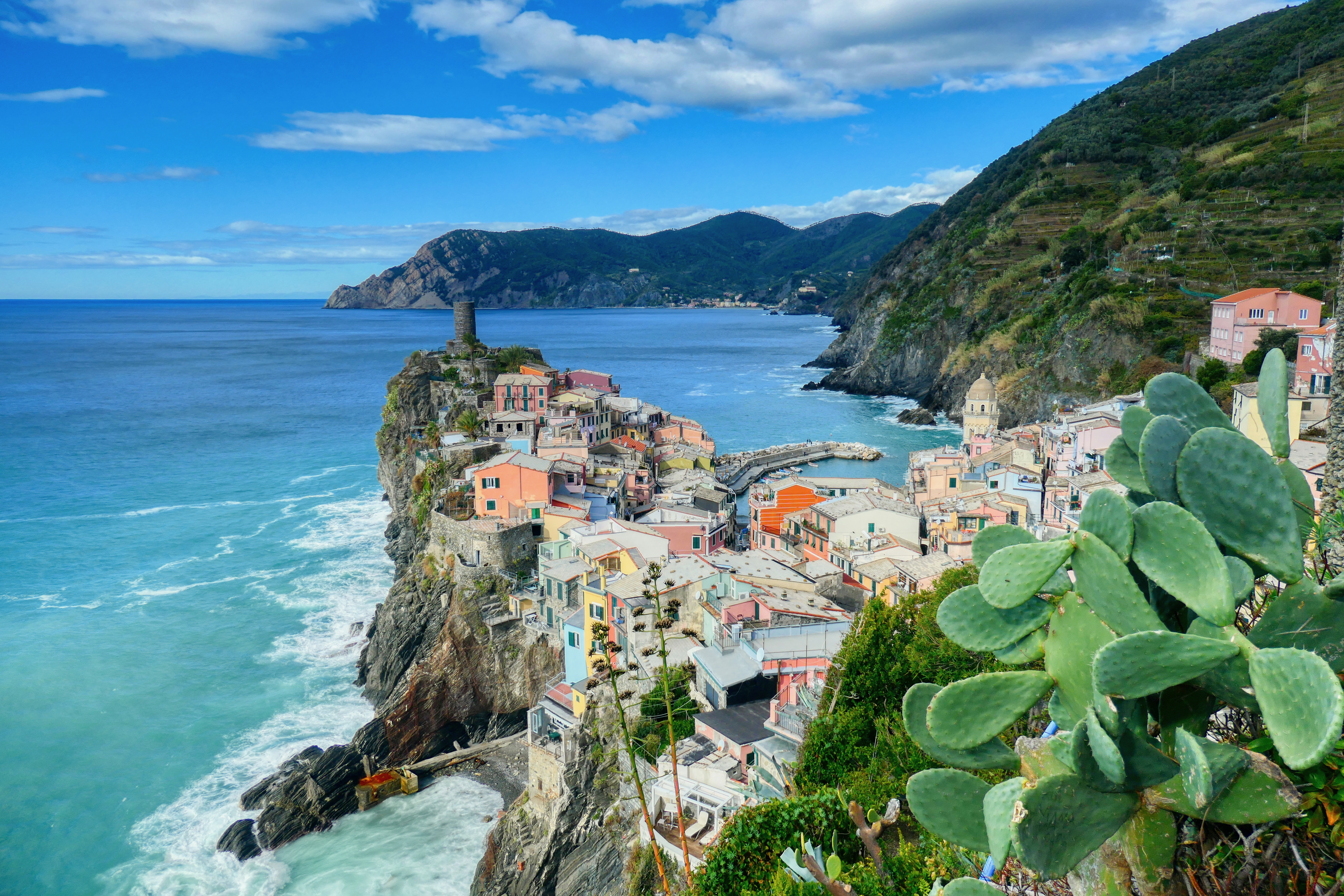
Cinque Terre is a string of five centuries-old fishing villages clinging to the cliffs of the Italian Riviera, connected by scenic hiking trails above the Ligurian Sea.
Manarola, Vernazza, Corniglia, Monterosso, and Riomaggiore tumble down their respective cliff faces in a cascade of colourful buildings.
How does it rate
CrowdsRomanceCash RequiredDangerAccessibilityWhy you should go
The views from the hillside hiking trails above each village, with the colourful houses tumbling down to the sea far below, are among Italy's most beautiful.
Why you shouldn't go
Cinque Terre has become very crowded and the trails between villages are sometimes restricted due to landslip damage; accommodation in the villages is very limited and expensive.
Plan your visit
Best time to visitApril-June or September-OctoberBest time of dayLate afternoon for the coloured houses in warm lightGetting thereTrain from La Spezia or Pisa, connects all 5 villagesEntry costCinque Terre Card ~EUR18 (trains + trails)Time needed2-3 daysInsider tip — Manarola's viewpoint at dusk is the most photographed spot; get there early to claim a spot on the wall -
 #388 /100
The Colosseum is the largest amphitheatre ever built and an enduring symbol of the power and ingenuity of ancient Rome.
Completed in 80 AD, it could hold up to 80,000 spectators who came to watch gladiatorial contests, animal hunts, and public spectacles that defined Roman entertainment culture.
How does it rate
CrowdsRomanceCash RequiredDangerAccessibilityWhy you should go
Standing inside the Colosseum and looking up at its tiered arches, imagining the roar of 80,000 Romans, is one of the most powerful experiences the ancient world has to offer.
Why you shouldn't go
The Colosseum is one of the most visited sites in the world and the surrounding area is extremely crowded; queues without advance booking can be several hours long.
Plan your visit
Best time to visitSpring or autumnBest time of dayEarly morning entry, or sunset from outsideGetting thereColosseo Metro stationEntry cost~EUR18 (combo with Roman Forum/Palatine Hill)Time needed2-3 hoursInsider tip — Book a timed entry ticket online; the walk-up line can take over an hour -
 #487 /100
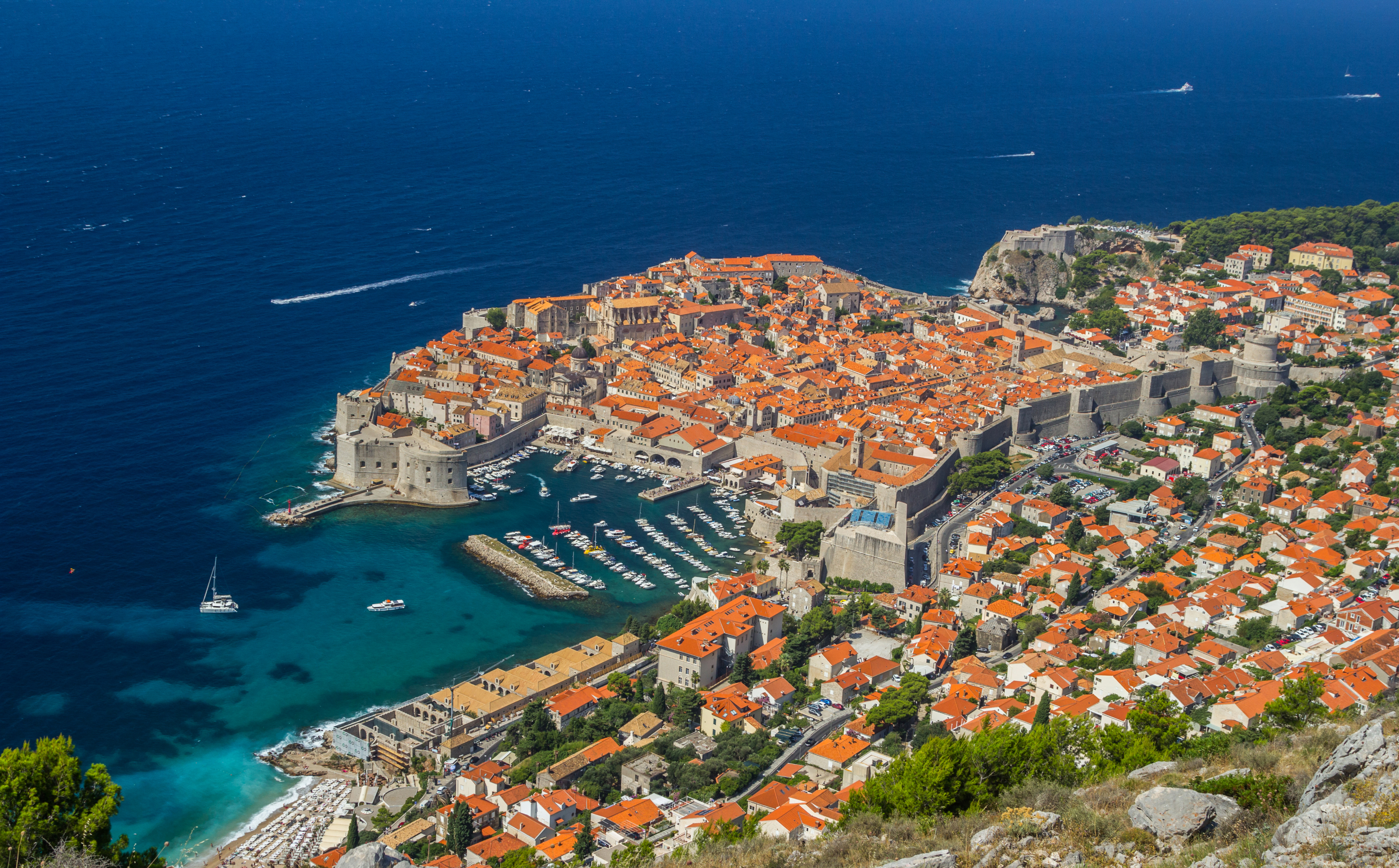
Dubrovnik is a medieval walled city on the Adriatic coast of Croatia, its terracotta rooftops and imposing limestone walls rising directly from the sea.
The medieval Old Town, a UNESCO World Heritage Site, was the backdrop for King's Landing in Game of Thrones, bringing global fame to what was already one of the Mediterranean's most beautiful cities.
How does it rate
CrowdsRomanceCash RequiredDangerAccessibilityWhy you should go
Walking the city walls above the Adriatic, with the old town's rooftops below and the Dalmatian islands in the distance, is one of the Mediterranean's great experiences.
Why you shouldn't go
Dubrovnik has been overwhelmed by tourism and cruise ships; the Old Town can feel claustrophobically crowded in summer and entry restrictions are frequently discussed.
Plan your visit
Best time to visitMay-June or September-OctoberBest time of daySunset from the city wallsGetting thereDubrovnik Airport, ~30 min to Old TownEntry costCity walls ~EUR35Time neededFull dayInsider tip — Walk the city walls in late afternoon so you finish right as the light turns golden -
 #587 /100
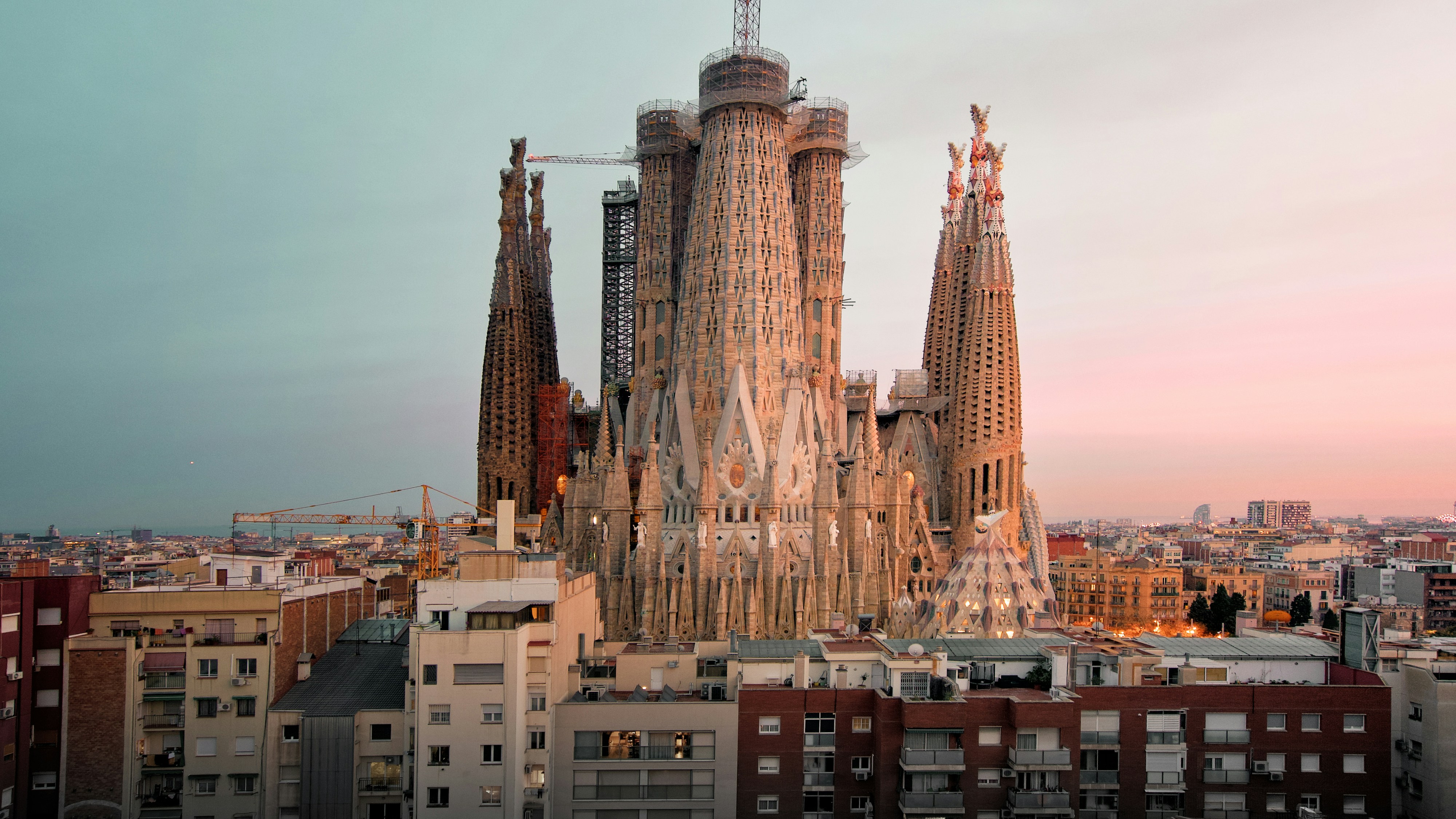
Gaudi's still-unfinished basilica rises in melting, organic stone spires unlike any other building on Earth, over 140 years into construction.
Inside, columns branch like trees to support a ceiling washed in colour from vast stained-glass windows.
The mix of Gothic scale and Art Nouveau strangeness makes both the exterior facades and the interior light equally worth lingering over.
How does it rate
CrowdsRomanceCash RequiredDangerAccessibilityWhy you should go
A cathedral that looks melted rather than built, still under construction after 140+ years.
Why you shouldn't go
Timed-entry tickets sell out days or weeks ahead in peak season - walk-ups are rarely possible.
Plan your visit
Best time to visitYear-round; late afternoon light suits the interior stained glass best.Best time of dayLate afternoon, when sunlight through the west-facing glass floods the interior in colour.Getting thereCentral Barcelona; Sagrada Familia metro station is directly outside.Entry costEntry from around EUR26; tower access costs extra.Time needed1.5-2 hoursBookingBook ahead →Insider tip — Book tickets online at least a week ahead and choose a late-afternoon slot for the best stained-glass light inside. -
 #687 /100
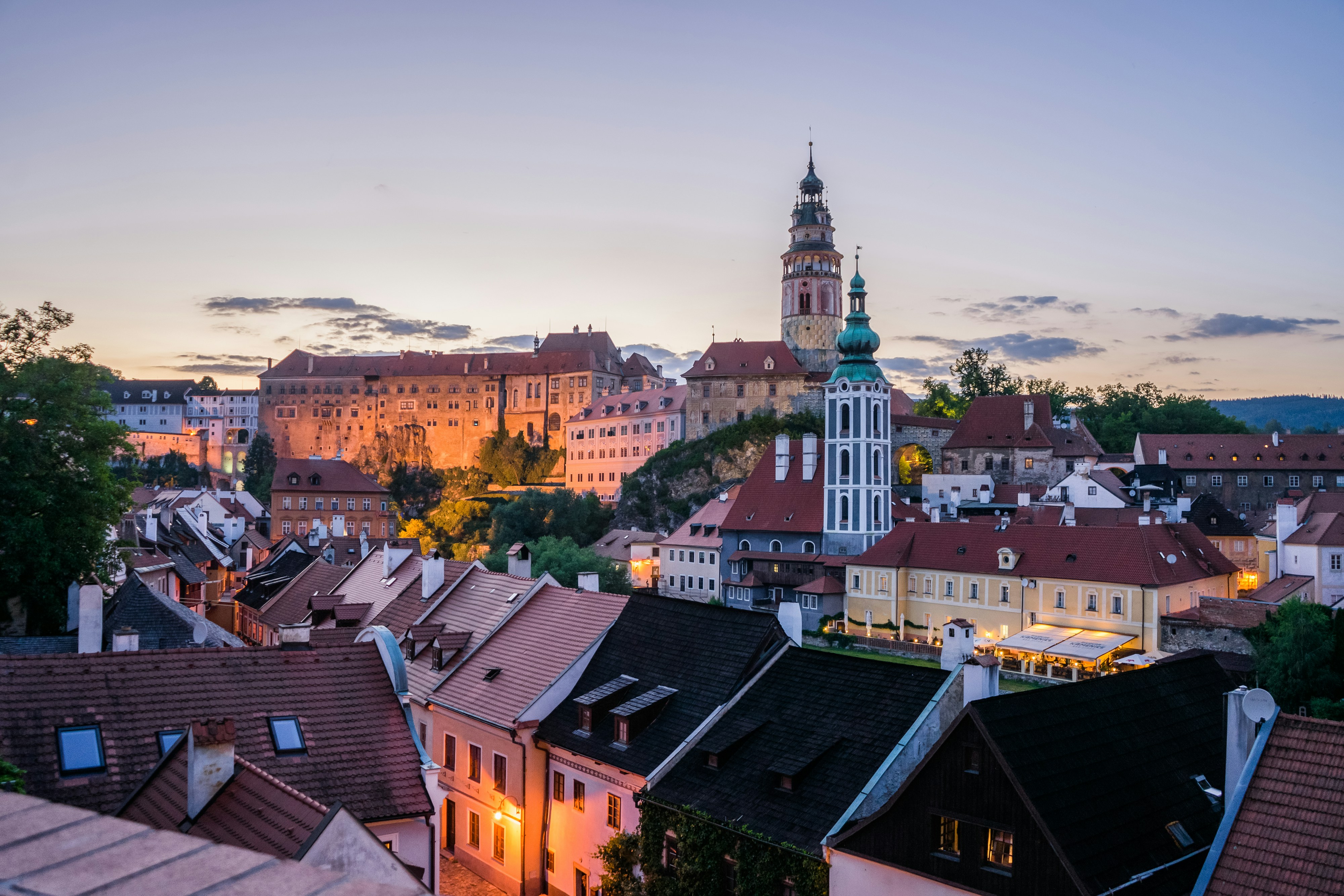
The Vltava River loops almost completely around this medieval town, wrapping its red-roofed old town and Renaissance castle in a natural moat.
A 13th-century castle tower rises above the rooftops, and its viewing gallery gives the single best angle over the whole horseshoe-shaped town below.
Narrow cobbled streets, largely untouched by wartime damage, still follow their original medieval layout.
How does it rate
CrowdsRomanceCash RequiredDangerAccessibilityWhy you should go
A medieval town wrapped almost entirely by a river, seen best from its own castle tower.
Why you shouldn't go
Summer weekends bring heavy day-tripper traffic from nearby Prague and Vienna.
Plan your visit
Best time to visitMay-June or September, for mild weather and thinner crowds than peak summer.Best time of dayEarly morning or after 5pm, once day-trip tour buses have left.Getting thereBus or train from Prague (about 2.5-3 hours).Entry costFree to walk the old town; castle tower entry a few dollars.Time needed1-2 daysBookingBook ahead →Insider tip — Climb the castle tower right at opening time for the classic horseshoe-bend view without other visitors in frame. -
 #786 /100
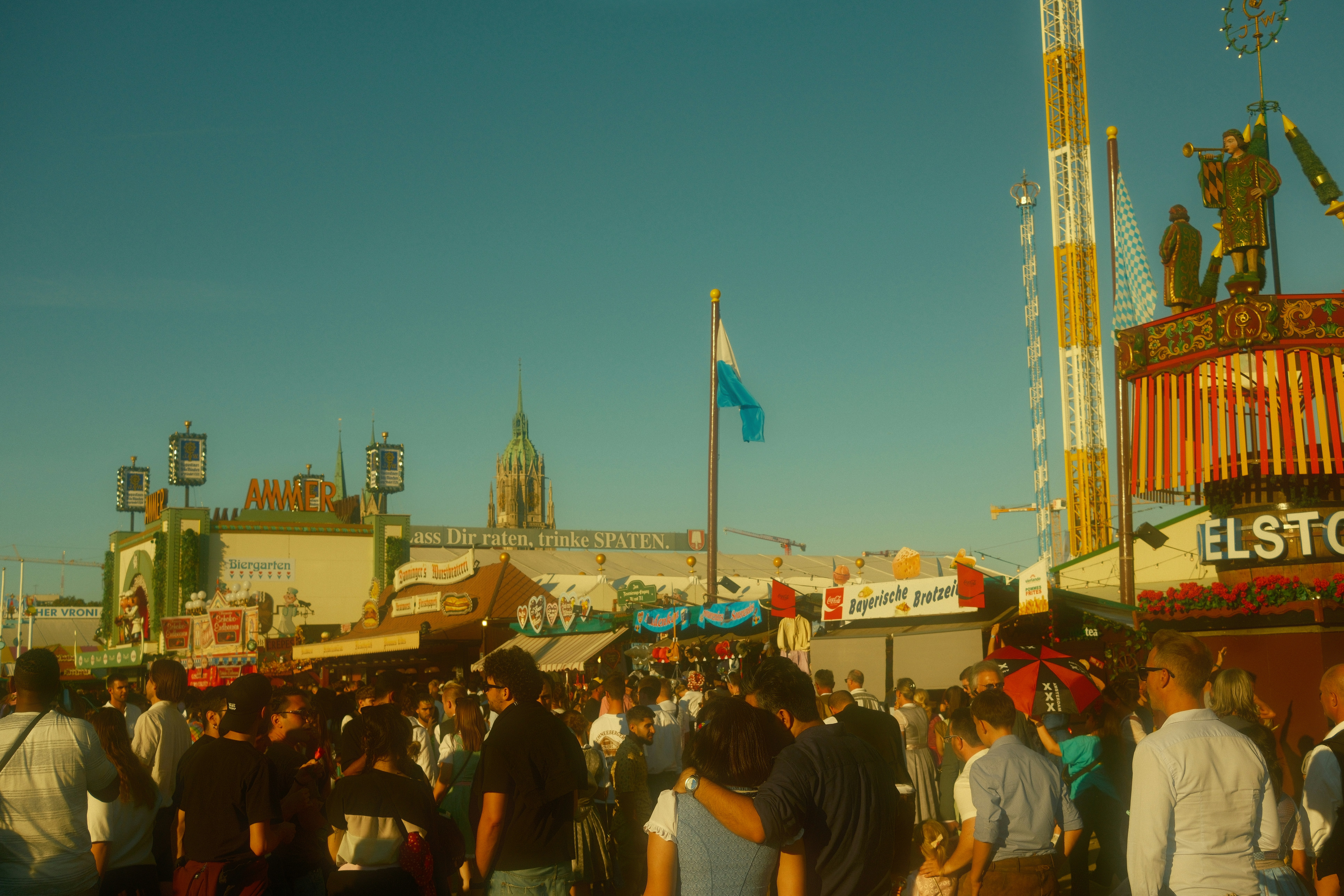
The world's largest beer festival, held on Munich's Theresienwiese since 1810, where tents run by the city's traditional breweries fill each day with brass bands, dirndls and lederhosen, and steins raised in unison.
Beyond the beer it's a proper folk festival, with fairground rides and grounds that hold over 100,000 people at once.
How does it rate
CrowdsRomanceCash RequiredDangerAccessibilityWhy you should go
Sixteen days of Bavarian beer-tent tradition on a fairground scale that has to be seen to be believed.
Why you shouldn't go
Tents fill fast; without a reservation, arriving after mid-morning on weekends often means standing outside.
Plan your visit
Best time to visitLate September to the first Sunday in October, the festival's fixed annual window.Best time of dayA weekday lunchtime, when tents are calmer and tables are easier to find without a booking.Getting thereFly to Munich Airport, then S-Bahn to Hauptbahnhof and a short walk or tram to Theresienwiese.Entry costFree entry to the grounds; a stein of beer runs roughly EUR12-14.Time neededHalf a day, or a full day to properly rotate between tents.BookingBook ahead →Insider tip — Reserve a tent table online months ahead for weekends, or arrive right at the 9am opening on a weekday for a walk-in seat. -
 #8
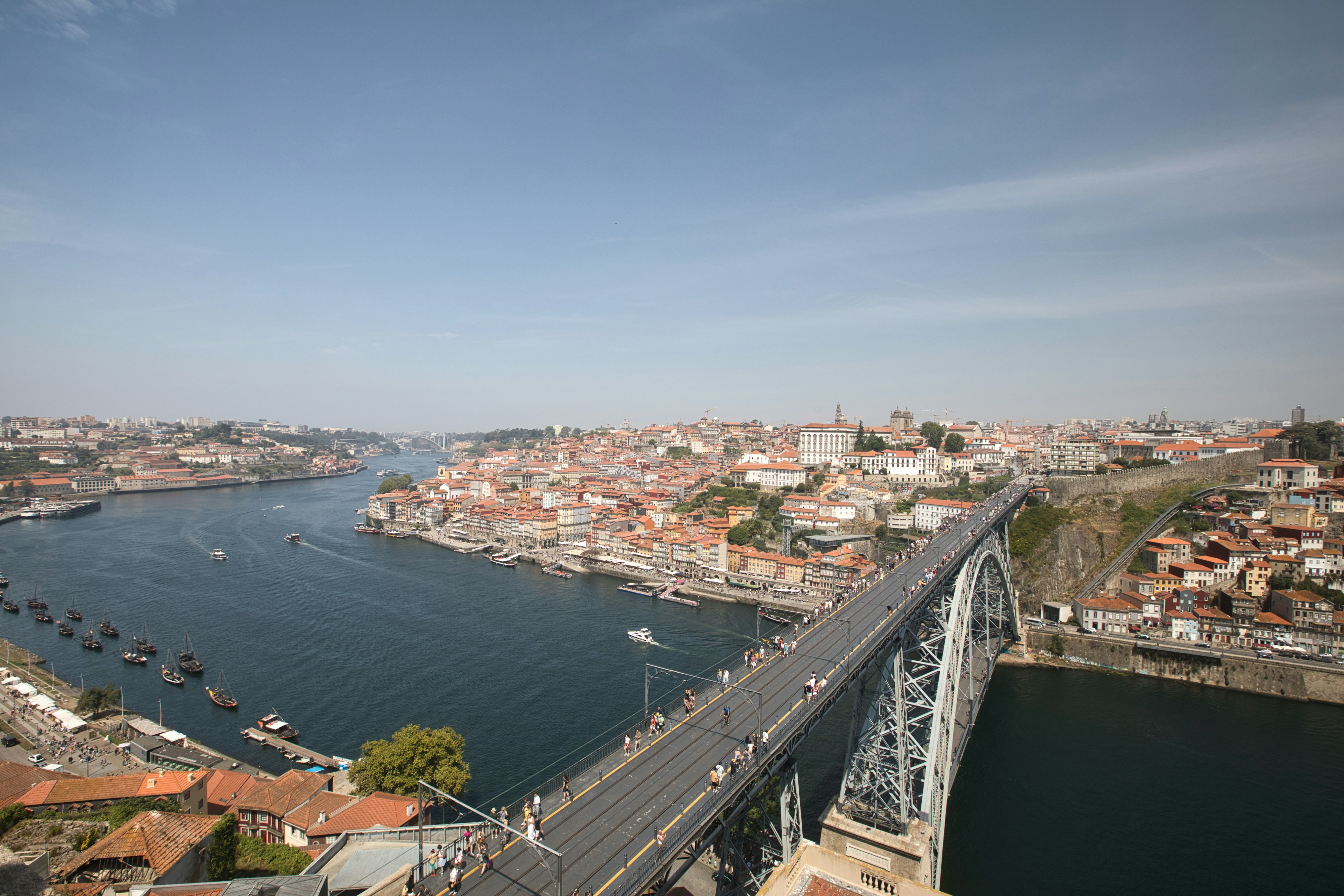
#8Terracotta-roofed houses stack up the steep riverbank of the Douro in Porto's Ribeira district, a tangle of narrow lanes barely changed since medieval times.
The double-decked Dom Luis I Bridge, engineered by a student of Gustave Eiffel, carries a metro line across the top and traffic below.
Port lodges line the far bank at Vila Nova de Gaia, where the wine is still aged, blended and tasted.
How does it rate
CrowdsRomanceCash RequiredDangerAccessibilityWhy you should go
A riverside old town stacked up a hillside, framed by an Eiffel-style double-decked bridge.
Why you shouldn't go
The Ribeira district's steep, narrow streets and stairs aren't an easy walk for anyone with mobility limits.
Plan your visit
Best time to visitMay-June or September, for mild weather and thinner crowds than summer.Best time of dayLate afternoon, when the light hits the Ribeira's terracotta rooftops.Getting thereFly into Porto Airport; the metro reaches the city centre in about 30 minutes.Entry costFree to walk the Ribeira; port wine cellar tours charge separately.Time needed2-3 daysInsider tip — Cross the upper deck of the Dom Luis I Bridge on foot for the best elevated view back over the Ribeira and the river. -
 #9
#9Rated #9 of 53
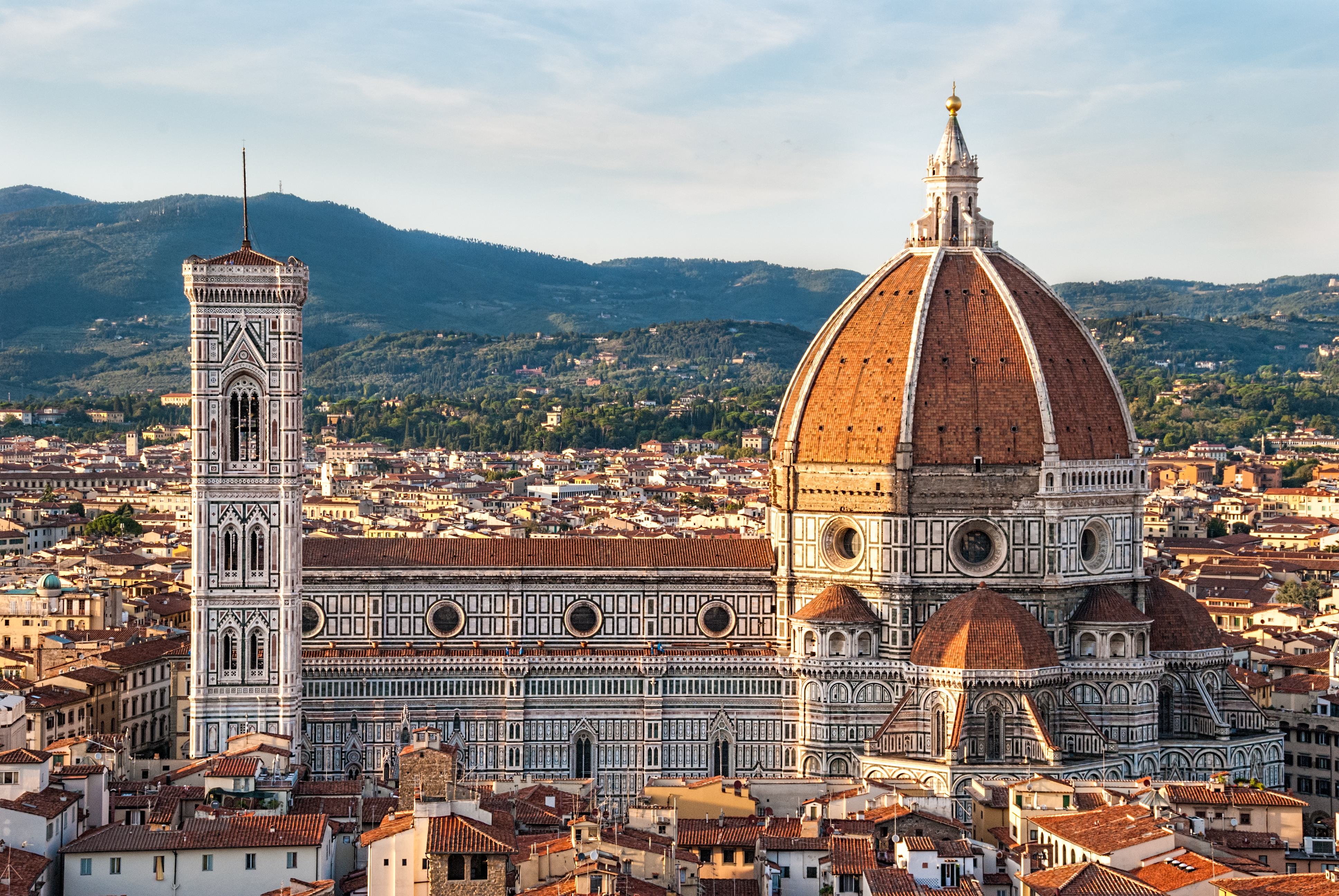
Cathedral of Santa Maria del Fiore, Italy
#cathedralofsantamariadelfiore ◆ Cathedrals85 /100Brunelleschi's magnificent dome crowns Florence's skyline and remains the largest brick dome ever constructed.
Built between 1296 and 1436, the Duomo's terracotta-tiled dome and its ornate campanile have defined the city's silhouette for nearly 600 years.
How does it rate
CrowdsRomanceCash RequiredDangerAccessibilityWhy you should go
Climbing the 463 steps to the top of Brunelleschi's dome rewards you with one of Europe's most spectacular 360-degree city panoramas.
Why you shouldn't go
Timed entry tickets for the dome must be booked weeks in advance during busy periods, and the climb is not suitable for those with claustrophobia.
Plan your visit
Best time to visitSpring or autumnBest time of daySunset for the dome lit upGetting thereCentral Florence, walkable from most hotelsEntry costDome climb ~EUR30 (combo ticket)Time needed1-2 hoursInsider tip — Climb the dome itself, not just the bell tower, for a view that includes the dome -
 #10
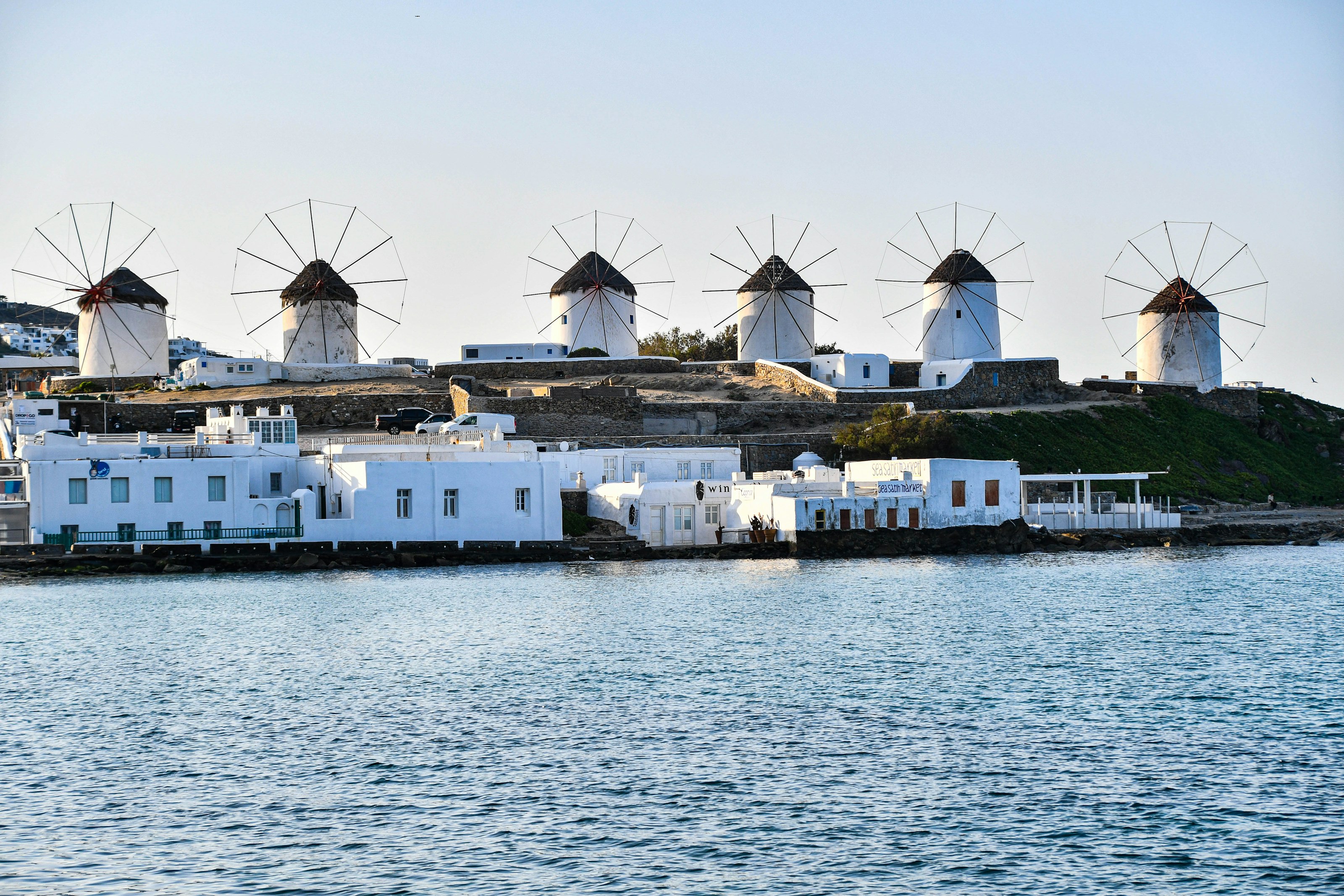
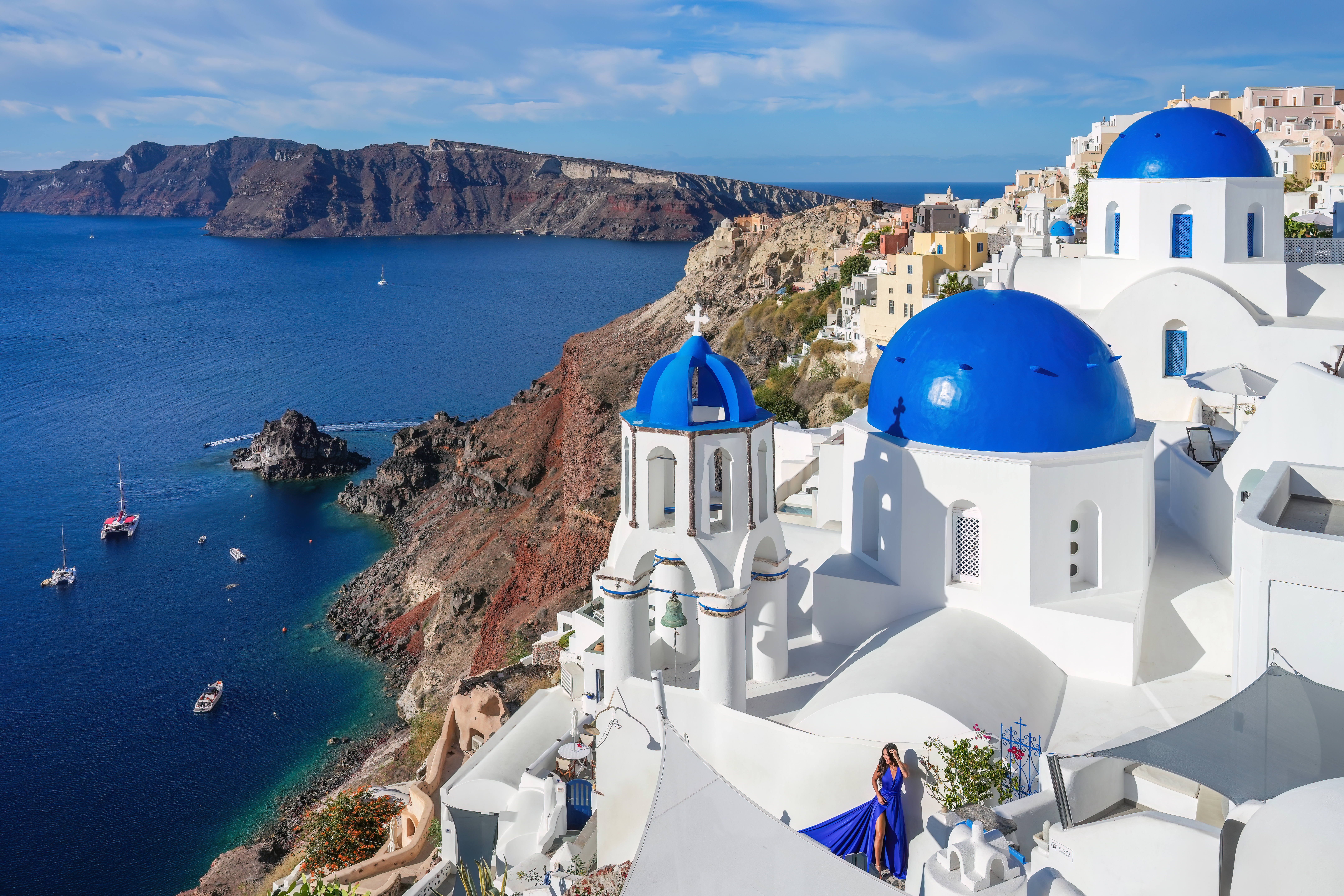
#10Mykonos built its reputation on whitewashed alleys, the row of windmills overlooking the harbour, and a nightlife scene that runs from beach clubs by day to bars in Chora by night.
Little Venice's balconied houses sit almost in the water, and beaches like Paradise and Psarou draw a see-and-be-seen crowd through the summer.
Away from the party scene, quieter coves and Cycladic villages inland offer a calmer version of the same island.
How does it rate
CrowdsRomanceCash RequiredDangerAccessibilityWhy you should go
The combination of postcard Cycladic architecture and genuinely lively nightlife makes Mykonos unlike any other Greek island.
Why you shouldn't go
Prices and crowds both spike hard in July and August, and the party reputation isn't for everyone.
Plan your visit
Best time to visitLate May–June or September for good weather without peak-season crowds and prices.Best time of daySunset over the windmills in Little Venice; night for the bar and club scene.Getting thereFly direct to Mykonos, or take a 2.5–5-hour ferry from Athens' Piraeus port.Entry costFree to walk the town and beaches; beach club sunbeds and nightlife are expensive.Time needed2–3 daysInsider tip — Stay in Chora but head to a quieter northern beach like Fokos for swimming — the crowds cluster almost entirely on the south coast. -
 #1185 /100
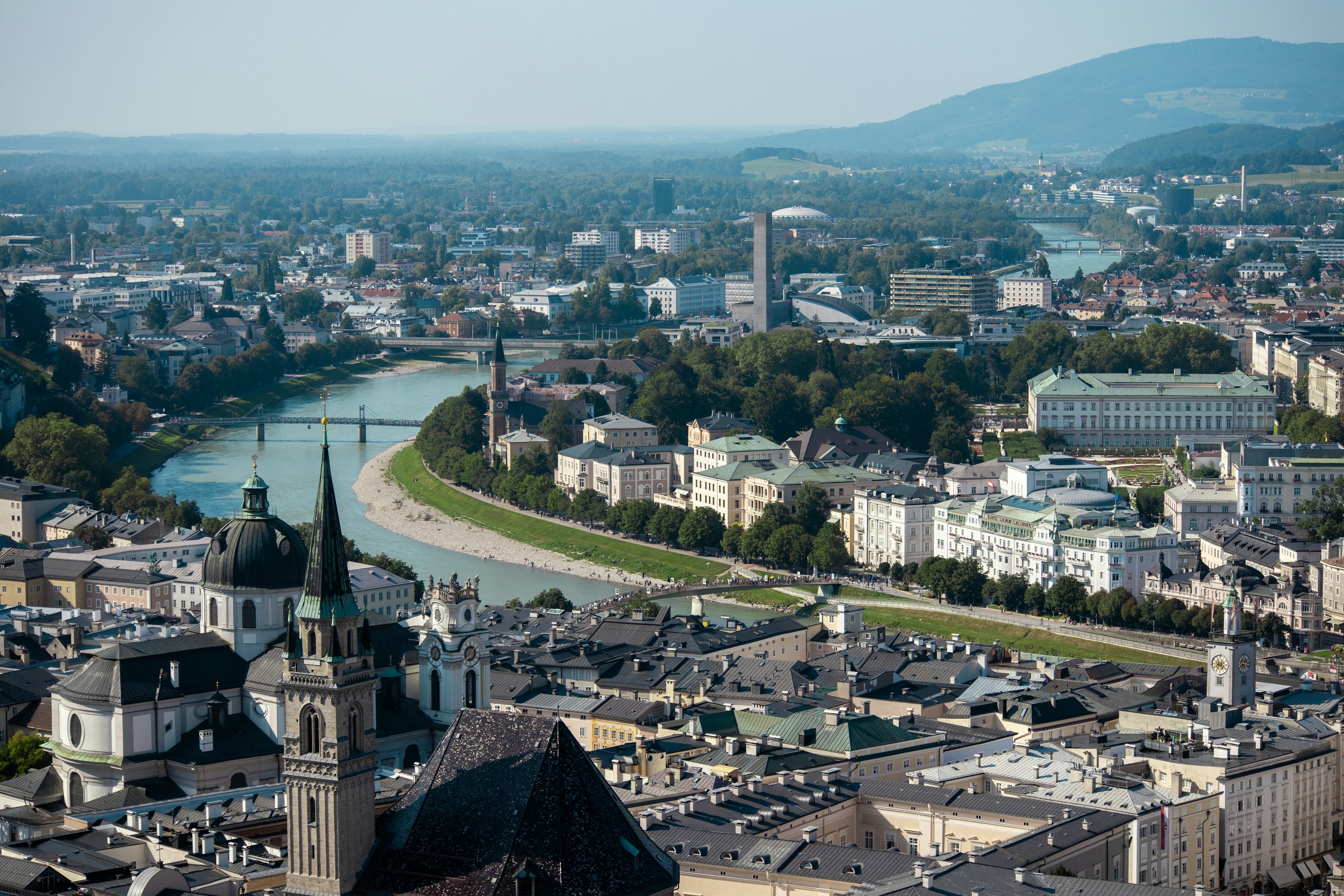
Salzburg's baroque old town sits below a hilltop fortress on the banks of the Salzach River, its narrow lanes lined with Mozart's birthplace, elaborate church facades, and the gardens used as filming locations for The Sound of Music.
The Hohensalzburg Fortress, one of Europe's largest surviving medieval castles, looms over the skyline and is reachable by funicular, and music runs through the city year-round.
How does it rate
CrowdsRomanceCash RequiredDangerAccessibilityWhy you should go
Walking streets that are simultaneously Mozart's birthplace and The Sound of Music's setting, under a medieval fortress, is a rare combination.
Why you shouldn't go
Sound of Music tour groups and summer festival crowds pack the old town's narrow streets in peak season.
Plan your visit
Best time to visitMay–June or September for mild weather; late July–August for the Salzburg Festival.Best time of dayEarly morning for quiet streets, or evening for a concert.Getting thereFly into Salzburg Airport, 20 minutes from the old town, or take a 2.5-hour train from Vienna.Entry costFree to walk the old town; Hohensalzburg Fortress and Mozart's birthplace charge entry.Time needed1–2 daysInsider tip — Take the funicular up to Hohensalzburg Fortress late in the day — the crowds thin out and the views over the old town at golden hour are the best of the day. -
 #1285 /100
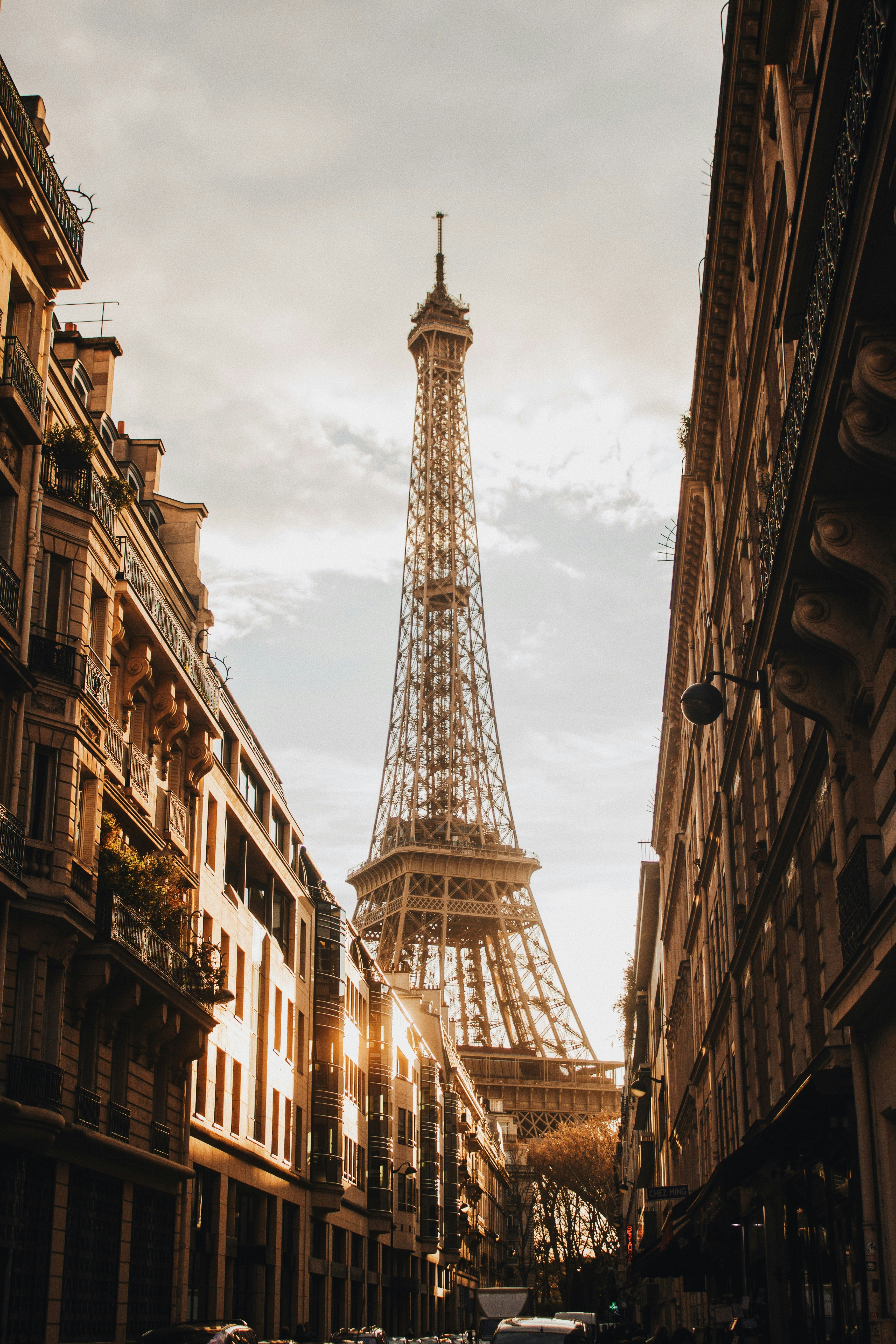
Built for the 1889 World's Fair and nearly dismantled twenty years later, the Eiffel Tower is 330 metres of exposed wrought iron that Parisians initially loathed and now cannot imagine the skyline without.
Lifts and stairs reach two public floors of restaurants and terraces, plus a summit platform with views across the whole city.
After dark, 20,000 bulbs make it sparkle for five minutes on the hour until 1am.
How does it rate
CrowdsRomanceCash RequiredDangerAccessibilityWhy you should go
The Eiffel Tower offers stunning panoramic views of Paris, is a symbol of romance, and is surrounded by charming streets and sights, making it a once-in-a-lifetime experience.
Why you shouldn't go
The area can be extremely crowded, especially during peak tourist seasons, and long lines for tickets and elevator access can detract from the experience.
Plan your visit
Best time to visitApril-June or September-OctoberBest time of daySunrise or blue hour for fewer crowdsGetting thereBir-Hakeim or Trocadero MetroEntry cost~EUR28 to the top; free to view from outsideTime needed2-3 hoursInsider tip — Trocadero across the river gives the best full-tower shot -
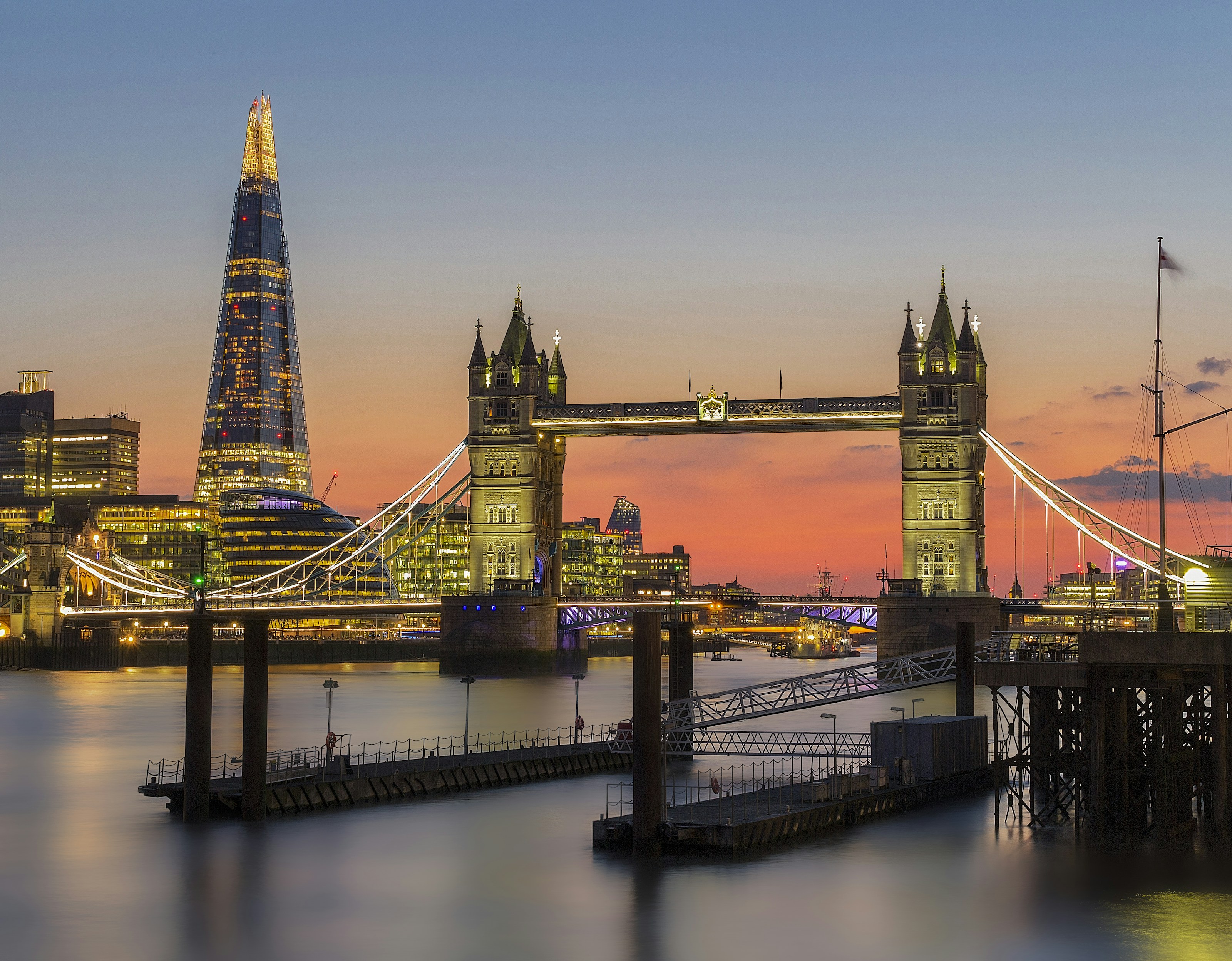 #1385 /100
London's most recognisable river crossing, a pair of neo-Gothic towers linked by a pale blue lattice and a glass-floored high walkway.
The bascules still lift around 800 times a year for tall ships, and the best views come from the south bank looking north.
Inside, the Victorian engine rooms hold the original steam machinery that raised the road.
How does it rate
CrowdsRomanceCash RequiredDangerAccessibilityWhy you should go
One of the few world-famous bridges you can walk across for free and still climb inside.
Why you shouldn't go
The riverside walkways are permanently crowded and the glass floor draws its own queue.
Plan your visit
Best time to visitApril-June or September for long light and thinner crowds than midsummerBest time of daySunset from the south bank, or before 9am for an empty deckGetting thereTube to Tower Hill or London Bridge, then a five-minute walk to either endEntry costFree to cross; Tower Bridge Exhibition around GBP 13.40Time needed1-2 hoursBookingBook ahead →Insider tip — Check the published lift times on the official site, then stand on the north-east corner - you get the raised bascules with the Shard behind them. -
 #14
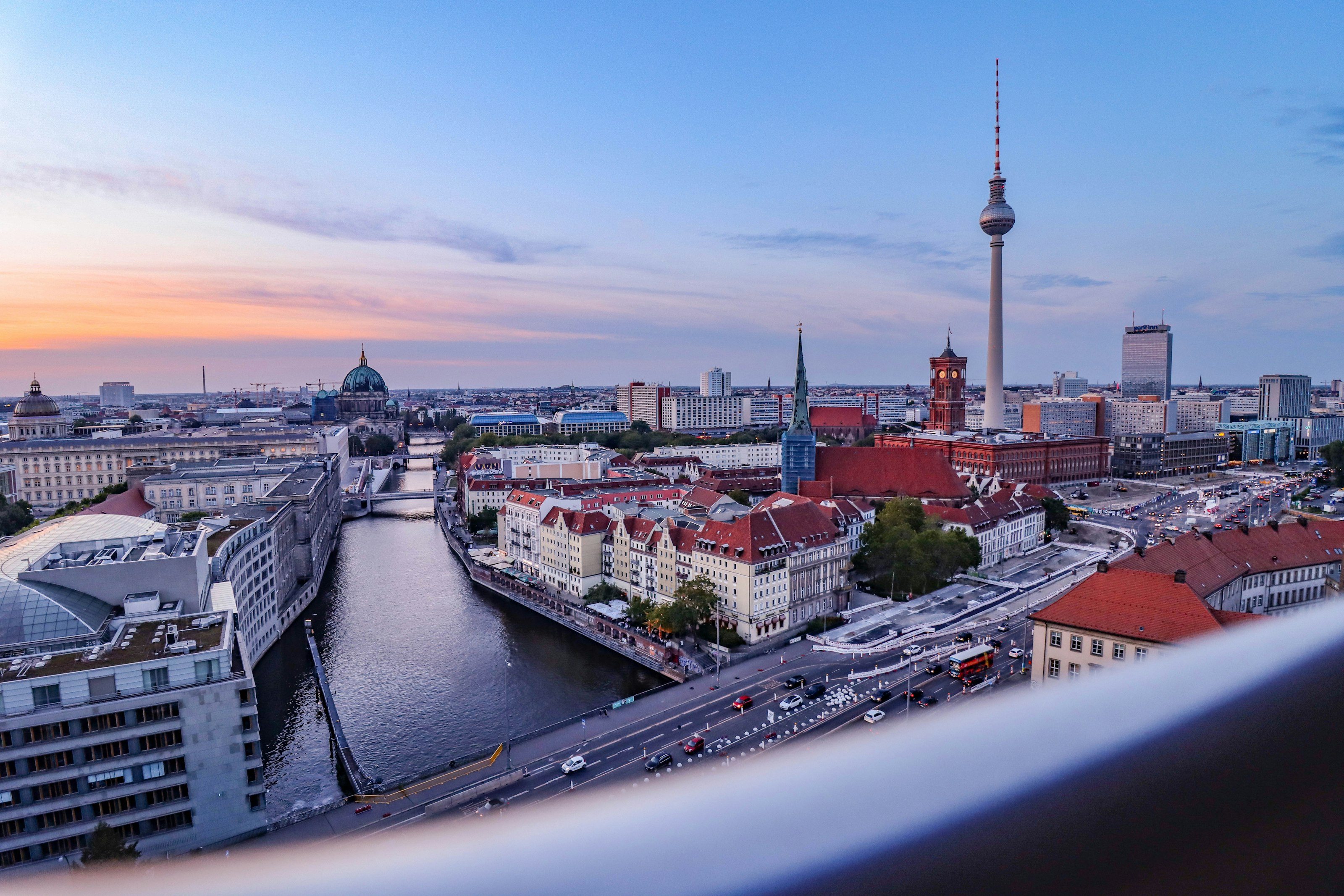
#14Berlin carries its twentieth-century history openly — the Brandenburg Gate, the remaining stretch of Wall at the East Side Gallery, and the glass dome of the Reichstag sit alongside a city that has rebuilt itself into one of Europe's most creative capitals.
Museum Island holds five major museums on a single stretch of the Spree, while neighbourhoods like Kreuzberg run a nightlife and food scene that runs well past midnight.
How does it rate
CrowdsRomanceCash RequiredDangerAccessibilityWhy you should go
Few capitals let you trace a wall that divided a city within living memory, then eat and dance in neighbourhoods that grew up on both sides of it.
Why you shouldn't go
The city is spread out, and its best neighbourhoods take real time on the U-Bahn to properly get to know.
Plan your visit
Best time to visitMay–September for long daylight hours and outdoor beer gardens.Best time of dayDaytime for the historical sites; nightfall for the neighbourhoods east of the centre.Getting thereFly into Berlin Brandenburg Airport (BER); the city centre is a 30-minute train ride away.Entry costFree to walk the main sights; museums and the Reichstag dome (advance booking) charge entry.Time needed3+ daysInsider tip — Book the free Reichstag dome visit online well ahead — same-day slots fill up fast in summer. -
 #15
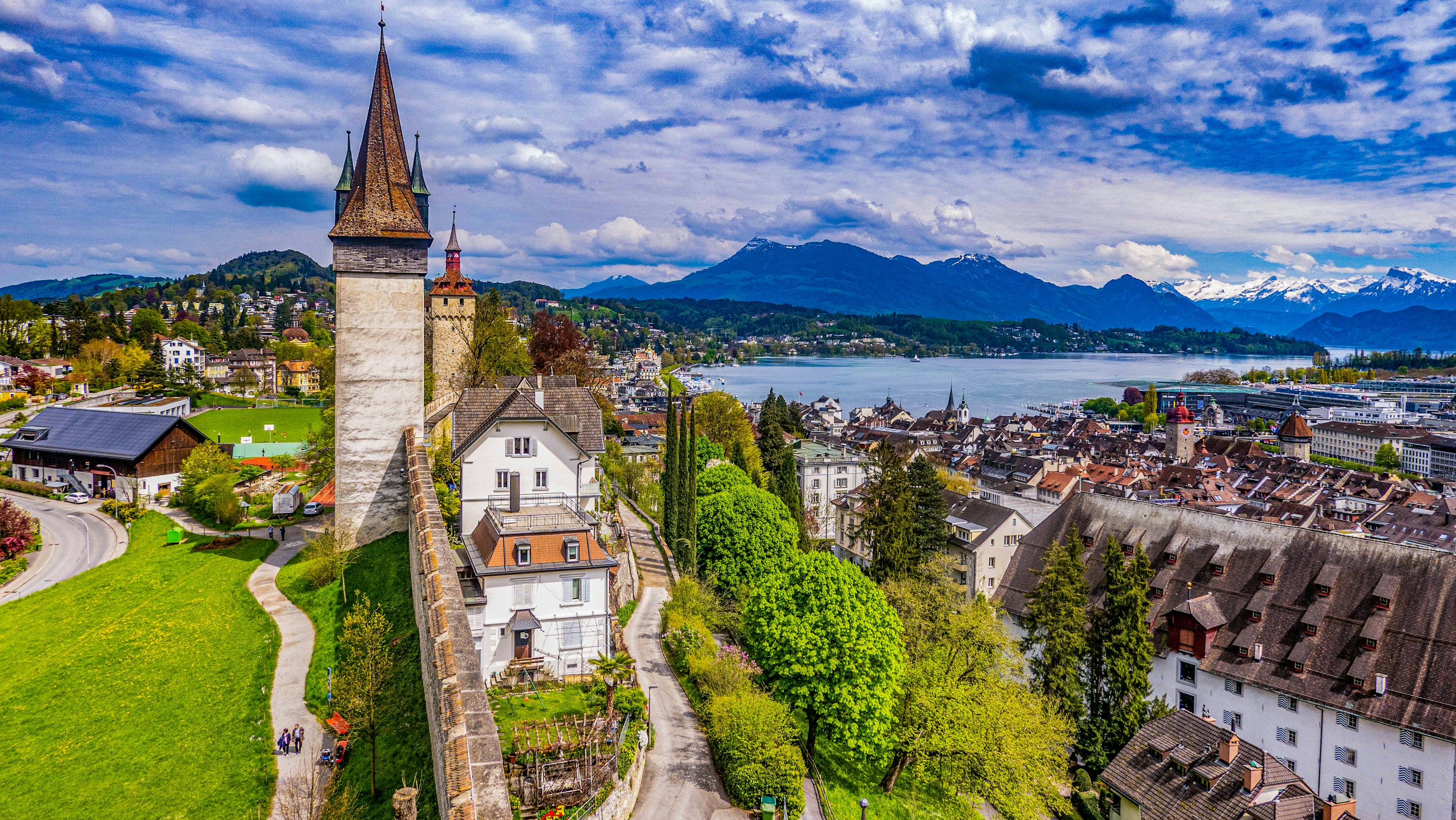
#15A compact old town of frescoed buildings wraps around the Reuss River where it leaves Lake Lucerne, crossed by the wooden, gabled Chapel Bridge that has linked both banks since the 14th century.
Mount Pilatus and Mount Rigi rise directly behind the rooftops, reachable by cogwheel train, cable car, or lake steamer, making Lucerne as much a gateway to the mountains as a destination of its own.
How does it rate
CrowdsRomanceCash RequiredDangerAccessibilityWhy you should go
City, lake, and mountains genuinely converge here — few Swiss towns pack this much into a walkable old town.
Why you shouldn't go
It's one of Switzerland's most visited towns, and the old town and Chapel Bridge get uncomfortably packed by midday in summer.
Plan your visit
Best time to visitMay–September for lake steamers and mountain excursions to run their full schedules.Best time of dayEarly morning around the Chapel Bridge and old town, before day-trippers arrive from Zurich.Getting thereDirect train from Zurich Airport (about 1 hour 10 minutes) or from Zurich, Basel, or Geneva.Entry costFree to explore the old town; Pilatus and Rigi excursions are separately ticketed.Time needed1–2 daysInsider tip — Climb the covered Musegg Wall for free views over the old town's rooftops — most visitors never make it up there. -
 #1683 /100
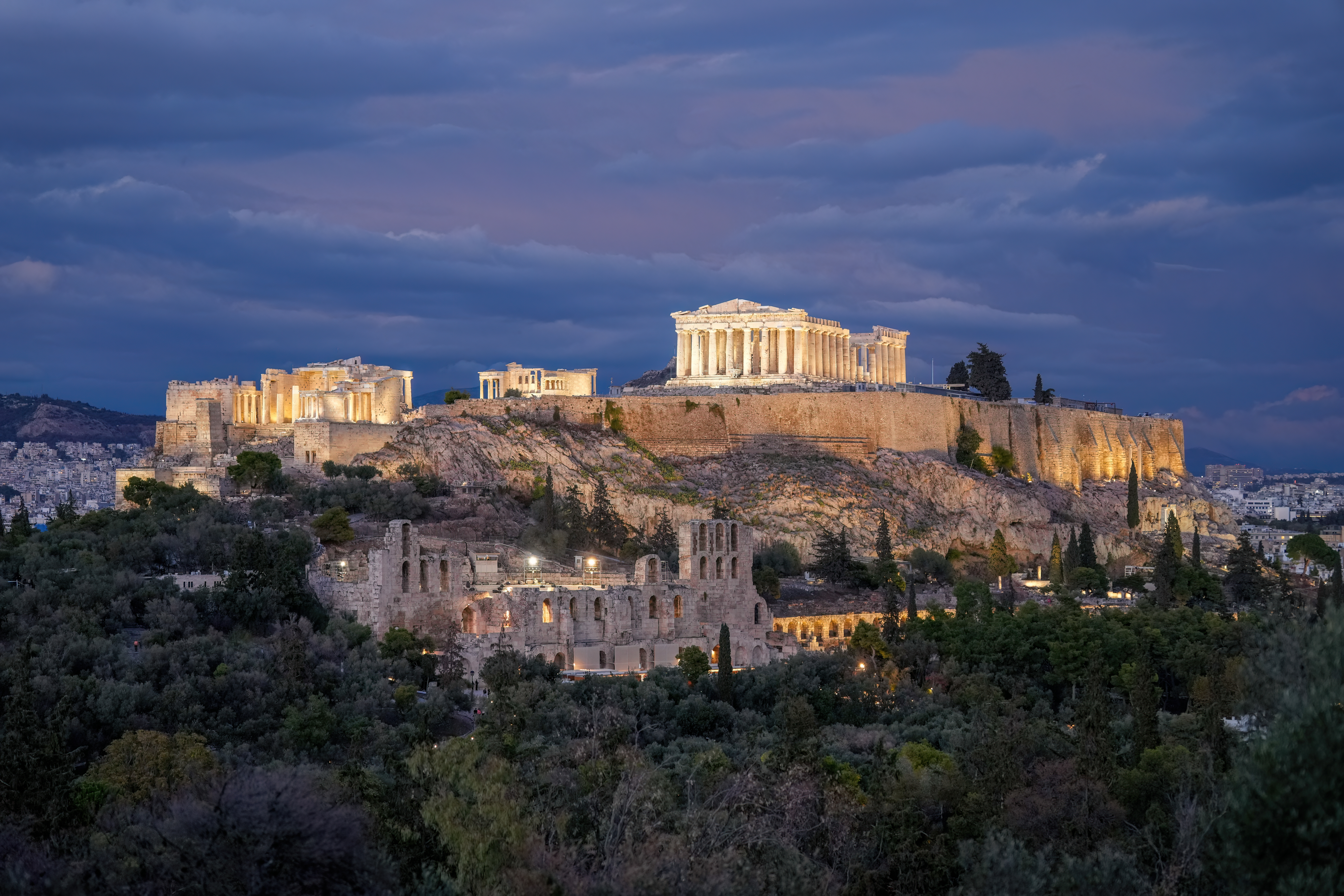
The Acropolis of Athens is a flat-topped hill rising 150 metres above the city, crowned by the Parthenon — the greatest surviving monument of ancient Greek civilisation.
Built under the direction of Pericles between 447 and 432 BC, the marble temple dedicated to the goddess Athena has stood as a symbol of democracy and Western culture for 2,500 years.
How does it rate
CrowdsRomanceCash RequiredDangerAccessibilityWhy you should go
Standing on the Acropolis and surveying the city of Athens below while the Parthenon's columns rise behind you is a profound encounter with the roots of Western civilisation.
Why you shouldn't go
The Acropolis is extremely crowded year-round, the marble surfaces are slippery, and summer temperatures at the exposed summit are intense; arrive early.
Plan your visit
Best time to visitSpring or autumnBest time of dayEarly morning entry (opens 8am) to beat both heat and crowdsGetting thereAcropoli Metro stationEntry cost~EUR20Time needed2-3 hoursInsider tip — Philopappos Hill opposite the Acropolis gives the best classic photo of the whole site -
 #1783 /100
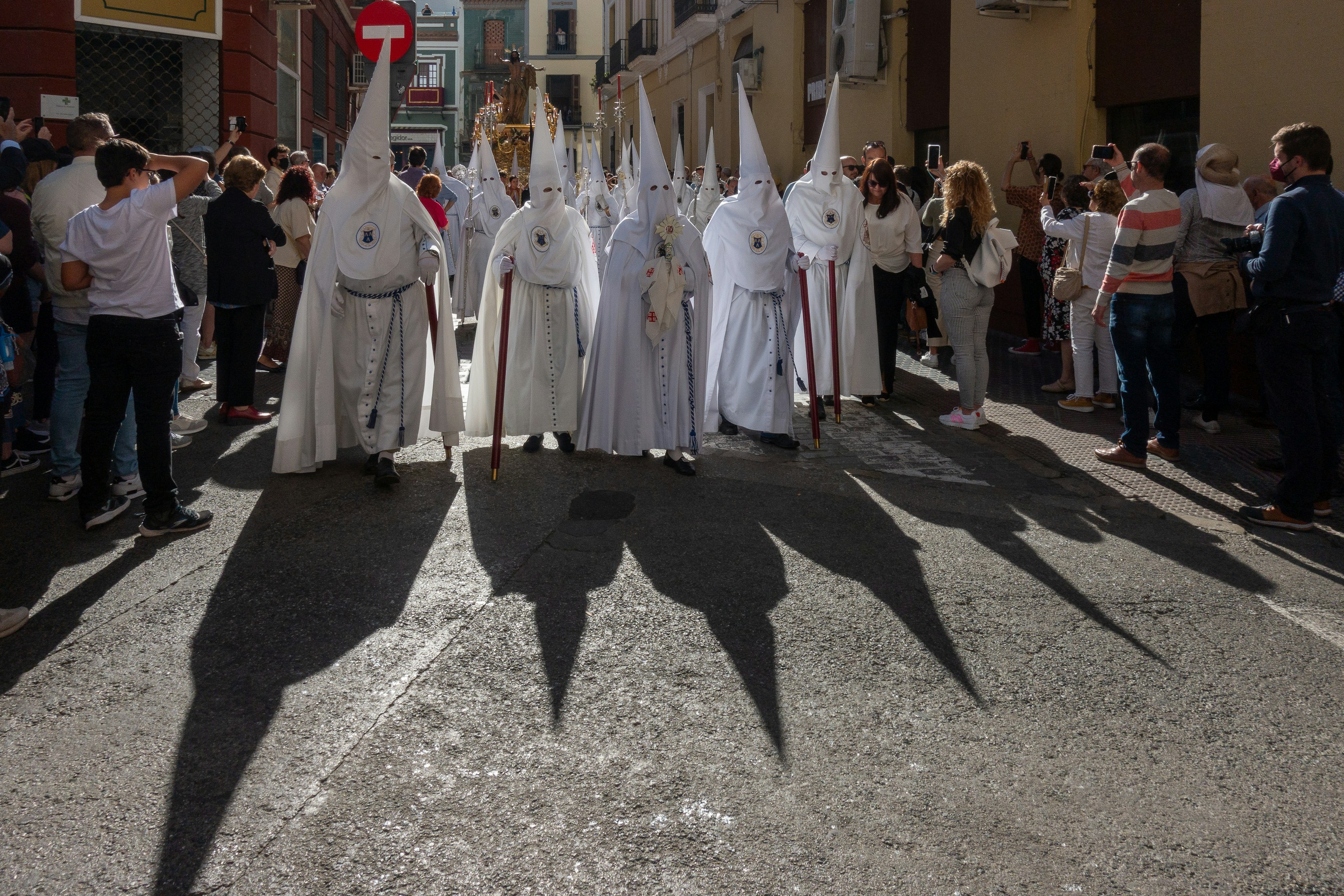
For a week before Easter, Seville's centuries-old religious brotherhoods carry ornate wooden floats bearing statues of Christ and the Virgin Mary through the streets on the shoulders of hidden bearers, accompanied by hooded penitents and mournful saeta singing.
Balconies fill and cafes stay open past midnight as processions cross the city continuously, culminating in the sleepless Madrugada from Maundy Thursday into Good Friday.
How does it rate
CrowdsRomanceCash RequiredDangerAccessibilityWhy you should go
Centuries-old brotherhoods carry ornate floats of Christ and the Virgin through Seville's streets for a week before Easter.
Why you shouldn't go
Hotels and flights sell out and prices spike across Andalusia during the week.
Plan your visit
Best time to visitThe week before Easter Sunday; dates shift with the church calendar each year.Best time of dayLate night into the small hours of Good Friday, for the Madrugada processions.Getting thereFly into Seville Airport, about 15 minutes from the historic centre where processions run.Entry costFree to watch from the street; paid grandstand seating is available along the route.Time neededOne evening captures a procession; the full week runs continuously.Insider tip — Watch from a side street near the cathedral rather than the main official route - the crowds are thinner and the floats pass just as close. -
 #18
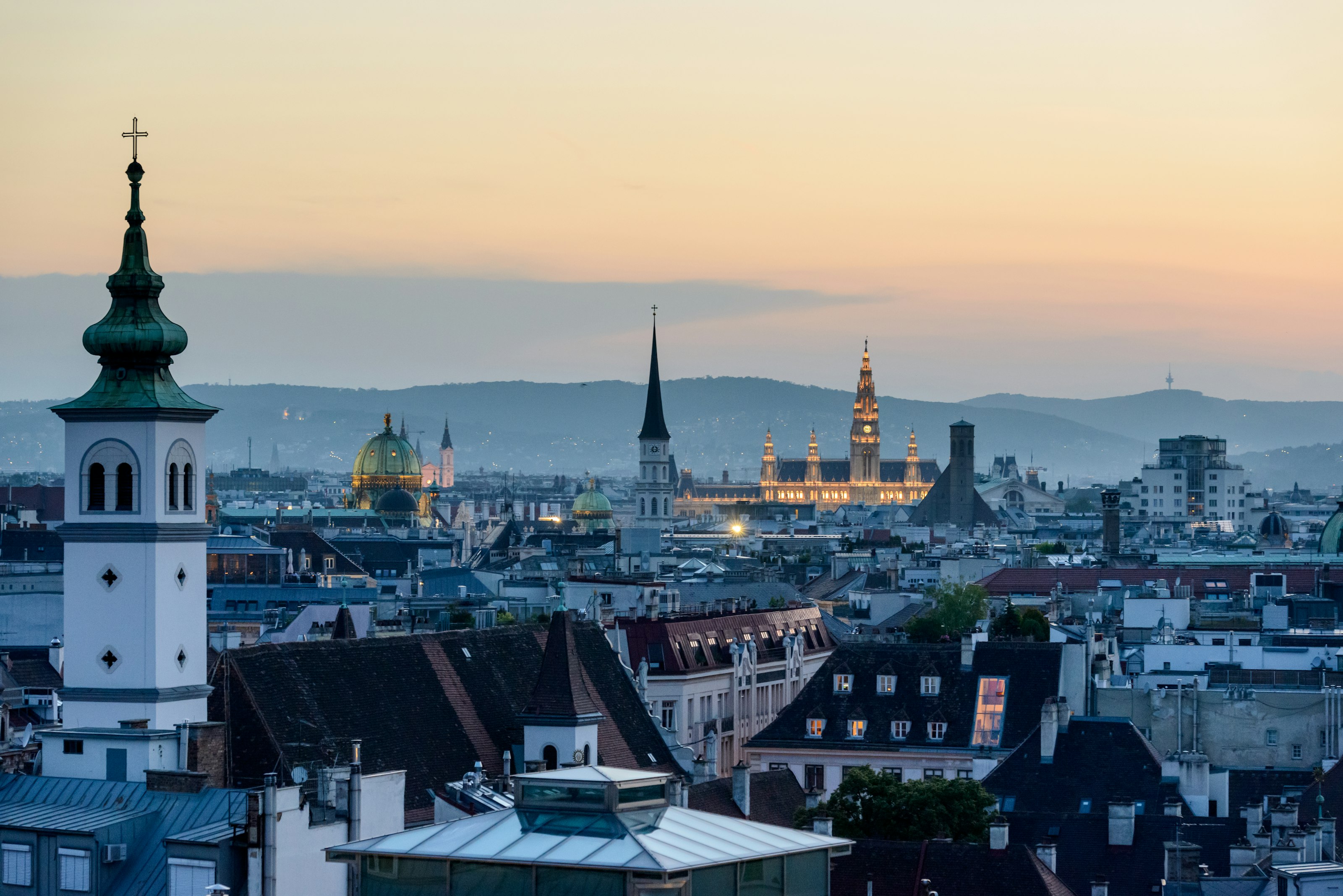
#18Vienna spent centuries as the seat of the Habsburg Empire, and the grandeur shows — the Ringstrasse boulevard circles an old town of imperial palaces, opera houses, and coffee houses that have hosted composers and philosophers for 300 years.
The Hofburg and Schönbrunn palaces anchor the city's imperial history, while the Naschmarkt and Prater park show its more everyday side.
How does it rate
CrowdsRomanceCash RequiredDangerAccessibilityWhy you should go
Few cities pack this much imperial architecture, classical music, and coffee-house culture into a walkable centre.
Why you shouldn't go
Formal sights like the opera and palaces come with real dress and booking expectations, and the city can feel stiff compared to livelier European capitals.
Plan your visit
Best time to visitApril–June or September–October for mild weather and a full concert season.Best time of dayDaytime for the palaces and museums; evening for opera, concerts, and coffee houses.Getting thereFly into Vienna International Airport; the City Airport Train reaches the centre in 16 minutes.Entry costFree to walk the centre; museums, palaces, and performances charge separate entry.Time needed2–3 daysInsider tip — Standing-room opera tickets at the Staatsoper go on sale shortly before each performance and cost a fraction of seated ones — a genuine bargain for world-class opera. -
 #19
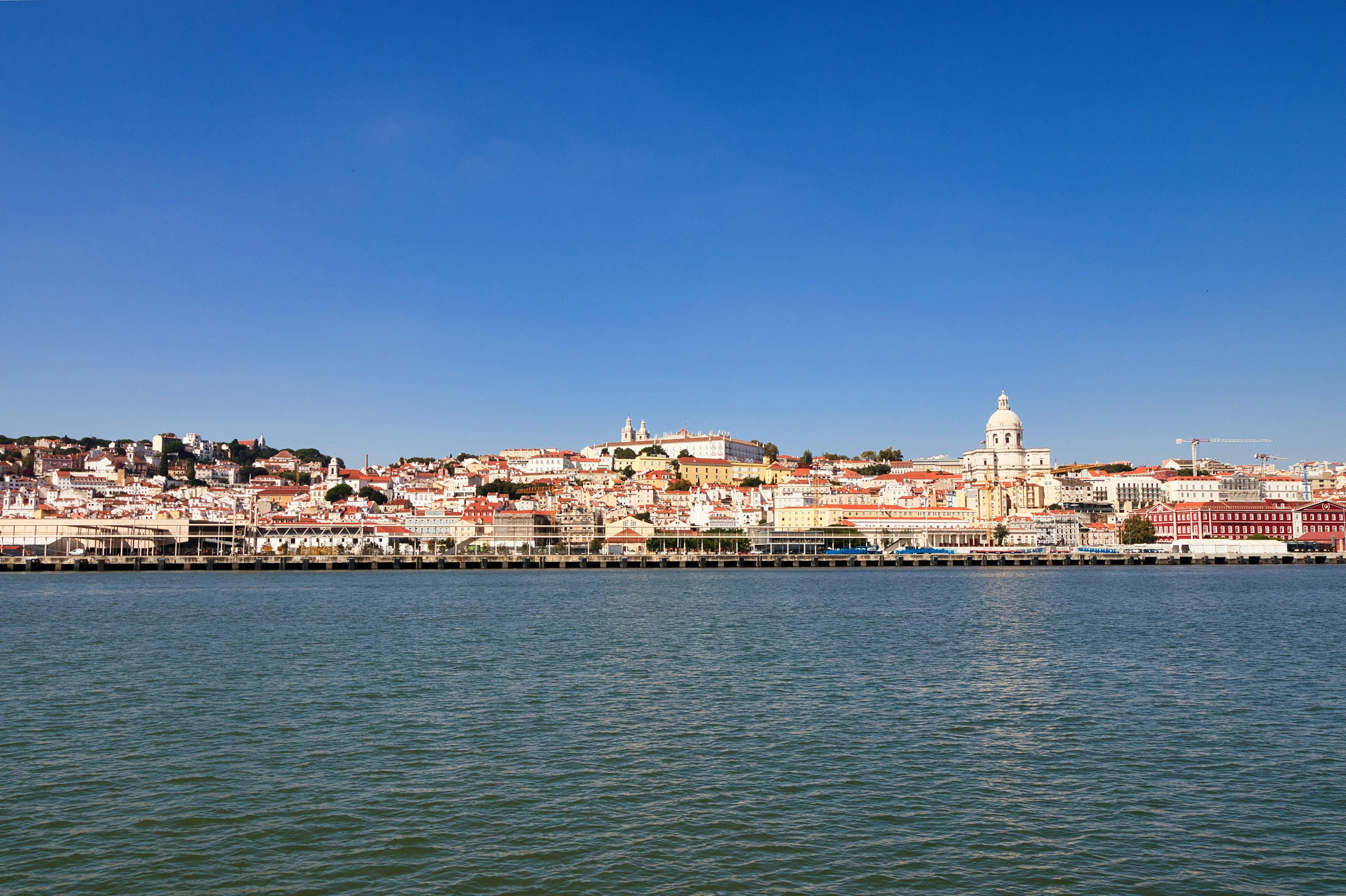
#19Portugal's hilly capital rises above the Tagus estuary in tiers of pastel façades, azulejo tilework, and rattling yellow trams.
Alfama's medieval lanes climb past fado bars toward São Jorge Castle, while Belém's monuments trace the Age of Discoveries and the modern LX Factory anchors a livelier scene.
It rewards slow wandering more than a fixed itinerary, with river-view miradouros around every third corner.
How does it rate
CrowdsRomanceCash RequiredDangerAccessibilityWhy you should go
Centuries of maritime history, food, and river views packed into a walkable, still-affordable European capital.
Why you shouldn't go
The seven hills mean constant climbing, and Tram 28 and Alfama's alleys are uncomfortably crowded by mid-morning.
Plan your visit
Best time to visitMarch–May or September–October for mild weather and thinner crowds than midsummer.Best time of dayEarly morning at the miradouros and Alfama, before tour groups and midday heat arrive.Getting thereFly into Lisbon Airport (LIS), a few minutes from downtown by metro, taxi, or ride-hail.Entry costFree to walk the city; individual sights charge roughly €6–€15 entry.Time needed2–3 daysInsider tip — Ride Tram 28 right at opening or skip it and walk its route instead — by mid-morning it's standing-room-only and a known pickpocket spot. -
 #2083 /100
Bryggen is the old Hanseatic wharf on Bergen's harbour, a row of narrow, brightly painted wooden warehouses rebuilt after fires since the 14th century and listed by UNESCO since 1979.
The buildings now hold workshops, galleries and restaurants behind their tilted timber frames, and the wharf sits at the centre of a lively harbour city ringed by seven mountains.
Compact enough to explore in an hour, longer with the Hanseatic Museum.
How does it rate
CrowdsRomanceCash RequiredDangerAccessibilityWhy you should go
Six centuries of Hanseatic trading history packed into one unmistakably colourful waterfront row.
Why you shouldn't go
Small area that gets swamped when a cruise ship is in port; some interiors visibly lean with age.
Plan your visit
Best time to visitMay-September for daylight and open museums; September brings milder crowds than midsummer.Best time of dayEarly morning or after 5pm, once tour groups from the cruise terminal have thinned out.Getting thereFly to Bergen Airport Flesland; a 30-minute bus or taxi into the city centre, then walk to the harbour.Entry costFree to walk; Hanseatic Museum and Schøtstuene charge separate entry.Time needed1-2 hours, half a day with museumsInsider tip — Walk through to the narrow passageways between the front-row buildings - the tilted floors and old pulleys are more interesting than the harbour-facing facades everyone photographs from the quay. -
 #21
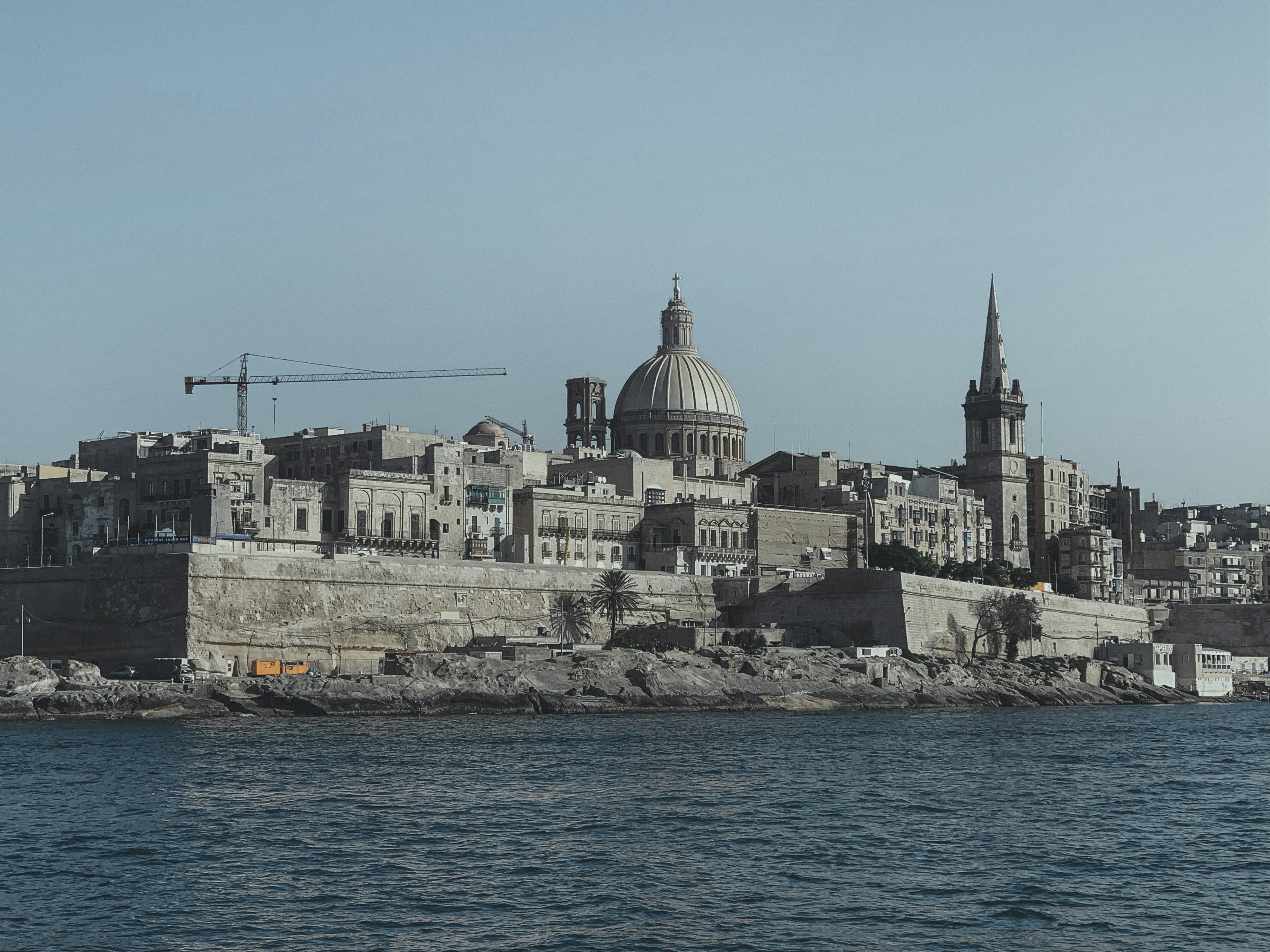
#21Golden limestone fortifications ring this entire harbour city, built by the Knights of St John in the 16th century to withstand a siege that never came again.
Baroque church domes and balconied townhouses in faded pastel line streets laid out on a strict grid, unusual for a city of its age.
The Upper Barrakka Gardens offer a sweeping view over the Grand Harbour, with warships once anchored where cruise liners now dock.
How does it rate
CrowdsRomanceCash RequiredDangerAccessibilityWhy you should go
An entire fortified city built from golden limestone, ringed by harbour views on three sides.
Why you shouldn't go
The streets are famously steep, stepped in places, and hard going in summer heat.
Plan your visit
Best time to visitApril-June or September-October, avoiding peak summer heat.Best time of dayLate afternoon, when the limestone fortifications glow gold in the light.Getting thereFly into Malta International Airport; buses reach Valletta in about 20-30 minutes.Entry costFree to walk the city; St John's Co-Cathedral and museums charge entry.Time needed1-2 daysInsider tip — Time a visit to the Upper Barrakka Gardens for noon or 4pm, when the Saluting Battery below fires its daily cannon. -
 #22
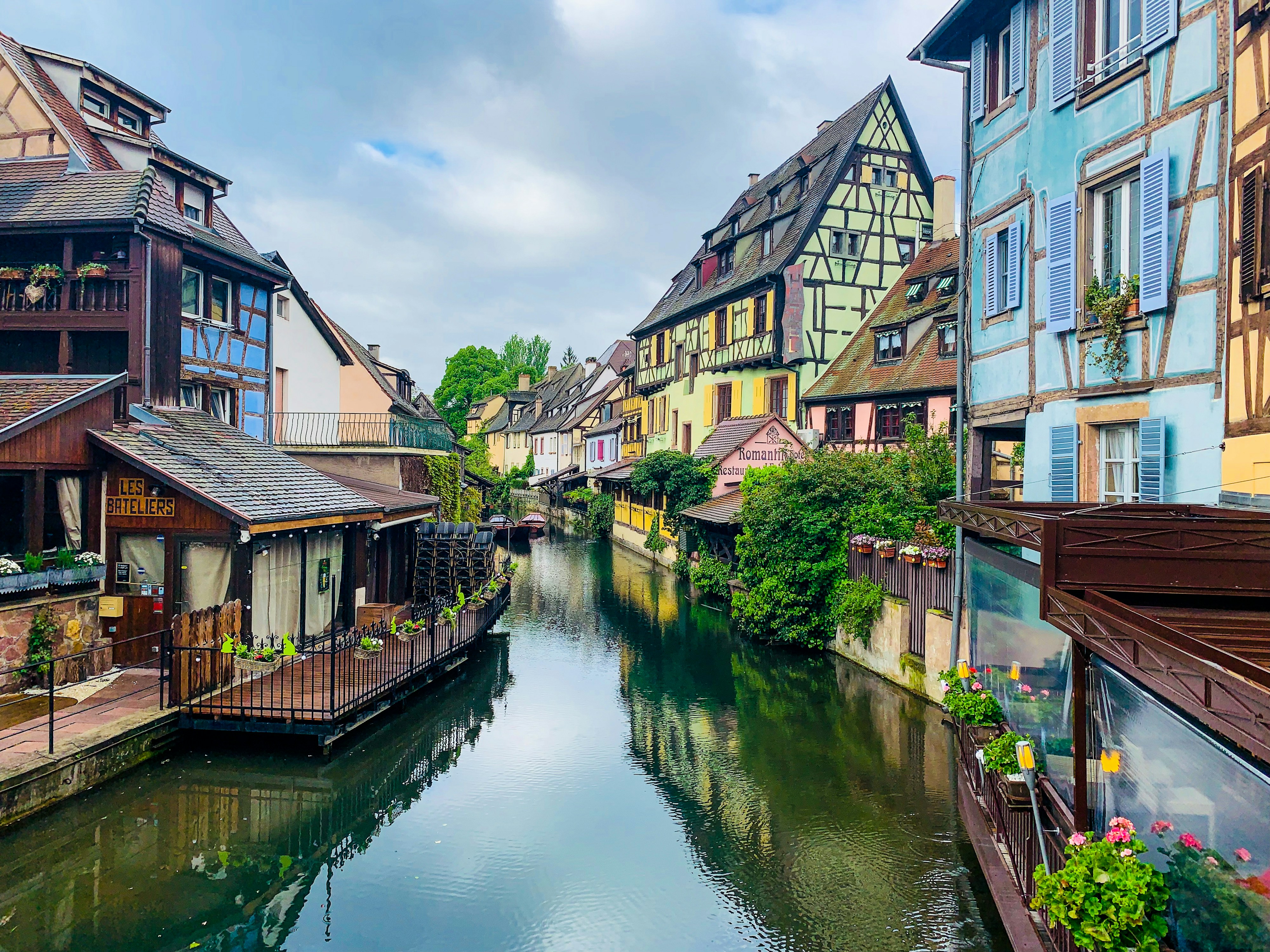
#22Half-timbered houses in candy-bright colours line the canals of this Alsatian town's La Petite Venise district, their upper floors leaning out over the water.
Flower boxes crowd almost every windowsill from spring through autumn, adding another layer of colour to the vivid facades.
The town's mix of French and German influence, a legacy of Alsace changing hands repeatedly, gives it a character unlike anywhere else in France.
How does it rate
CrowdsRomanceCash RequiredDangerAccessibilityWhy you should go
Canal-side half-timbered houses in every colour, especially vivid with the summer flower boxes.
Why you shouldn't go
The most photographed canal stretch is narrow and gets genuinely congested at midday in summer.
Plan your visit
Best time to visitMay-September for flower boxes in full bloom; December for the Christmas markets.Best time of dayEarly morning, before day-trip groups arrive from Strasbourg.Getting thereTrain from Strasbourg (about 30 minutes) or Paris (about 2.5 hours direct).Entry costFree to wander the old town.Time needed1 dayInsider tip — Take a short boat ride along La Petite Venise - the canal-level view of the leaning houses is better than any angle from the street. -
 #23
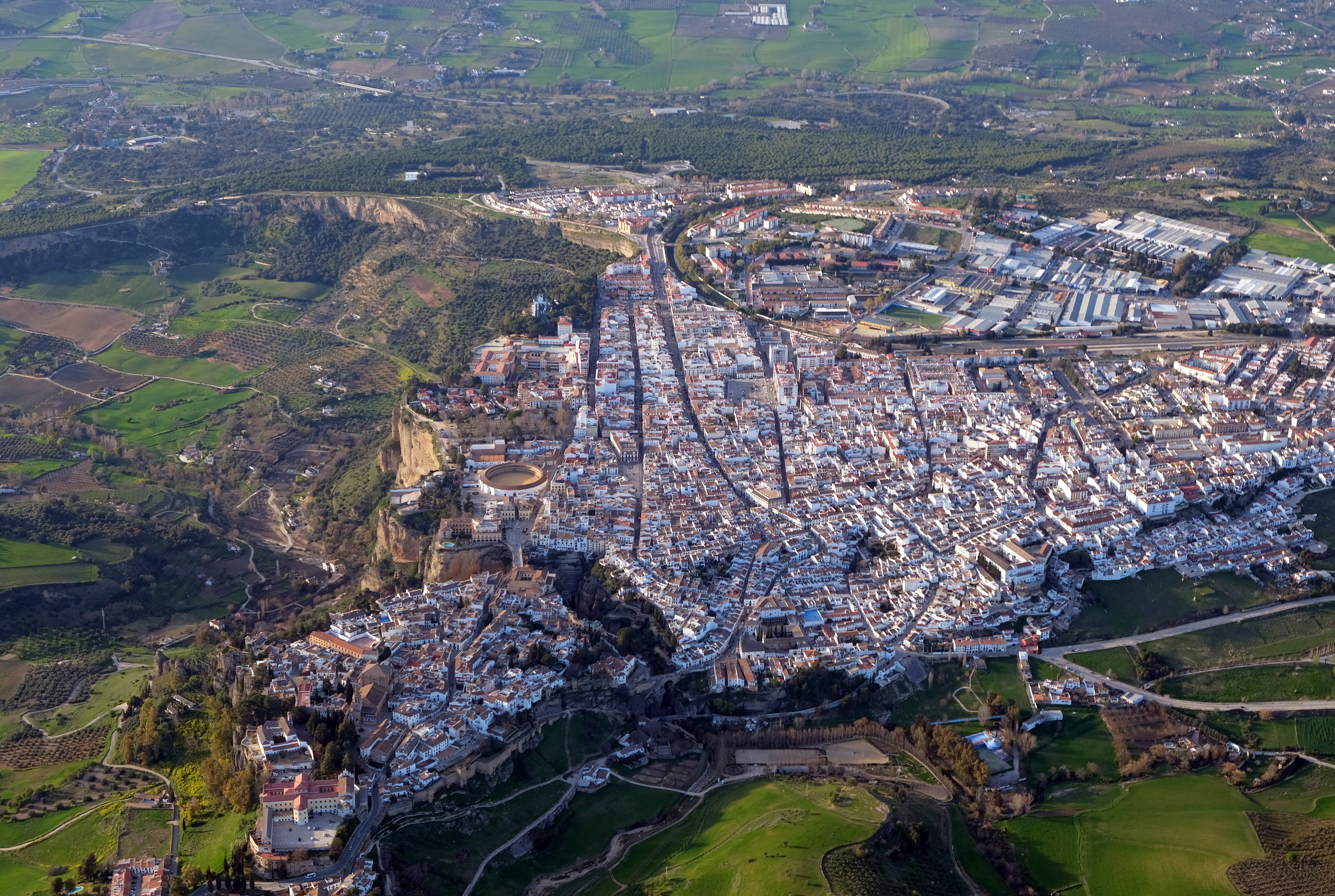
#23Ronda is a dramatic Andalusian city built on a rocky plateau divided by a 120-metre-deep gorge, over which the 18th-century Puente Nuevo bridge arches in an astonishing feat of engineering.
The combination of Moorish old town, bullring, and vertiginous cliff-edge position makes Ronda one of Spain's most striking cities.
How does it rate
CrowdsRomanceCash RequiredDangerAccessibilityWhy you should go
The Puente Nuevo bridge crossing the El Tajo gorge is one of Spain's most dramatic engineering achievements and the cliff-edge views from the Alameda del Tajo gardens are extraordinary.
Why you shouldn't go
Ronda is a day trip destination from Malaga and the coach parties that descend from late morning can make the bridge and old town very crowded; arrive early or late.
Plan your visit
Best time to visitSpring or autumnBest time of dayLate afternoon for light on the gorge and bridgeGetting thereTrain from Malaga or SevilleEntry costFree to viewTime neededHalf dayInsider tip — Walk down into El Tajo gorge for the classic upward shot of Puente Nuevo bridge -
 #2480 /100
The world's smallest sovereign state packs an extraordinary concentration of art and architecture into just 44 hectares.
The colonnaded embrace of St Peter's Square, Michelangelo's Sistine Chapel ceiling, and Raphael's frescoed Stanze make Vatican City unmissable for art lovers.
How does it rate
CrowdsRomanceCash RequiredDangerAccessibilityWhy you should go
The sheer density of masterpieces is staggering — from the top of St Peter's dome, the view over the piazza and Rome beyond is one of the city's finest.
Why you shouldn't go
Vatican Museums queues are legendary and even with pre-booked tickets the crowds inside the Sistine Chapel make it hard to appreciate the art in peace.
Plan your visit
Best time to visitSpring or autumnBest time of dayEarly morning entry to beat tour groupsGetting thereOttaviano Metro stationEntry costMuseums ~EUR17Time neededHalf dayInsider tip — Book timed-entry tickets online; the walk-up queue can take hours -
 #2580 /100
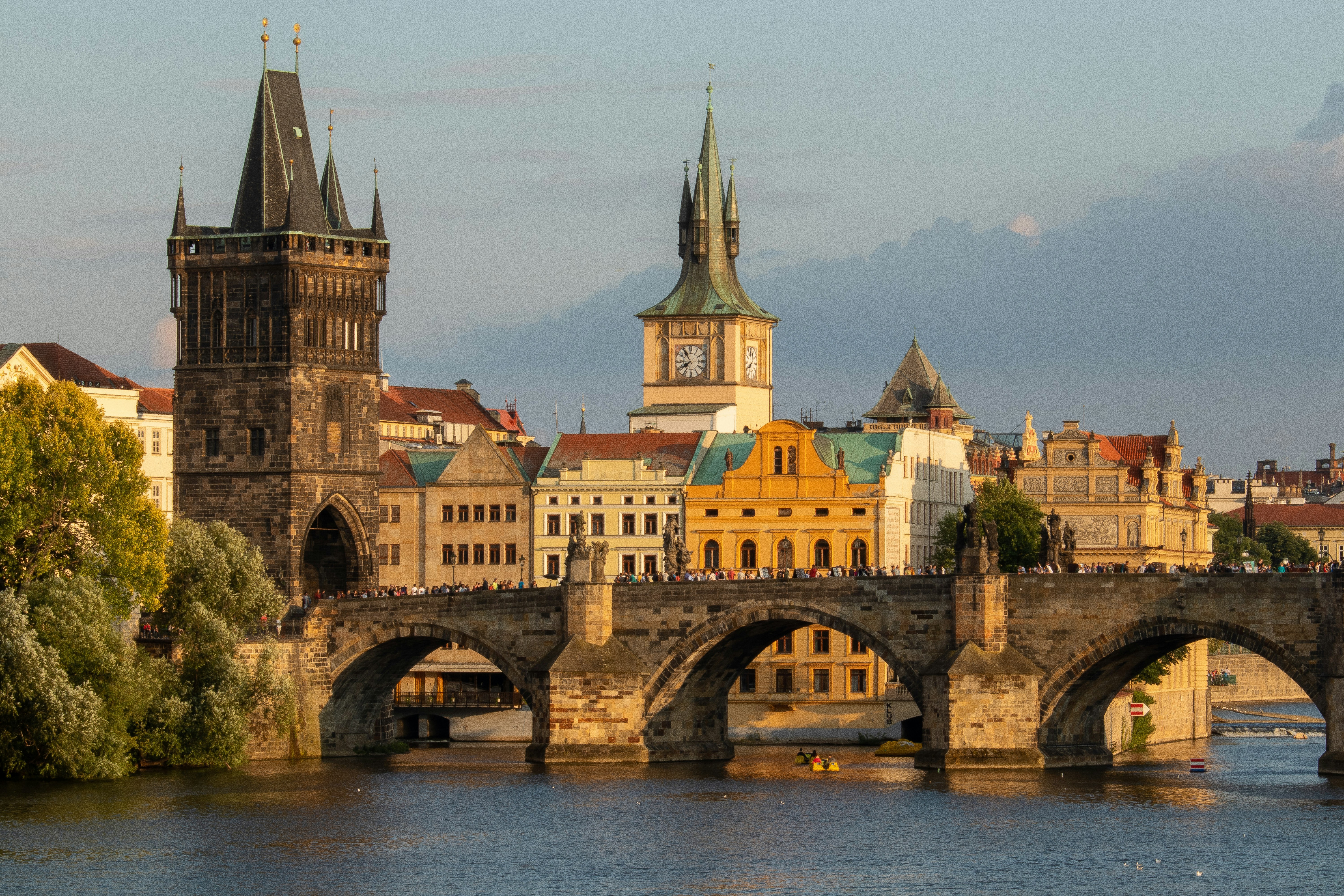
Charles Bridge has carried foot traffic over the Vltava since 1402, running dead straight from the Old Town gate tower to the castle bank beneath a parade of thirty blackened baroque statues.
At dawn, with mist on the river and Prague Castle rising behind, it's one of Europe's great city walks; by mid-morning it's one of Europe's great crushes, buskers and all.
How does it rate
CrowdsRomanceCash RequiredDangerAccessibilityWhy you should go
The dawn view along the statues to Prague Castle is centuries of city in a single frame.
Why you shouldn't go
From breakfast to midnight the bridge is one slow-moving crowd.
Plan your visit
Best time to visitDecember for snow and thinner crowds; May-September for warmthBest time of dayDawn - the bridge is genuinely empty for an hour after sunriseGetting thereShort walk from Old Town Square or Staromestska metroEntry costFree; Old Town tower climb about CZK 190Time needed1 hourInsider tip — Climb the Old Town bridge tower right at opening for the elevated shot down the bridge toward the castle -
 #2679 /100
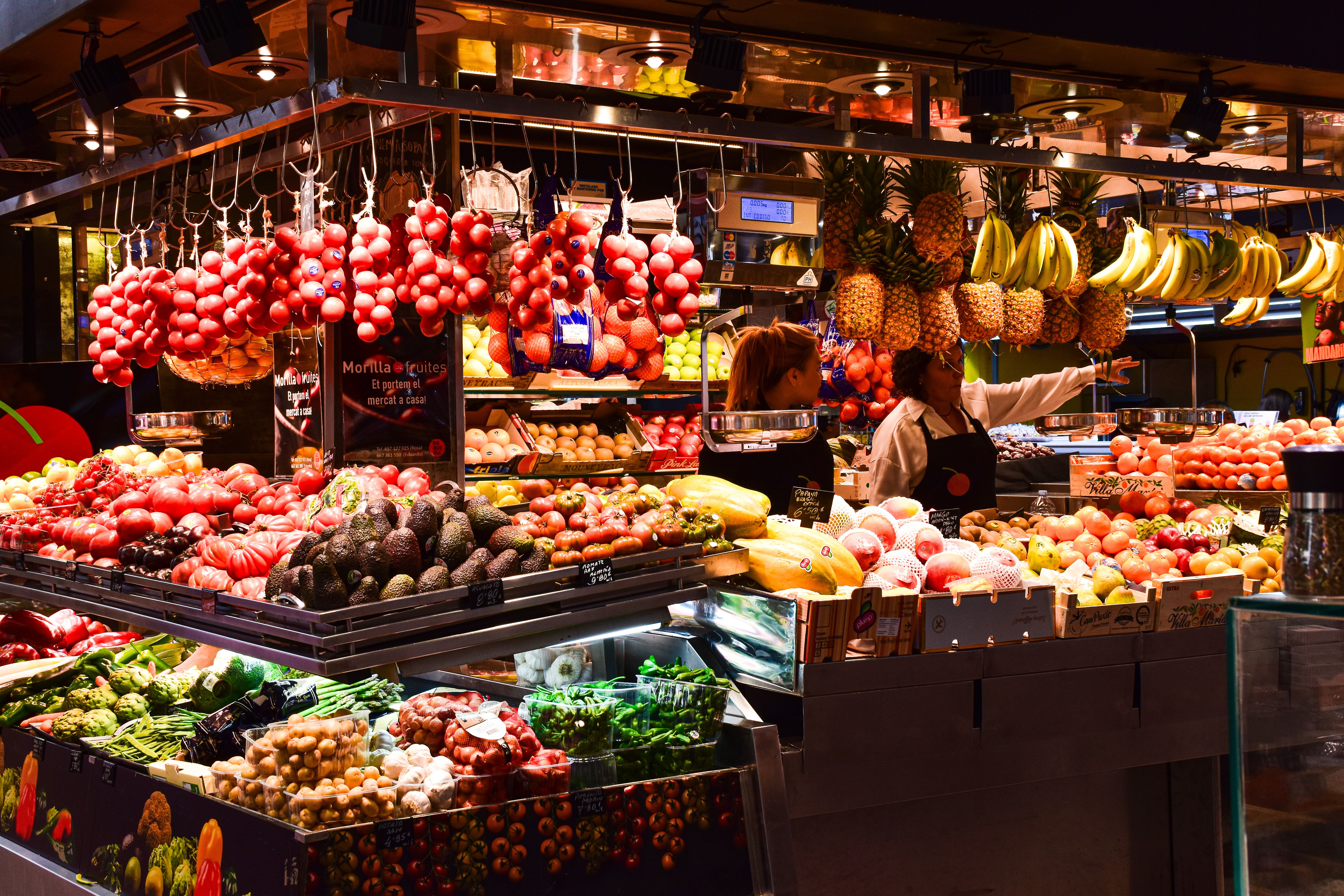
Just off Barcelona's Las Ramblas, La Boqueria has traded since the 13th century and sits behind a stained-glass modernist entrance.
Stalls run to jamon iberico, glistening seafood, cured cheeses and fruit cut and stacked for the counter, while several bars at the back serve cooked plates to whoever can claim a stool.
It works as both a genuine working market and a place to eat your way through lunch standing up.
How does it rate
CrowdsRomanceCash RequiredDangerAccessibilityWhy you should go
A 13th-century food market off Las Ramblas, its stalls of jamon and fresh seafood as photographed as any landmark in Barcelona.
Why you shouldn't go
Its fame means the stalls closest to the entrance are noticeably pricier and more tourist-oriented than the market's back sections.
Plan your visit
Best time to visitWeekday mornings, when the market is fully stocked but before tour groups arrive.Best time of dayMid-morning, for the best produce selection and manageable crowds.Getting thereTake the Barcelona Metro L3 (green line) to Liceu station, a short walk to the market entrance on Las Ramblas.Entry costFree to enter; tapas and produce prices vary by stall.Time needed1-2 hours.Insider tip — Walk past the busy front stalls to the market's quieter rear sections for better prices and a more local feel. -
 #2778 /100
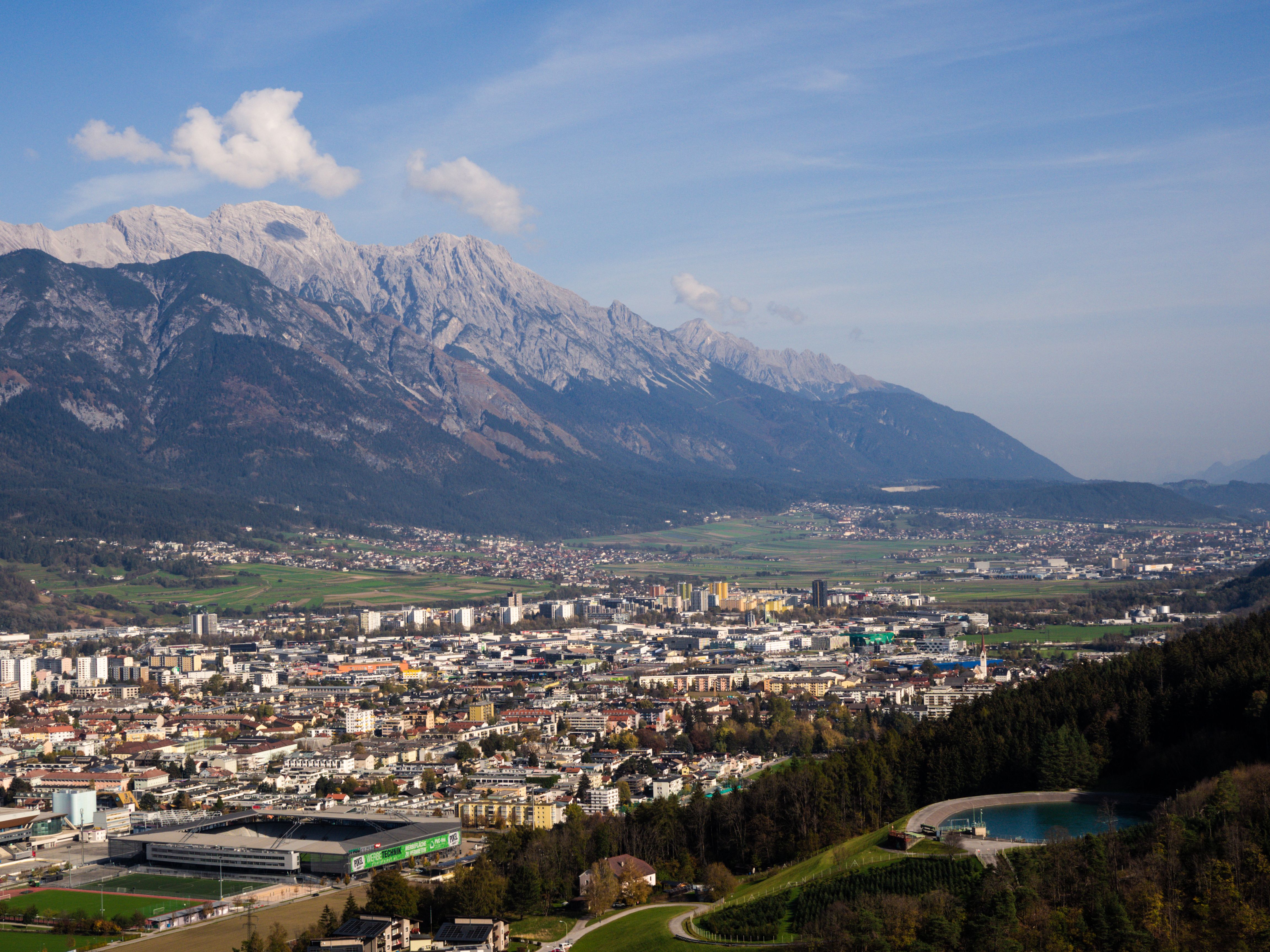
The Nordkette range rises so steeply above Innsbruck that a cable car runs directly from the edge of the old town to a mountain station above 2,300 metres in under 20 minutes.
From the top, the view takes in the Alpine capital below and rows of peaks stretching into Italy and Germany, and hiking trails and via ferrata routes continue further up the ridge.
How does it rate
CrowdsRomanceCash RequiredDangerAccessibilityWhy you should go
Going from café tables in the old town to a 2,300-metre alpine ridge in under 20 minutes, without leaving the city's public transport, is remarkable.
Why you shouldn't go
The upper station can be windy and much colder than the valley floor, so pack layers even on a warm city day.
Plan your visit
Best time to visitJune–September for hiking; December–March for skiing directly above the city.Best time of dayLate afternoon, for clear light on the peaks and fewer crowds on the cable car.Getting thereFly to Innsbruck; the Nordkettenbahn cable car station is a short walk or tram ride from the old town.Entry costPaid cable car ticket; return fares are cheaper than one-way plus return.Time neededHalf a dayInsider tip — Ride the funicular partway up to Hungerburg first for city views, then transfer to the second cable car stage for the full alpine panorama. -
 #2878 /100
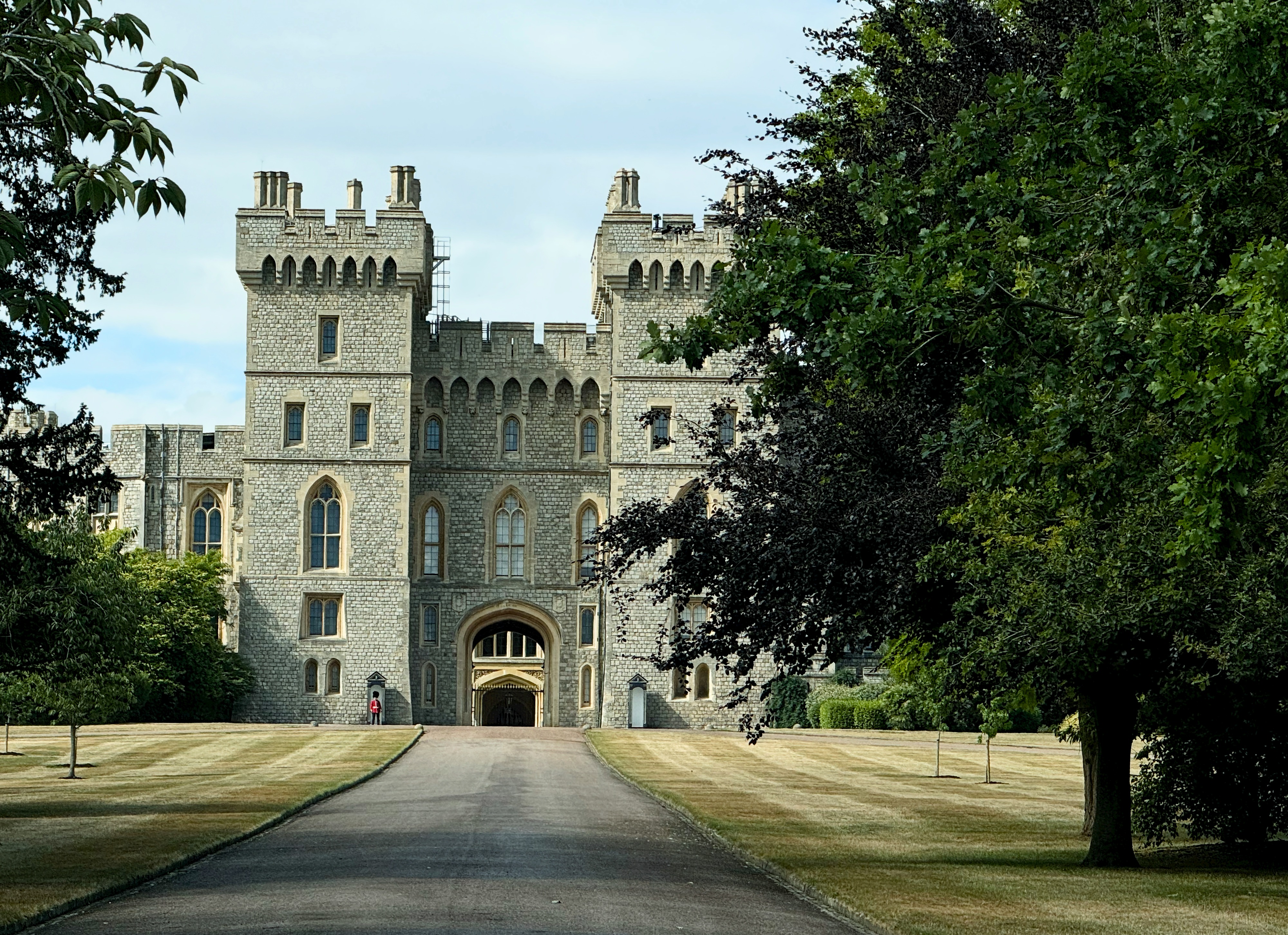
The world's oldest and largest continuously occupied castle, still an official residence of the British monarch, with nearly a thousand years of continuous history inside its walls.
State Apartments, St George's Chapel (site of several royal weddings), and the daily Changing of the Guard draw huge crowds year-round.
It sits an easy day trip from London, which keeps it firmly on the well-worn royal-sightseeing circuit.
How does it rate
CrowdsRomanceCash RequiredDangerAccessibilityWhy you should go
Nearly a thousand years of continuous royal history, still a working royal residence, in a single day trip from London.
Why you shouldn't go
It's one of the most visited sites in England, and ticket lines and tour-group crowds are heavy most of the year.
Plan your visit
Best time to visitSpring or autumn for milder weather and slightly thinner queues than summer.Best time of dayFirst entry in the morning, before coach tours from London arrive.Getting thereTrain from London Waterloo or Paddington to Windsor, then a short walk to the castle gates.Entry costAround GBP30 for adult entry to State Apartments and grounds.Time neededHalf a day.BookingBook ahead →Insider tip — Check the Changing of the Guard schedule before you go - it doesn't run daily outside summer, and timing your visit around it is worth it. -
 #2978 /100
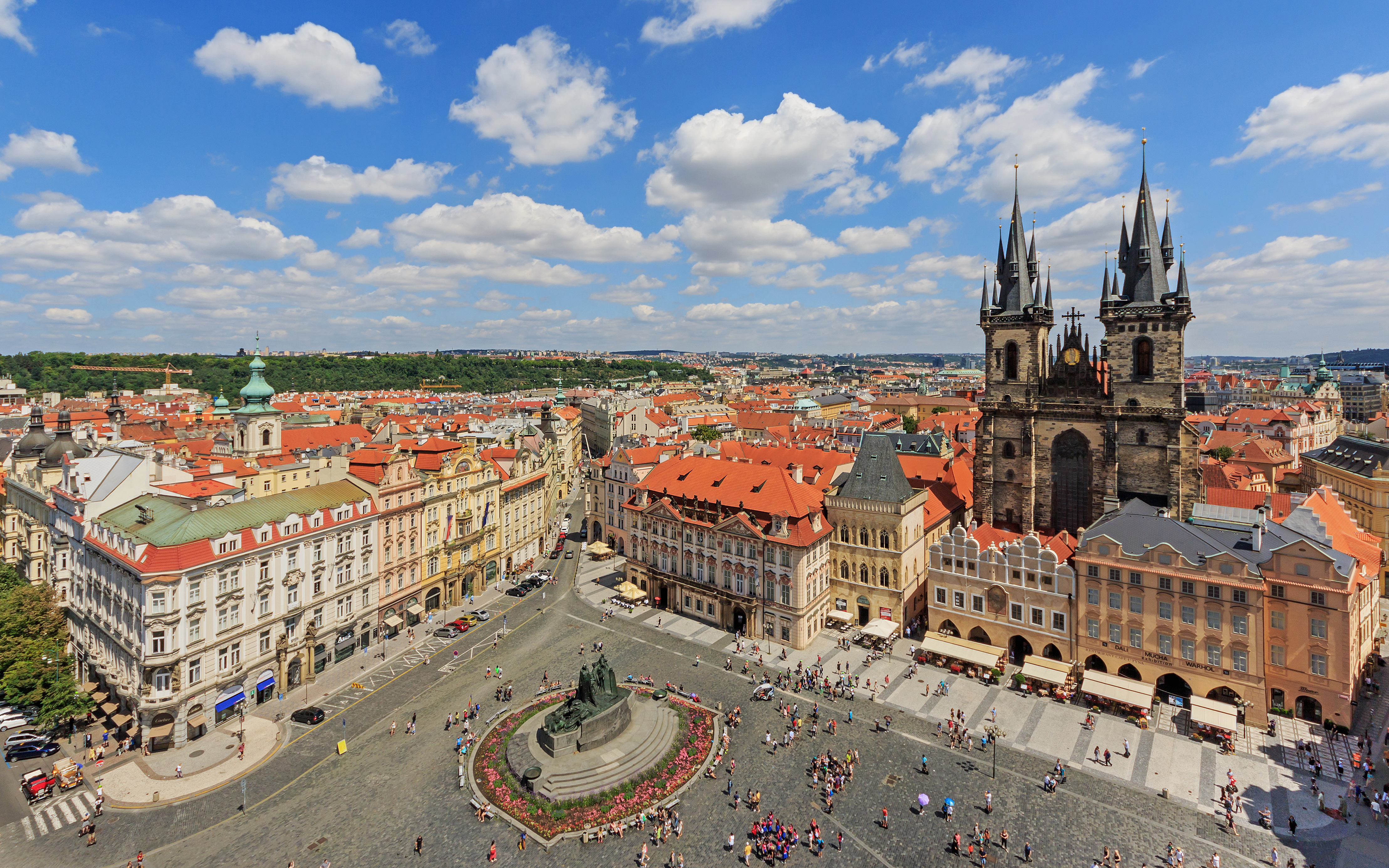
Prague's Old Town Square has been the city's beating heart for centuries, surrounded by a colourful ensemble of Baroque, Romanesque, and Gothic buildings.
The 15th-century Astronomical Clock performs an hourly show, while the twin towers of the Church of Our Lady before Tyn create one of Central Europe's most distinctive skylines.
How does it rate
CrowdsRomanceCash RequiredDangerAccessibilityWhy you should go
The square's architectural variety and the views across it from the Old Town Hall tower make it one of Europe's most charming urban spaces.
Why you shouldn't go
The square is extremely touristy and surrounding restaurants charge high prices; the astronomical clock's hourly show is underwhelming given the waiting crowds.
Plan your visit
Best time to visitSpring or autumnBest time of dayGolden hour, or on the hour for the Astronomical Clock showGetting thereCentral Prague, walkable from most hotelsEntry costFreeTime needed1-2 hoursInsider tip — Climb the Old Town Hall Tower for a rooftop view over the square itself -
 #30
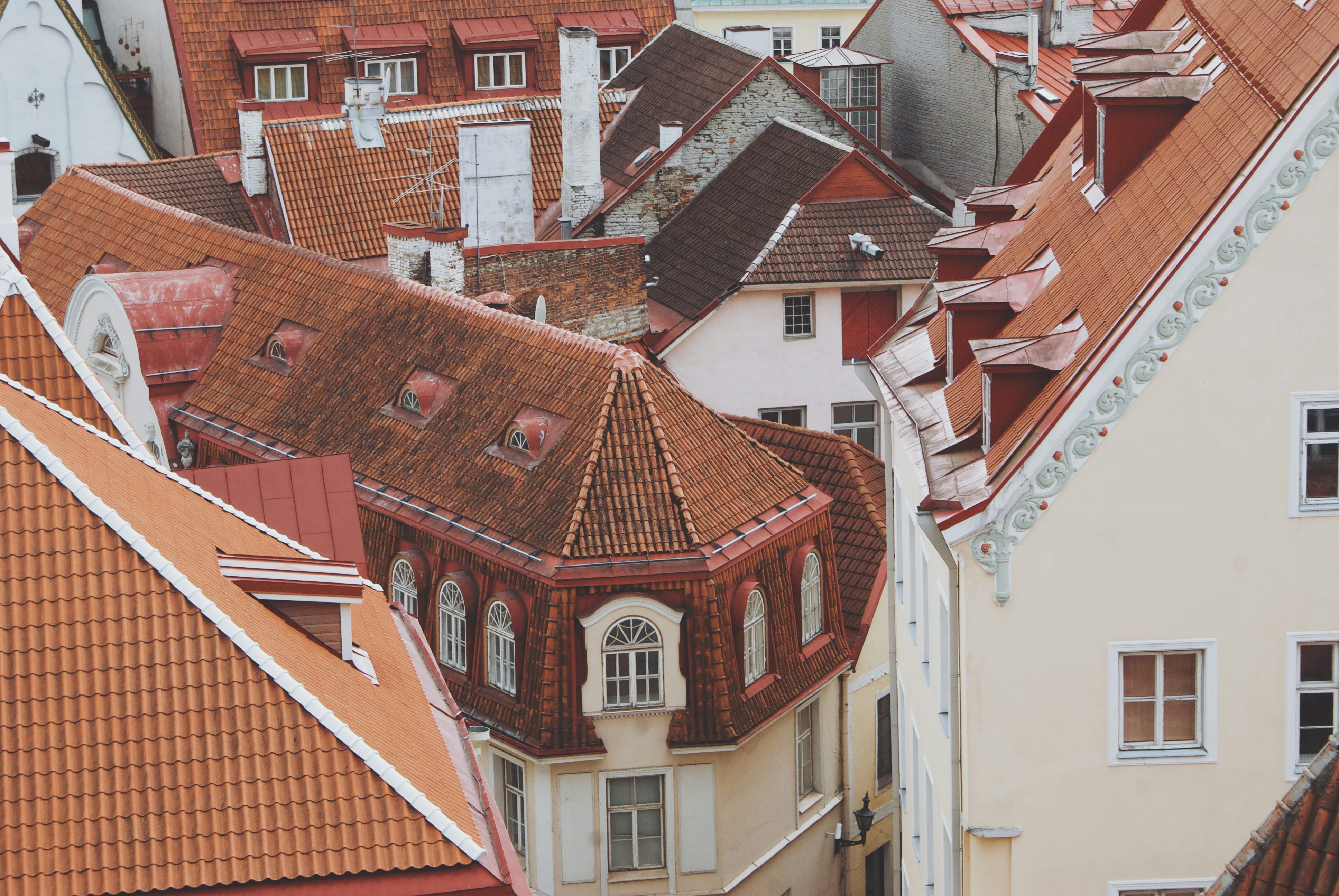
#30Turrets and cobbled lanes fill this Baltic old town's medieval core, ringed almost entirely by its original 13th-century defensive walls.
Toompea Hill rises above the lower town, topped by a Russian Orthodox cathedral and views over red-tiled rooftops toward the harbour.
Despite the medieval look, Tallinn is one of Europe's most digitally advanced capitals.
How does it rate
CrowdsRomanceCash RequiredDangerAccessibilityWhy you should go
A completely walled medieval old town, still fully intact and lived-in rather than a museum piece.
Why you shouldn't go
The old town's cobblestones and hills make it a genuinely tough walk in heels or with luggage.
Plan your visit
Best time to visitMay-September, for the mildest weather and long daylight hours.Best time of dayEarly morning or evening, once day-trip cruise ship crowds have cleared out.Getting thereFly into Tallinn Airport, about 15 minutes from the old town; ferries also arrive from Helsinki.Entry costFree to walk the old town; Toompea viewpoints and museums charge small fees.Time needed2 daysInsider tip — Check cruise ship arrival schedules before visiting - the old town's narrow lanes get genuinely packed on the days multiple ships are in port. -
 #3177 /100
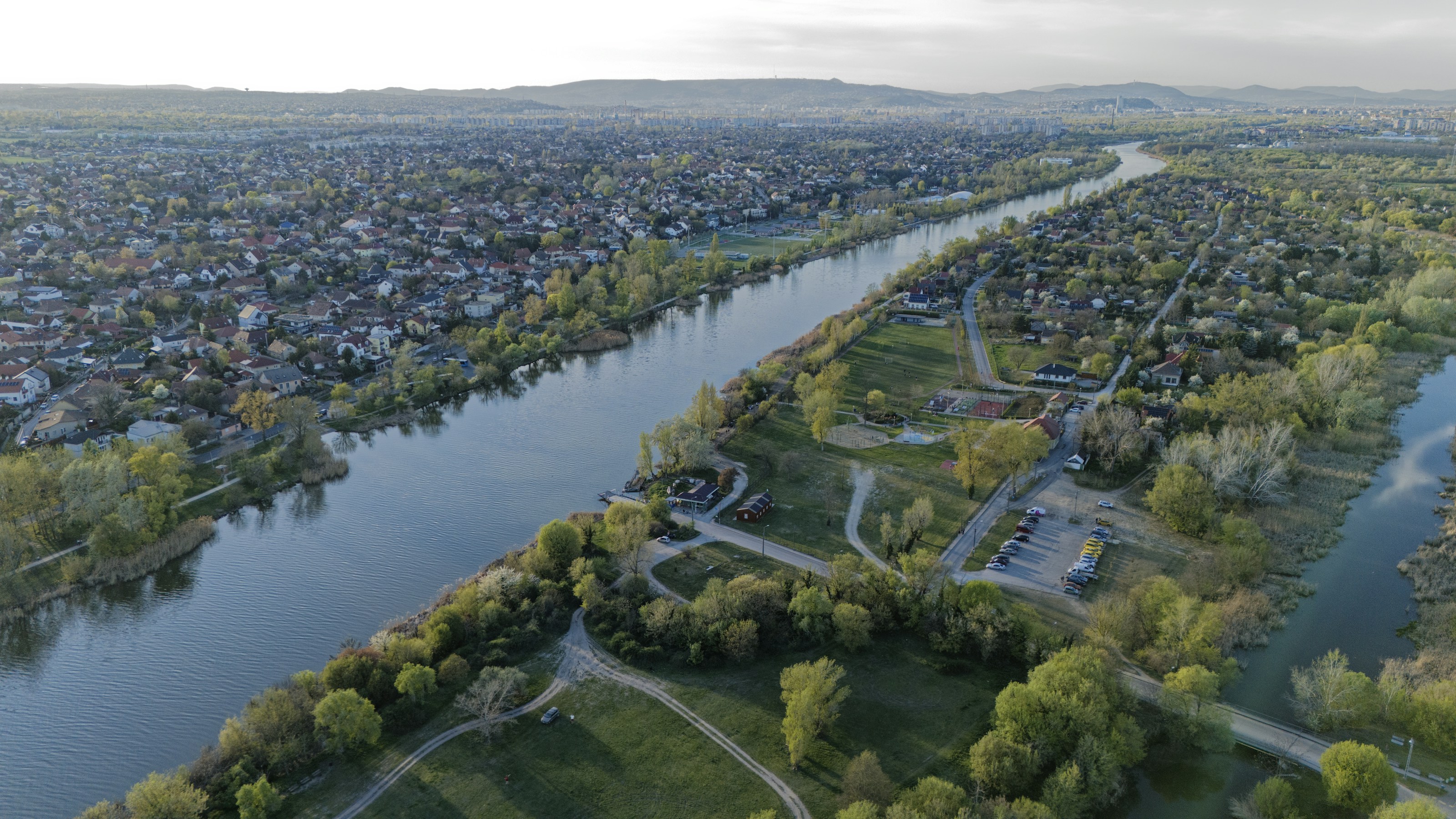
Nicknamed the 'Island of Freedom', Sziget takes over an entire Danube island in Budapest for a week each August, mixing major international headliners with theatre, circus, and dozens of themed areas beyond the main stages.
Most attendees camp on-site for the full week, and the festival has grown into one of Europe's largest, drawing well over half its crowd from outside Hungary.
How does it rate
CrowdsRomanceCash RequiredDangerAccessibilityWhy you should go
A week-long festival on a Danube island in Budapest, combining major music headliners with theatre, circus, and themed areas.
Why you shouldn't go
On-site camping for a full week means basic shared facilities, and the island gets crowded and muddy after rain.
Plan your visit
Best time to visitThe second week of August each year.Best time of dayEvening for the main stage headline sets, though the island runs programming through the afternoon.Getting thereFly into Budapest Ferenc Liszt International Airport; the island is reachable by dedicated festival shuttle boats and buses from the city centre.Entry costFull week passes run roughly EUR300-350.Time neededThe full week for the complete experience, or a single day pass to sample it.BookingBook ahead →Insider tip — Buy a day pass first if you're unsure about camping a full week - Budapest's hotels are a short boat ride from the island and let you sleep somewhere with a real shower. -
 #32
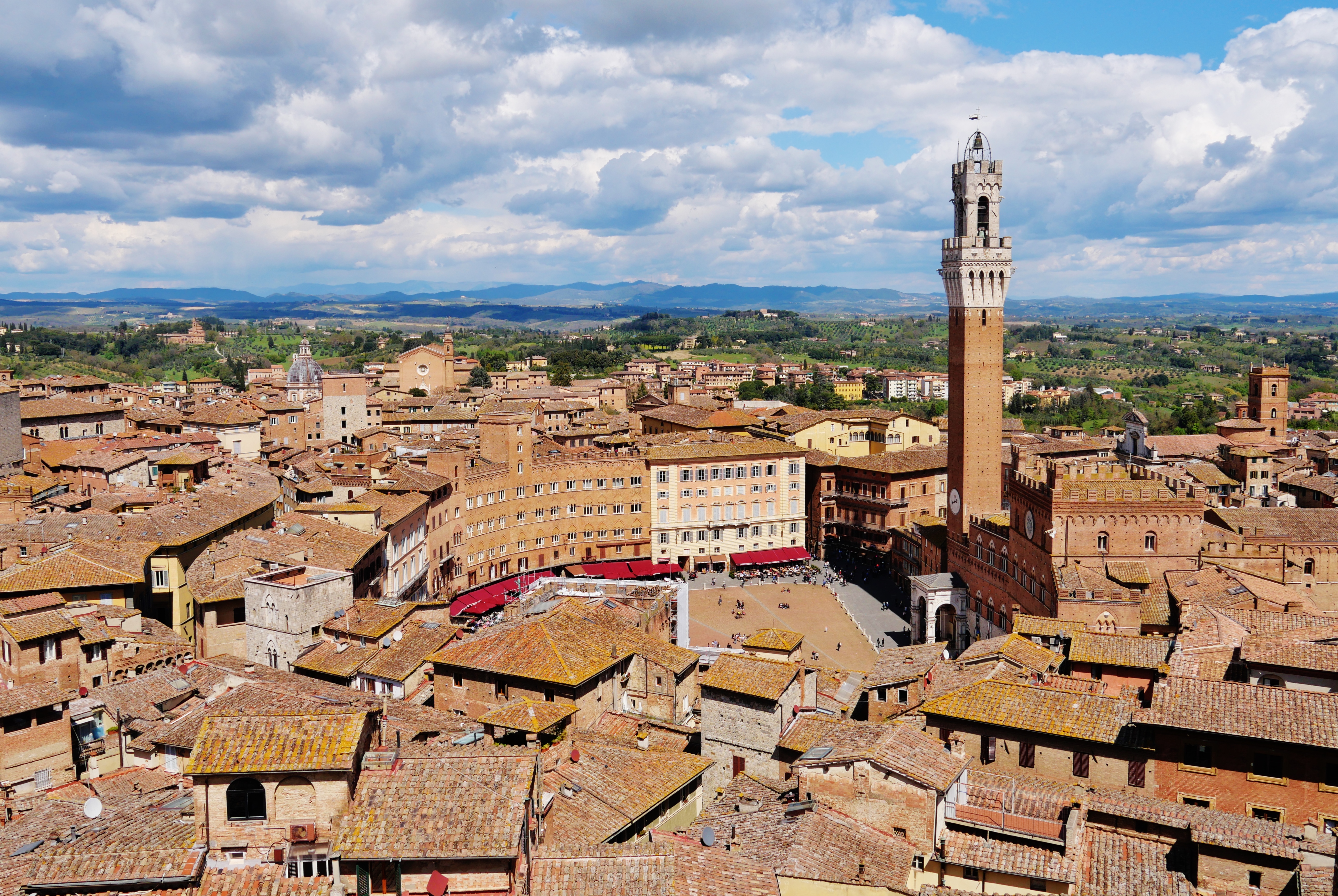
#32Siena is a medieval city in the heart of Tuscany that has preserved its Gothic character more completely than any other city in Italy.
Its fan-shaped main piazza, the Piazza del Campo, is the venue for the famous Palio horse race held twice yearly, and its cathedral, the Duomo, is considered one of the finest Gothic buildings in Italy.
How does it rate
CrowdsRomanceCash RequiredDangerAccessibilityWhy you should go
Siena's extraordinary Gothic atmosphere is one of Italy's most complete — the Piazza del Campo and the Cathedral combine to make this one of Europe's most satisfying medieval urban experiences.
Why you shouldn't go
Siena is a day trip destination from Florence and can be crowded during the Palio season in July and August; the steep streets require a reasonable level of fitness to navigate.
Plan your visit
Best time to visitSpring or autumn, or early July/August for the Palio horse raceBest time of daySunset from Torre del Mangia for the whole city in golden lightGetting there~1hr drive or bus from FlorenceEntry costTower climb ~EUR10Time neededHalf dayInsider tip — Piazza del Campo looks completely different, and much emptier, outside Palio race days in July/August -
 #33
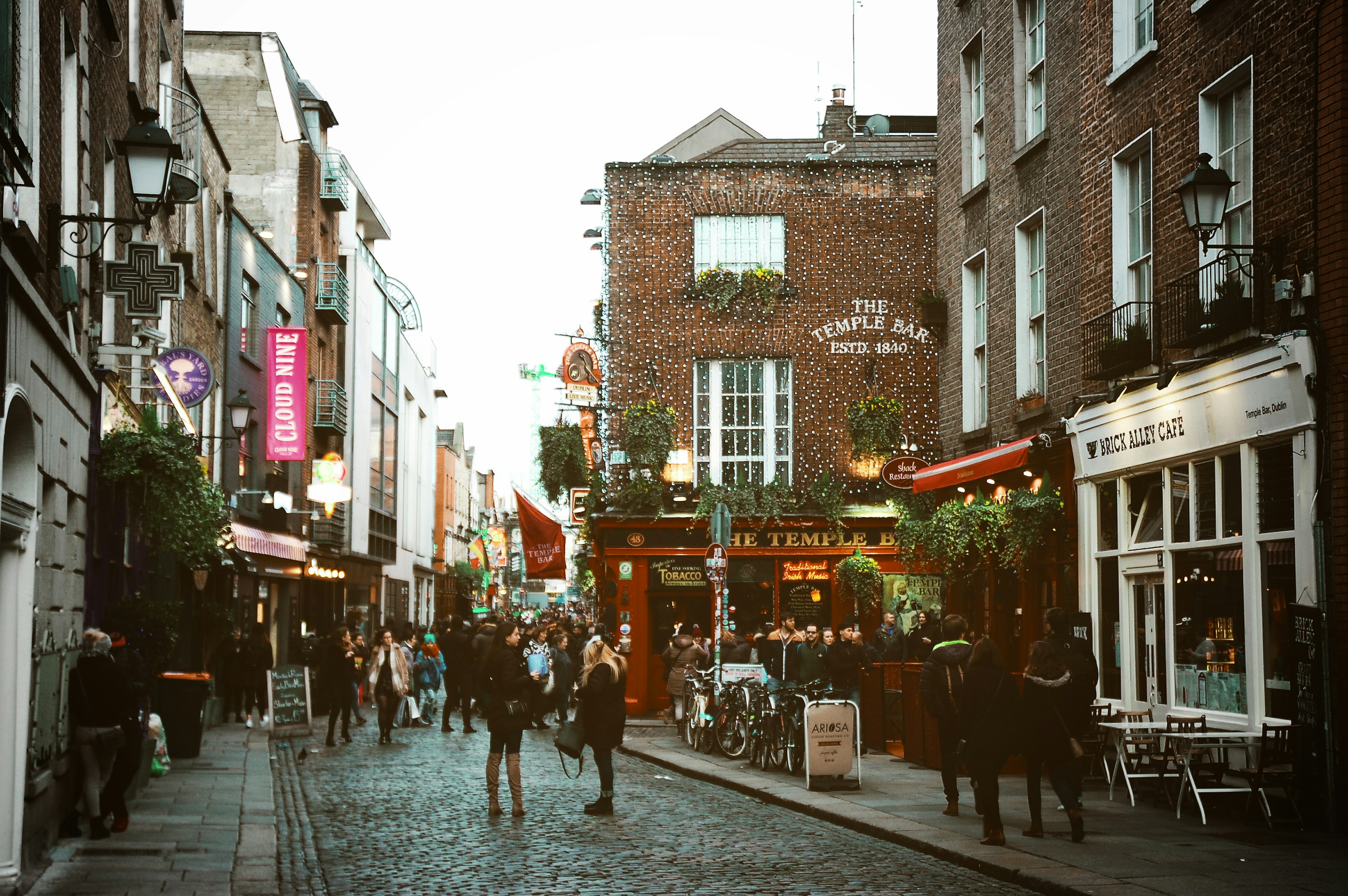
#33Ireland's capital pairs a compact, walkable historic core with a genuinely lively pub and music scene, from the Georgian squares around Trinity College — home to the Book of Kells — to the cobbled lanes of Temple Bar.
The Guinness Storehouse and Kilmainham Gaol offer two very different sides of the city's story, industrial and political, while traditional music sessions spill out of pubs most nights of the week.
How does it rate
CrowdsRomanceCash RequiredDangerAccessibilityWhy you should go
A walkable capital with world-class literary history and a genuinely lively live-music pub scene.
Why you shouldn't go
Temple Bar itself is touristy and overpriced — the better pubs are a few streets away.
Plan your visit
Best time to visitMay–September for the best weather and longest daylight.Best time of dayEvening for pub culture and live traditional music sessions.Getting thereDublin Airport is 30 minutes from the city center by bus or taxi.Entry costFree to walk the city; Book of Kells and Guinness Storehouse each around €20-30.Time needed2–3 days.Insider tip — Skip Temple Bar's pubs and head to the smaller, cheaper bars around Camden Street or the Liberties for a more local session. -
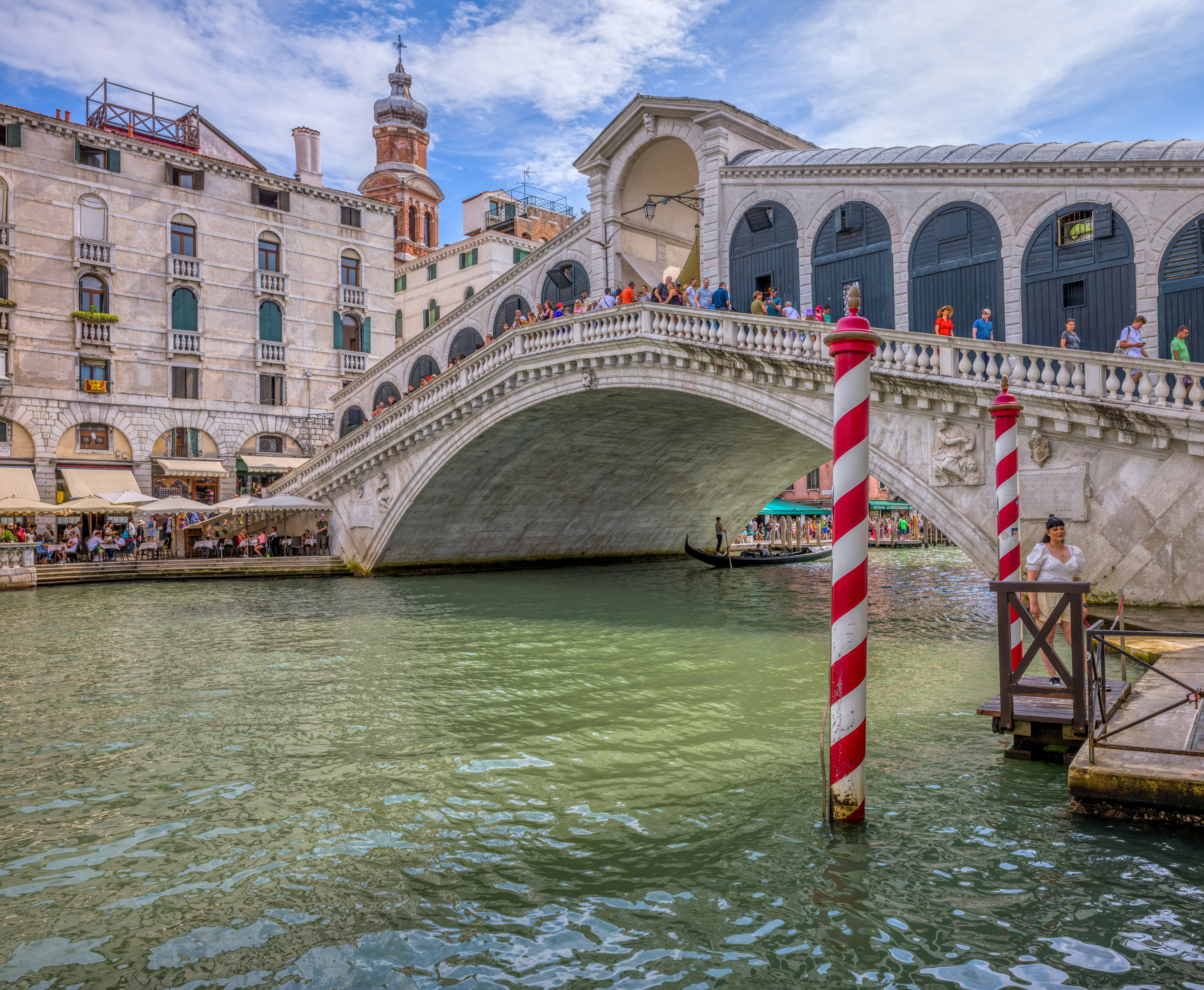 #3475 /100
The Rialto Bridge is the oldest and best known of the four crossings of Venice's Grand Canal, a single stone arch completed in 1591 after a succession of wooden predecessors collapsed.
Two rows of shops run the length of its span, and the steps up either side open onto views down the canal in both directions.
The market on the San Polo bank has traded fish and produce for centuries.
How does it rate
CrowdsRomanceCash RequiredDangerAccessibilityWhy you should go
It’s an iconic landmark in Venice and offers stunning views of the canal and Venetian architecture.
Why you shouldn't go
It can be crowded with tourists, making it difficult to get clear photos.
Plan your visit
Best time to visitSpring or autumn, avoiding summer heat and crowdsBest time of dayEarly morning before the crowdsGetting thereVaporetto (water bus) to the Rialto stopEntry costFreeTime needed30-60 minutesInsider tip — Shoot from the Riva del Ferro side for the classic view without dodging gondolas -
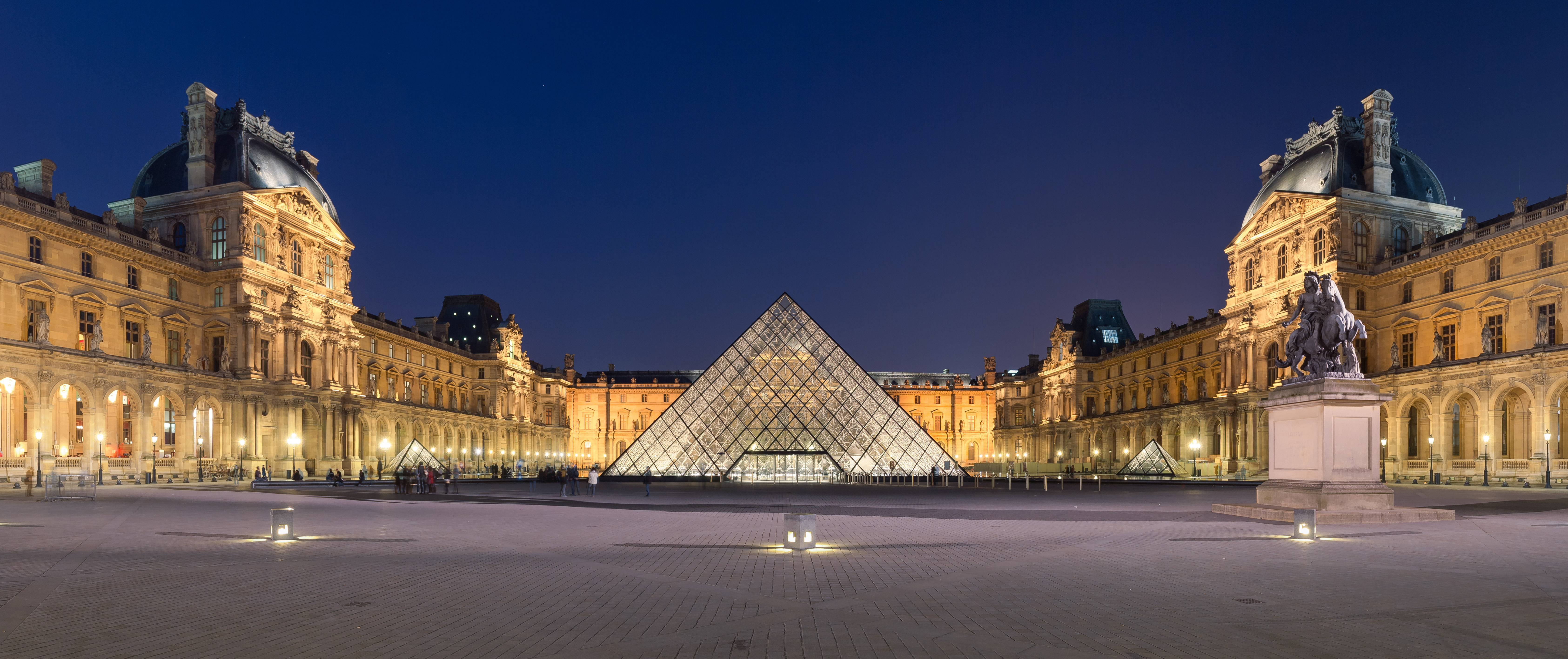 #3575 /100
The Louvre is the world's most visited art museum and home to over 35,000 works including the Mona Lisa, Venus de Milo, and Winged Victory of Samothrace.
The iconic glass pyramid designed by I.
M.
Pei, completed in 1989, provides an instantly recognisable contrast against the museum's baroque stone wings.
How does it rate
CrowdsRomanceCash RequiredDangerAccessibilityWhy you should go
The museum's glass pyramid entrance is one of Paris's most iconic photo opportunities, particularly beautiful when lit at night or reflected in the surrounding pools.
Why you shouldn't go
The Louvre is enormous and crowds around the most famous works can be very dense; the Mona Lisa in particular is usually surrounded by hundreds of people.
Plan your visit
Best time to visitWeekdays, avoiding French school holidaysBest time of dayEarly morning entry, or Wed/Fri evenings when open lateGetting therePalais-Royal-Musee du Louvre MetroEntry cost~EUR17Time neededHalf day minimumInsider tip — Enter via the Carrousel du Louvre underground entrance to skip the pyramid queue -
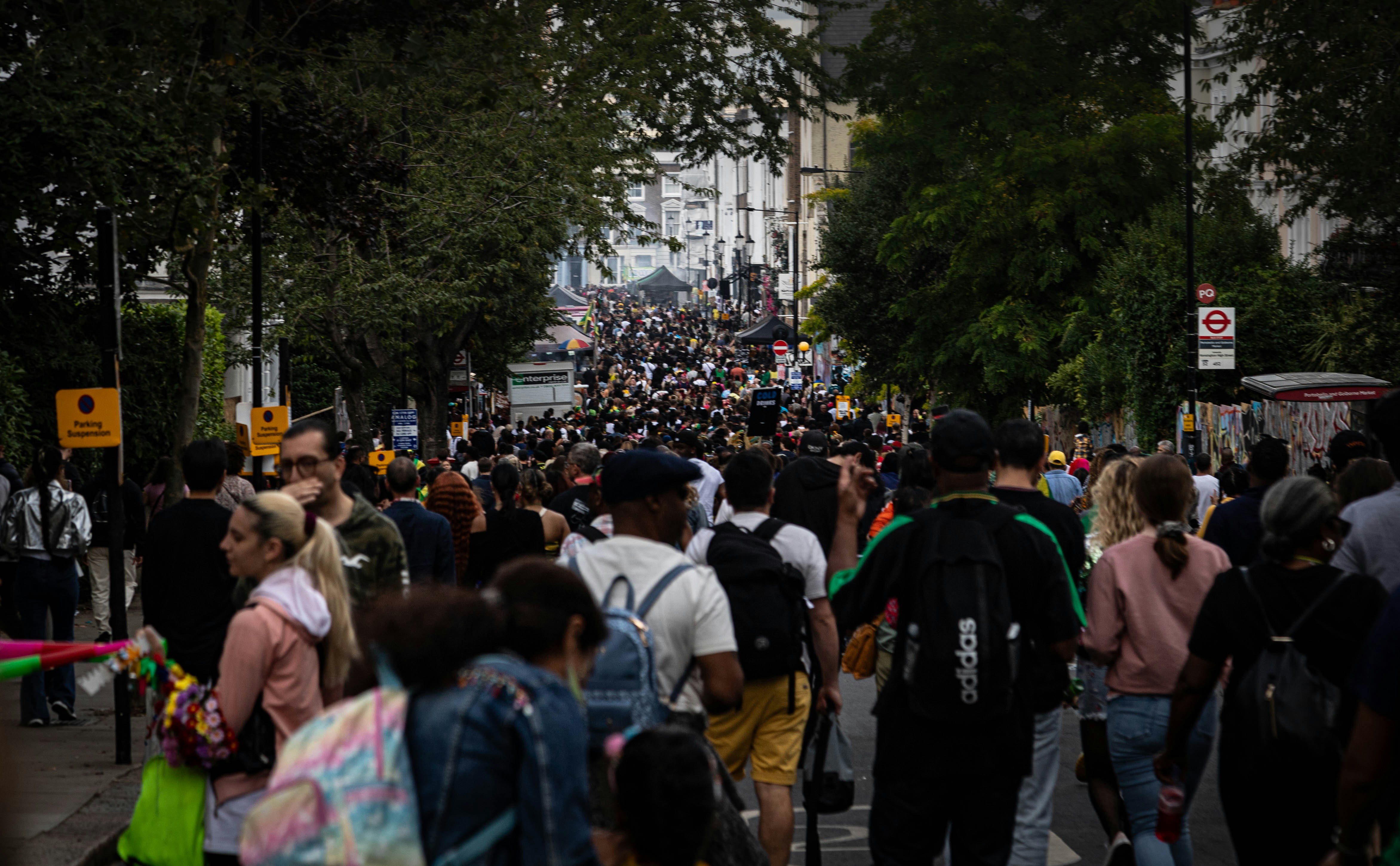 #3675 /100
Europe's largest street festival takes over west London every August bank holiday, born from Notting Hill's Caribbean community in the 1960s and now drawing over a million people to watch steel bands, soca floats and dancers in feathered, sequinned costumes wind through the neighbourhood's terraced streets, sound systems blasting reggae and dancehall late into the evening.
How does it rate
CrowdsRomanceCash RequiredDangerAccessibilityWhy you should go
Europe's biggest street carnival, born from London's Caribbean community, filling Notting Hill with steel bands and feathered costumes.
Why you shouldn't go
Crowds are dense enough that pickpocketing and crush points are a real concern in the afternoon peak.
Plan your visit
Best time to visitAugust bank holiday weekend, the carnival's fixed annual dates.Best time of dayMidday to late afternoon on the parade's second, main day, when the main procession is in full swing.Getting thereTake the London Underground to Notting Hill Gate, Ladbroke Grove or Westbourne Park stations.Entry costFree to attend in the streets.Time neededA full day.Insider tip — Follow the parade route rather than staying static, since the crowd thins noticeably a block or two off the main road. -
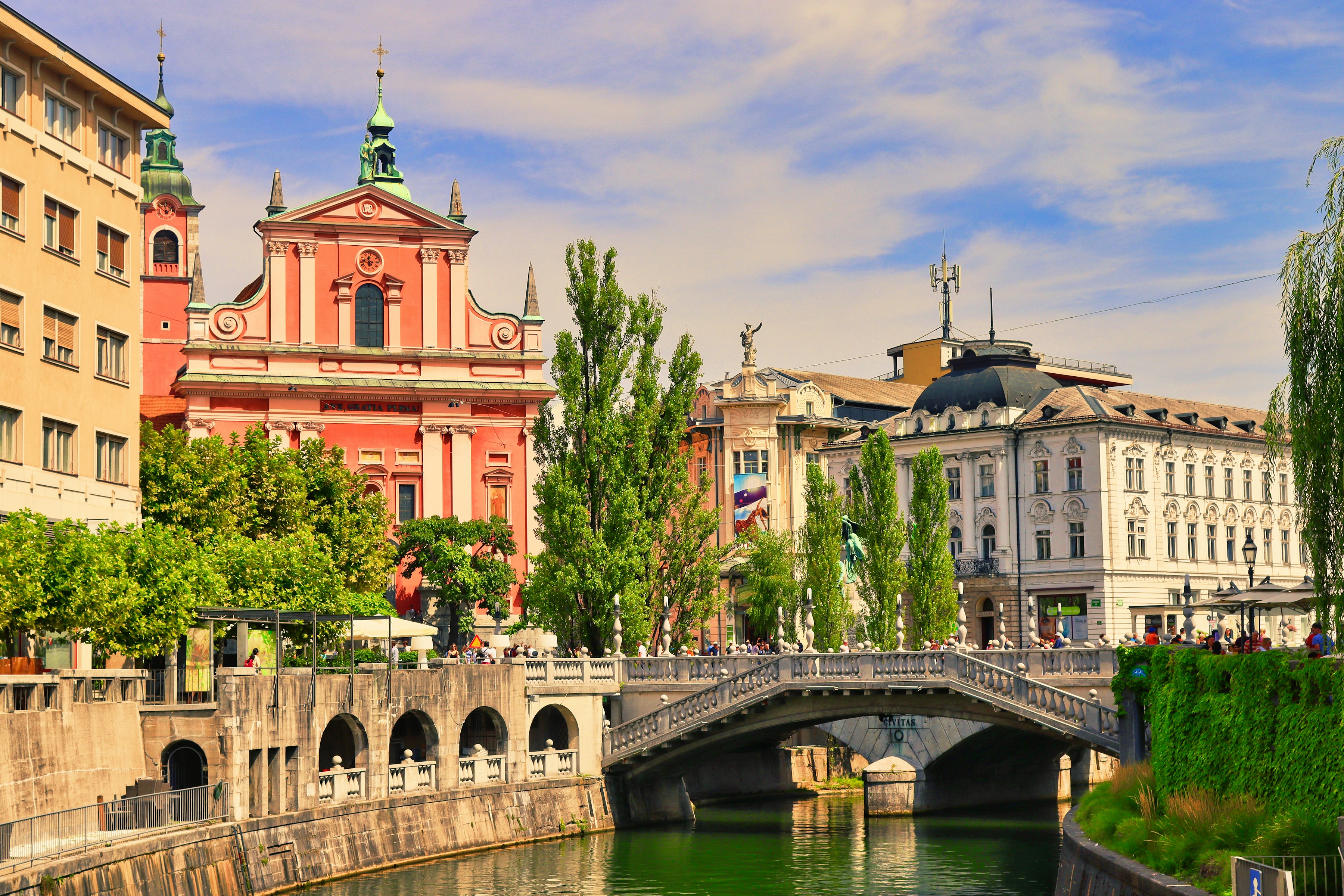 #3774 /100
One of Europe's smallest and most walkable capitals, Ljubljana centers on a car-free riverside old town beneath a hilltop castle, its Ljubljanica River crossed by architect Jože Plečnik's distinctive bridges, including the dragon-flanked Dragon Bridge.
Riverside cafés, a lively open-air market and a compact, green city center make it an easy place to explore in a day or two, with a noticeably relaxed pace.
How does it rate
CrowdsRomanceCash RequiredDangerAccessibilityWhy you should go
One of Europe's most walkable, relaxed small capitals, built around a car-free riverside old town.
Why you shouldn't go
The city itself is small — a day or two comfortably covers the main sights.
Plan your visit
Best time to visitMay–September for outdoor café culture along the river.Best time of dayEvening, when riverside cafés and the Old Town fill up but stay unhurried.Getting thereFly into Ljubljana Jože Pučnik Airport, 30 minutes from the city center.Entry costFree to walk; Ljubljana Castle funicular and entry around €12.Time needed1–2 days.Insider tip — Cross to the Dragon Bridge at dusk when the dragon statues are lit — one of the city's most photographed spots but genuinely uncrowded after dark. -
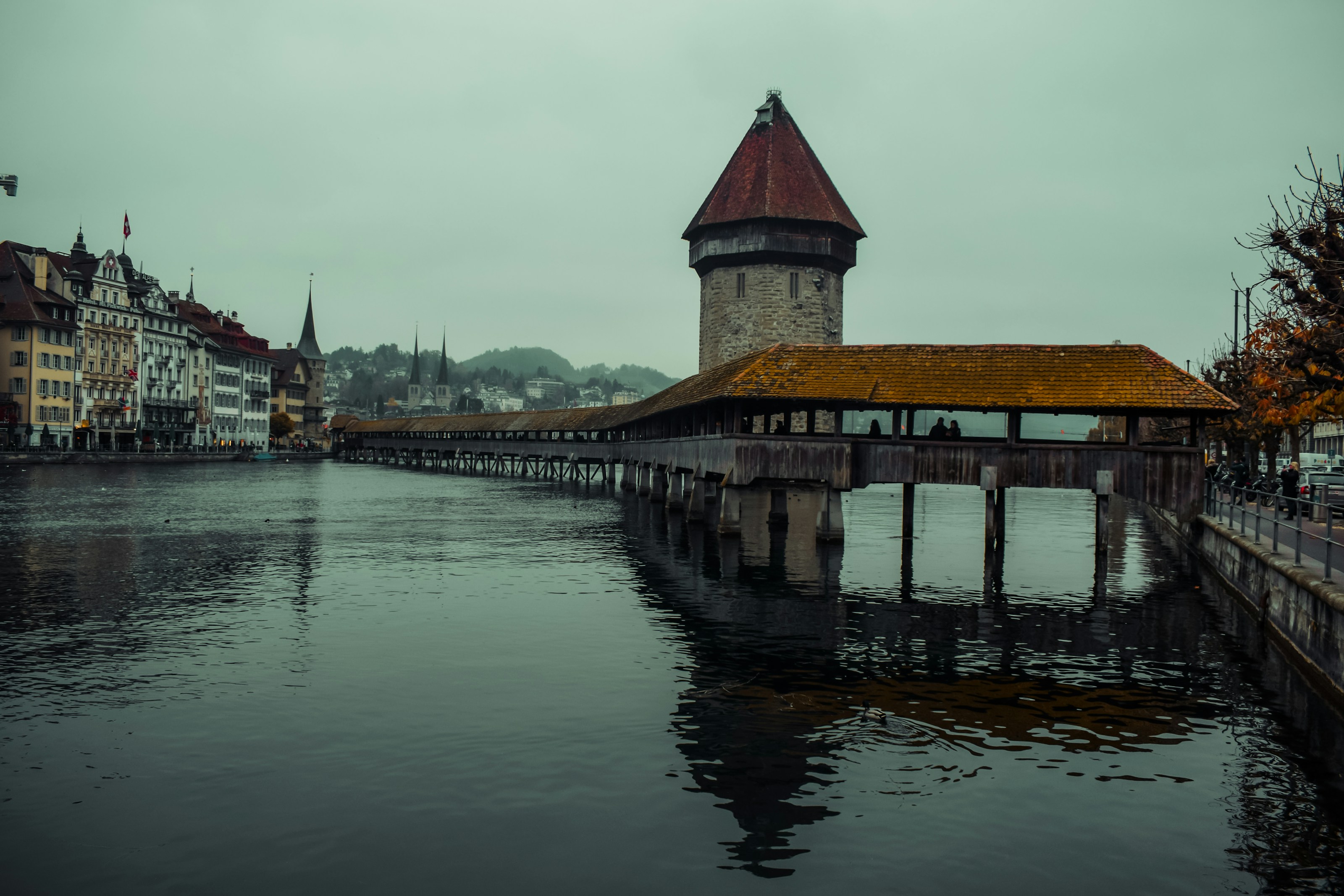 #3874 /100
A covered timber footbridge zigzagging across the Reuss in Lucerne, built in 1333 and hung with painted gable panels telling the city's history.
The octagonal stone water tower beside it is the image on every Lucerne postcard.
Much of the bridge was rebuilt after a fire in 1993, but the effect from the riverbank is unchanged.
How does it rate
CrowdsRomanceCash RequiredDangerAccessibilityWhy you should go
Europe's oldest surviving covered wooden bridge, free to cross and beautifully lit at dusk.
Why you shouldn't go
Its fame is out of proportion to its size - most visitors have seen everything in ten minutes.
Plan your visit
Best time to visitMay-September, when the flower boxes along the rails are in bloomBest time of dayBlue hour, when the lamps come on and the water goes stillGetting thereFive minutes on foot from Lucerne station, straight down to the riverEntry costFreeTime needed30 minutesInsider tip — Shoot from the Rathaussteg downstream to get the bridge, the water tower and the Pilatus massif behind it all in one frame. -
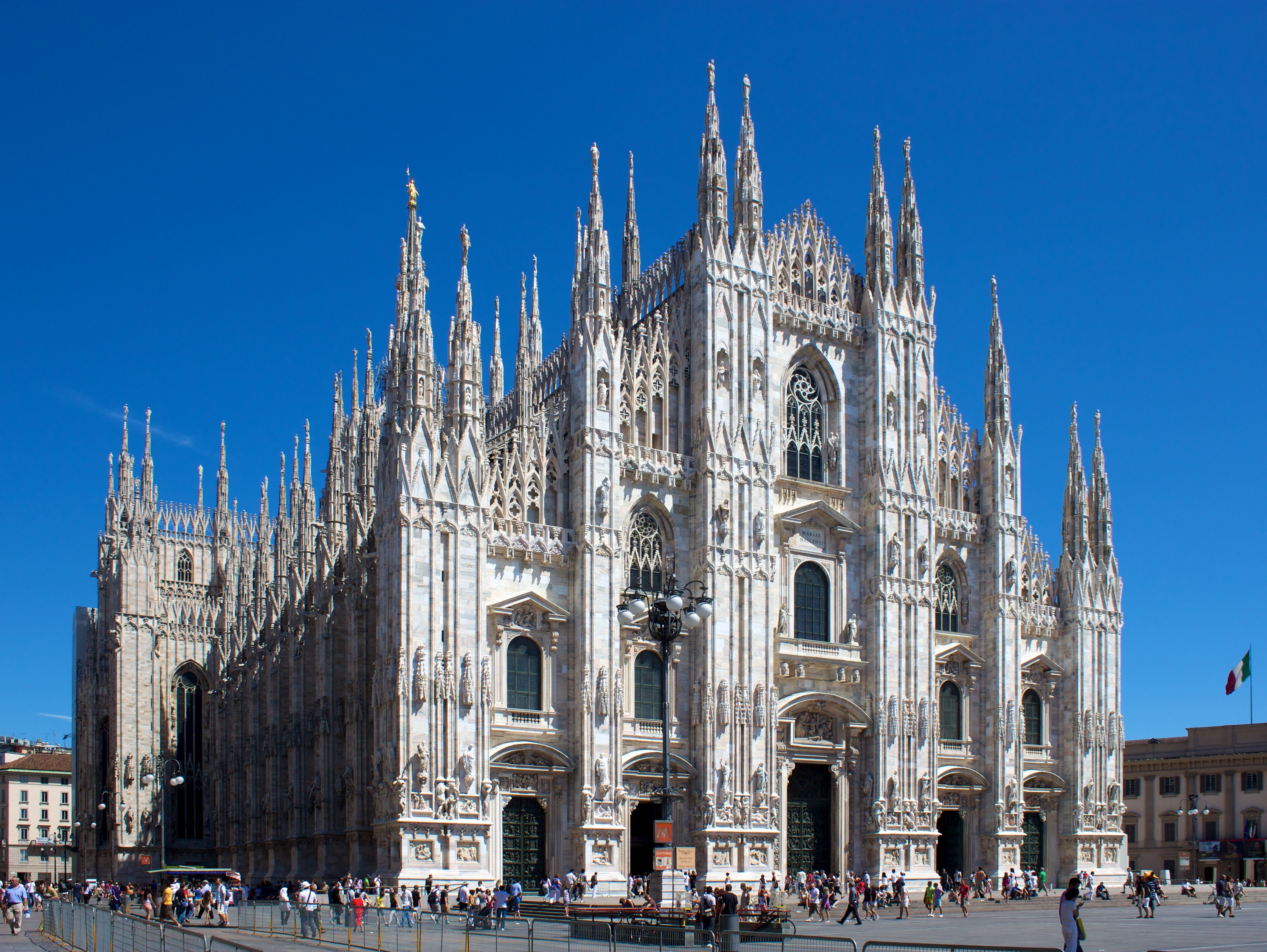 #3970 /100
The Duomo di Milano is the largest Gothic cathedral in the world and took nearly six centuries to complete.
Its rooftop terrace, accessible by lift or stairs, offers a unique up-close view of its 3,400 statues and 135 spires against the Milan skyline.
How does it rate
CrowdsRomanceCash RequiredDangerAccessibilityWhy you should go
Walking among the spires on the cathedral rooftop is a surreal and unforgettable experience that gives you extraordinary close-up views of the intricate stonework.
Why you shouldn't go
The cathedral interior is often crowded and the rooftop terrace has an entrance fee on top of the already steep cost of visiting Milan.
Plan your visit
Best time to visitSpring or autumnBest time of daySunset from the rooftopGetting thereCentral Milan, Duomo Metro stopEntry costRooftop access ~EUR15-20Time needed1.5 hoursInsider tip — Book rooftop terrace tickets online to skip the queue -
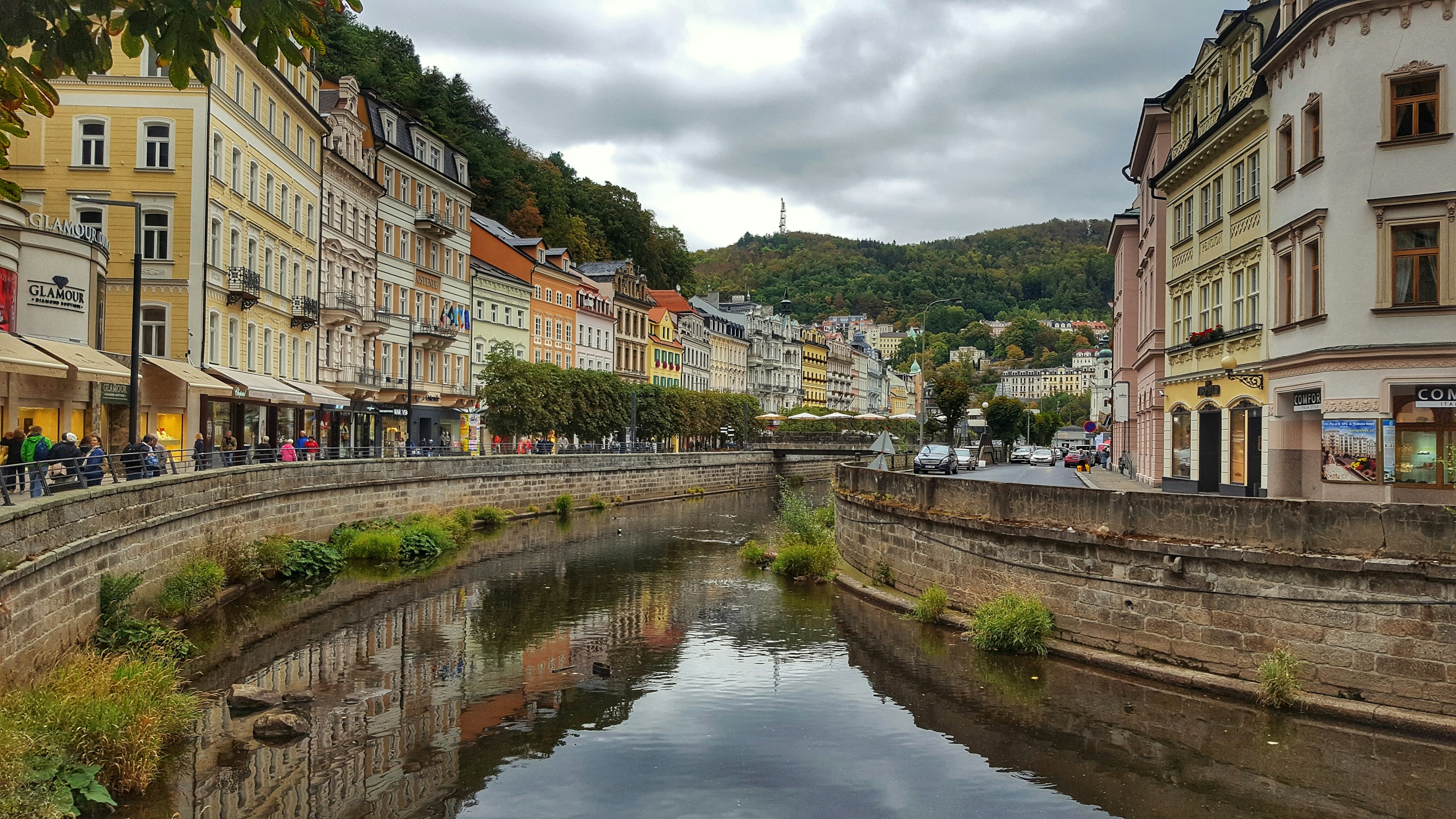 #4068 /100
Karlovy Vary is Bohemia's grandest spa town, its curving colonnades and belle-époque facades built around thirteen mineral hot springs that locals have taken for their health since the 14th century.
Visitors sip the sulphurous water from porcelain spa cups while wandering the Teplá riverside promenade, and the wooded hills above hide viewpoints reachable by funicular.
It hosts a major film festival each July.
How does it rate
CrowdsRomanceCash RequiredDangerAccessibilityWhy you should go
Ornate 19th-century colonnades built around genuinely therapeutic hot springs, still in daily use.
Why you shouldn't go
The spa water itself is an acquired taste, and much of the grandest architecture is now fenced-off private clinics.
Plan your visit
Best time to visitMay-September for warm-weather promenading, or early July for the Film Festival if crowds don't bother you.Best time of dayLate afternoon, when the colonnade light softens and day-trip buses have thinned out.Getting thereRegioJet or FlixBus from Prague (~1hr 40min); the direct train takes closer to 3.5 hours.Entry costFree to walk the colonnades; spa cup and water tasting a few hundred CZKTime neededHalf a day, or overnight for a spa treatmentInsider tip — Buy a lázeňský pohárek (spa cup with a built-in straw spout) from any kiosk and refill it free at the different colonnade springs; each tastes distinctly different. -
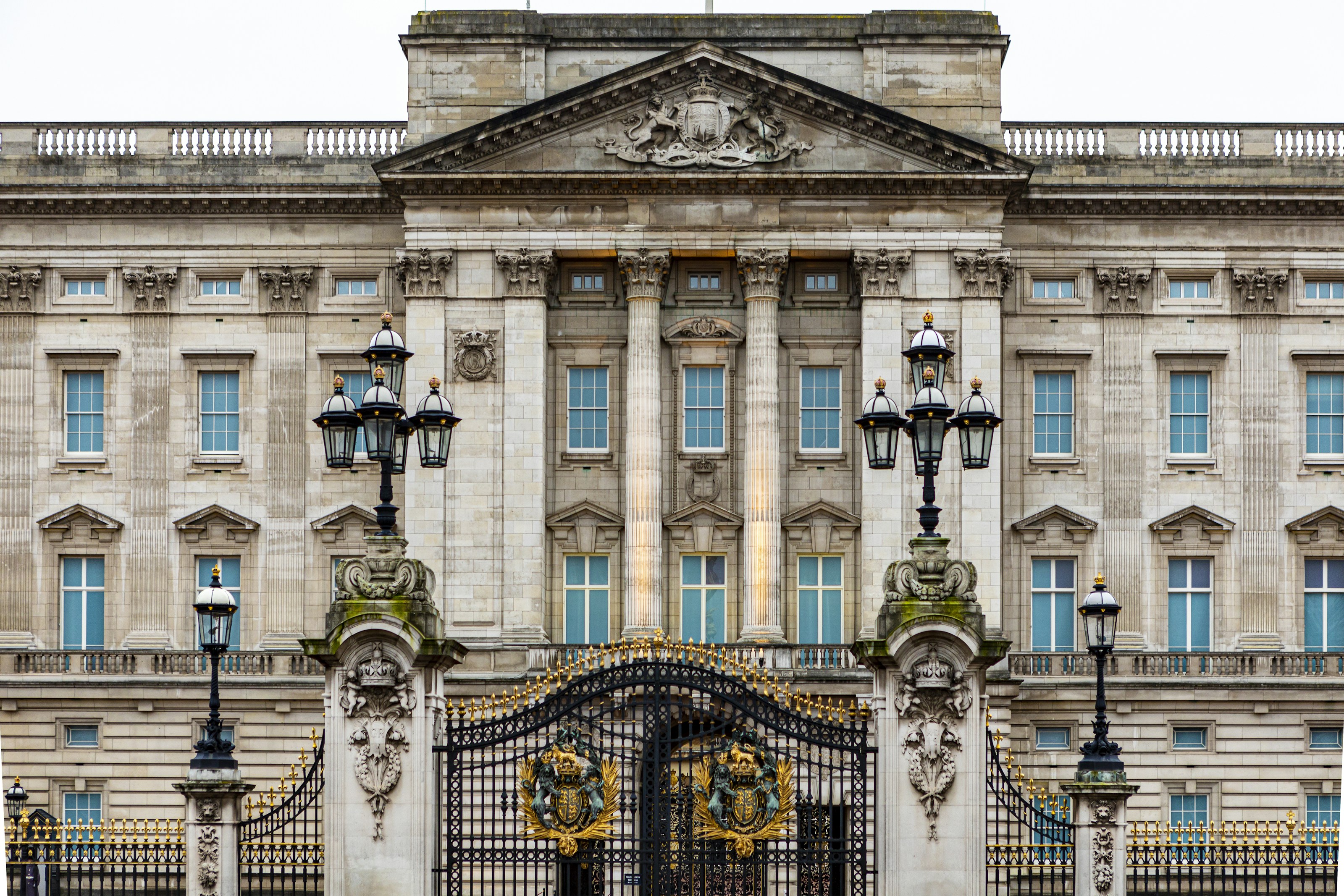 #4168 /100
The monarch's London residence, a 775-room block behind the gilded Victoria Memorial gates where the Changing of the Guard draws a crush most mornings.
The State Rooms open for ten weeks each summer, when visitors can walk the Throne Room and the Picture Gallery.
For the rest of the year the railings are as close as anyone gets.
How does it rate
CrowdsRomanceCash RequiredDangerAccessibilityWhy you should go
The State Room opening each summer is the only chance to walk through a working royal palace.
Why you shouldn't go
For most of the year it is a facade behind a fence, and the guard ceremony is watched three deep.
Plan your visit
Best time to visitMid-July to late September, while the State Rooms are openBest time of dayArrive by 10am for the Changing of the Guard, which begins at 11amGetting thereTube to Green Park, St Jamess Park or Victoria, all under ten minutes on footEntry costFree to view; State Rooms around GBP 35Time needed1-2 hoursBookingBook ahead →Insider tip — Watch the guard from the steps of the Victoria Memorial rather than the palace railings - you are higher up and can see the band coming down the Mall. -
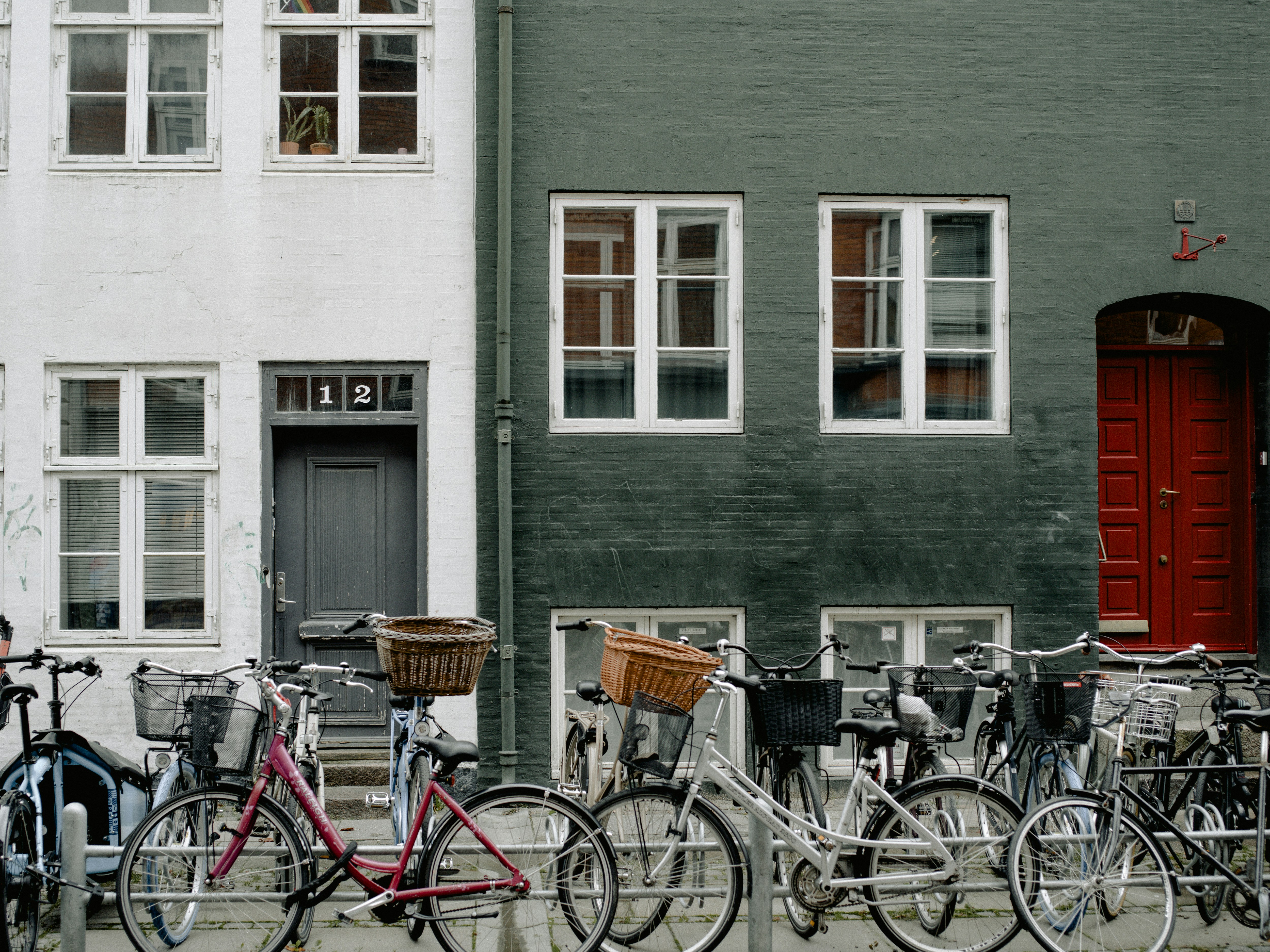 #4266 /100
Copenhagen's 400km network of raised, kerb-separated cycle tracks makes riding the easiest way to see the city, from Nyhavn's canal houses to the harbour baths and Christiania.
Dedicated bicycle bridges and traffic lights timed for cyclists mean two-wheeled traffic genuinely outnumbers cars downtown.
Hotel and station bike rental is everywhere, and the flat terrain suits complete beginners.
How does it rate
CrowdsRomanceCash RequiredDangerAccessibilityWhy you should go
The world's most bike-friendly capital lets you cover its sights on dedicated, car-free lanes.
Why you shouldn't go
Rush-hour lanes are genuinely busy, and unfamiliar riders can feel intimidated by fast local commuters.
Plan your visit
Best time to visitMay-Sep for long daylight hours and mild weather.Best time of dayMid-morning or early afternoon, outside the sharpest commuter rush hours.Getting thereFly into Copenhagen Airport; 15-minute metro to the centre, where rental bikes are available citywide.Entry costBike rental from DKK 100-150/day; many hotels lend bikes freeTime neededHalf a day to explore the centreBookingBook ahead →Insider tip — Follow local etiquette -- signal turns by hand, keep right unless overtaking, and never stop suddenly in the cycle lane, since commuters ride close behind. -
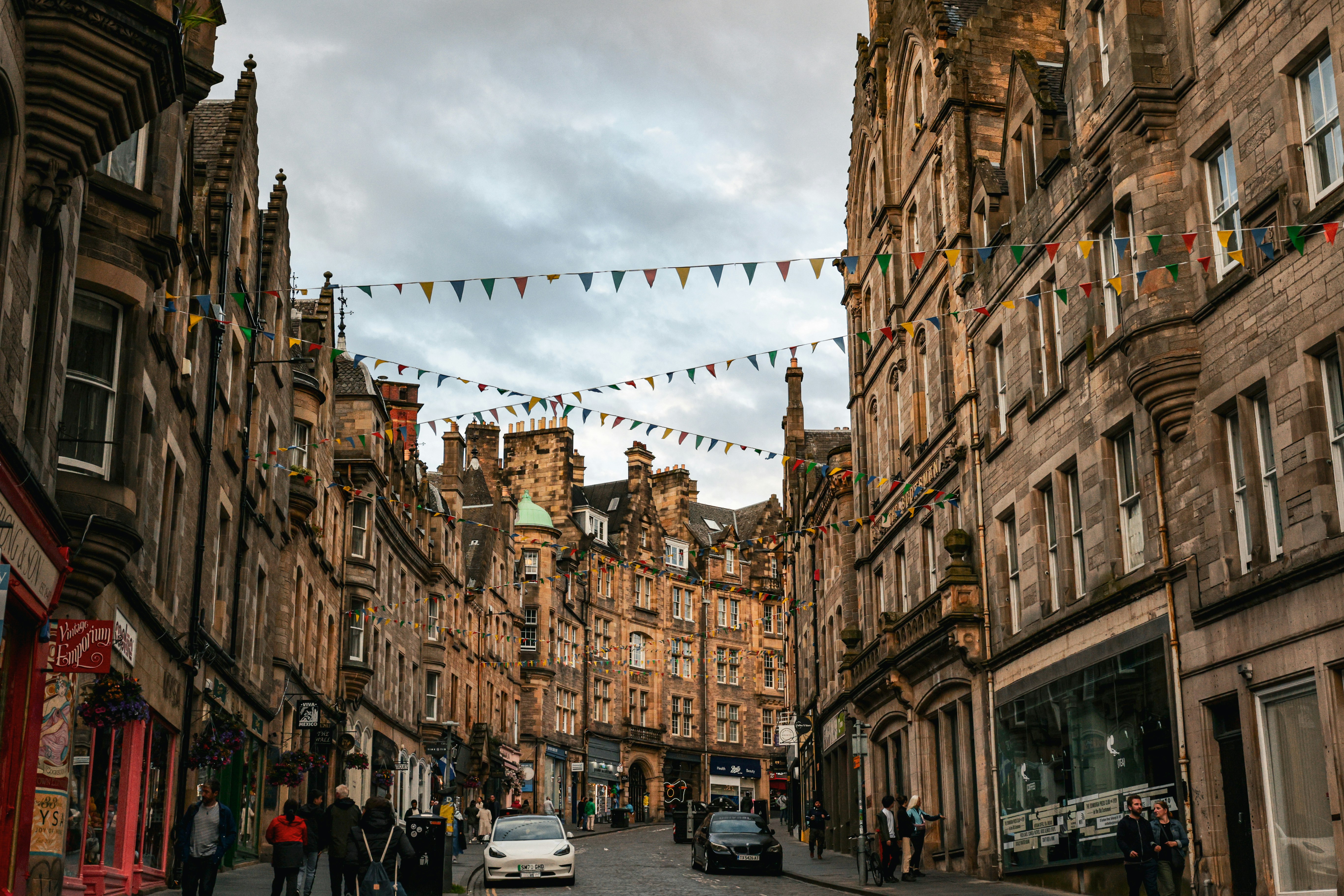 #4366 /100
Every August, Edinburgh's Old Town becomes the world's largest arts festival, with thousands of comedy, theatre and street performances crammed into venues from grand halls to converted cupboards, while the Royal Mile fills with performers touting shows to passers-by.
It began in 1947 when eight companies turned up uninvited to the official Edinburgh International Festival.
How does it rate
CrowdsRomanceCash RequiredDangerAccessibilityWhy you should go
The world's largest arts festival, staged across a medieval Old Town for the entire month of August.
Why you shouldn't go
Venues are tiny and shows overlap constantly, so seeing more than a handful of performances takes real scheduling.
Plan your visit
Best time to visitAugust, the festival's fixed month-long annual run.Best time of dayLate afternoon on the Royal Mile, when street performers and flyering are at their busiest.Getting thereFly to Edinburgh Airport, then a tram or bus roughly 30 minutes into the city centre.Entry costStreet performances are free (tip expected); ticketed shows typically run GBP10-25.Time neededA full day to sample multiple shows, or several days for a proper Fringe trip.BookingBook ahead →Insider tip — Half-price ticket booths around the Royal Mile sell same-day tickets to shows that haven't sold out, often for genuinely good acts. -
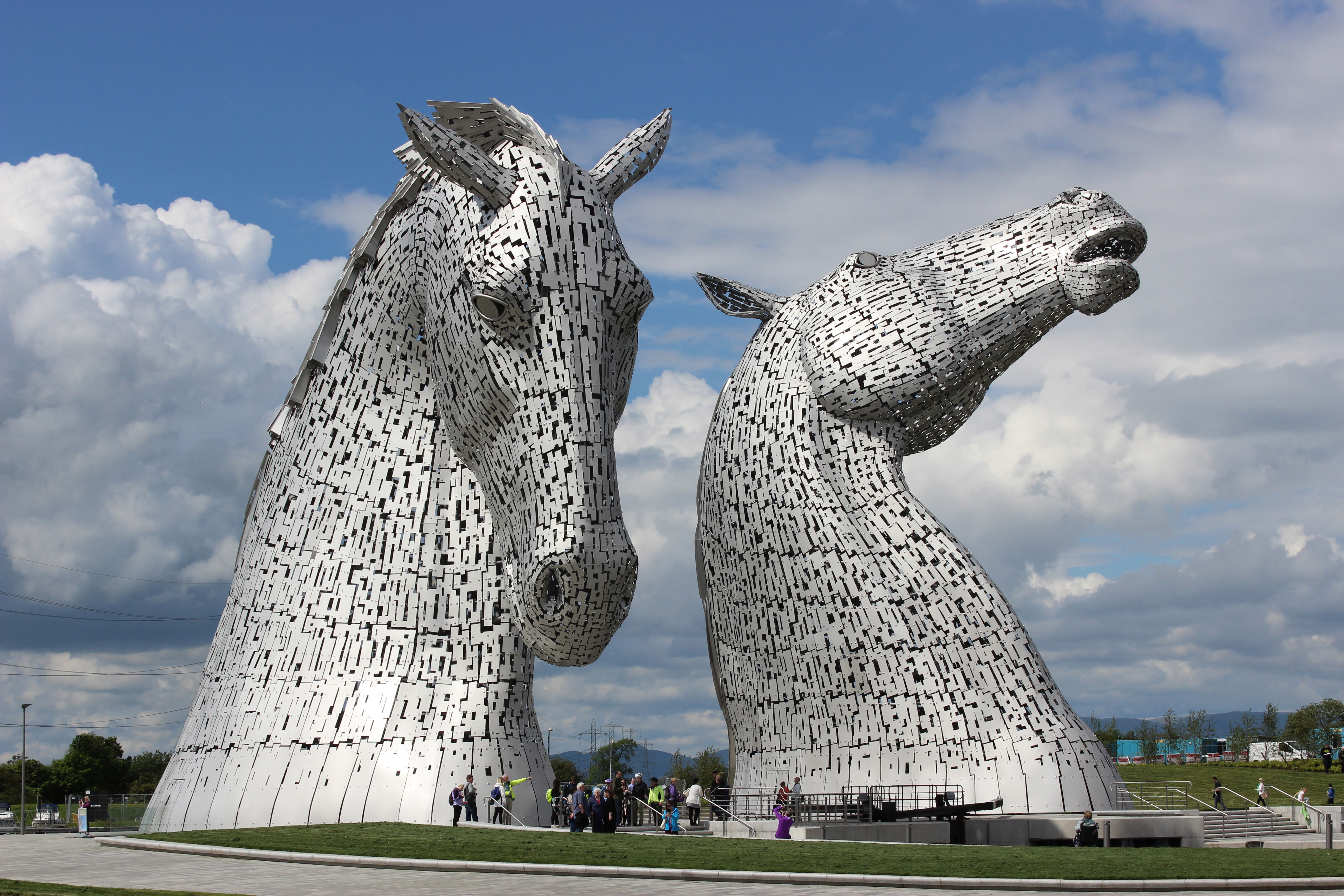 #4465 /100
The Kelpies are two enormous horse-head sculptures rising 30 metres above the Forth and Clyde Canal in Falkirk, the largest equine sculptures in the world.
Designed by Andy Scott and completed in 2013, they celebrate the working horses that were central to Scotland's industrial and agricultural heritage.
How does it rate
CrowdsRomanceCash RequiredDangerAccessibilityWhy you should go
The scale of the Kelpies is genuinely impressive in person and they are particularly dramatic when floodlit at night; entry to the interior is available through guided tours.
Why you shouldn't go
The Kelpies are in an industrial area of Falkirk with little else of interest nearby; they are impressive to look at but the experience is brief.
Plan your visit
Best time to visitYear-round, especially when illuminated at nightBest time of dayBlue hour when the lights turn onGetting there~30 min drive from Edinburgh or Glasgow, near FalkirkEntry costFree; visitor centre tours extraTime needed1 hourInsider tip — They are lit up after dark; the reflection in the canal water is best on a still evening -
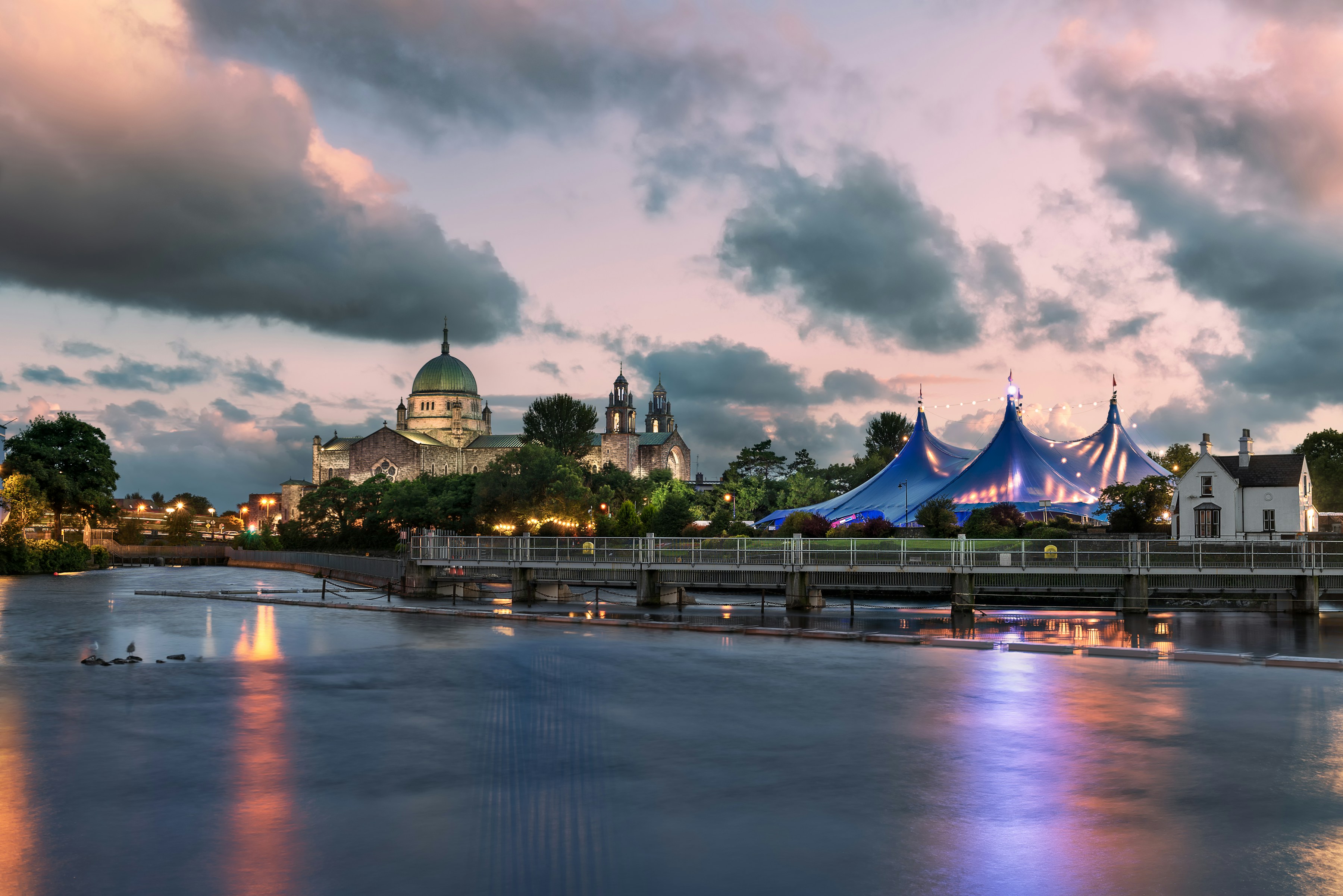 #45
#45A compact, colorful university city on Ireland's west coast, Galway trades Dublin's scale for a tighter concentration of traditional music pubs, street buskers and independent shops along its pedestrianized Latin Quarter.
It's the natural gateway to Connemara and the Aran Islands, but has enough character — the Spanish Arch, the Saturday market, a lively arts festival calendar — to justify a stop on its own.
How does it rate
CrowdsRomanceCash RequiredDangerAccessibilityWhy you should go
A compact, walkable city with Ireland's liveliest concentration of traditional music pubs.
Why you shouldn't go
Popular weekends and festival dates get very busy and accommodation prices spike accordingly.
Plan your visit
Best time to visitJuly for the Galway International Arts Festival, or September for quieter weather.Best time of dayEvening, when pubs along Quay Street fill with live music.Getting thereDirect train or bus from Dublin, about 2.5 hours; nearest airport is Shannon, 1 hour away.Entry costFree to explore the city.Time needed1–2 days.Insider tip — Follow the music, not the signage — the best sessions are often in smaller pubs off the main Quay Street strip. -
 #4664 /100
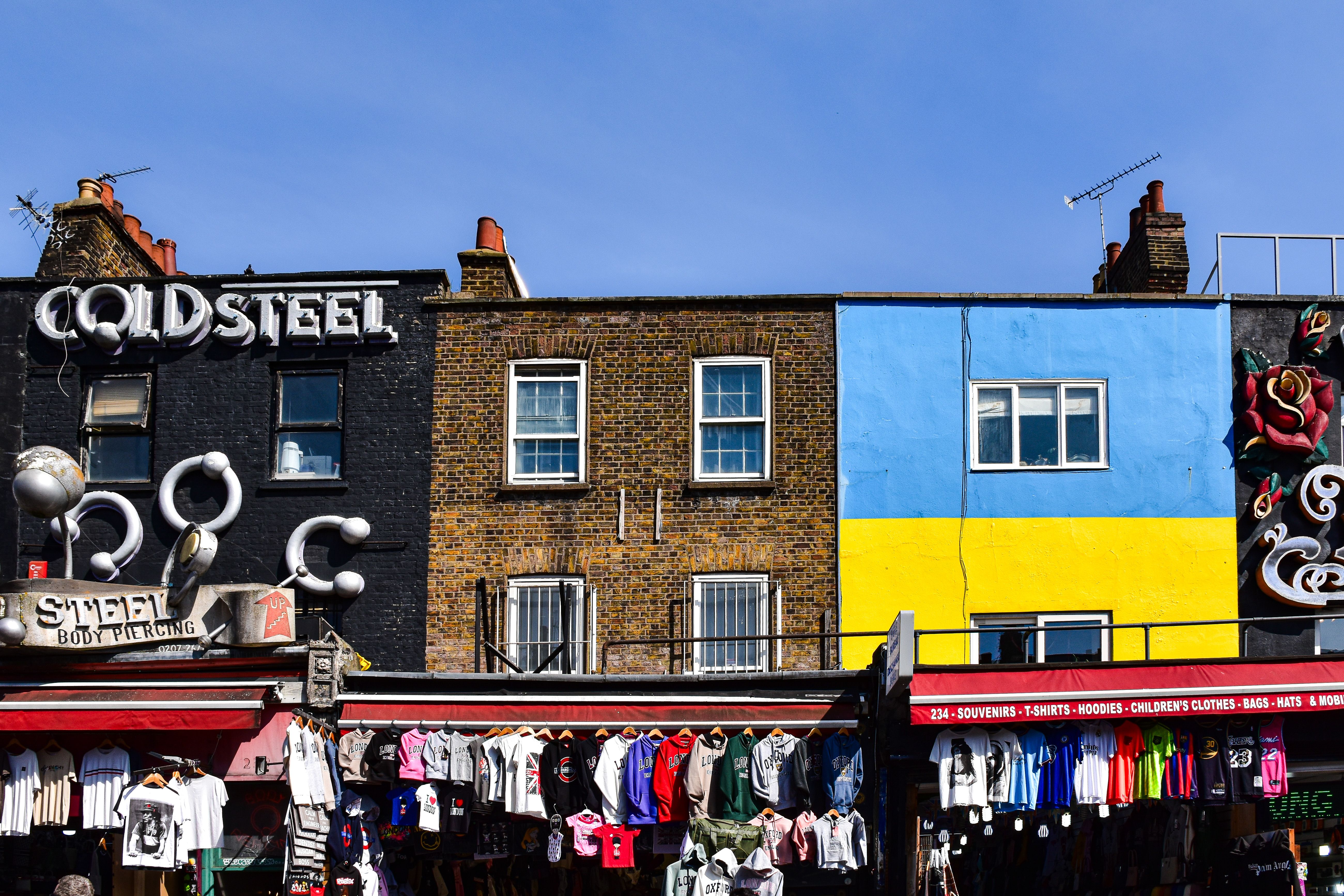
Camden's sprawling network of markets grew from a single lock-side crafts market in 1974 into one of London's most-visited attractions, a warren of stalls, food vendors and independent shops across the canalside Stables Market and Camden Lock.
Its identity has always leaned alternative - punk memorabilia, gothic fashion, tattoo studios - and the surrounding streets carry a live-music history running from punk through Britpop to Amy Winehouse.
How does it rate
CrowdsRomanceCash RequiredDangerAccessibilityWhy you should go
A canalside warren of alternative fashion, street food and independent stalls that's been London's countercultural market since the 1970s.
Why you shouldn't go
Weekends get extremely crowded, pickpocketing is common in the busiest lanes, and the market's edgier reputation has faded under heavy tourist footfall.
Plan your visit
Best time to visitWeekday mornings for a noticeably calmer visit than the packed weekends.Best time of dayLate morning, once stalls are fully open but before peak weekend crowds arrive.Getting thereTake the London Underground to Camden Town station, a short walk to the market entrance.Entry costFree to browse; food stalls and goods vary widely in price.Time needed2-3 hours.Insider tip — Walk the canal towpath from Camden Lock toward Regent's Park for a quieter, more scenic route away from the main stalls. -
 #4763 /100
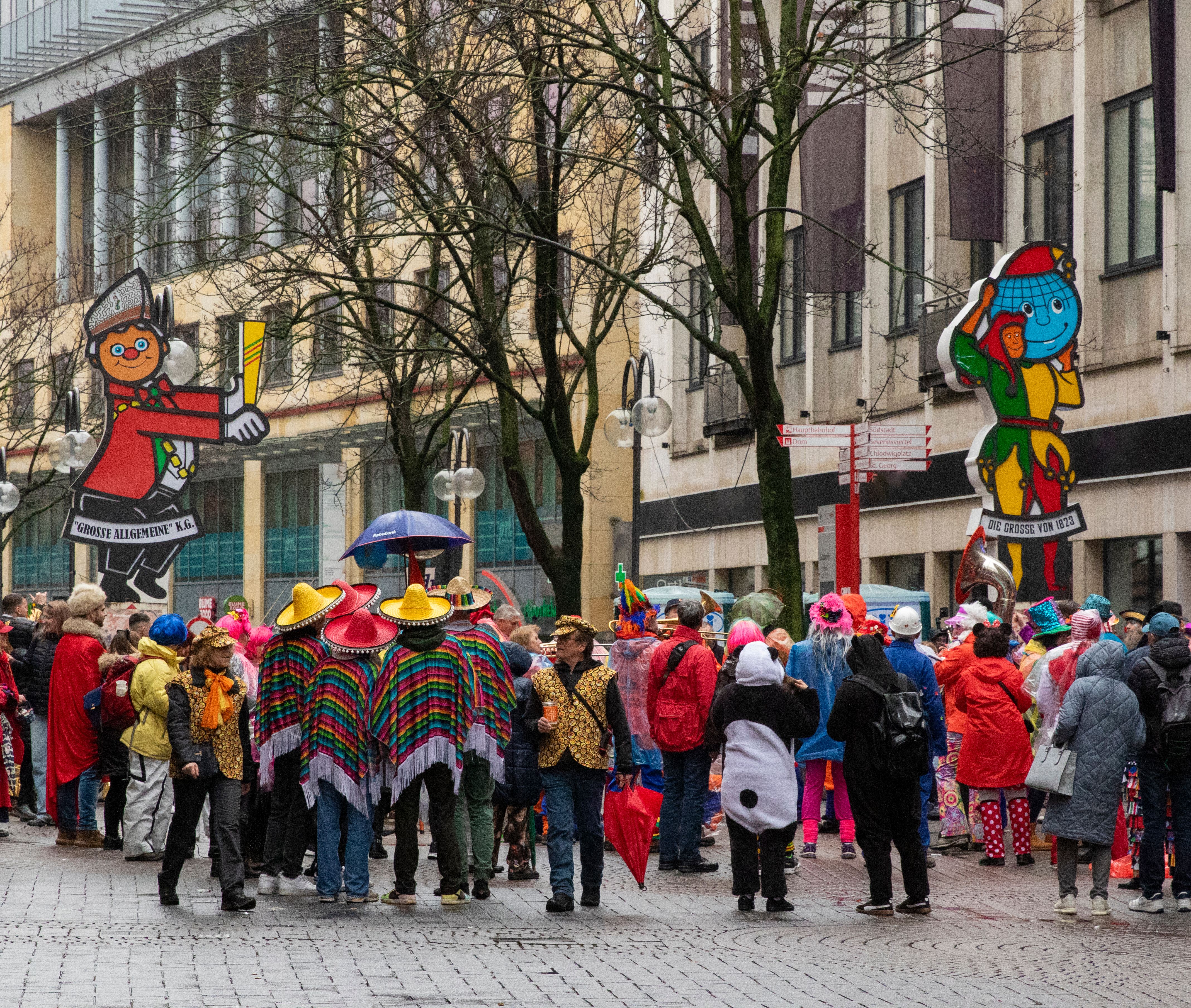
Cologne takes carnival more seriously than almost any other German city, its 'fifth season' building to its real climax on Rose Monday, when satirical floats and marching bands parade through the city centre while crowds shout 'Kolle Alaaf' and scramble for thrown sweets.
Costumed carnival societies, some dating to the 1820s, organise much of the festivities.
How does it rate
CrowdsRomanceCash RequiredDangerAccessibilityWhy you should go
A boisterous German street carnival built around satirical parade floats and a citywide, week-long party.
Why you shouldn't go
The core carnival days are extremely crowded and drinking-heavy, which won't suit visitors looking for a quieter cultural event.
Plan your visit
Best time to visitRose Monday, the carnival's parade peak (falls in February or early March, shifting yearly with Easter).Best time of dayEarly afternoon, for the Rose Monday parade through the city centre.Getting thereFly to Cologne Bonn Airport, then a train roughly 20 minutes to Cologne Hauptbahnhof.Entry costFree to watch the parade in the streets.Time neededA full day.Insider tip — Bring a bag to catch the sweets and small gifts thrown from the floats, a genuine local tradition rather than just for kids. -
 #4863 /100
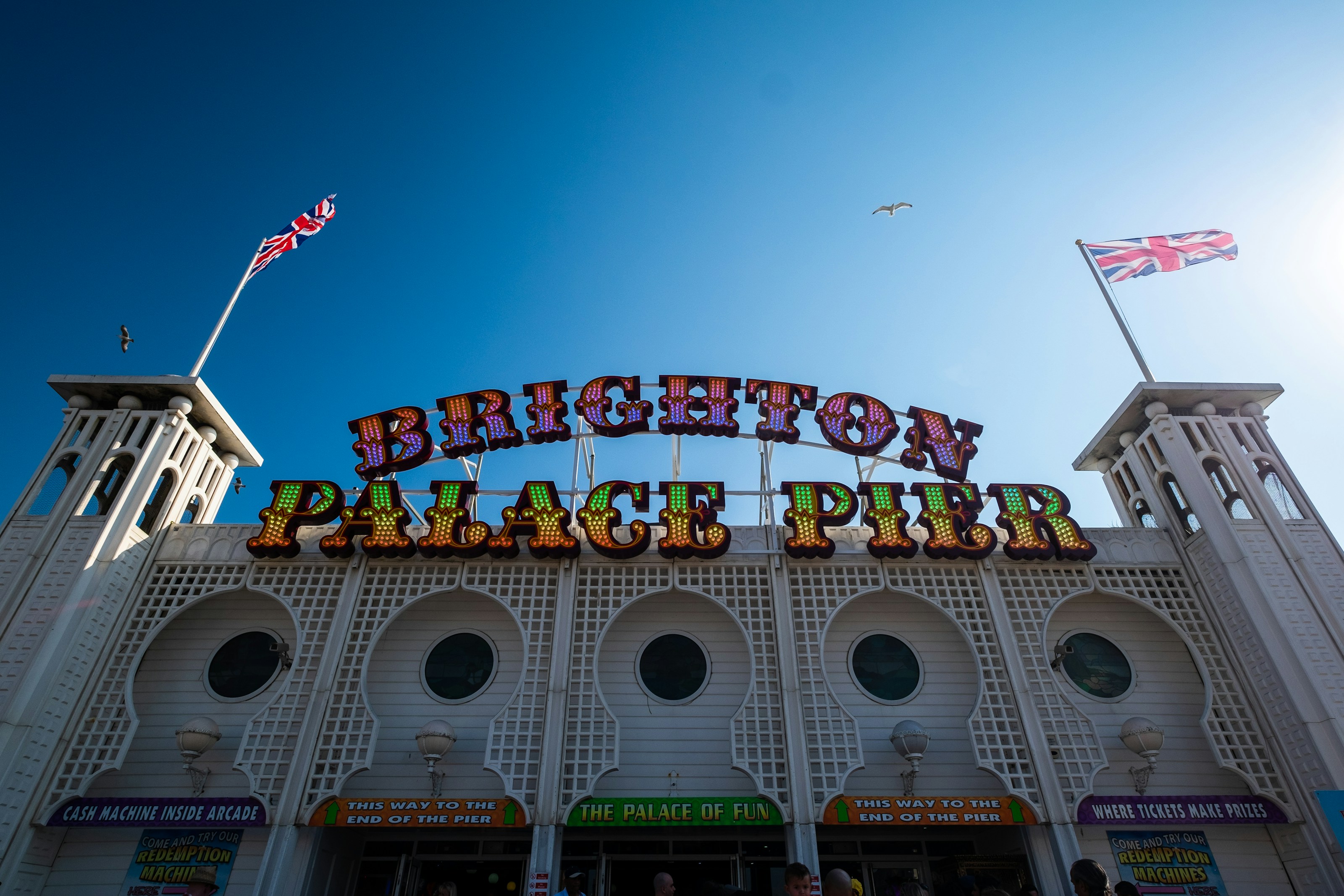
England's largest annual multi-arts festival fills Brighton each May with theatre, dance, music, and visual art across the seaside city's theatres, churches, and public spaces, alongside the fringe-style Brighton Festival Fringe running in parallel.
A different guest artistic director curates the programme each year, while the free outdoor Children's Parade and Artists' Open Houses trail draw crowds beyond ticketed shows.
How does it rate
CrowdsRomanceCash RequiredDangerAccessibilityWhy you should go
England's largest multi-arts festival, with a new guest artistic director curating theatre, dance, and art across Brighton each May.
Why you shouldn't go
Brighton's hotels fill and prices rise through May, especially on weekends when the festival overlaps with regular seaside crowds.
Plan your visit
Best time to visitThe month of May each year.Best time of dayAfternoon and evening for most performances; the Artists' Open Houses run daytime.Getting thereTake a direct train from London Victoria or London Bridge, about an hour to Brighton station.Entry costMany events are free; ticketed shows run roughly GBP10-35.Time neededA weekend covers a good sample; the full festival runs the whole month.BookingBook ahead →Insider tip — The Artists' Open Houses trail, where locals turn their homes into small galleries, is free and often overlooked next to the ticketed main programme. -
 #4960 /100
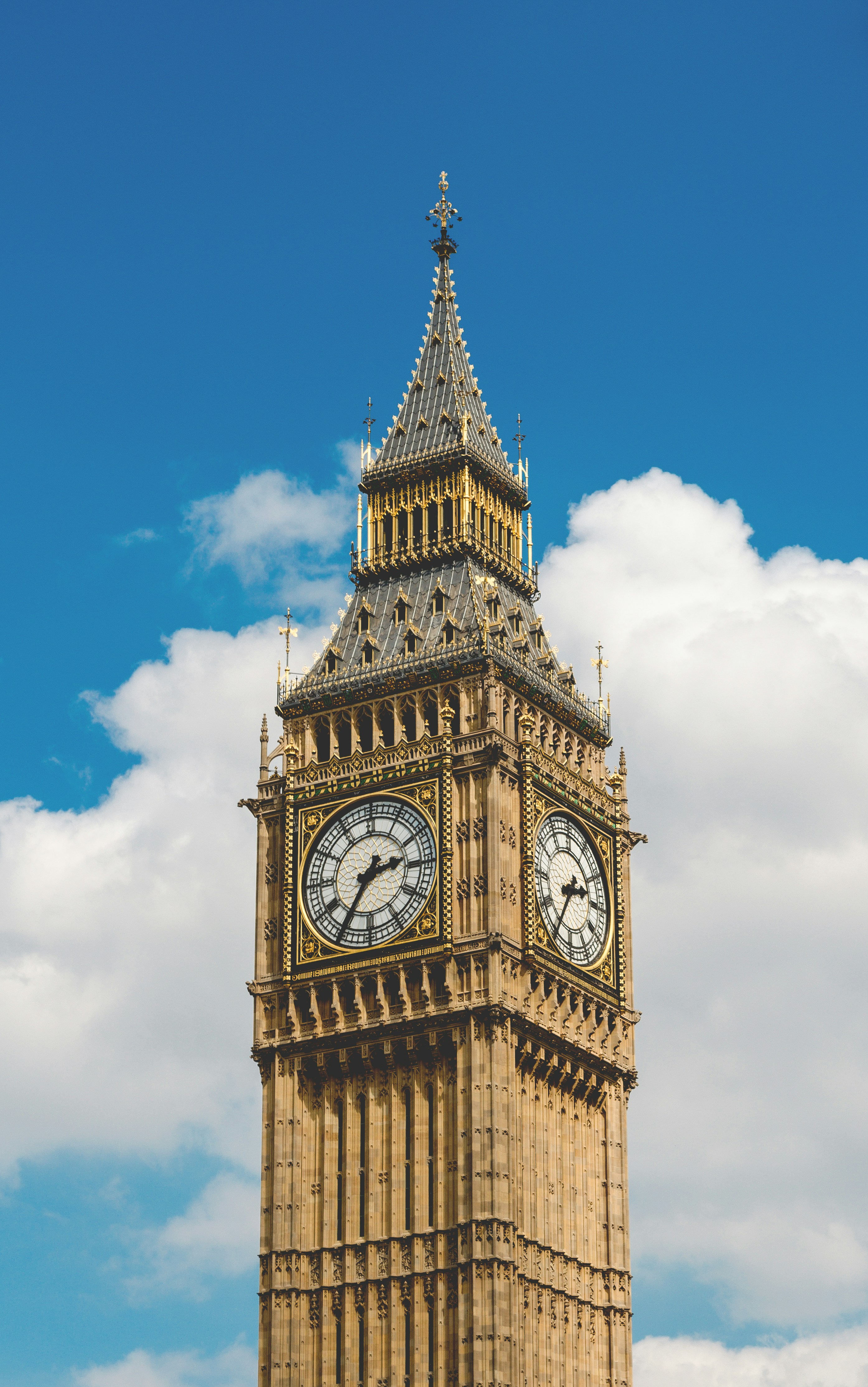
Big Ben is the great bell inside the Elizabeth Tower, the Gothic Revival clock tower at the north end of the Palace of Westminster.
Completed in 1859 and fully restored by 2022, its four illuminated dials and hourly chimes are the sound and silhouette most associated with London.
From outside it is a ten-minute stop; the interior tour climbs 334 steps and is open to UK residents only, by MP nomination.
How does it rate
CrowdsRomanceCash RequiredDangerAccessibilityWhy you should go
Visiting Big Ben offers a quintessential British experience and an impressive photo opportunity.
Why you shouldn't go
The area around Big Ben is often crowded with tourists, and ongoing renovations can sometimes obstruct the view.
Plan your visit
Best time to visitYear-round; spring for cherry blossoms nearbyBest time of daySunset for golden light on the clock faceGetting thereWestminster Tube stationEntry costFree to view from outsideTime needed30 minutesInsider tip — Cross Westminster Bridge for the classic postcard shot -
 #5055 /100
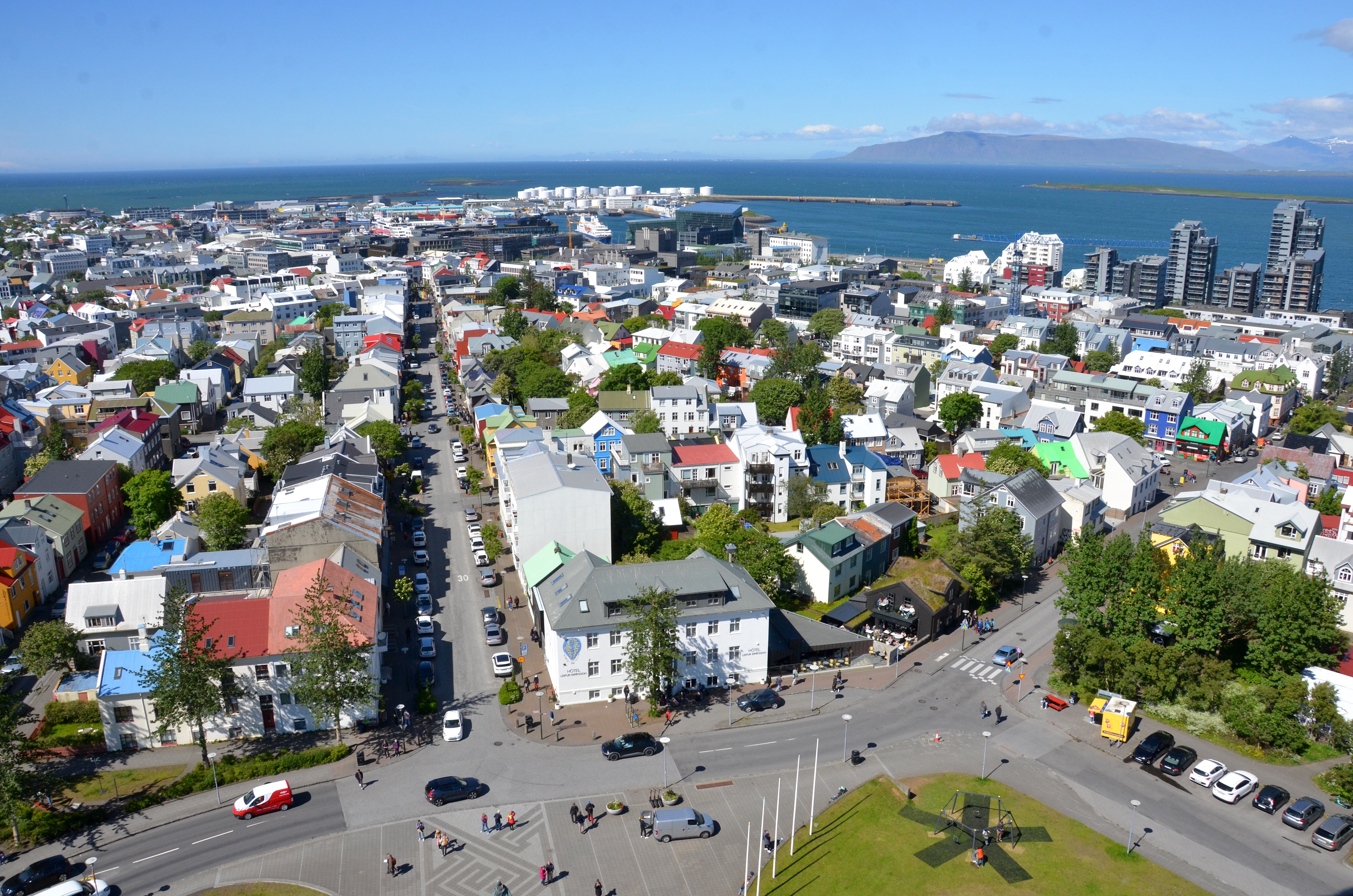
Iceland's compact and colourful capital sits between the mountains and the sea as the world's most northerly capital city.
Rainbow-painted corrugated iron houses, the soaring Hallgrímskirkja church, and a bar and music scene far larger than the population suggests fill a centre small enough to cross on foot.
It doubles as the base for Northern Lights trips and Golden Circle day tours.
How does it rate
CrowdsRomanceCash RequiredDangerAccessibilityWhy you should go
Reykjavik is a wonderfully walkable city with a vibrant arts scene, and serves as the perfect base for Iceland's most spectacular natural wonders.
Why you shouldn't go
The city is notoriously expensive and the famous Northern Lights are only visible during the darker months between September and March.
Plan your visit
Best time to visitJune-August for midnight sun, or Sept-March for Northern LightsBest time of dayDepends on season - midnight light in summer, dark evenings for aurorasGetting thereKeflavik Airport, ~45 min to the cityEntry costFree to exploreTime needed1-2 daysInsider tip — Hallgrimskirkja church tower gives the best rooftop view of the colourful city -
 #51
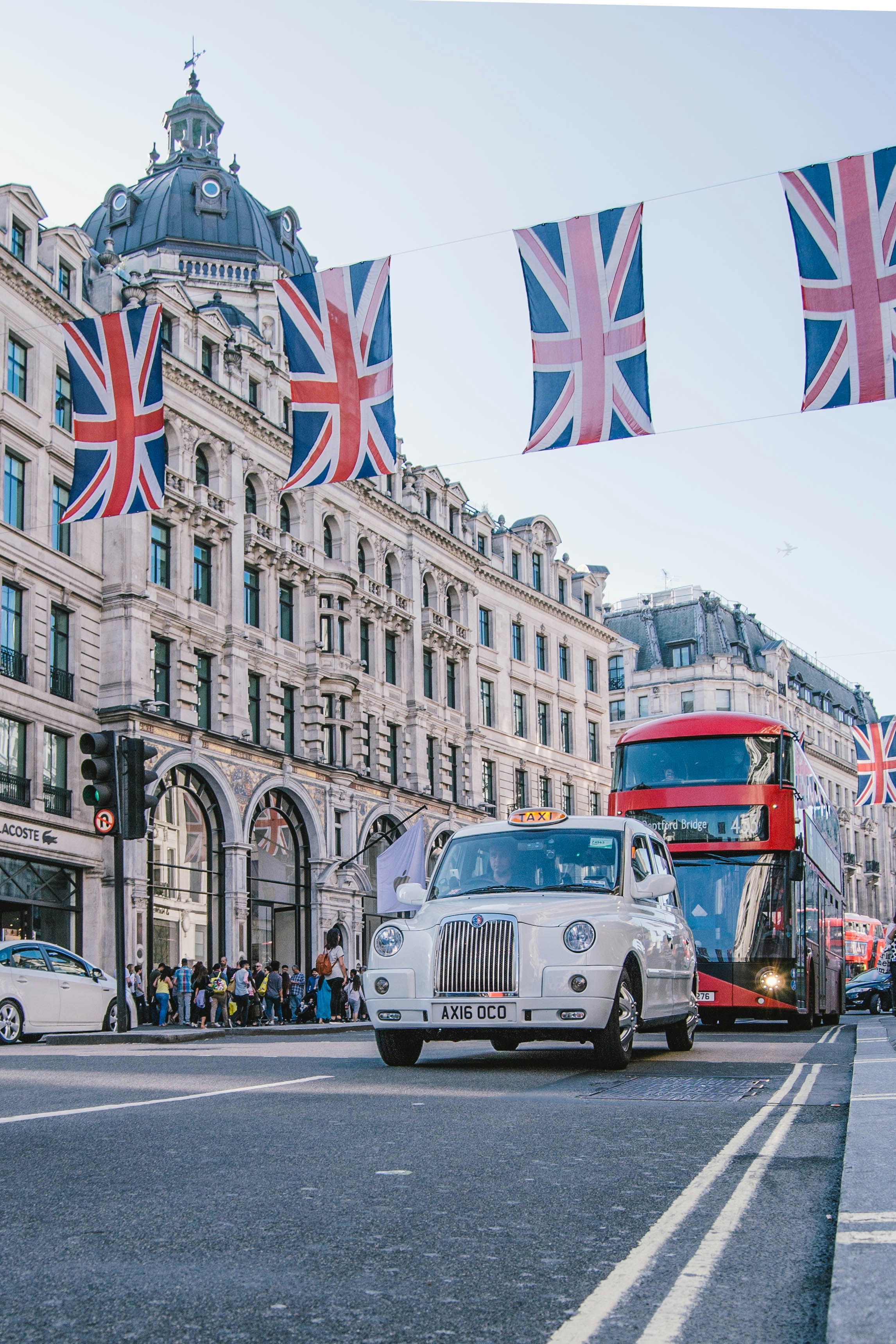
#51London packs two thousand years into one city: fragments of Roman wall, a Norman fortress, Georgian squares and glass towers all within a few Tube stops of each other.
Its national museums are among the best in the world and free to enter, while the parks, markets and riverside walks give the place room to breathe between landmarks.
The weather is unreliable and the prices are not, but the range of things to do is close to unmatched.
How does it rate
CrowdsRomanceCash RequiredDangerAccessibilityWhy you should go
London offers a rich blend of history, culture, and modern attractions with world-famous landmarks and museums.
Why you shouldn't go
It can be very expensive, and its unpredictable weather may impact sightseeing plans.
Plan your visit
Best time to visitSpring or autumn, avoiding summer crowds and winter gloomBest time of dayEarly morning for empty streetsGetting thereFly into Heathrow or Gatwick; the Tube covers the whole cityEntry costFree to explore; individual attractions charge separatelyTime needed3+ daysInsider tip — Get an Oyster card for the Tube instead of buying single tickets -
 #5240 /100
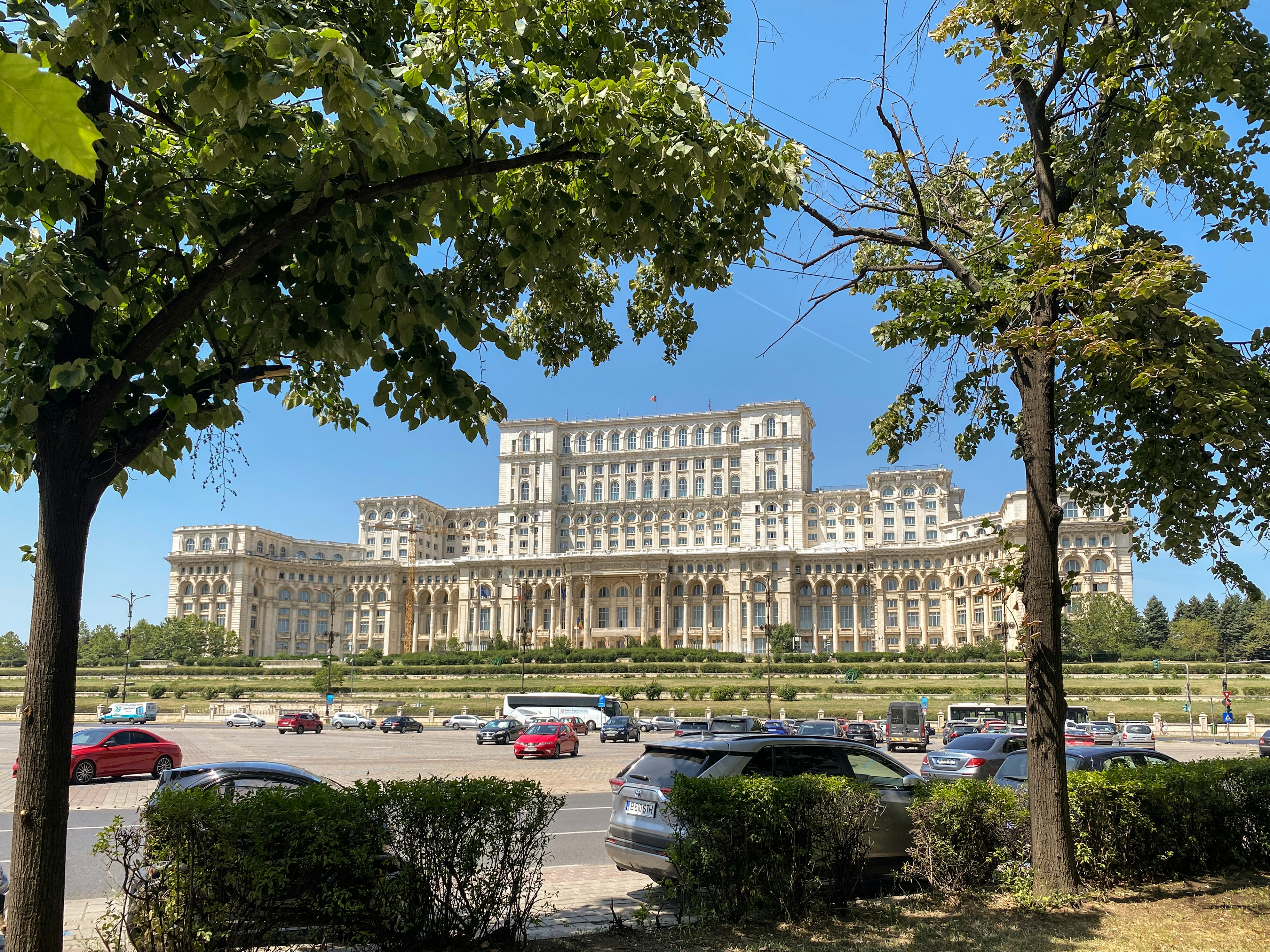
Nicolae Ceausescu's Palace of the Parliament is the heaviest building on Earth and, after the Pentagon, the largest administrative building anywhere: 1,100 rooms over twelve storeys, with eight more levels underground.
It was finished only after his execution, and building it flattened a fifth of Bucharest's historic centre.
Guided tours cover a fraction of the interior, all marble, crystal and corridors built to a scale that never made sense.
How does it rate
CrowdsRomanceCash RequiredDangerAccessibilityWhy you should go
Nothing else conveys the scale of Ceausescu's ambition so directly - the size of the building genuinely has to be seen to be believed.
Why you shouldn't go
Only a fraction of the interior is open, tours must be booked ahead with ID required at the door, and the history behind it is a bleak one.
Plan your visit
Best time to visitSpring or autumnBest time of daySunset, when it is floodlitGetting thereCentral Bucharest, walkable from Unirii SquareEntry costGuided tour ~$10Time needed1-2 hoursInsider tip — Book the guided tour in advance; it is the only way to see the ornate interior -
 #5330 /100
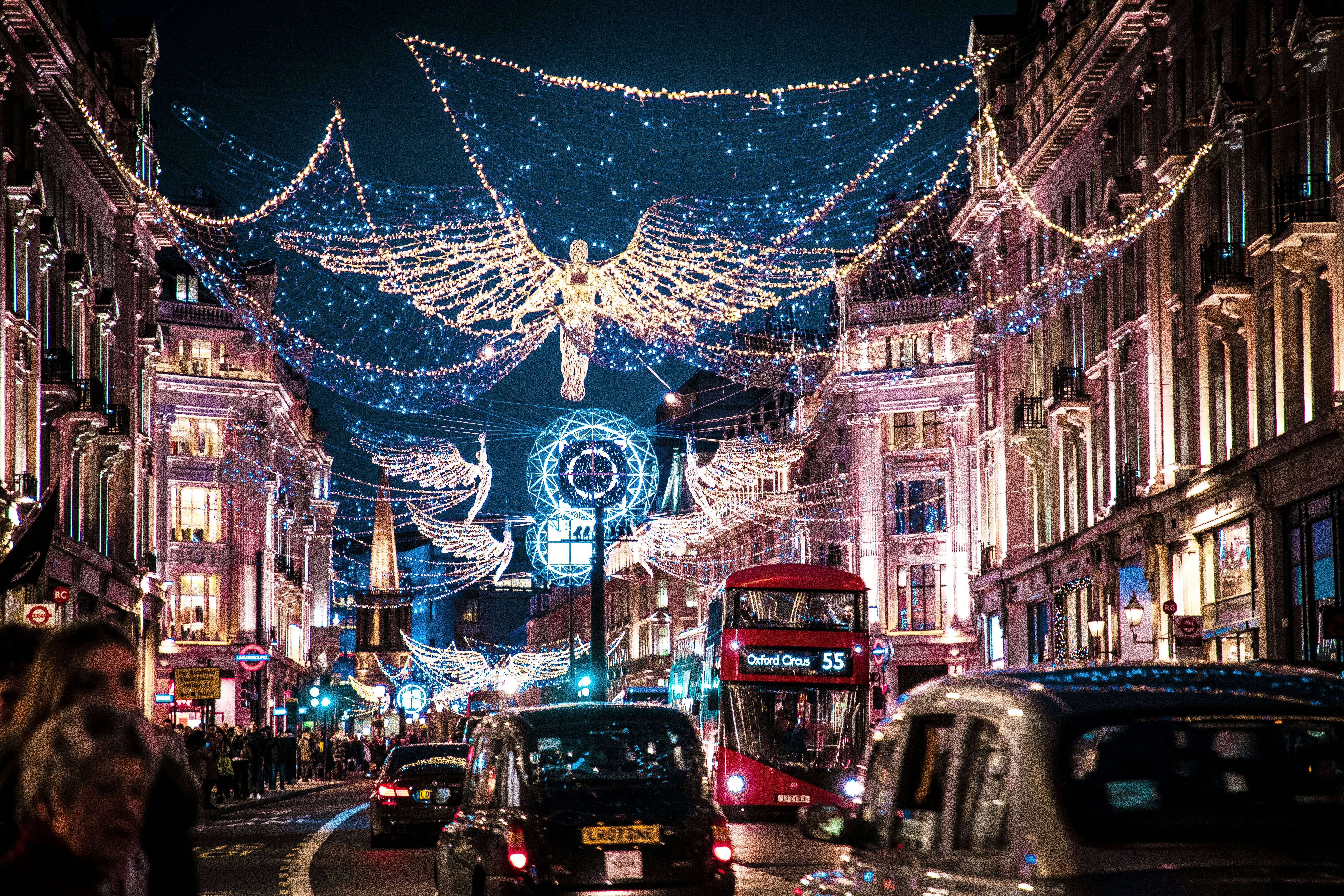
Oxford Street is Britain's busiest shopping street, a mile and a half of chain stores and flagship department stores running from Marble Arch to Tottenham Court Road.
Selfridges, and Liberty just off the eastern end, are the two with genuine character; much of the rest is the same set of brands found in any large UK city.
The Christmas lights through November and December are the one time it feels like an occasion rather than an errand.
How does it rate
CrowdsRomanceCash RequiredDangerAccessibilityWhy you should go
It’s a must-visit shopping street with an array of brands and seasonal decorations.
Why you shouldn't go
It’s often overcrowded, especially during sales, making navigation and photos challenging.
Plan your visit
Best time to visitNovember-December for Christmas lights, otherwise avoid SaturdaysBest time of dayEarly morning before shopping crowdsGetting thereOxford Circus or Bond Street TubeEntry costFreeTime needed1-2 hoursInsider tip — The Christmas lights switch-on in early November is spectacular but very busy


More from Europe
-
More City Life spots
-
How a score is built
One score out of 100, five criteria behind it
Every place is rated 1–5 on each of the criteria below, then combined into a single score out of 100. It's calculated by us, the same way every time — not an average of traveller reviews or social votes.
Crowds
How many people you'll be sharing it with, and at what time of day.
Romance
How well it suits a couple, a proposal, or a quiet moment together.
Cash required
Entry fees, permits, guides, rentals — what it actually costs to do it.
Danger
Physical risk involved, from a slippery viewpoint to genuine hazard.
Accessibility
How far off the beaten path it is, and how hard it is to actually reach.


