-
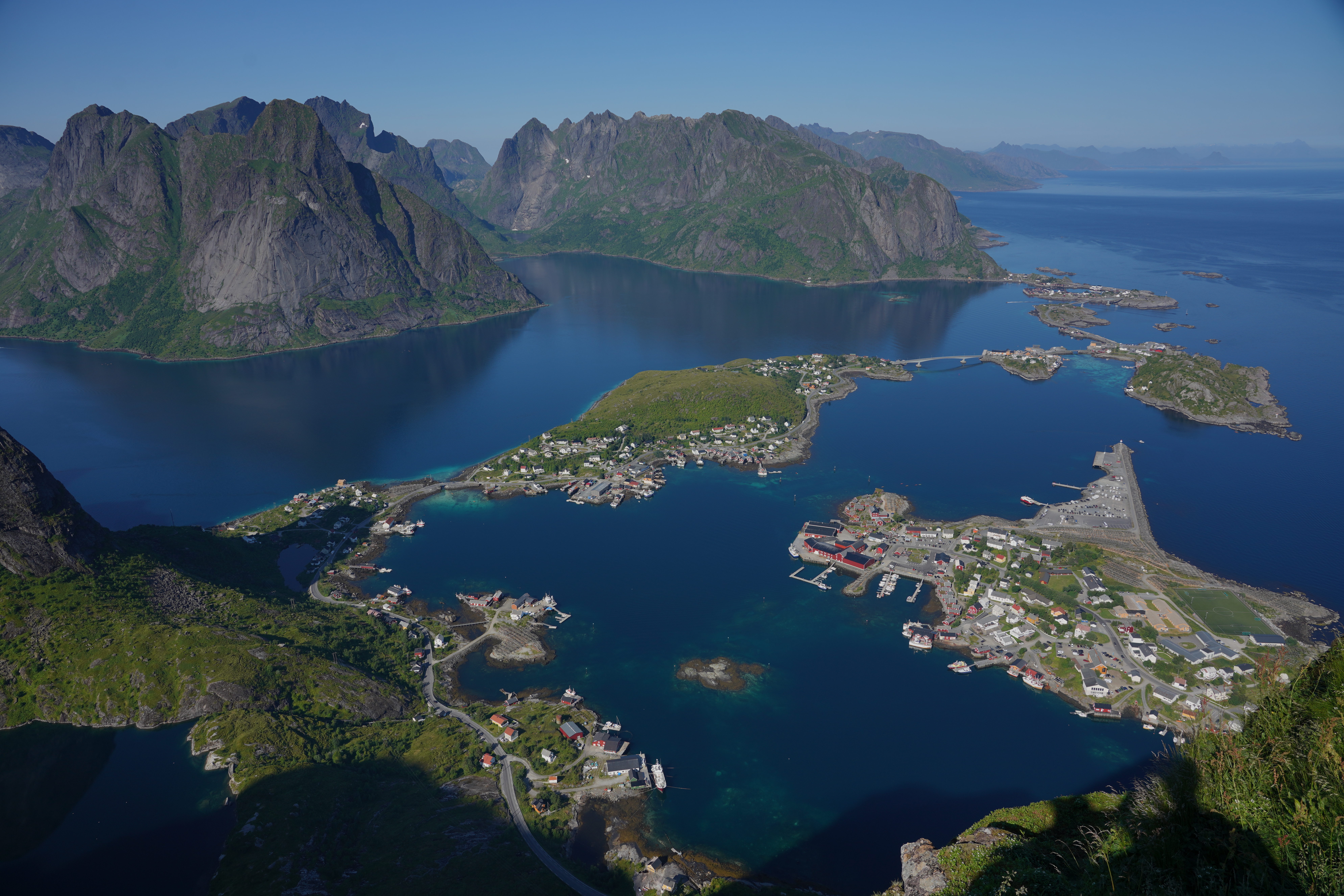 #192 /100
The Lofoten archipelago in northern Norway rises dramatically from the Norwegian Sea as a series of jagged peaks and sheltered bays.
Traditional red fishing cabins called rorbuer dot the shoreline against a backdrop of some of Europe's most spectacular mountain scenery, with the Northern Lights frequently visible in winter.
How does it rate
CrowdsRomanceCash RequiredDangerAccessibilityWhy you should go
The combination of dramatic mountains, Arctic light, colourful fishing villages, and frequent Northern Lights makes Lofoten one of the most photogenic places in Europe.
Why you shouldn't go
The islands are extremely remote, weather is frequently poor, and the Northern Lights are only visible during the dark winter months.
Plan your visit
Best time to visitJune-August for midnight sun, or Sept-March for Northern LightsBest time of dayMidnight sun in summer, or golden hourGetting thereFly to Harstad/Narvik or take the Bodo ferryEntry costFree to exploreTime needed4-5 daysInsider tip — The fishing village of Reine at sunset is the classic shot; go early to get the viewpoint to yourself -
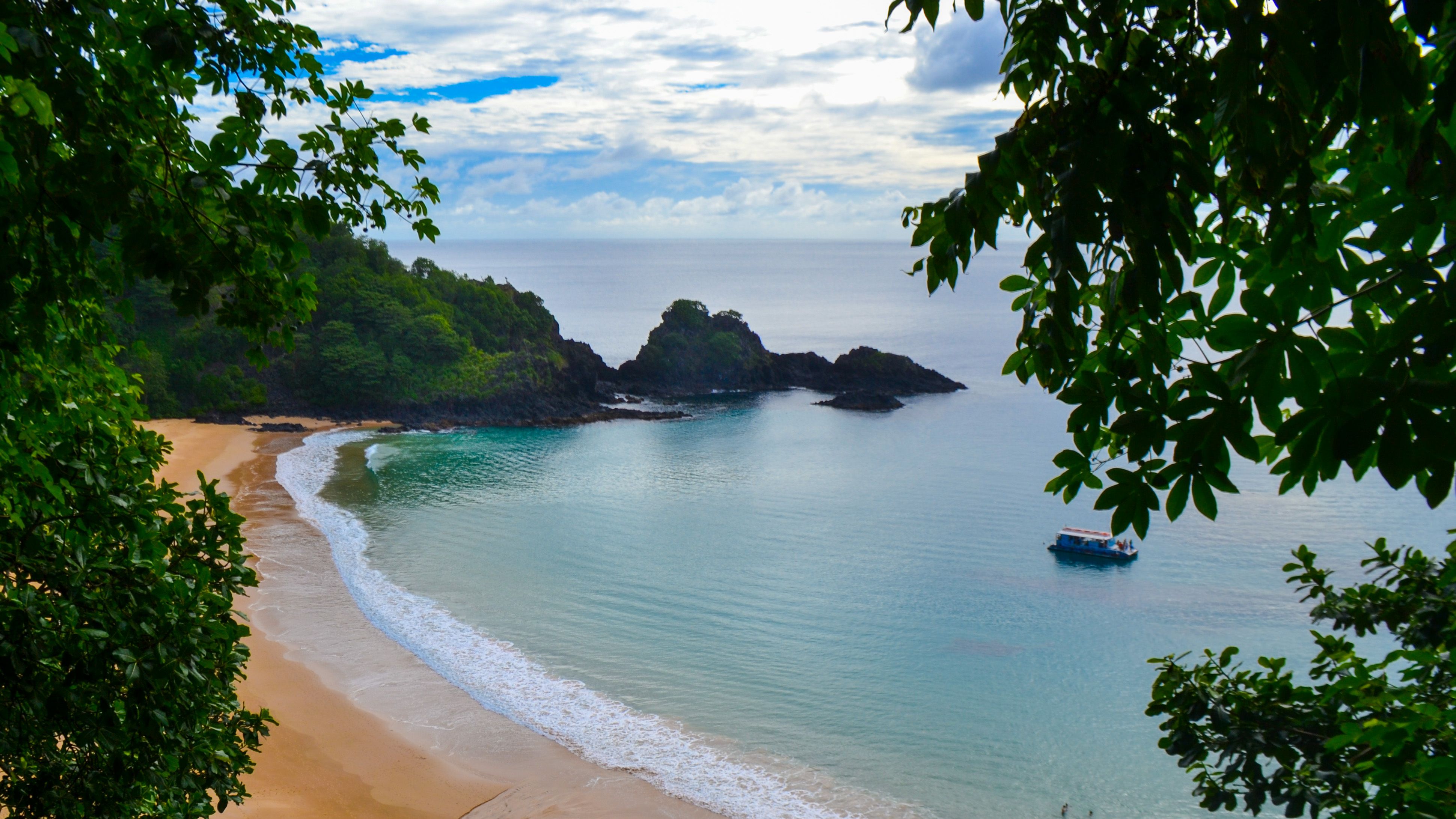 #290 /100
Tucked beneath sheer cliffs on Fernando de Noronha and reachable only by a steep ladder cut into the rock (or by boat), this beach has topped "world's best beach" rankings for good reason.
Turquoise water, sea turtles visible from the shore, and a protected marine park setting mean it stays close to pristine.
The remoteness that makes it special also caps how many people can visit each day.
How does it rate
CrowdsRomanceCash RequiredDangerAccessibilityWhy you should go
Repeatedly voted the world's most beautiful beach, with clear water and visible sea turtles just offshore.
Why you shouldn't go
Only reachable by a steep cliff ladder or a boat transfer, and the island itself is expensive and visitor-capped.
Plan your visit
Best time to visitSeptember-December for the calmest, clearest water.Best time of dayMorning, before the wind picks up and while the ladder queue is short.Getting thereFly to Fernando de Noronha via Recife or Natal; the beach is a short drive plus the cliff ladder from the island's main road.Entry costIncluded in the island's mandatory environmental preservation fee, charged per day.Time neededHalf a day.Insider tip — Snorkel gear rented in Vila dos Remedios pays off here - the reef right off the sand has some of the island's best visibility. -
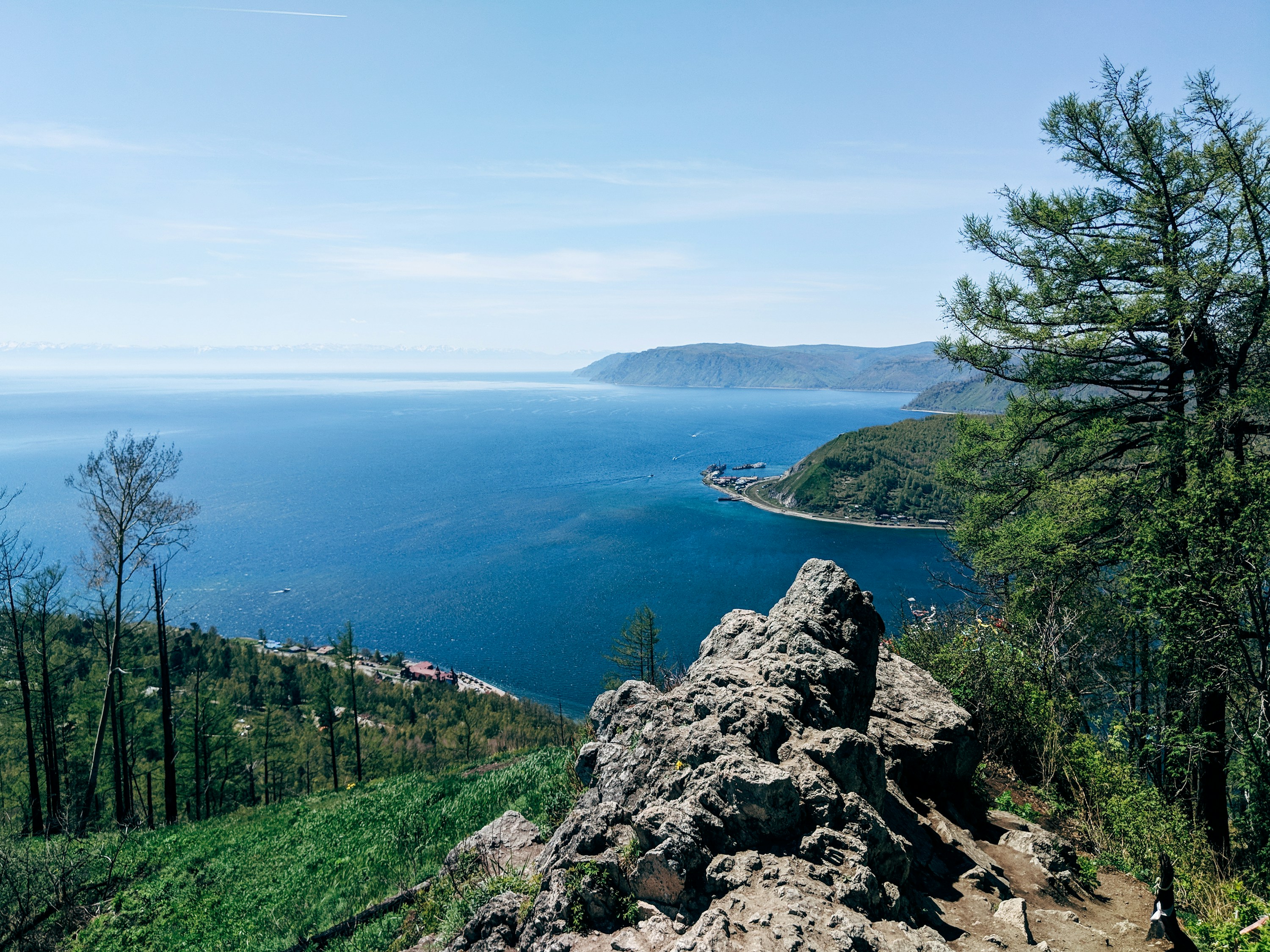 #388 /100
Lake Baikal holds a fifth of the planet's unfrozen fresh water and is both the world's deepest and oldest lake, ringed by taiga forest and mountains in Siberia.
Its clarity lets you see many metres down in summer, while in winter the surface freezes into clear blue ice sheets thick enough to drive on.
Most visitors base themselves in Listvyanka or on Olkhon Island to explore the shoreline and villages.
How does it rate
CrowdsRomanceCash RequiredDangerAccessibilityWhy you should go
The world's deepest, oldest and clearest lake — a fifth of Earth's unfrozen fresh water in one place.
Why you shouldn't go
Deep Siberia is genuinely remote — expect a long flight connection and further travel just to reach the shore.
Plan your visit
Best time to visitLate June–August for open water and hiking; February–March for the clear ice seasonBest time of dayMorning, before wind picks up on the open water in the afternoonGetting thereFly to Irkutsk via a transit hub (no direct Western routes); Listvyanka on the shore is about an hour's bus or taxi ride from the airport.Entry costFree to view the shoreline; boat trips and excursions from around 1,500 RUBTime needed2–3 days to see the shore properly; a week or more for Olkhon Island and the ice seasonInsider tip — Skip the crowded main pier in Listvyanka and walk or taxi a few kilometres along the shore for quieter viewpoints; the Chersky Stone viewpoint above the village gives the best overview of the lake and the Angara River's source. -
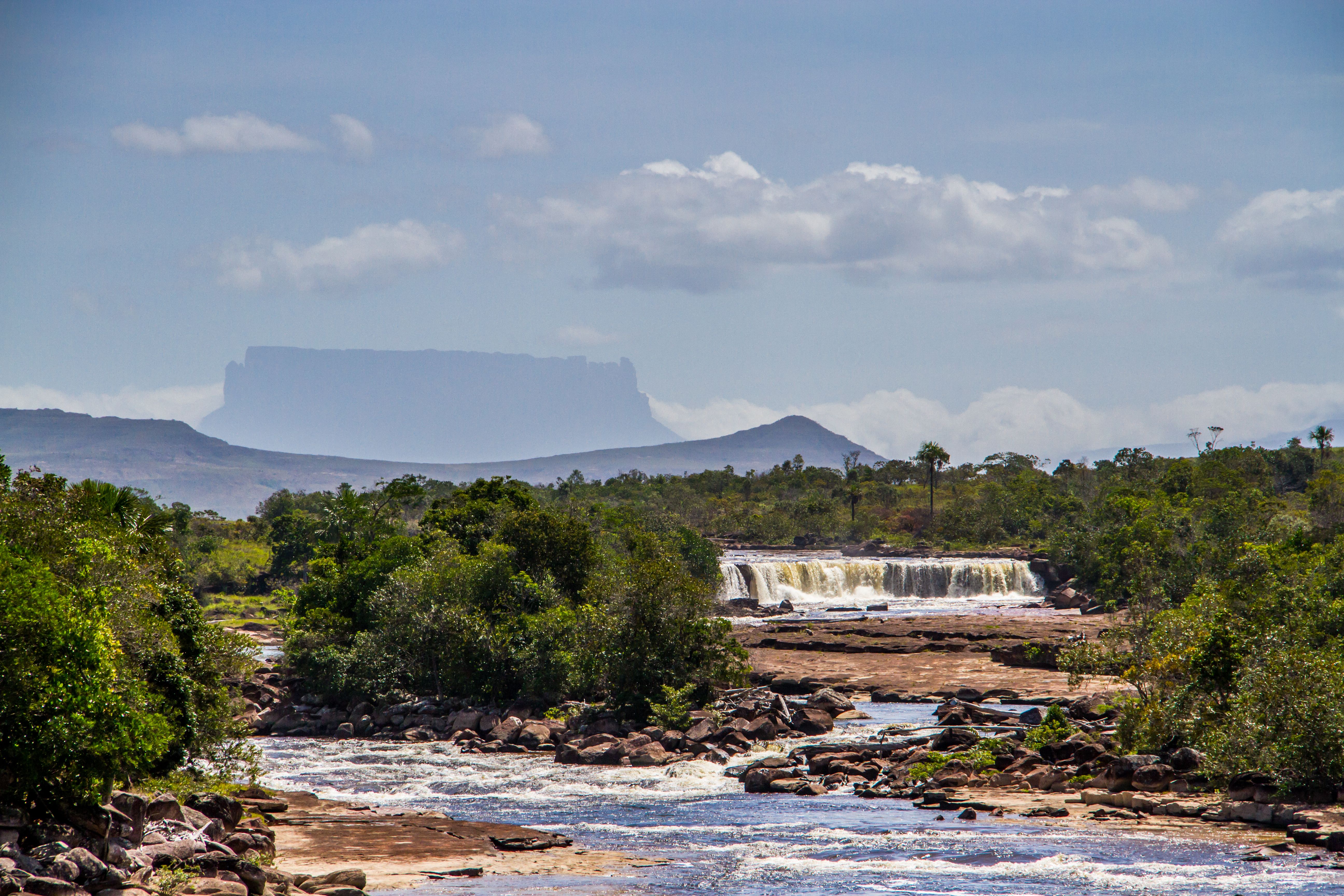 #488 /100
Water drops 979 metres off a sheer tabletop mountain in the middle of remote Venezuelan jungle, making this the tallest waterfall on Earth by a wide margin.
The fall is so tall that much of the water disperses into mist before ever reaching the pool below.
Reaching it means days of river travel by dugout canoe through Canaima National Park, so the sheer remoteness is part of what keeps the view unspoiled.
How does it rate
CrowdsRomanceCash RequiredDangerAccessibilityWhy you should go
The tallest waterfall on Earth, dropping nearly a kilometre off an isolated jungle tabletop mountain.
Why you shouldn't go
There's no road access at all - reaching the base requires days of canoe travel and real logistics.
Plan your visit
Best time to visitJune-November, the wet season, when water volume is highest.Best time of dayMorning, before afternoon cloud typically obscures the tepui's summit.Getting thereFly to Canaima, then travel by dugout canoe up the Carrao and Churun rivers (multi-day trip).Entry costIncluded in multi-day guided tour packages; no independent access.Time needed3-5 days round trip from CanaimaInsider tip — Go in the wet season - in the dry months the river can run too low for canoes to reach the base at all. -
 #588 /100
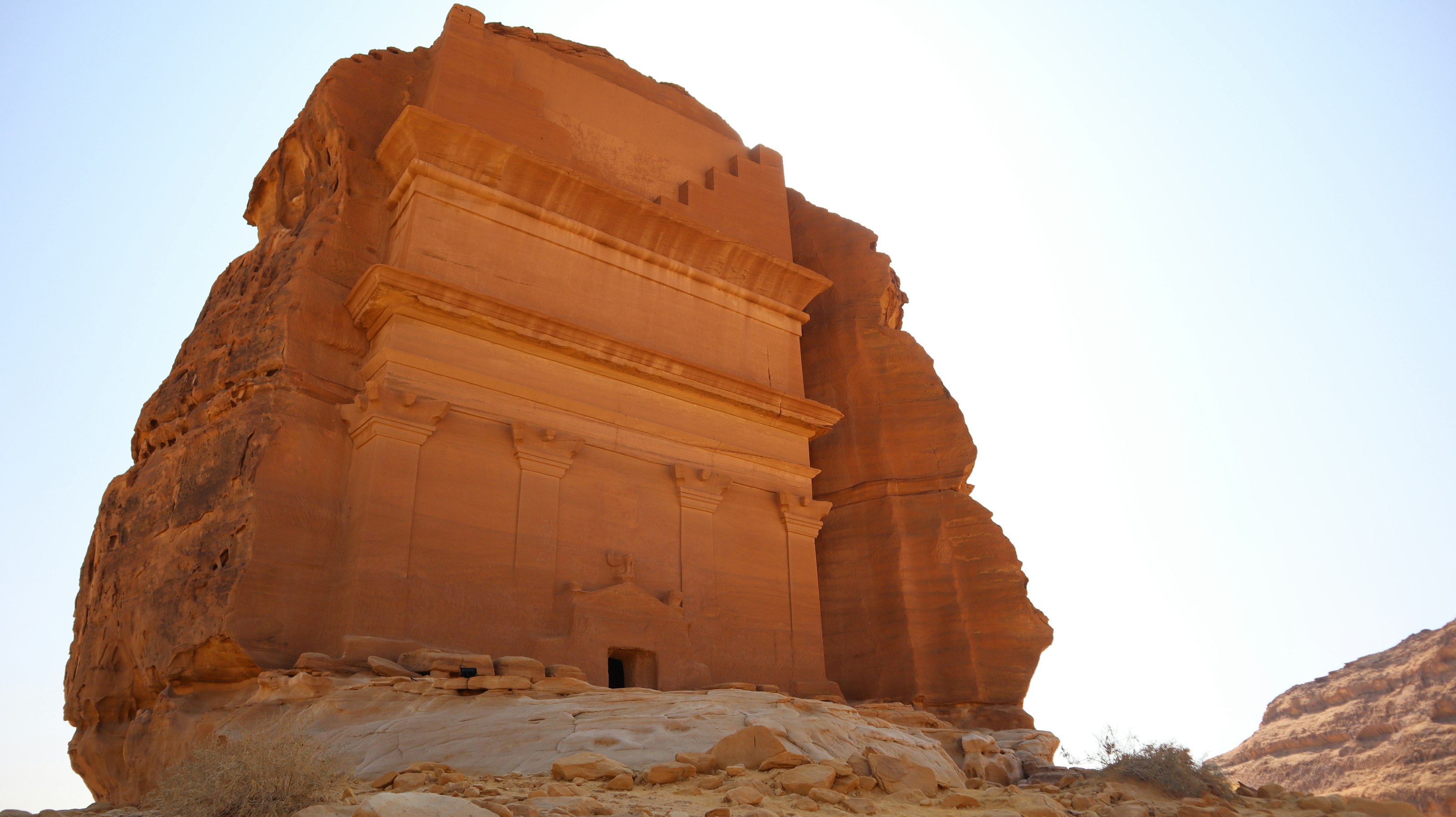
Hegra was the second city of the ancient Nabataean kingdom after Petra, and its more than 100 monumental tombs, carved into sandstone outcrops across a desert plain, survive in far better condition than their Jordanian counterpart.
Saudi Arabia's first UNESCO World Heritage site opened to tourism only in 2019, and the tombs still show sharp carved detail after two thousand years in the desert.
How does it rate
CrowdsRomanceCash RequiredDangerAccessibilityWhy you should go
Tombs as monumental as Petra's, carved into standalone desert rock, but with almost none of Petra's crowds.
Why you shouldn't go
Independent visits aren't possible — access requires a booked guided tour, which limits spontaneity and adds cost.
Plan your visit
Best time to visitNovember–March, avoiding the extreme heat of the Arabian summer.Best time of dayEarly morning or late afternoon, when desert light is softer and temperatures are lower.Getting thereFly to AlUla's own airport, or to Medina and drive roughly 1.5 hours north.Entry costPaid guided tour, booked in advance through AlUla's official tourism operator.Time needed3–4 hoursInsider tip — Book the earliest available tour slot — both the light for photos and the temperature are noticeably better before mid-morning. -
 #688 /100
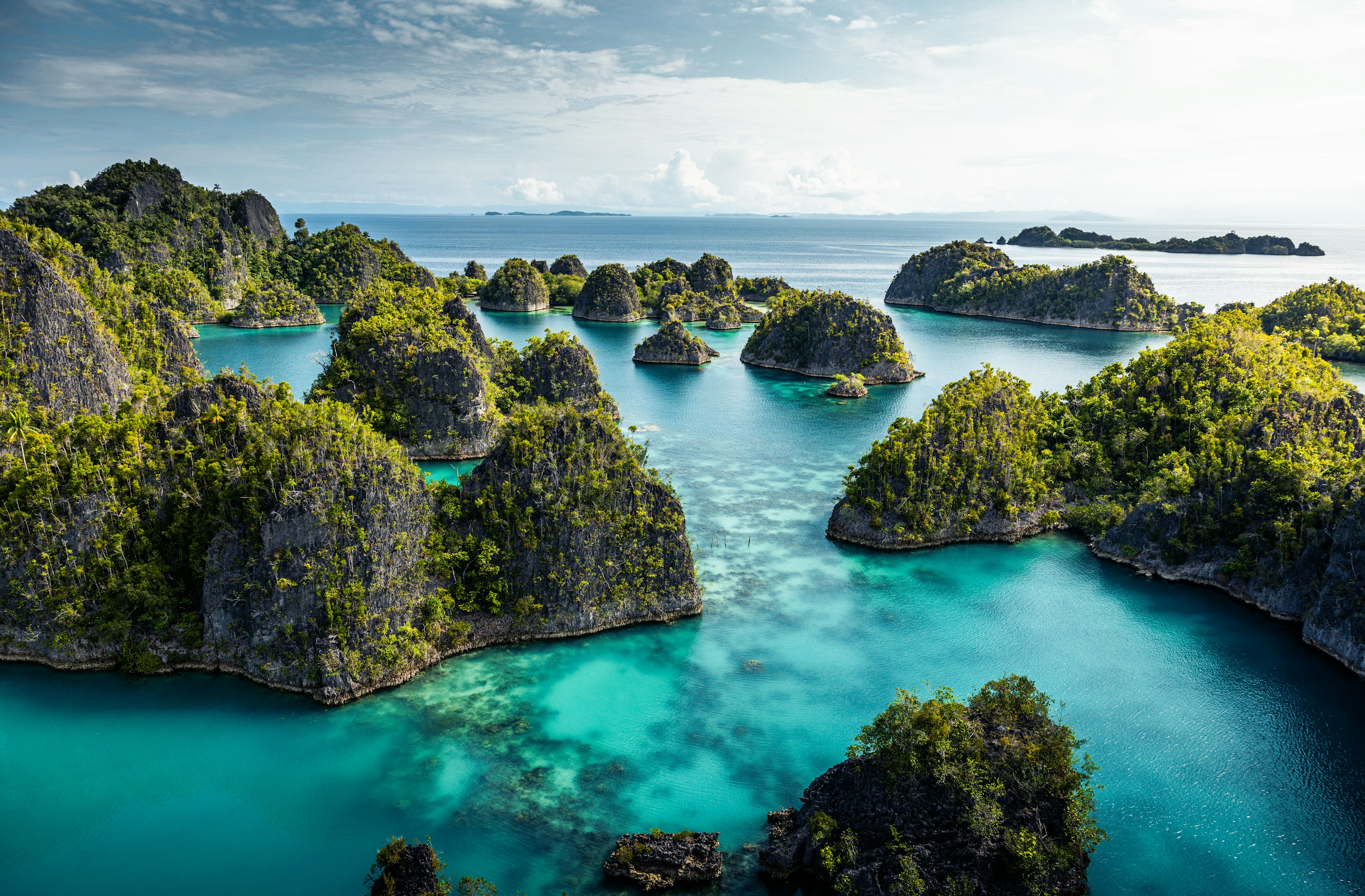
Raja Ampat's four main islands and hundreds of smaller limestone islets sit at the heart of the Coral Triangle, the most biodiverse marine environment on Earth, with reefs holding far more coral and fish species than the Caribbean.
Above water, karst islands draped in jungle ring turquoise lagoons; below, divers and snorkelers find manta rays, reef sharks, and dense coral gardens largely undamaged by mass tourism.
Reaching it takes real commitment, but few marine destinations compare.
How does it rate
CrowdsRomanceCash RequiredDangerAccessibilityWhy you should go
The most biodiverse reef system on the planet, still relatively undisturbed by mass tourism.
Why you shouldn't go
Very remote and expensive to reach, with permits, flights, and boat transfers all adding up before you even dive.
Plan your visit
Best time to visitOctober-April for calmer seas and the best underwater visibility.Best time of dayMorning dives and snorkels, before afternoon winds pick up on the open crossings.Getting thereFly to Sorong via Jakarta or Makassar, then a public or chartered boat (2-4 hours) to Waisai or a resort island.Entry costMarine Park entry permit (PIN) required, roughly 500,000-1,000,000 IDR (~$30-65)Time needed4+ daysBookingBook ahead →Insider tip — Buy the marine park permit (PIN) in Sorong or Waisai before heading to the islands; it's checked on arrival and covers the whole marine park for a full calendar year. -
 #787 /100
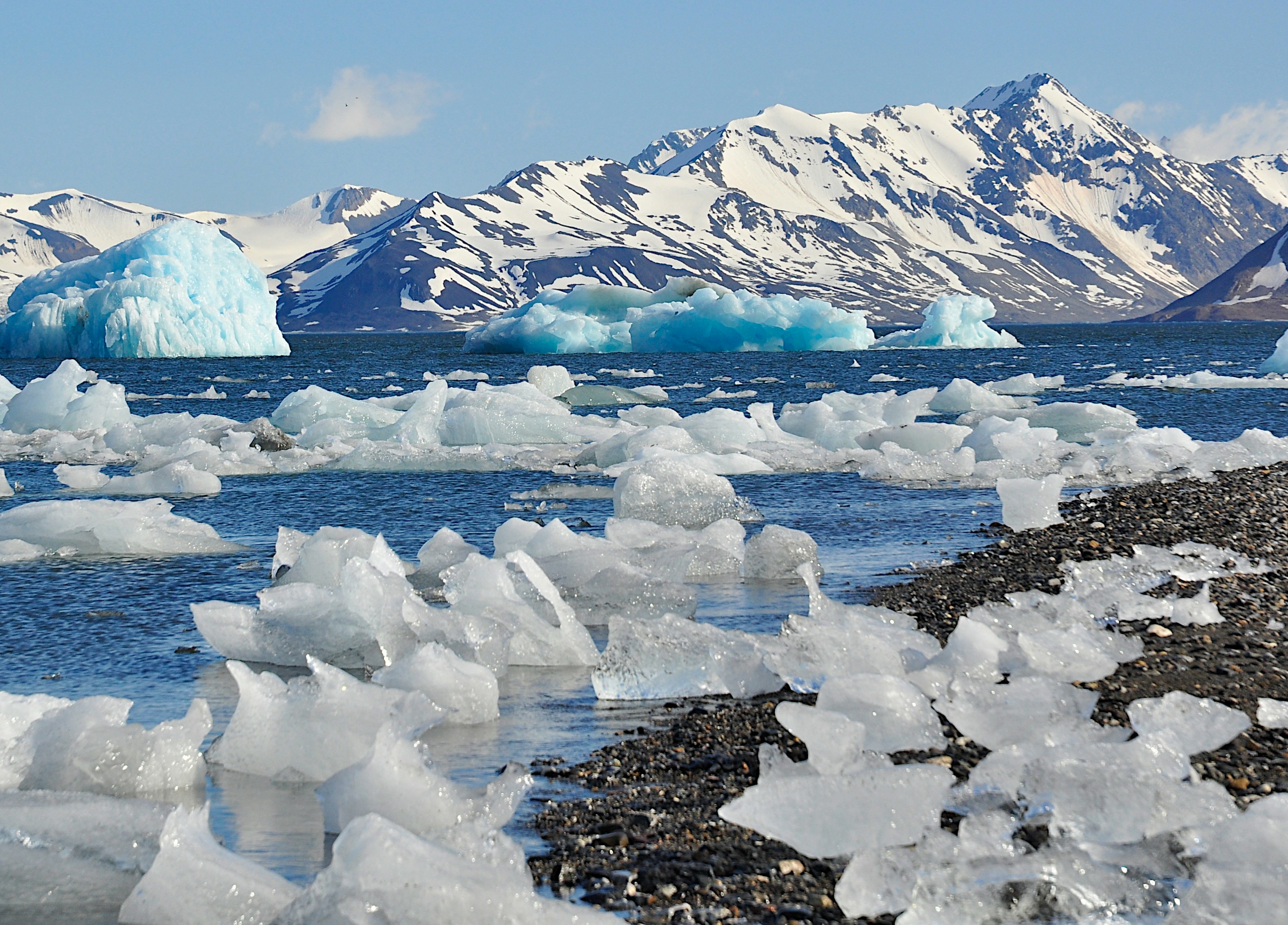
Svalbard is a remote Norwegian archipelago deep in the Arctic Ocean, roughly 60% covered by glaciers and home to more polar bears than people.
Longyearbyen, the main settlement, is the base for dog-sledding, snowmobiling and boat trips past calving glaciers and drifting sea ice, with the midnight sun in summer and polar night and northern lights in winter.
Almost everything beyond town requires an armed guide, which shapes the whole experience.
How does it rate
CrowdsRomanceCash RequiredDangerAccessibilityWhy you should go
Genuine Arctic wilderness - glaciers, polar bears and sea ice - reachable on a scheduled flight, not an expedition.
Why you shouldn't go
Expensive and logistically restrictive: guided tours are compulsory for almost anything outside Longyearbyen.
Plan your visit
Best time to visitApril-August for midnight sun and easier travel; November-February for northern lights and polar night.Best time of daySeason matters more than time of day - summer light is near-constant, winter darkness is too.Getting thereDirect flights from Oslo or Tromsø to Longyearbyen, around 3 hours from Oslo.Entry costNo entry fee; guided excursions typically 500-3000+ NOK per person per day.Time needed4-7 daysInsider tip — Book glacier or fjord boat trips a season ahead in summer - the small tour operators sell out before the ice starts breaking up. -
 #887 /100
A sub-Arctic town on the Hudson Bay coast known as the polar bear capital of the world, where bears gather each autumn waiting for the sea ice to freeze.
Specially built tundra vehicles bring visitors safely within metres of wild bears, and the same stretch of coast offers beluga whale watching in summer and reliable northern lights viewing in winter.
No road connects Churchill to the rest of Manitoba.
How does it rate
CrowdsRomanceCash RequiredDangerAccessibilityWhy you should go
The most reliable place on Earth to see wild polar bears up close, from the safety of a purpose-built tundra vehicle.
Why you shouldn't go
Only reachable by plane or a two-day train; peak-season tours routinely cost thousands of dollars.
Plan your visit
Best time to visitLate October to mid-November for polar bears; July-August for beluga whales; Jan-March for auroraBest time of dayDaylight hours for bear viewing; clear, moonless nights for the northern lightsGetting thereFly from Winnipeg (about 2 hours) or take the 2-day VIA Rail train; no roads connect Churchill to the rest of Manitoba.Entry costTundra buggy tours from around CA$400/day; multi-day packages often CA$3,000+Time needed3-5 days for a bear-viewing tripBookingBook ahead →Insider tip — Book tundra buggy tours many months ahead for the first two weeks of November, when bear numbers along the coast are highest; shoulder-season dates are cheaper but far less certain. -
 #986 /100
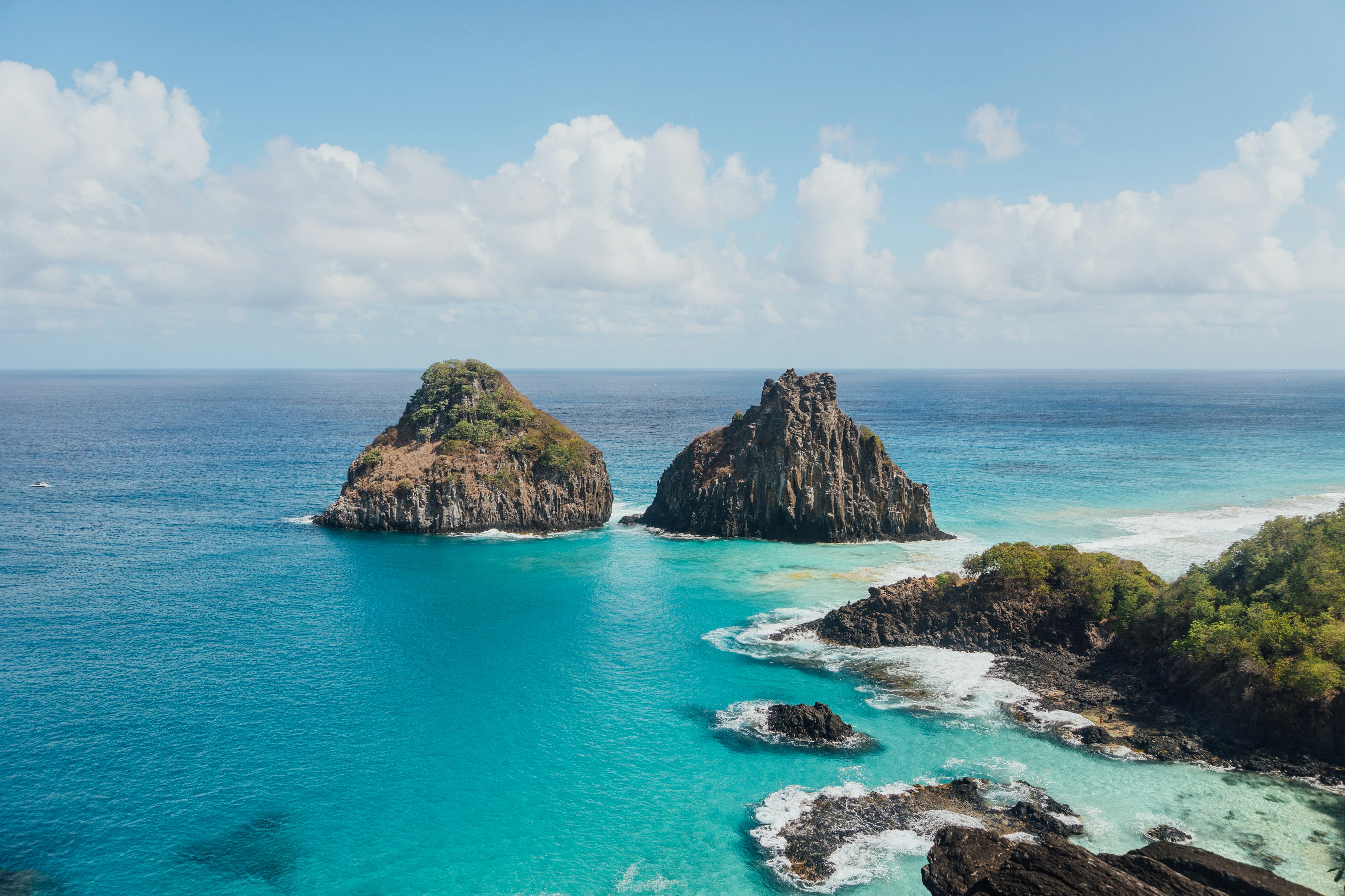
A volcanic archipelago 350km off Brazil's coast, this is regularly ranked among the world's best beaches, with clear water that reveals reef sharks and sea turtles from the shoreline.
A strict daily visitor cap and environmental tax keep the beaches close to empty even in high season.
Morro Dois Irmaos, twin volcanic peaks rising from the sea, anchor the view from almost every beach.
How does it rate
CrowdsRomanceCash RequiredDangerAccessibilityWhy you should go
Regularly ranked among the world's best beaches, kept nearly empty by a strict daily visitor cap.
Why you shouldn't go
A mandatory environmental tax plus limited flights make this one of the most expensive beach trips in Brazil.
Plan your visit
Best time to visitAugust-December, the dry season, for the clearest water.Best time of dayMorning, for calm water and the best snorkelling visibility.Getting thereFly via Recife or Natal; only small aircraft serve the island's single airstrip.Entry costEnvironmental preservation tax charged per day, plus a separate national park fee for some beaches.Time needed4-5 daysInsider tip — Book flights and accommodation well ahead - the daily visitor cap means the island sells out during Brazilian holiday periods. -
 #1085 /100
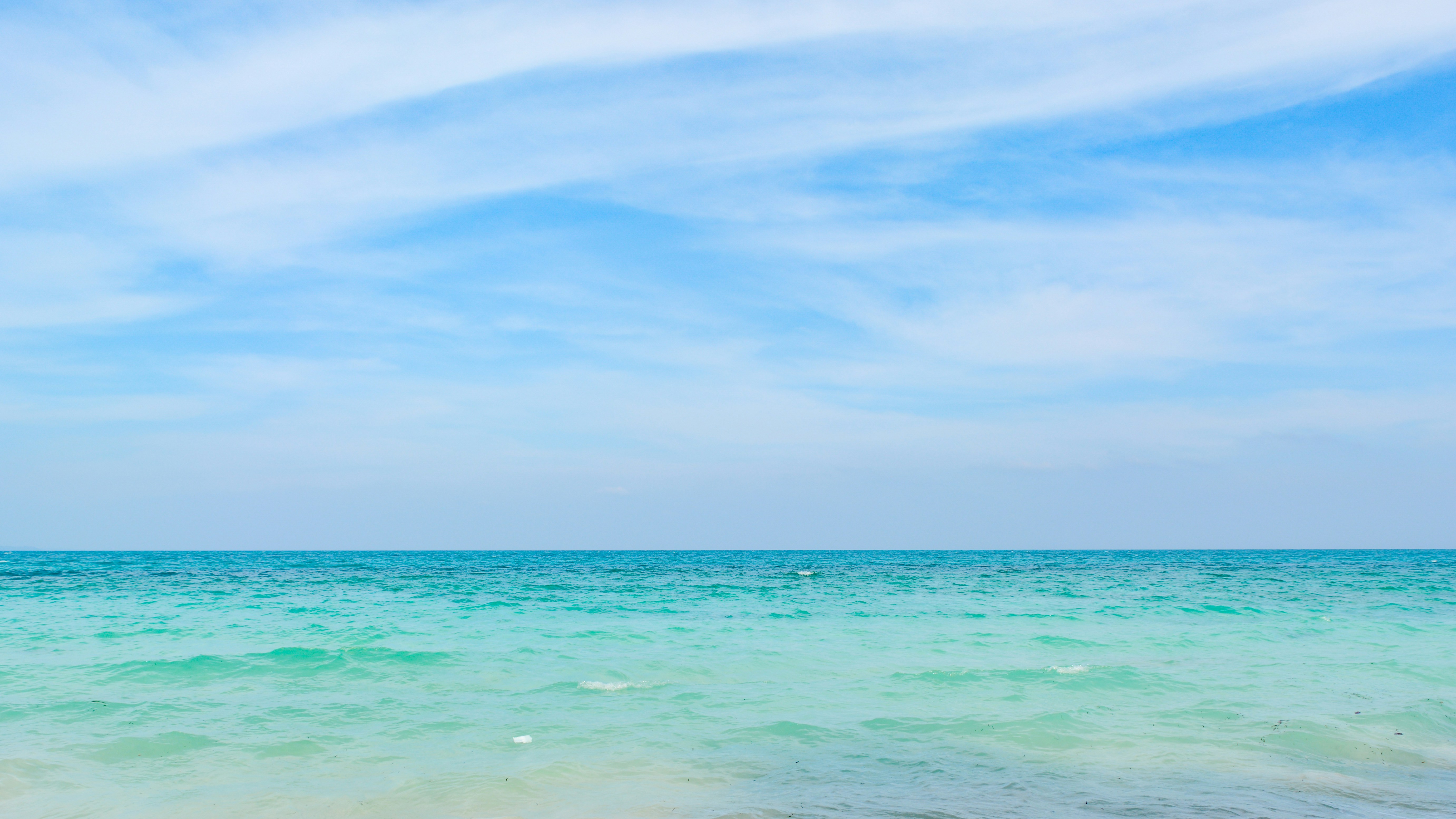
A two-kilometre arc of white sand on Havelock Island backed by dense rainforest, with water that shifts from pale turquoise to deep blue at the reef line.
Time magazine once named it Asia's best beach, and sunset here - sun dropping straight into the Andaman Sea with no development in sight - remains the main draw.
It takes real effort to reach, which keeps it far less crowded than its reputation suggests.
How does it rate
CrowdsRomanceCash RequiredDangerAccessibilityWhy you should go
Named Asia's best beach, with untouched rainforest backing two kilometres of white sand and a clean sunset over open water.
Why you shouldn't go
Reaching Havelock Island takes a flight plus a ferry, so it's a multi-day commitment, not a day trip.
Plan your visit
Best time to visitNovember-April, outside the monsoon season.Best time of daySunset, when the beach empties out and the sky over the water turns orange.Getting thereFly to Port Blair, then a 1.5-2 hour ferry to Havelock Island (Swaraj Dweep).Entry costFree.Time neededHalf a day.Insider tip — Walk 10 minutes north past the main entrance to have long stretches of the same sand almost entirely to yourself. -
 #11
#11Rated #11 of 100
Rock-Hewn Churches of Lalibela, Ethiopia
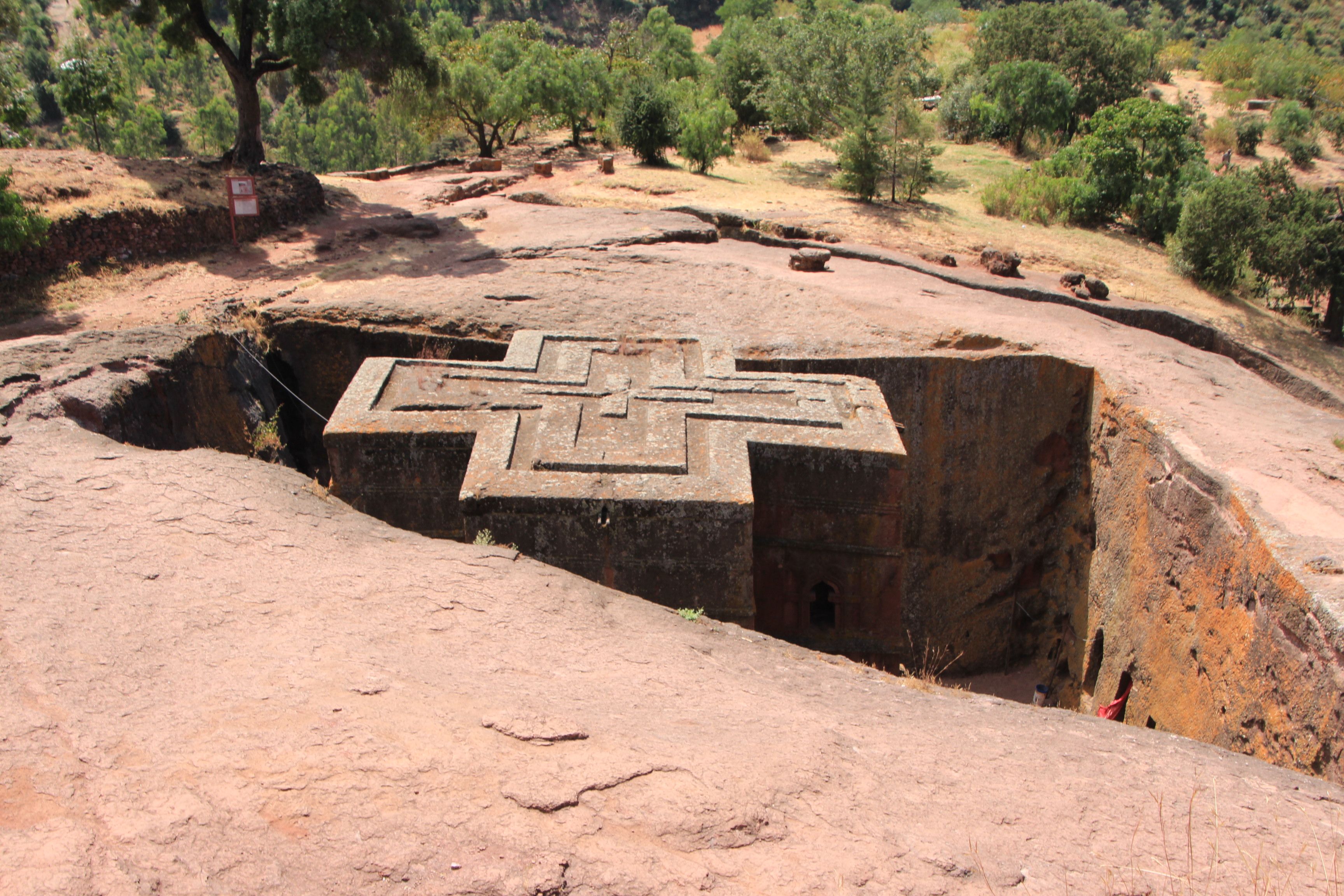
#rock-hewnchurchesoflalibela ◆ Religious Buildings84 /100Eleven medieval churches here weren't built up from the ground but carved downward into solid volcanic rock, each one excavated as a single monolithic block below ground level.
Narrow trenches and tunnels connect them, and pilgrims in white robes moving through the passages add scale and colour against the bare stone.
Nothing else in the world uses this exact rock-hewn technique at this scale.
How does it rate
CrowdsRomanceCash RequiredDangerAccessibilityWhy you should go
Eleven churches carved downward out of solid rock - a building technique found nowhere else at this scale.
Why you shouldn't go
Getting here requires a dedicated flight and detour; it's not on the way to anywhere else.
Plan your visit
Best time to visitOctober-March, the dry season.Best time of dayMorning, when pilgrims gather for services and the light reaches into the carved trenches.Getting thereFly to Lalibela from Addis Ababa (about 1.5 hours).Entry costEntry permit around $50, covering all eleven churches.Time needed1-2 daysInsider tip — Hire a local guide - the churches' connecting tunnels and symbolism are easy to miss without one, and guiding supports the local community directly. -
 #12
#12Rated #12 of 100
Phong Nha-Ke Bang National Park, Vietnam
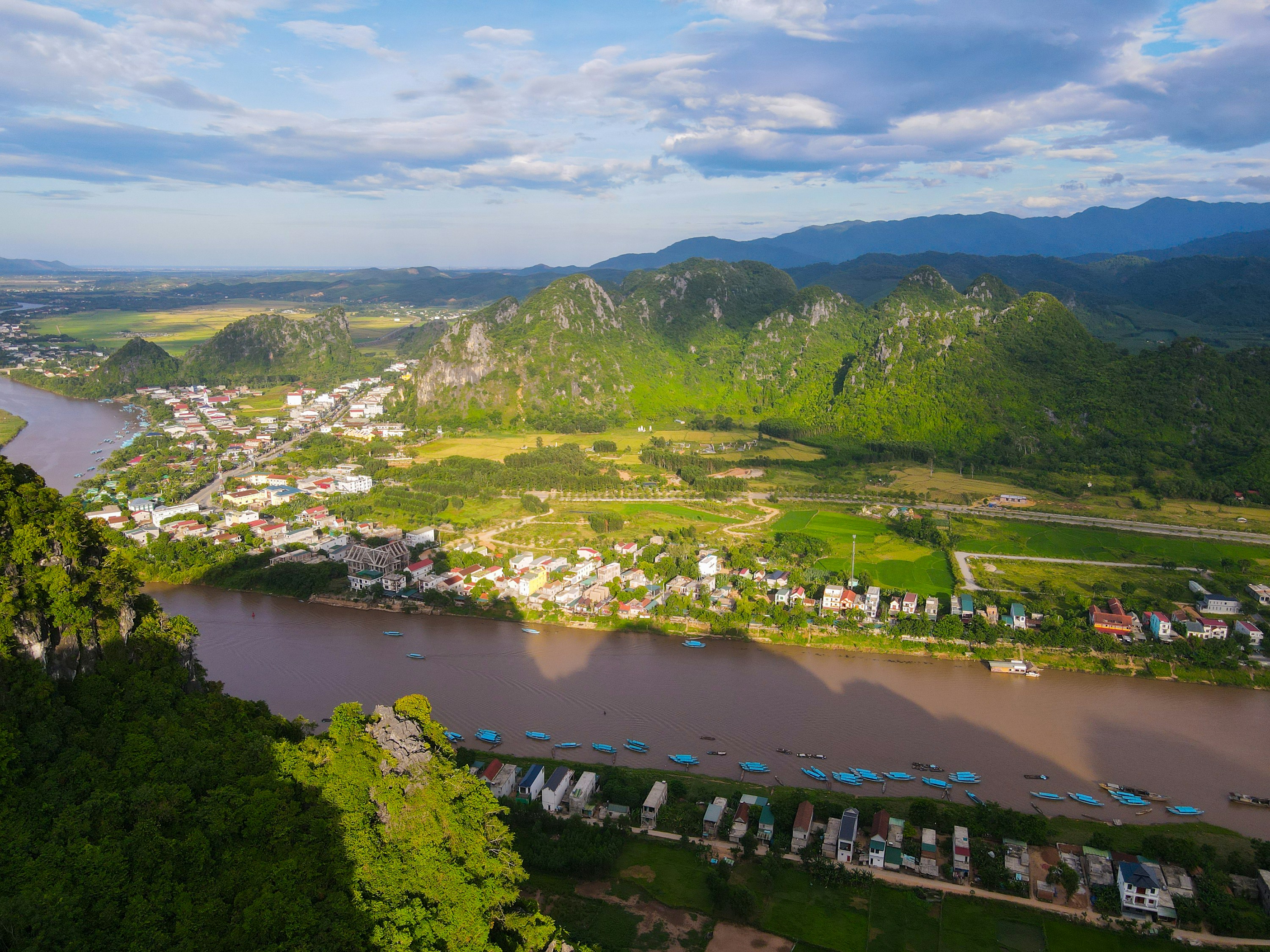
#phongnha-kebangnationalpark ◆ National Parks84 /100Phong Nha-Ke Bang protects one of the world's largest karst regions, its jungle-covered limestone hiding thousands of caves, including Son Doong, the largest cave passage on Earth, and Paradise Cave's vast chambers of stalactites.
Most visitors explore by boat along the Son River into Phong Nha Cave itself, or walk the lit boardwalks of Paradise Cave.
It's Vietnam's premier caving destination, still largely undeveloped outside the main sites.
How does it rate
CrowdsRomanceCash RequiredDangerAccessibilityWhy you should go
Home to some of the planet's largest and most spectacular cave systems, from boat-accessible grottoes to multi-day expedition caving.
Why you shouldn't go
The headline cave, Son Doong, requires a costly multi-day expedition booked a year ahead; day-trip caves get busy with tour groups.
Plan your visit
Best time to visitFebruary-August, dry season; avoid September-November when typhoon flooding can close the caves.Best time of dayEarly morning at Paradise Cave, before tour buses arrive mid-morning.Getting thereFly to Dong Hoi; Phong Nha town is a 45-minute drive, with cave entrances a further 20-40 minutes on.Entry costPhong Nha Cave boat trip and Paradise Cave each charge separate entry fees, roughly $8-10Time needed1 day for the main caves; Son Doong expeditions run 4-7 daysBookingBook ahead →Insider tip — Visit Paradise Cave right at opening to get the boardwalk to yourself before tour buses arrive; the boat ride into Phong Nha Cave itself is included in a single ticket and needs no separate booking. -
 #1383 /100
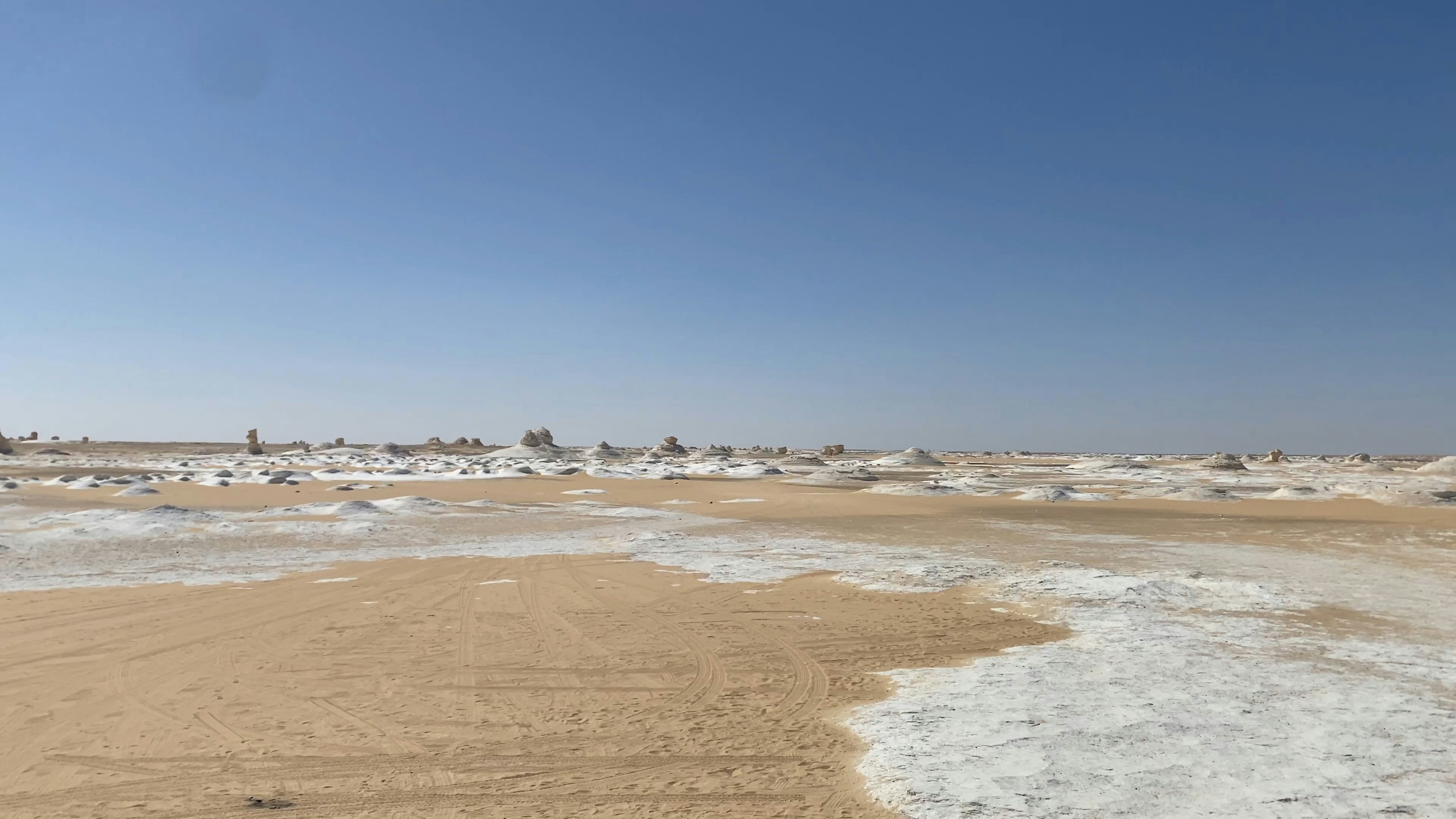
A surreal expanse of chalk-white rock formations near Farafra Oasis, carved by millennia of sand-wind erosion into shapes resembling mushrooms, camels, and icebergs scattered across pale desert sand.
Camping overnight among the formations, with no artificial light for miles, is the main way to see it - the white rock glows almost blue under a full moon.
It remains one of the least-visited major landscapes in Egypt outside the Nile corridor.
How does it rate
CrowdsRomanceCash RequiredDangerAccessibilityWhy you should go
Chalk-white rock sculptures scattered across open desert, glowing almost blue under moonlight with zero light pollution.
Why you shouldn't go
It's remote even by Egyptian desert standards - a long drive from Cairo through the Western Desert with minimal facilities en route.
Plan your visit
Best time to visitOctober-April, avoiding summer desert heat that can exceed 40C.Best time of daySunset and again after moonrise, when the white rock formations change character completely.Getting thereFly to Cairo, then a 5-6 hour drive (often via Bahariya Oasis) to Farafra and the White Desert.Entry costOvernight camping tours typically run USD50-100 per person, all-inclusive.Time neededOvernight (2-day trip typical).Insider tip — Time the trip around a full moon if possible - the white formations under moonlight are the single most photographed sight here. -
 #1483 /100
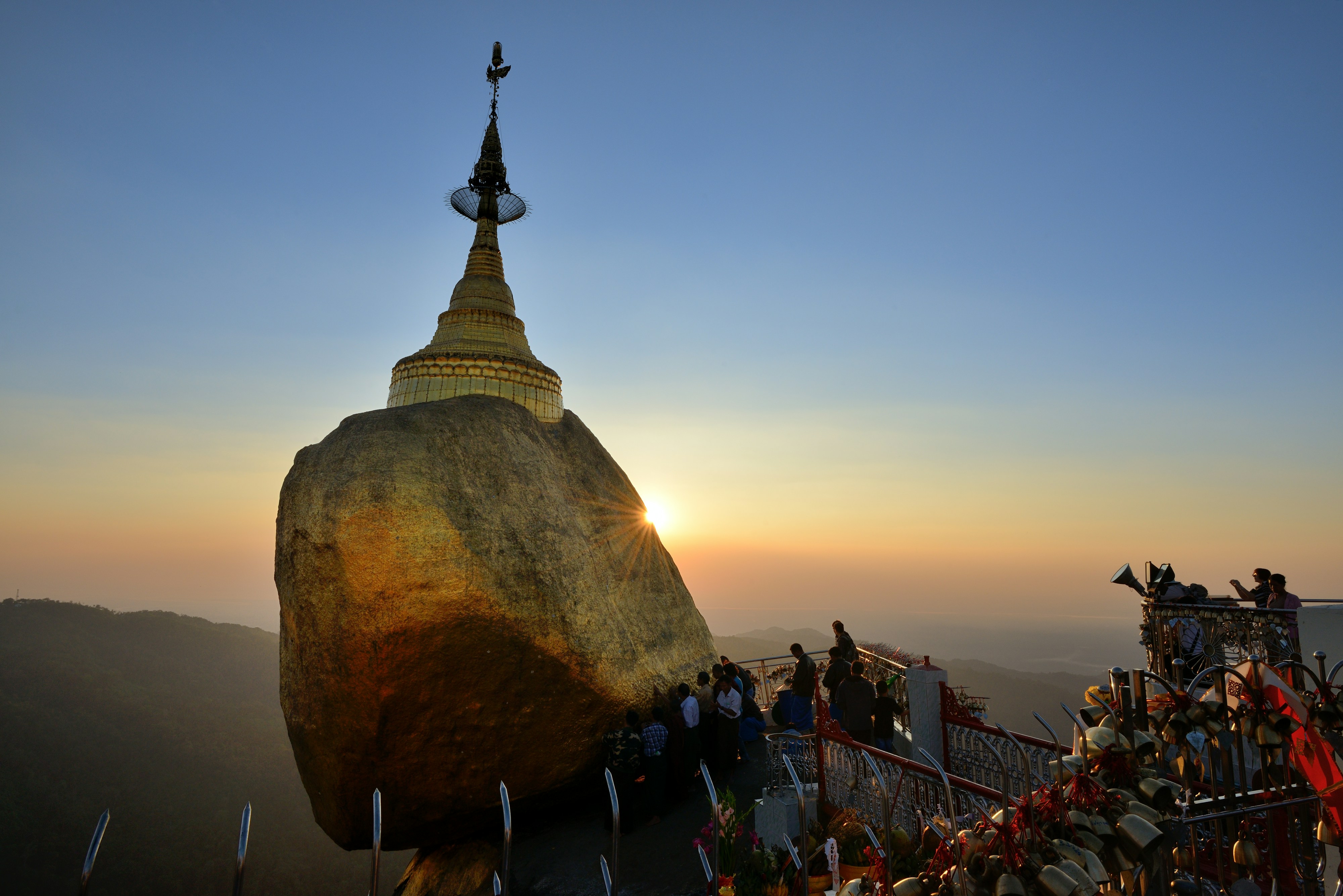
A gold-leaf-covered boulder balances impossibly on the very edge of a cliff, topped with a small pagoda said to be held in place by a strand of Buddha's hair.
Generations of pilgrims have applied gold leaf by hand, thickening the surface over centuries into a solid gilded shell.
At sunset the rock glows against the surrounding hills, appearing to defy gravity from almost every angle.
How does it rate
CrowdsRomanceCash RequiredDangerAccessibilityWhy you should go
A gilded boulder that appears to balance on a cliff edge by physics alone.
Why you shouldn't go
Reaching the summit requires a rough open-truck ride plus a steep uphill walk - it isn't a quick stop.
Plan your visit
Best time to visitNovember-February, the cool, dry season.Best time of daySunset, when the gold surface catches the low light.Getting thereDrive from Yangon to Kinpun base camp (about 5 hours), then open-truck transfer and a short uphill walk to the summit.Entry costEntry fee for foreign visitors, plus the truck transfer fare.Time needed1-2 days, including overnight near the summitInsider tip — Stay overnight at the summit - sunset and sunrise on the gilded rock, once the day-trip crowds descend, are dramatically quieter. -
 #1583 /100
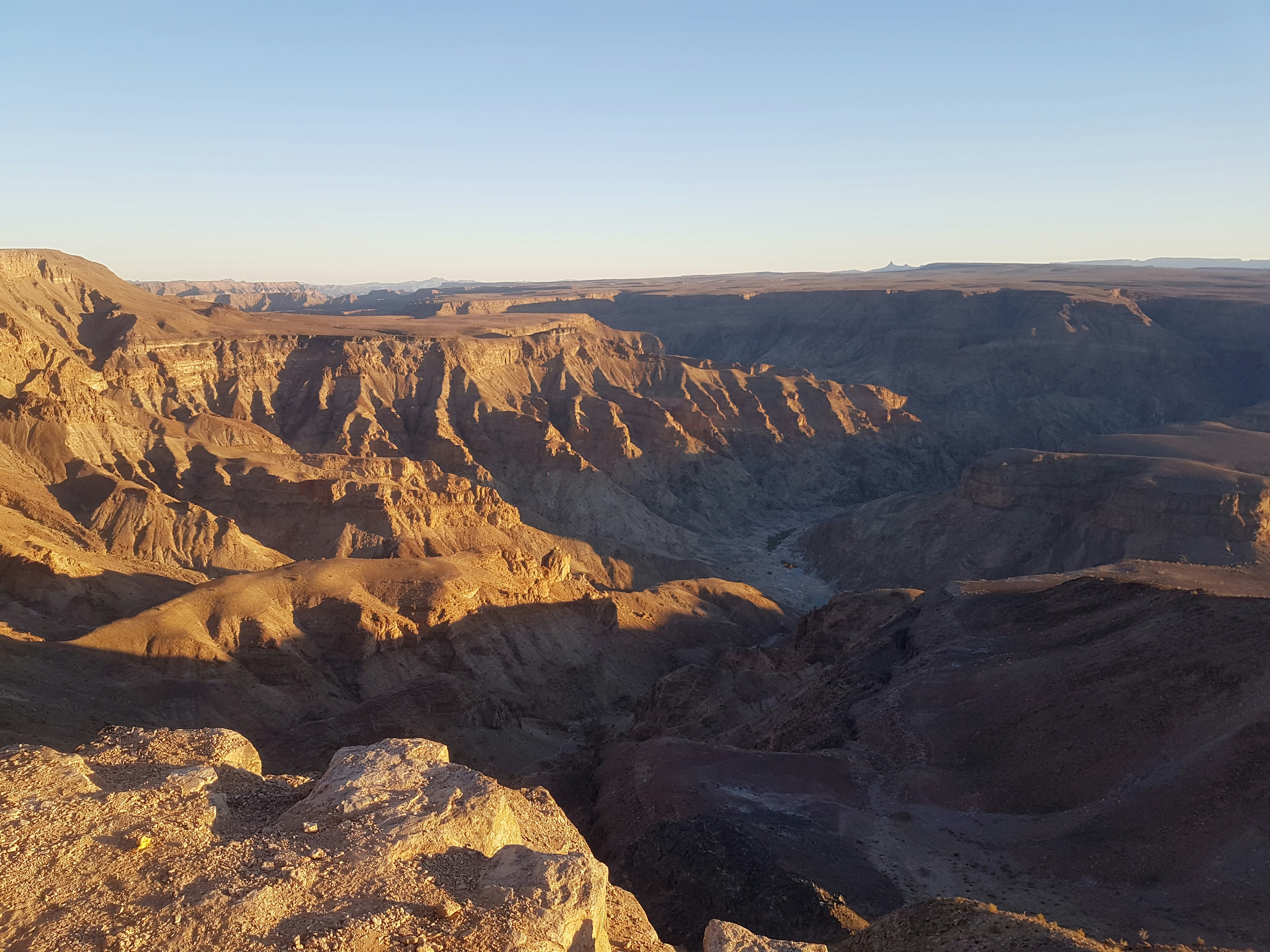
The second-largest canyon on Earth cuts a 160km gash through the Namibian desert, its layered rock walls dropping 550 metres to the seasonal Fish River below.
A multi-day hike along the canyon floor is one of Southern Africa's classic treks, but the main viewpoint at Hobas delivers the scale in a single sweeping look without any walking required.
Sunset turns the canyon's rust-red rock a deep orange.
How does it rate
CrowdsRomanceCash RequiredDangerAccessibilityWhy you should go
The world's second-largest canyon, with a sweeping viewpoint that needs no hiking at all.
Why you shouldn't go
The multi-day canyon-floor hike is only permitted May-September and requires a medical certificate to book.
Plan your visit
Best time to visitMay-September, the cooler dry season (also the only window the multi-day hike is permitted).Best time of daySunset, when the canyon walls turn deep orange-red.Getting thereSelf-drive from Windhoek (about 5.5 hours) or fly to Keetmanshoop and drive onward.Entry costPark entry fee, a few dollars per person.Time needed1-2 hours for the viewpoint; 5 days for the full hikeInsider tip — Even without doing the multi-day hike, walk 15-20 minutes along the rim from the main viewpoint for a less crowded angle. -
 #1683 /100
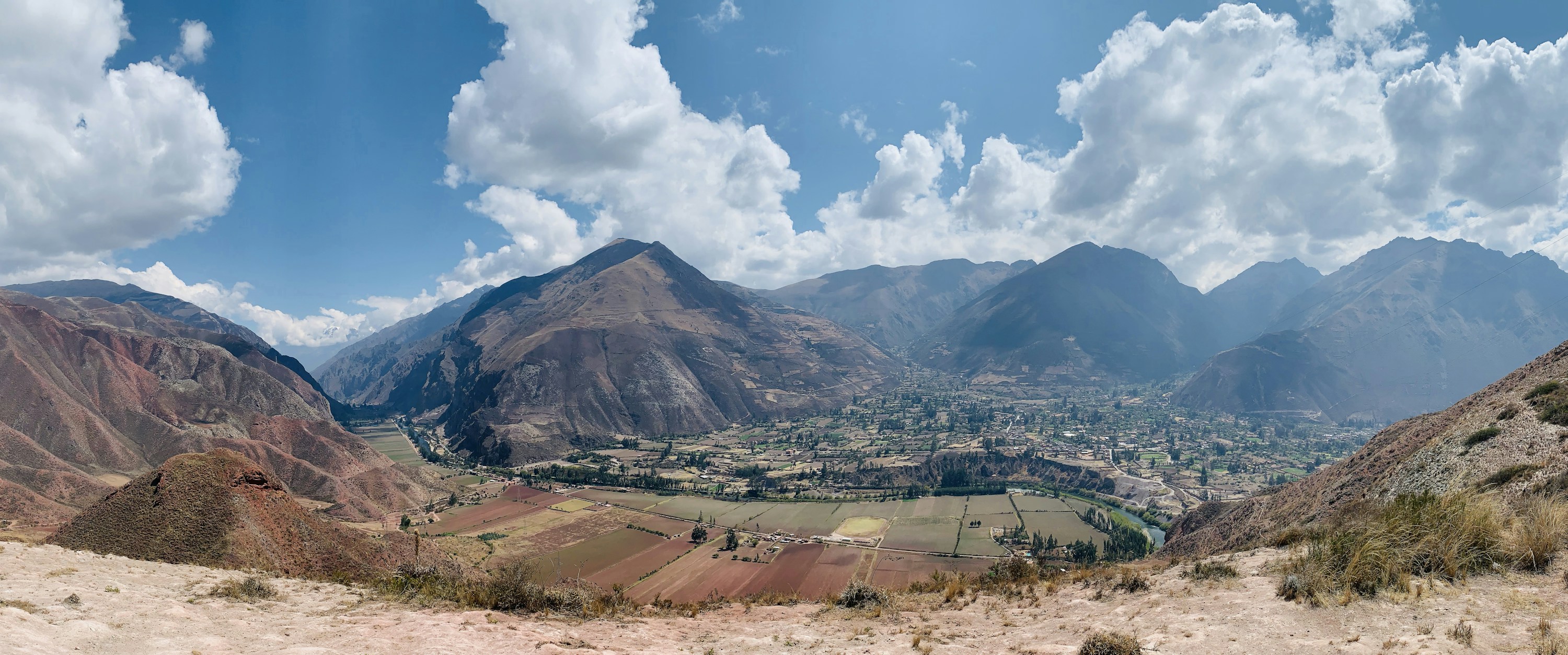
Strung along the Urubamba River between Cusco and Machu Picchu, the Sacred Valley was the Inca empire's farming heartland and still works the same terraced hillsides.
In a day you can walk the Pisac ruins above their market, climb Ollantaytambo's fortress terraces, and see the circular agricultural bowl at Moray.
Lower and gentler than Cusco, it rewards a slower, multi-stop visit.
How does it rate
CrowdsRomanceCash RequiredDangerAccessibilityWhy you should go
Four or five distinct Inca sites and living Andean villages within one easy valley.
Why you shouldn't go
Seeing it properly means several separate entry tickets and a full day of driving between stops.
Plan your visit
Best time to visitApril-October, dry season; Pisac's market is liveliest on SundaysBest time of dayMorning, before afternoon cloud builds over the mountainsGetting there40-60 min by road from Cusco to Pisac or Urubamba; most visitors join a tour or hire a driverEntry costBoleto turistico parcial ~S/70 covers Pisac, Ollantaytambo, Chinchero, Moray; Maras extra ~$8Time needed1-2 daysInsider tip — Base yourself overnight in Ollantaytambo rather than day-tripping from Cusco - it's the only Inca town still inhabited on its original foundations, and you get the ruins to yourself at opening time. -
 #1783 /100
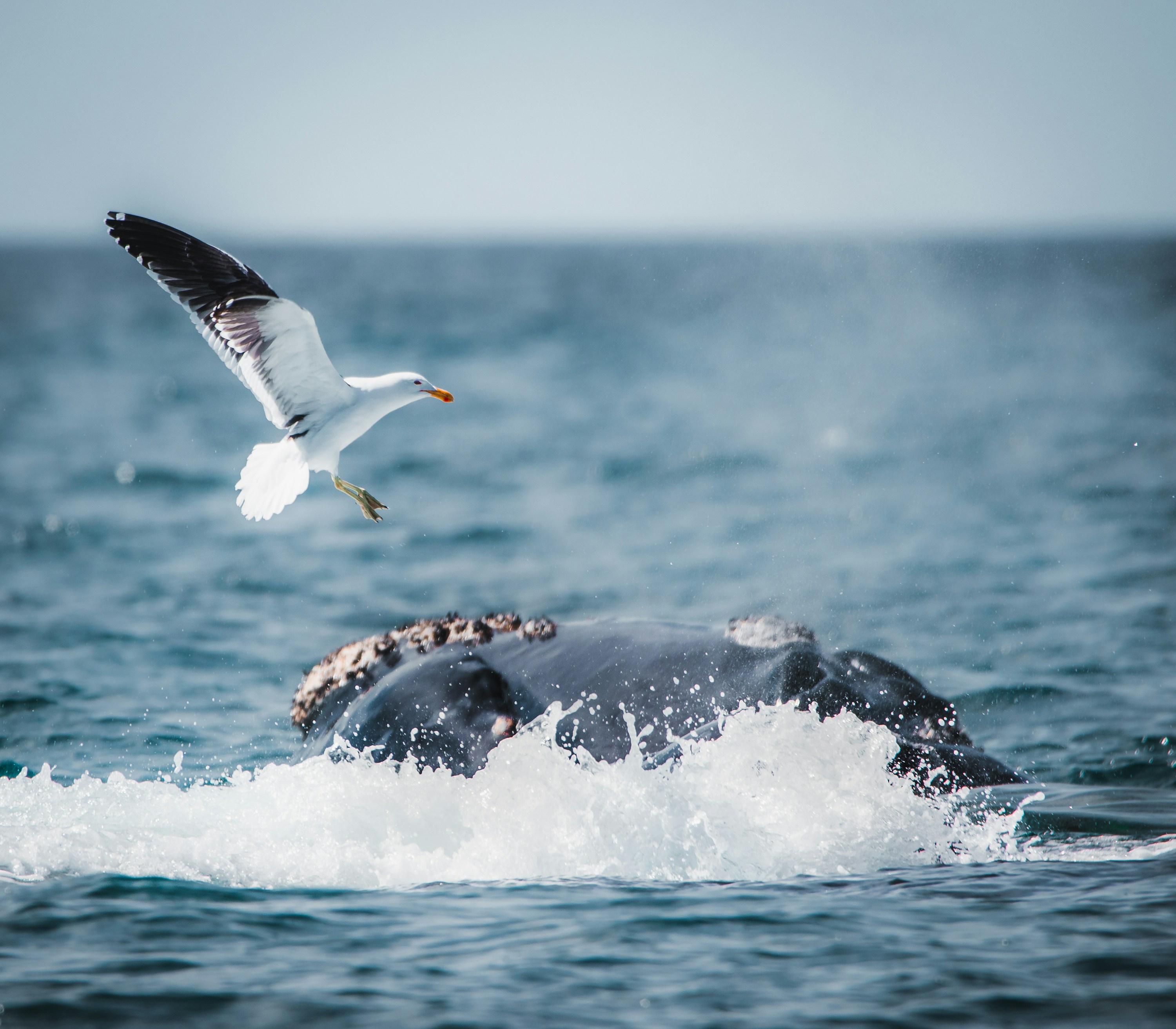
Peninsula Valdes juts into the South Atlantic off Argentine Patagonia and holds one of the continent's great wildlife spectacles: southern right whales calving close to shore, orcas that beach themselves hunting sea lion pups, and colonies of elephant seals and penguins.
A UNESCO site reached from Puerto Madryn, it's linked by unpaved roads between viewing points.
Sightings are seasonal, so timing matters.
How does it rate
CrowdsRomanceCash RequiredDangerAccessibilityWhy you should go
Southern right whales come close enough to watch from small boats or even the shore, in season.
Why you shouldn't go
Wildlife is seasonal and not guaranteed outside the main months - check the calendar before booking.
Plan your visit
Best time to visitJune-December for whales (peak Sept-Nov); Oct-Nov also for orca hunting behaviorBest time of dayMorning boat trips tend to have calmer water and more active whalesGetting thereFly to Trelew or Puerto Madryn, then 1-1.5hr drive onto the peninsulaEntry costReserve entrance fee ~$20-30; whale-watching boat trips separate, ~$70-100Time neededFull day; two days to cover more viewing pointsInsider tip — Book a boat trip from Puerto Piramides itself rather than a day tour from Puerto Madryn - you get more time on the water and less time on the bus. -
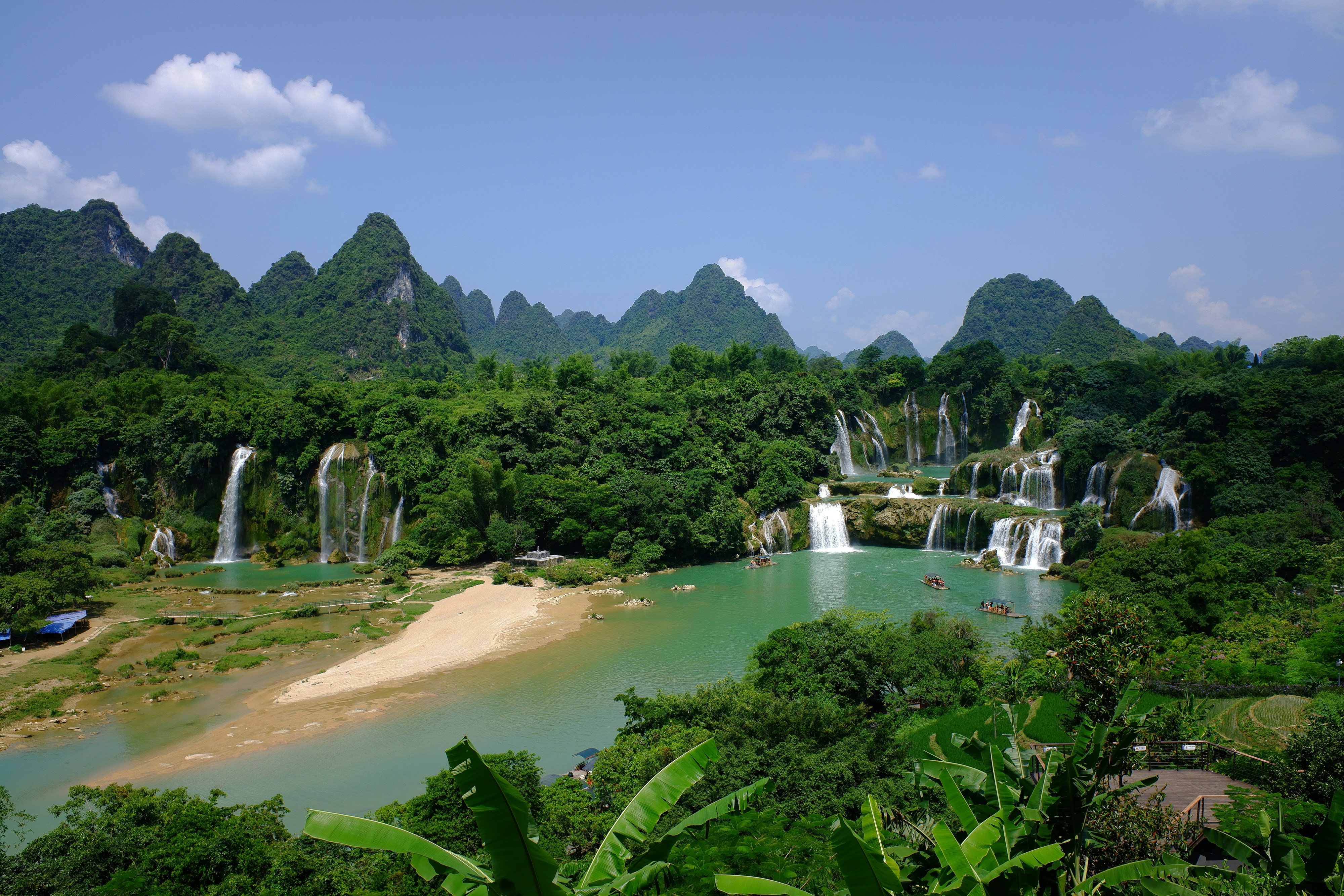 #1882 /100
Southeast Asia's largest transnational waterfall spills over limestone terraces straddling the Vietnam-China border, wide enough that bamboo rafts drift right up to its base.
Rice paddies and karst peaks frame the Vietnamese side, while mist rises constantly off the wide, multi-tiered drop, especially heavy after summer rains.
How does it rate
CrowdsRomanceCash RequiredDangerAccessibilityWhy you should go
A wide, multi-tiered transnational waterfall you can raft right up to the base of.
Why you shouldn't go
The best straight-on view is technically from the Chinese side, requiring a separate border crossing and visa.
Plan your visit
Best time to visitJune-September for maximum water flow, though rice paddies are greenest in spring.Best time of dayMorning, for calm water and soft light on the karst backdrop.Getting thereDrive from Cao Bang (about 3 hours) or Hanoi (about 6-7 hours) to the Ban Gioc viewpoint.Entry costEntry fee plus optional bamboo raft ride, together around $10-15.Time neededHalf a dayInsider tip — Take the bamboo raft ride to get right up to the base of the falls - the road viewpoint alone undersells the scale. -
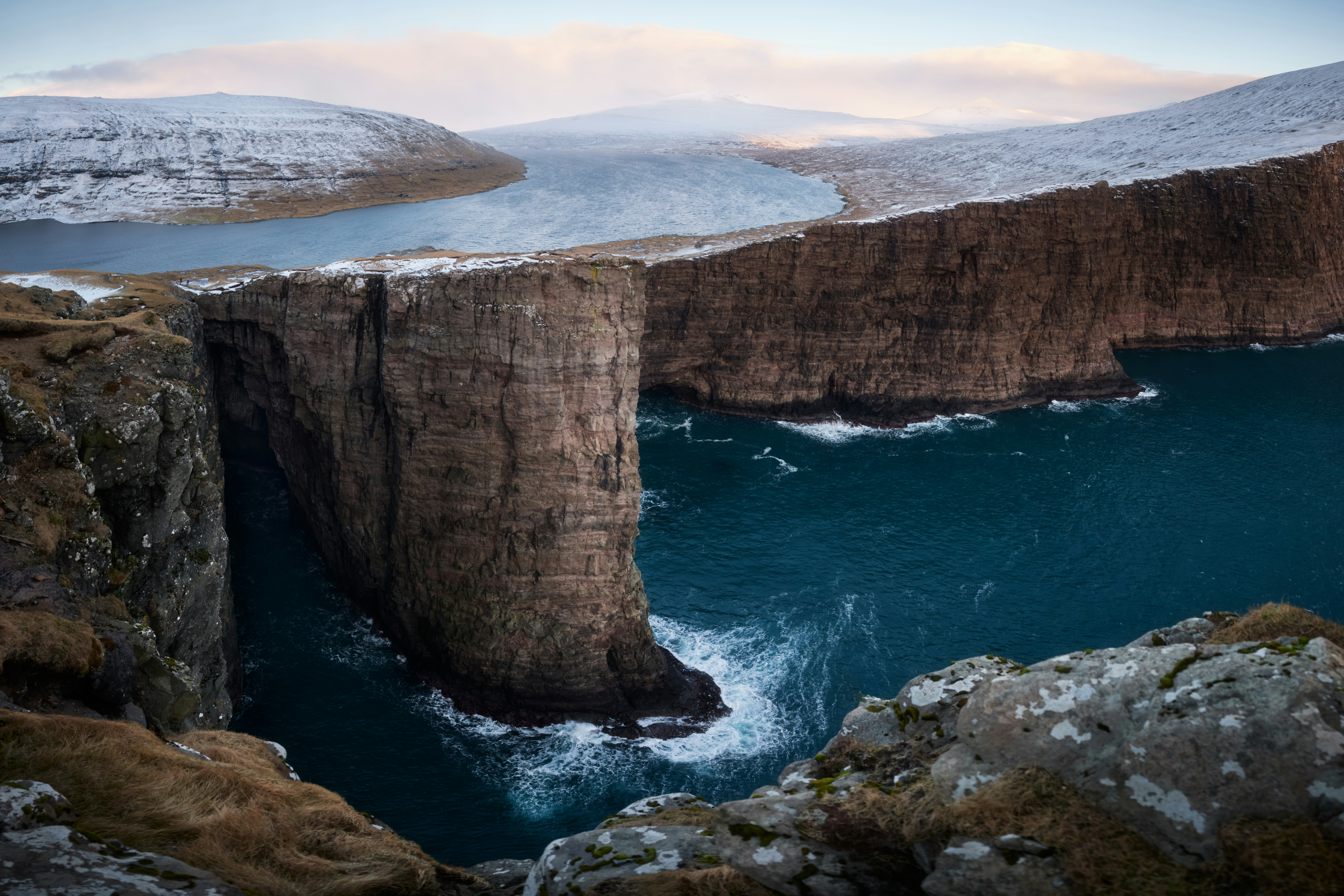 #1982 /100
A dramatic clifftop on Vágar island overlooking Lake Leitisvatn, which appears from this angle to float 30 meters above the Atlantic Ocean — a famous optical illusion.
Sheer 300-meter drops, sheep-dotted grass, and constantly shifting Nordic light make it one of Europe's most striking viewpoints.
How does it rate
CrowdsRomanceCash RequiredDangerAccessibilityWhy you should go
A lake that appears to hover above the ocean, seen from a sheer 300-meter clifftop — one of Europe's great optical illusions.
Why you shouldn't go
No barriers at the cliff edge; wind gusts are frequent and dangerous; weather can close in with little warning.
Plan your visit
Best time to visitMay–August for the longest daylight and most stable (if still unpredictable) weather.Best time of dayMidday for the clearest view of the lake-over-ocean illusion; golden hour for photography.Getting thereFly to Vágar Airport, 15-minute drive to Miðvágur, then a 45–60 minute hike to the viewpoint.Entry costFree; some trail sections cross private land with a small landowner fee (~DKK 200).Time needed2–3 hours including the hike.Insider tip — Wear waterproof boots — the trail is boggy even in summer. Stay well back from the unfenced edge; gusts here have blown hikers off balance. -
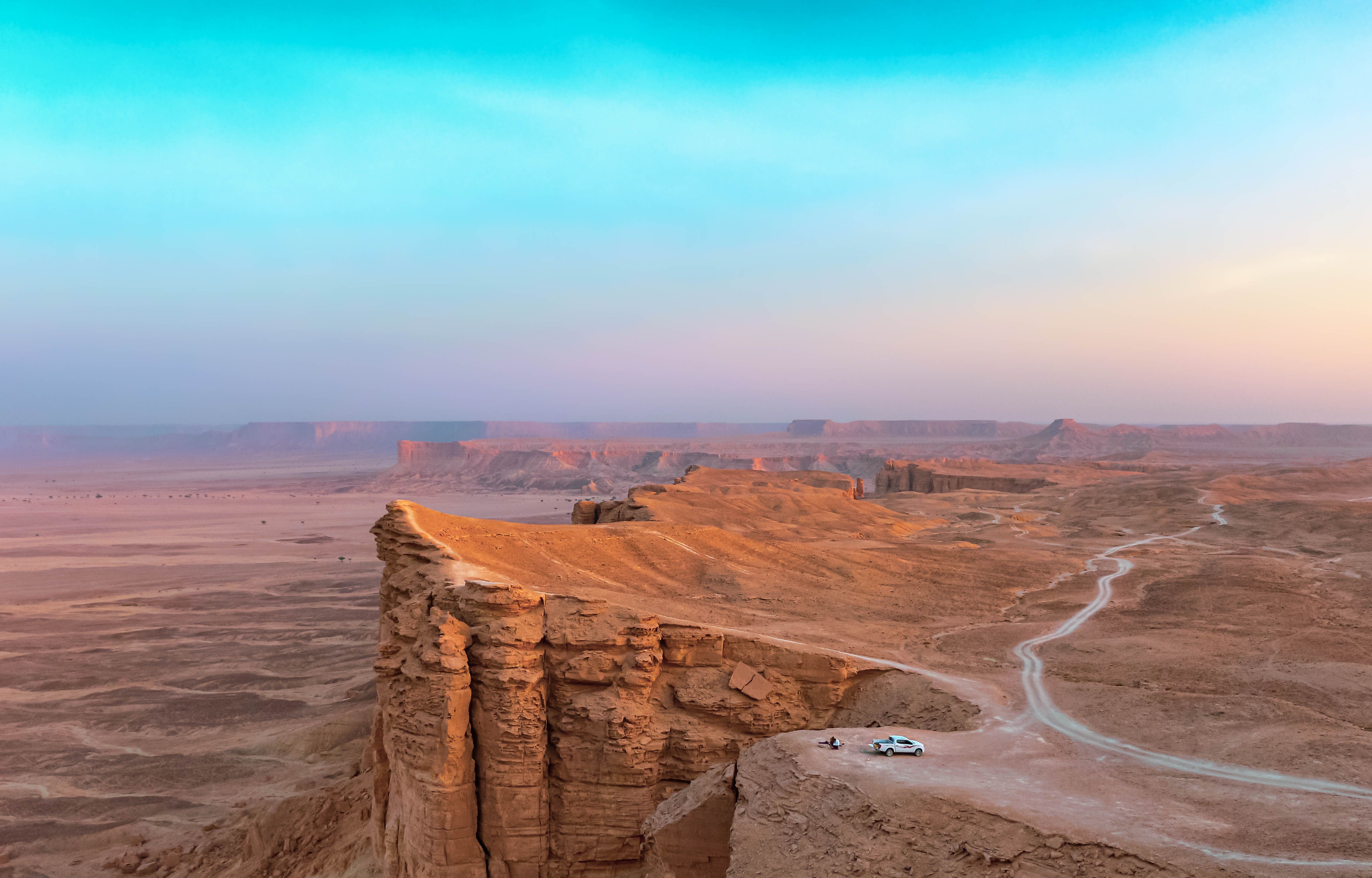 #2082 /100
Jebel Fihrayn, known as the Edge of the World, is a sheer escarpment roughly 1,100 metres above the desert floor, part of the Tuwaiq Mountains that once formed the shoreline of an ancient sea.
A rough 4x4 track and a short walk lead to a cliff edge with no barriers, looking out over a flat desert plain stretching to the horizon, and it has become one of the most visited natural landmarks near Riyadh since the country opened to tourism.
How does it rate
CrowdsRomanceCash RequiredDangerAccessibilityWhy you should go
Standing at an unguarded cliff edge with a completely flat desert stretching to the horizon feels like reaching the literal edge of the map.
Why you shouldn't go
There are no safety barriers at the cliff edge, and the last stretch of track requires a 4x4 and an experienced driver.
Plan your visit
Best time to visitNovember–March, avoiding summer heat that makes the exposed cliff top dangerous by midday.Best time of dayLate afternoon into sunset, when the escarpment and desert plain both light up gold.Getting thereFly to Riyadh; roughly 1.5–2-hour drive northwest, the final stretch on an unpaved desert track requiring 4x4.Entry costFree; most visitors join a paid tour that includes 4x4 transport.Time neededHalf a day including travelInsider tip — Go with an organised tour rather than a rental car — the final approach track is easy to get stuck on without local knowledge. -
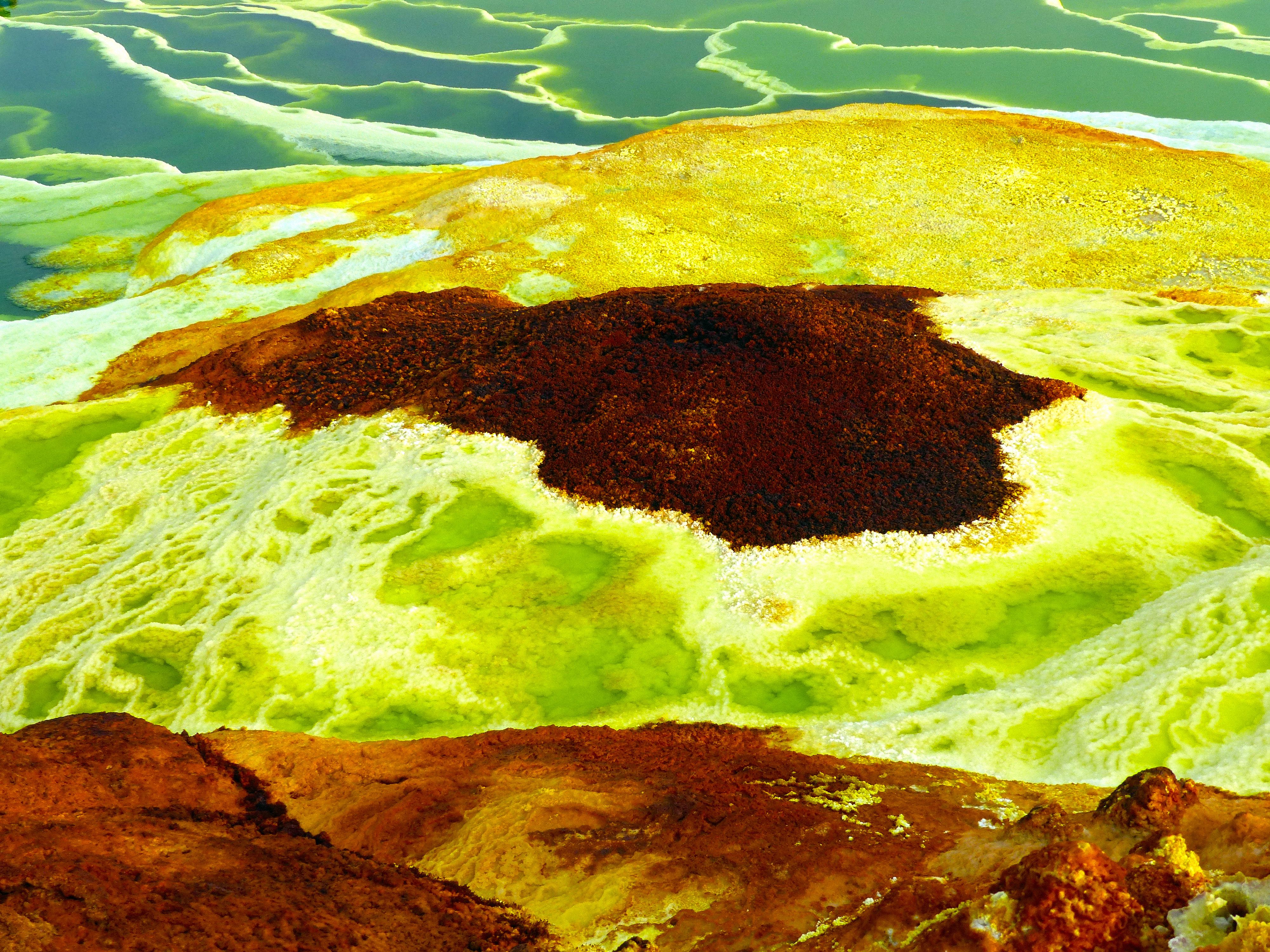 #2181 /100
One of the hottest, lowest, and strangest inhabited places on Earth, a volcanic depression over 100 metres below sea level where sulphur springs bubble in acid-yellow and electric-green pools beside the active Erta Ale lava lake.
Camel caravans still cross the adjoining Danakil salt flats to mine slabs of salt by hand, much as they have for centuries.
The colours and scale look almost entirely artificial, which is exactly why people make the brutal trip.
How does it rate
CrowdsRomanceCash RequiredDangerAccessibilityWhy you should go
Acid-yellow sulphur pools and an active lava lake in one of the most alien landscapes on the planet.
Why you shouldn't go
Genuinely dangerous and physically demanding - extreme heat, toxic gases, and a history of security incidents mean an armed local guide is mandatory.
Plan your visit
Best time to visitNovember-March, avoiding the deadliest summer heat (which can exceed 50C).Best time of daySunrise at the sulphur springs; night for the glowing Erta Ale lava lake, reached by an overnight hike.Getting thereFly to Mekele, then a multi-day 4x4 expedition with a mandatory guide and security escort into the depression.Entry costMulti-day guided expeditions typically run USD400-700+ per person, all-inclusive.Time needed3+ days.Insider tip — Only go with an established, reputable local operator - this is one of the few places where the standing caution about safety and guides genuinely matters. -
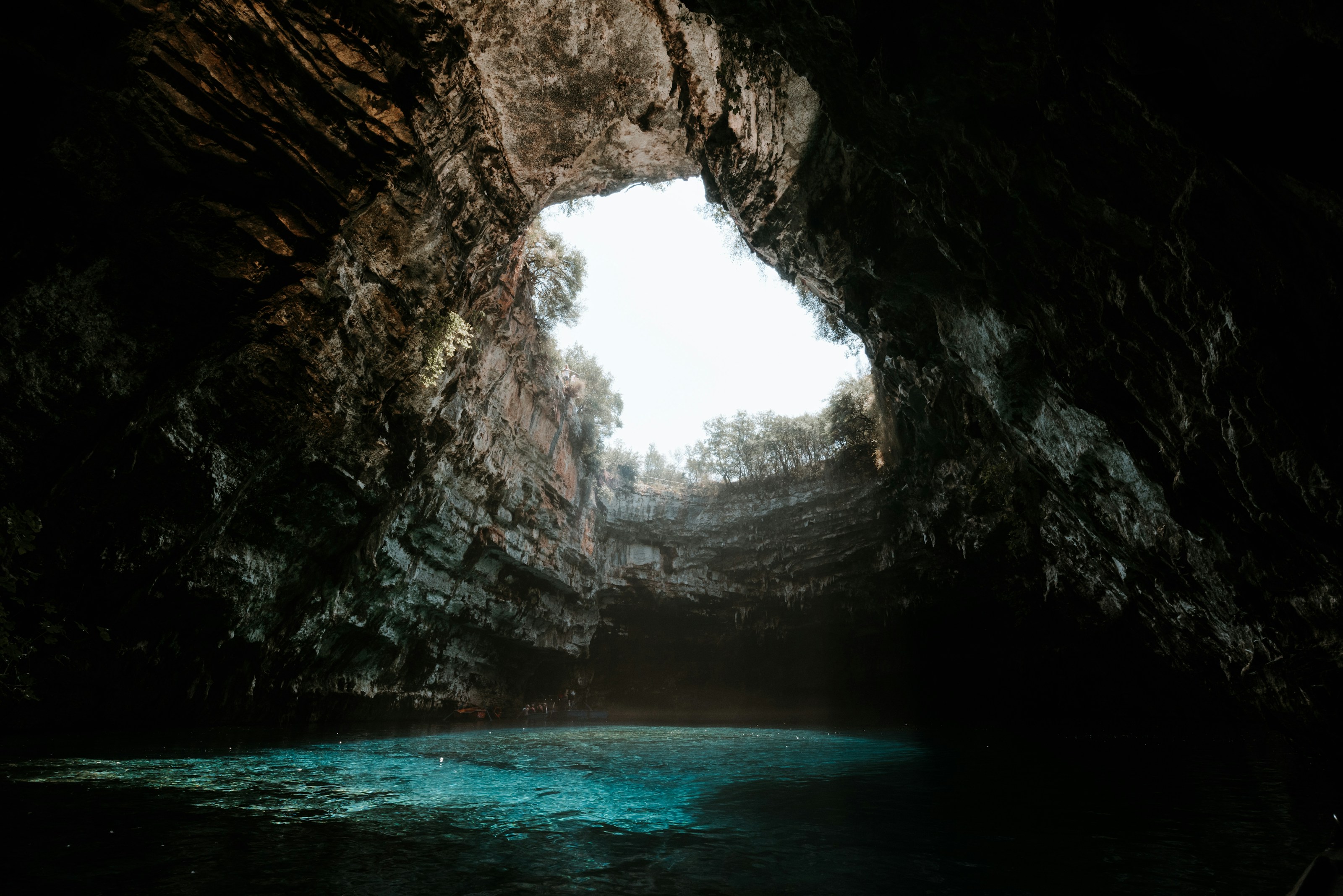 #2281 /100
A collapsed cave roof on Kefalonia opens onto an underground lake so clear that the rowing boats appear to hang in mid-air.
When the sun is directly overhead the water turns an electric blue that looks artificially enhanced but isn't.
A short boat trip takes you through the lit chamber and out under the open dome.
How does it rate
CrowdsRomanceCash RequiredDangerAccessibilityWhy you should go
At midday the boats look like they are floating on nothing but light.
Why you shouldn't go
The effect only works in a narrow window around noon, and only when the sun is out.
Plan your visit
Best time to visitJune-September, when the sun climbs high enough to reach the waterBest time of dayBetween 12pm and 2pm - any earlier or later and the blue disappearsGetting thereDrive or taxi from Sami on Kefalonia, about 10 minutes; the island is reached by ferry or its small airportEntry costAround EUR 8 including the boatTime needed1 hourInsider tip — Go on a cloudless day and join the queue shortly before noon - the light show lasts barely two hours and the queue moves slowly. -
 #2381 /100
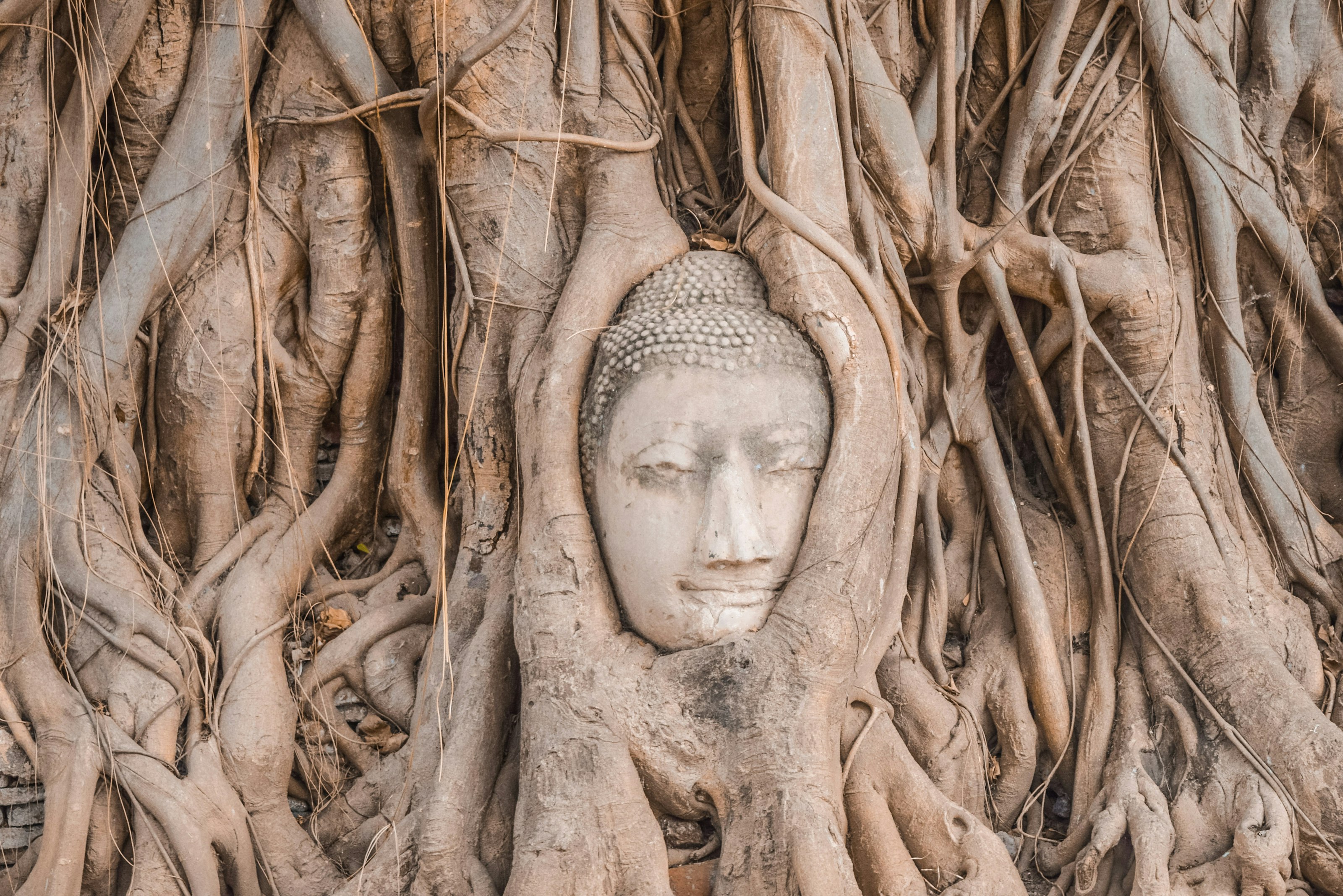
Ayutthaya was the capital of Siam for four centuries and one of the largest cities in the world before Burmese armies destroyed it in 1767, leaving rows of brick temple spires and headless Buddha statues across the old city island.
Its best-known image is a stone Buddha head cradled in the roots of a banyan tree at Wat Mahathat, but the wider site holds dozens of temple ruins connected by quiet canals and cycling paths.
How does it rate
CrowdsRomanceCash RequiredDangerAccessibilityWhy you should go
The Buddha head grown into a tree's roots at Wat Mahathat is one of the most photographed, genuinely strange sights in Thailand.
Why you shouldn't go
The ruins are spread across a wide area with little shade, and midday heat makes cycling between them exhausting.
Plan your visit
Best time to visitNovember–February, Thailand's cool, dry season.Best time of dayEarly morning or late afternoon, avoiding the worst of the midday heat.Getting thereFly to Bangkok; 1.5-hour train or minivan north to Ayutthaya.Entry costSmall entry fee per temple, or a combined multi-site ticket.Time needed1 dayInsider tip — Rent a bicycle at the train station rather than hiring a tuk-tuk — the old city is flat and the temples are close enough together to cycle between. -
 #24
#24Rated #24 of 100
Lençóis Maranhenses National Park, Brazil
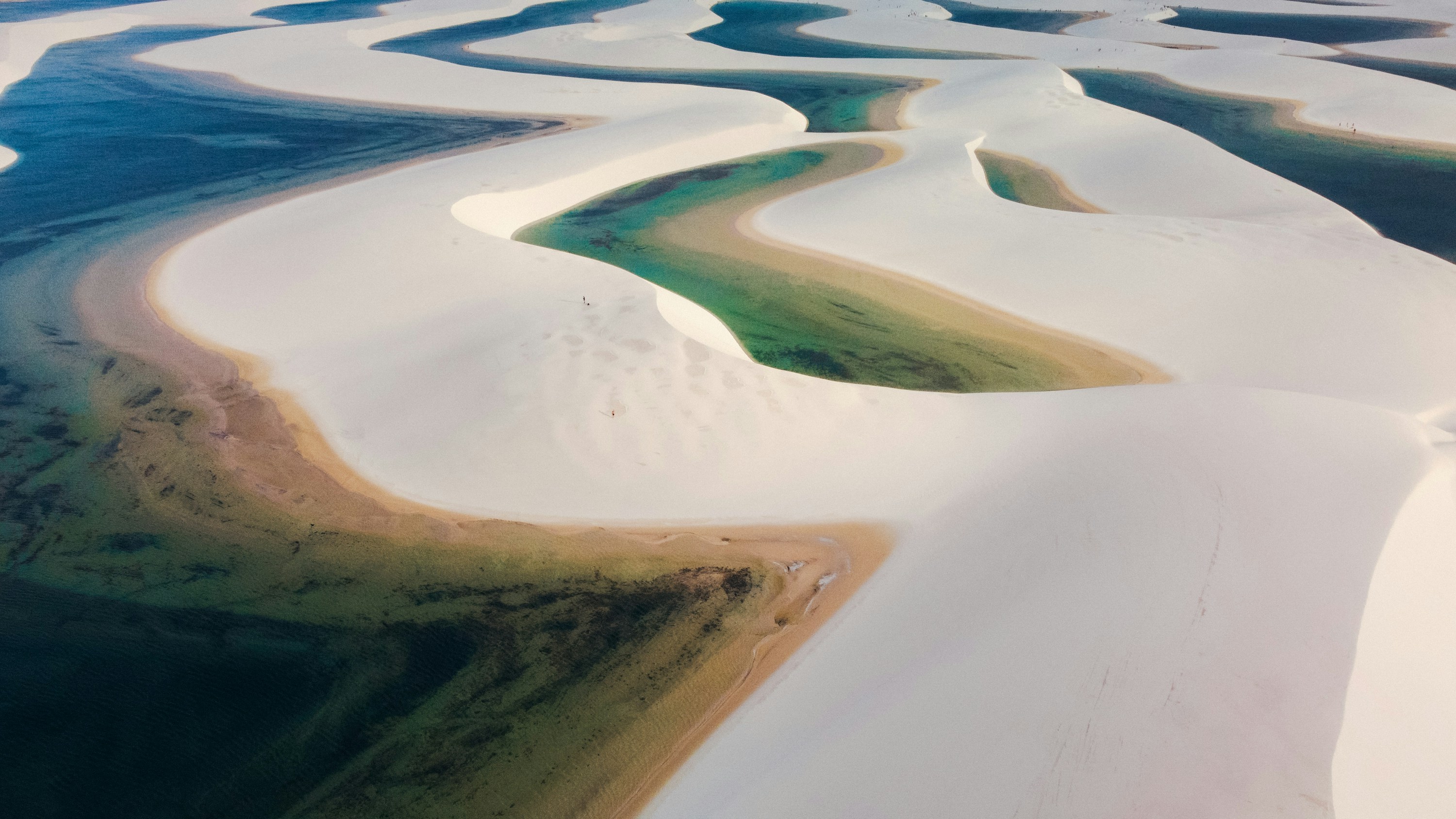
#lençóismaranhensesnationalpark ◆ Natural Features81 /100Despite the name, this isn't a desert: seasonal rains fill the valleys between hundreds of square kilometres of white dunes with clear turquoise lagoons, usually June to September.
Outside that window, the dunes stretch out bone-dry and empty.
Reaching the interior means a 4x4 or a walk across shifting sand from the gateway town of Barreirinhas, but the landscape has no real equivalent on the Brazilian coast.
How does it rate
CrowdsRomanceCash RequiredDangerAccessibilityWhy you should go
Turquoise rainwater lagoons threaded through pure white dunes, found nowhere else on the coast.
Why you shouldn't go
The lagoons only hold water roughly June-September; visit outside that window and it's just dry sand.
Plan your visit
Best time to visitJune-September, when rains fill the dune lagoons for swimming.Best time of dayEarly morning, for cooler sand and softer light before the midday heat.Getting thereFly to São Luís, then about a 4-hour transfer to Barreirinhas; onward by 4x4 or boat into the dune field.Entry costFree to enter the park; guided 4x4/boat tours from Barreirinhas cost extraTime neededFull day, or 2-3 days to see multiple dune areasInsider tip — Base yourself in Barreirinhas rather than São Luís, and get out to Lagoa Azul or Lagoa Bonita early, before the midday sun flattens the colour. -
 #2580 /100
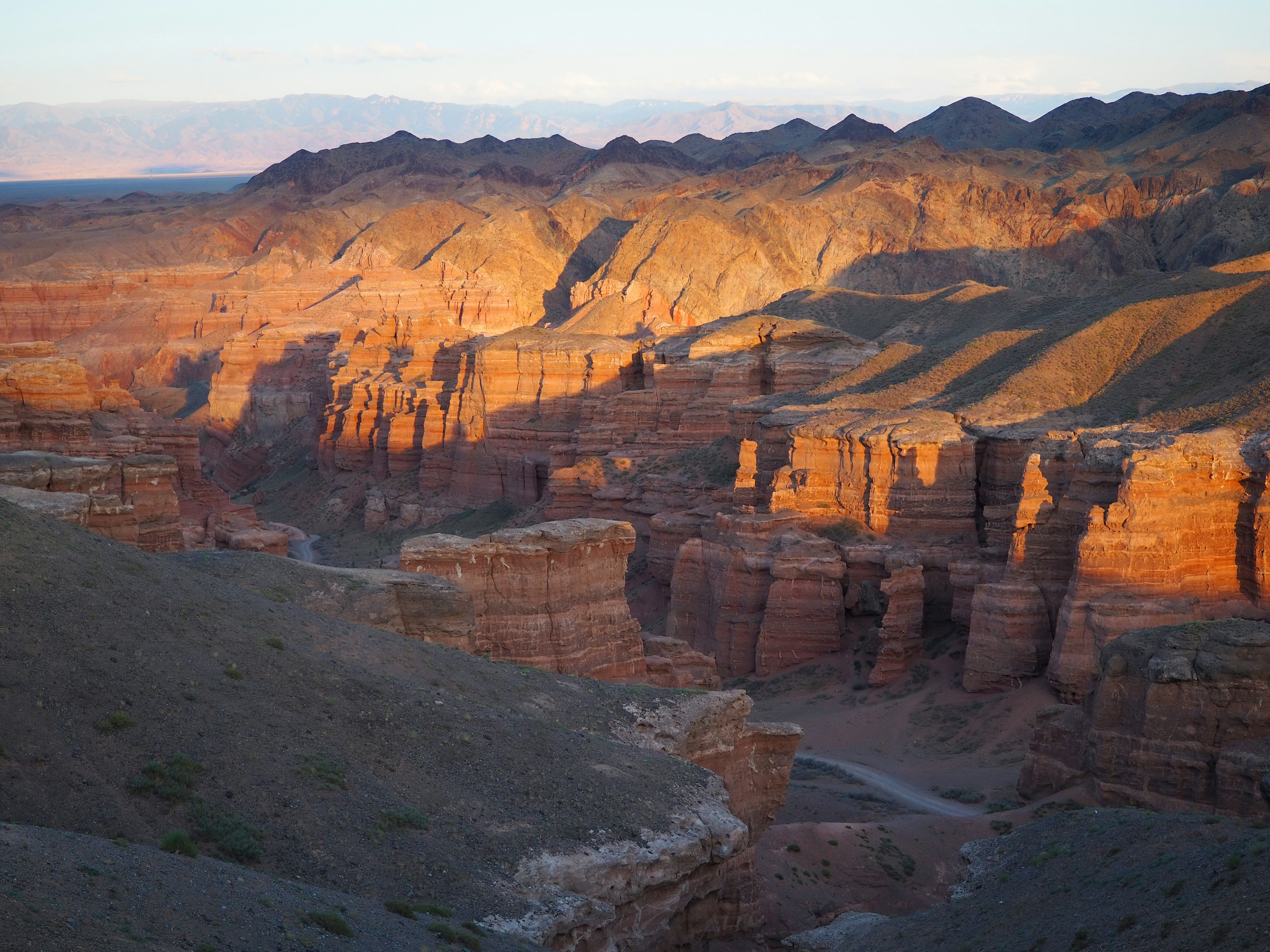
Red sandstone spires and narrow corridors give this Central Asian canyon its nickname, the Valley of Castles, carved by the Charyn River over 12 million years.
Often compared to a miniature Grand Canyon, it draws a fraction of the visitors despite comparably dramatic scenery.
Walking the valley floor between the eroded rock towers is the main draw, especially in the low light of early evening.
How does it rate
CrowdsRomanceCash RequiredDangerAccessibilityWhy you should go
Grand Canyon-scale rock formations in Central Asia, with almost none of the crowds.
Why you shouldn't go
Summer temperatures in the exposed canyon can exceed 40C by midday.
Plan your visit
Best time to visitApril-May or September-October, avoiding summer heat and winter closures.Best time of dayLate afternoon, when low light picks out the red rock's texture.Getting thereDrive from Almaty (about 3 hours) to the canyon entrance.Entry costPark entry fee, a few dollars per person.Time neededHalf a dayInsider tip — Walk the full Valley of Castles trail rather than just the main viewpoint - the rock formations get more dramatic the further in you go. -
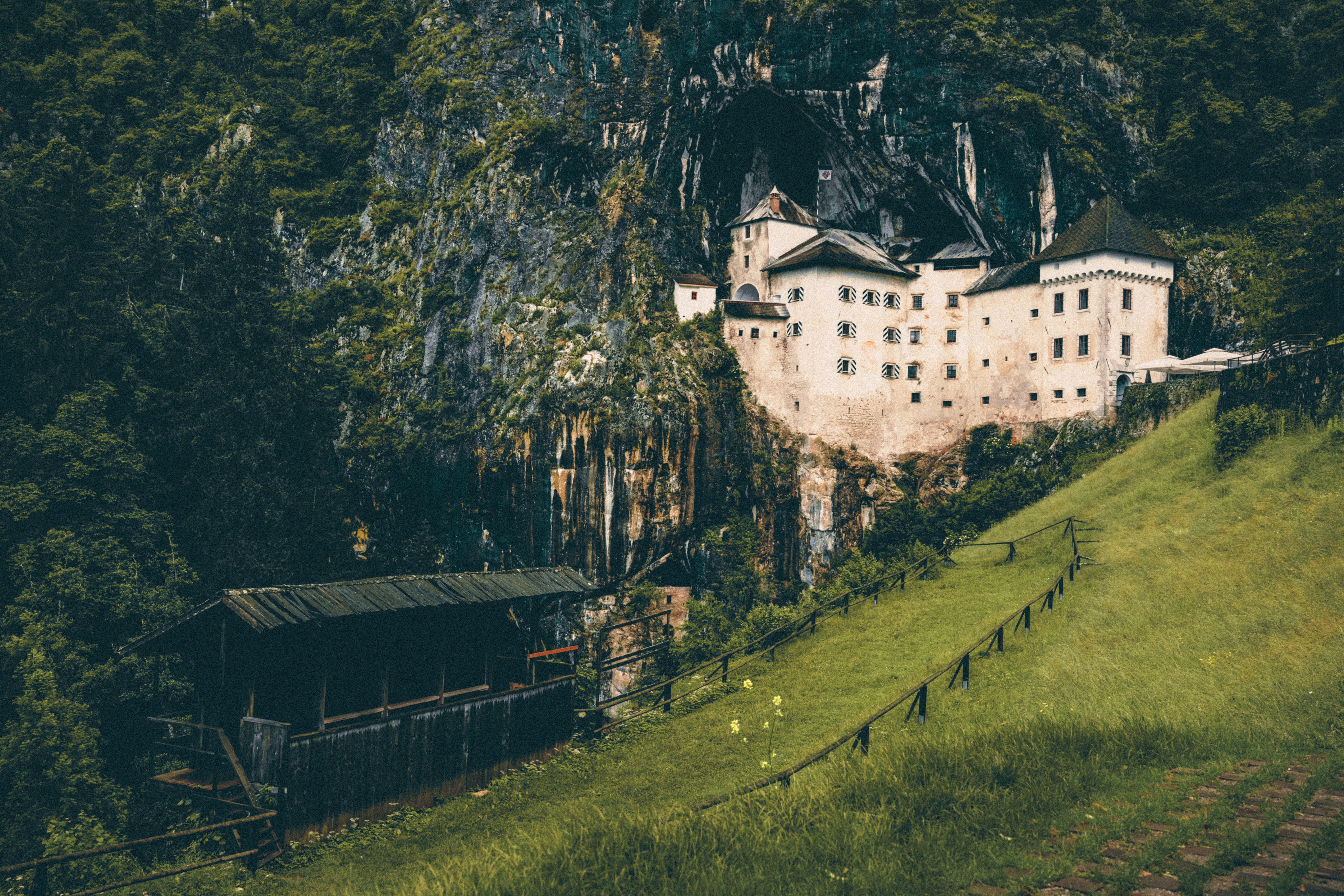 #2680 /100
Built directly into the mouth of a cave halfway up a 123-metre cliff face, this is the largest cave castle in the world and looks almost physically impossible from below.
A network of tunnels behind the walls once let its most famous resident, the robber baron Erazem, escape sieges and raid the countryside undetected.
The combination of Gothic-Renaissance architecture fused seamlessly into raw limestone rock makes it one of Europe's strangest buildings.
How does it rate
CrowdsRomanceCash RequiredDangerAccessibilityWhy you should go
A castle built directly into a cliff-face cave mouth, looking almost impossible from the valley floor below.
Why you shouldn't go
It's a genuine detour from Ljubljana or the Postojna Cave area, and the secret tunnel tour requires a separate, timed booking.
Plan your visit
Best time to visitMay-June or September for good weather and manageable crowds.Best time of dayLate afternoon, when the sun lights the cliff face directly.Getting thereA 45-minute drive from Ljubljana, often combined with a visit to nearby Postojna Cave.Entry costAround EUR18 for adult entry.Time needed2-3 hours.BookingBook ahead →Insider tip — Book the Predjama Castle secret passage tour in advance - it's a separate, limited-capacity ticket that sells out on busy days. -
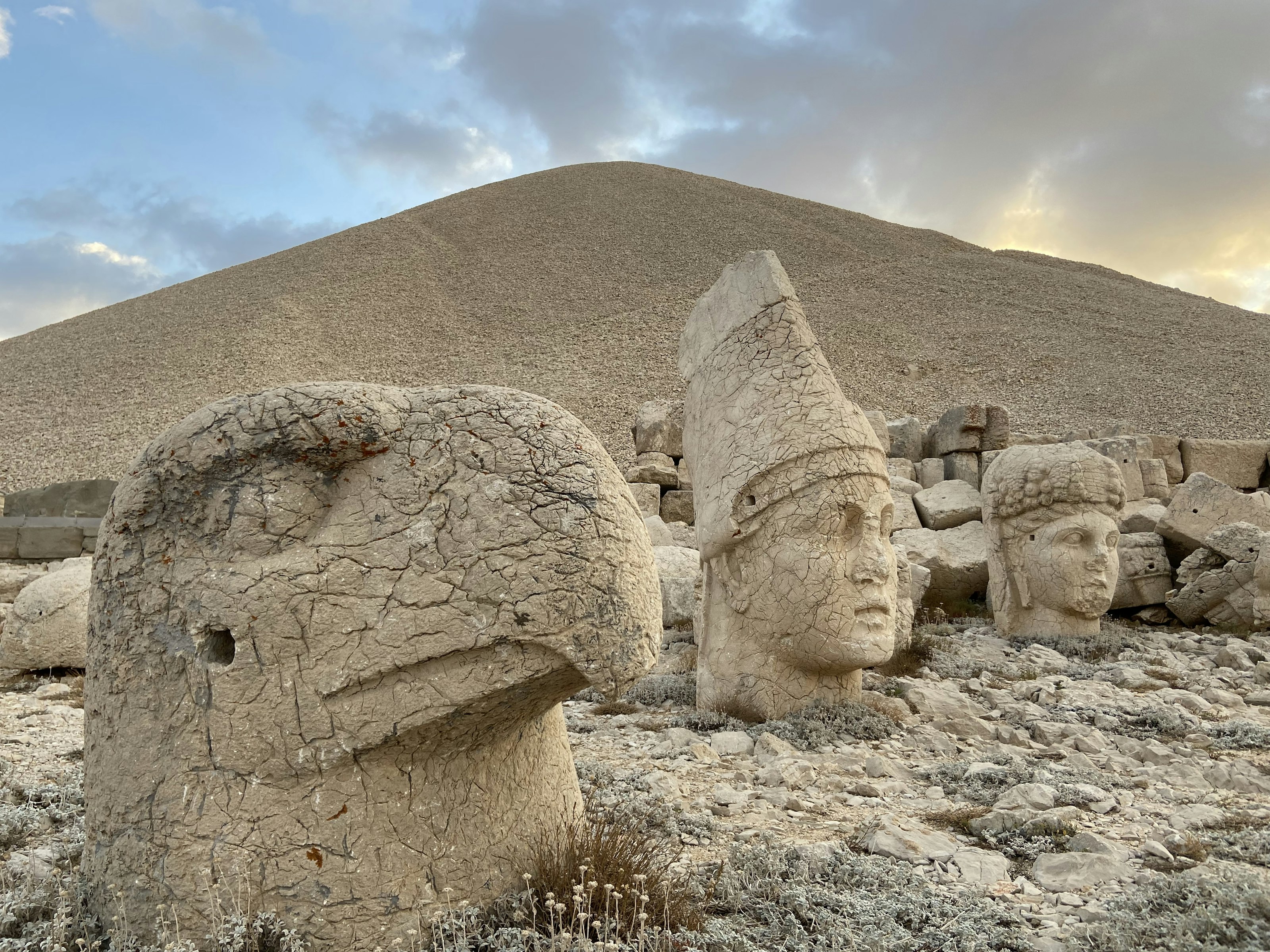 #2780 /100
At the 2,100-metre summit of Mount Nemrut, a first-century BC king built himself a burial sanctuary flanked by colossal stone heads of gods and eagles, toppled from their bodies by centuries of earthquakes but still staring out over the Anatolian plateau.
Visitors climb the last stretch before dawn to watch sunrise light hit the eastern terrace's statues one by one.
How does it rate
CrowdsRomanceCash RequiredDangerAccessibilityWhy you should go
Watching sunrise break across the row of giant stone heads is one of the more surreal moments in Turkish travel.
Why you shouldn't go
The site is remote and the pre-dawn climb in the cold puts off casual visitors — this is a dedicated detour, not a stopover.
Plan your visit
Best time to visitMay–September, when mountain roads are reliably clear and mornings aren't freezing.Best time of dayBefore sunrise — most visitors climb in the dark to catch first light on the statues.Getting thereFly to Adıyaman or Kahta; a rough 1-hour mountain road leads to the summit car park, then a 20-minute climb.Entry costPaid entry.Time needed2–3 hours including the climbInsider tip — Bring a warm layer even in summer — the summit is cold and windy well after sunrise. -
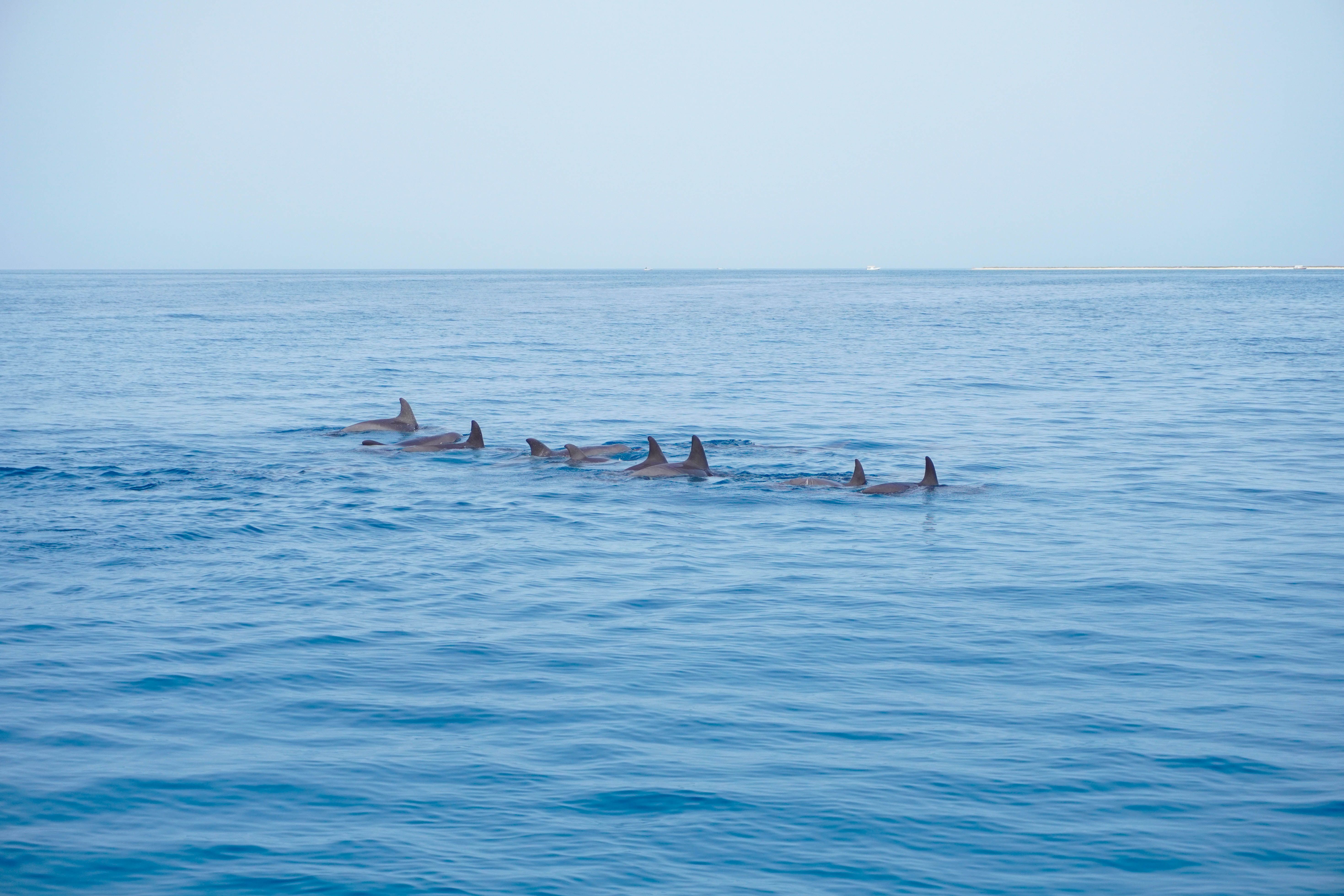 #28
#28Umluj sits on Saudi Arabia's northern Red Sea coast, where a scattering of uninhabited islands and sandbars sit in water shallow and clear enough to earn the coastline the nickname 'the Maldives of Saudi Arabia'.
Boat trips out to islands like Jabal Hassan reach coral reefs largely untouched by mass tourism, and the coastline remains quiet even as new mega-resort developments rise further south along the same coast.
How does it rate
CrowdsRomanceCash RequiredDangerAccessibilityWhy you should go
Genuinely Maldives-clear water and coral reefs, reachable by a short boat ride, with almost no other tourists around.
Why you shouldn't go
Infrastructure is still limited outside a few boat operators and basic hotels, so it takes more planning than an established beach destination.
Plan your visit
Best time to visitNovember–April, avoiding the intense heat of the Red Sea summer.Best time of dayMorning, for the calmest boat crossings and best underwater visibility.Getting thereFly to Yanbu or Tabuk; roughly 1.5–2-hour drive to Umluj, then a boat to the islands.Entry costFree coastline; island boat trips and snorkelling gear are paid extras.Time needed1 dayInsider tip — Book a boat trip a day ahead through a local operator in Umluj town rather than turning up expecting one on the spot — options are still limited. -
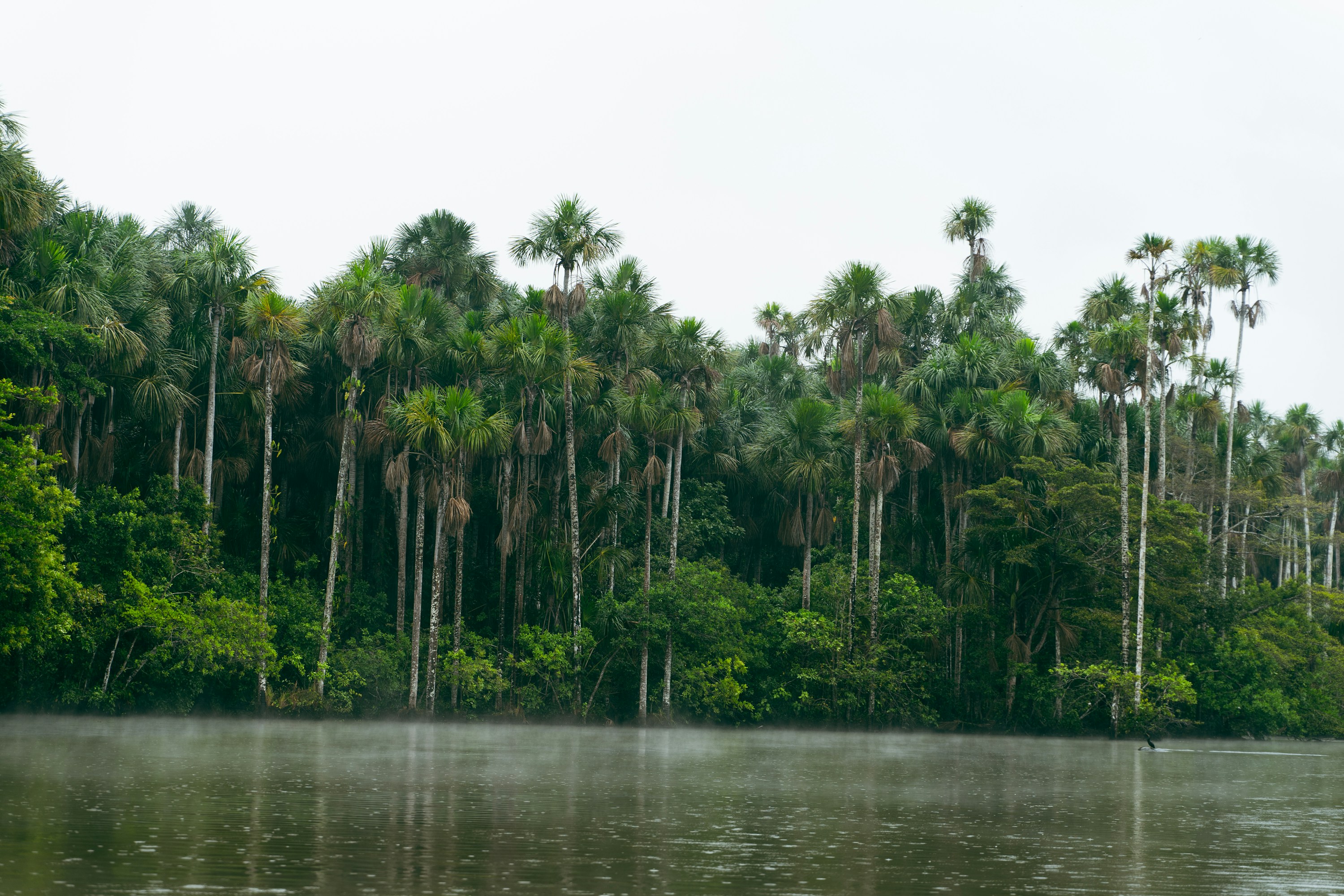 #2980 /100
Tambopata protects lowland Amazon rainforest in southeastern Peru, reached by boat from Puerto Maldonado.
Jungle lodges put visitors within reach of oxbow lakes, giant otters, and one of the Amazon's largest macaw clay licks, where hundreds of parrots gather at dawn.
Guided walks and night boat rides turn up a density of wildlife hard to match elsewhere in Peru, though it costs real time and money to reach.
How does it rate
CrowdsRomanceCash RequiredDangerAccessibilityWhy you should go
One of the Amazon's best macaw clay licks, plus genuinely high odds of otters, caimans and monkeys.
Why you shouldn't go
Getting to the good lodges means a flight to Puerto Maldonado plus hours by boat, and it isn't cheap.
Plan your visit
Best time to visitMay-October (dry season) for easier trails and reliable clay-lick activityBest time of dayDawn for the macaw clay lick; dusk and after dark for caiman and nocturnal wildlifeGetting thereFly to Puerto Maldonado, then 1-4 hours by boat depending on the lodgeEntry costReserve entry fee ~$20-30; lodge packages from roughly $250 for 3 daysTime needed3-4 days including travelInsider tip — Stay at least three nights - the clay licks aren't guaranteed daily, and lodges further upriver see far less boat traffic than those near Puerto Maldonado. -
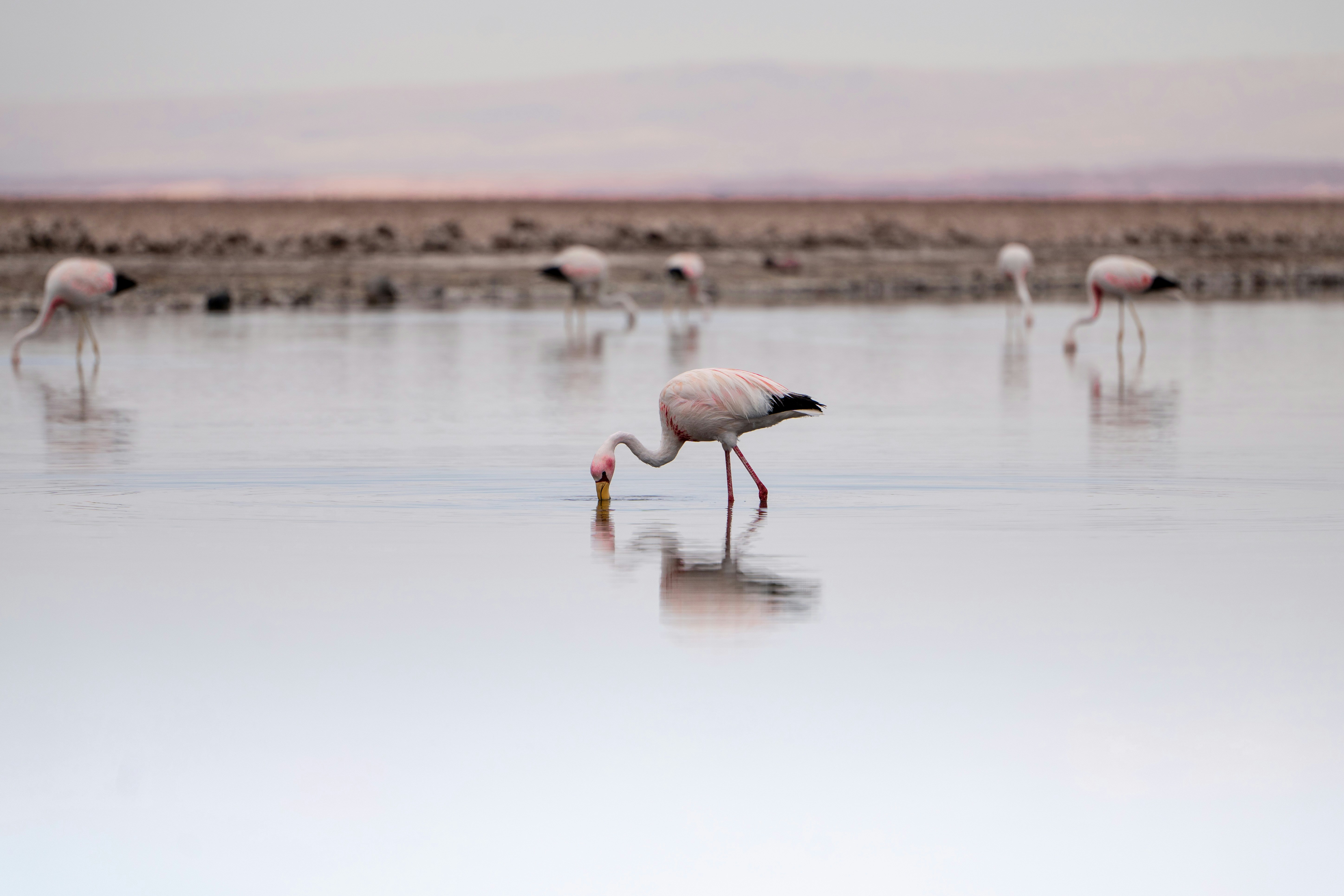 #3079 /100
A vast basin of white salt crust and brine lagoons mirrors the Andes, with flamingo colonies wading in mineral-pink pools.
Otherworldly geology in the driest non-polar desert on Earth, with almost no vegetation, cracked salt crust underfoot, and only the wind and distant volcanoes for company.
How does it rate
CrowdsRomanceCash RequiredDangerAccessibilityWhy you should go
Vast white salt basin with flamingo-pink brine lagoons in the world's driest desert.
Why you shouldn't go
Extremely remote with sparse facilities; requires high-altitude driving; intense sun and altitude exposure.
Plan your visit
Best time to visitOctober–April (dry season) for flamingo breeding activity; winter rain can close roads.Best time of daySunrise and sunset for the strongest color shifts on the lagoons.Getting thereFly to Calama, then 1.5–2 hour drive south from San Pedro de Atacama.Entry costGuided tours $50–80 USD per person, includes reserve entry fee.Time neededHalf day to full day with a guide.Insider tip — Book with a local guide who knows the safe salt-crust routes; bring sunscreen, a hat, and high-SPF lip balm, and acclimatize in San Pedro (2,400m) before heading out. -
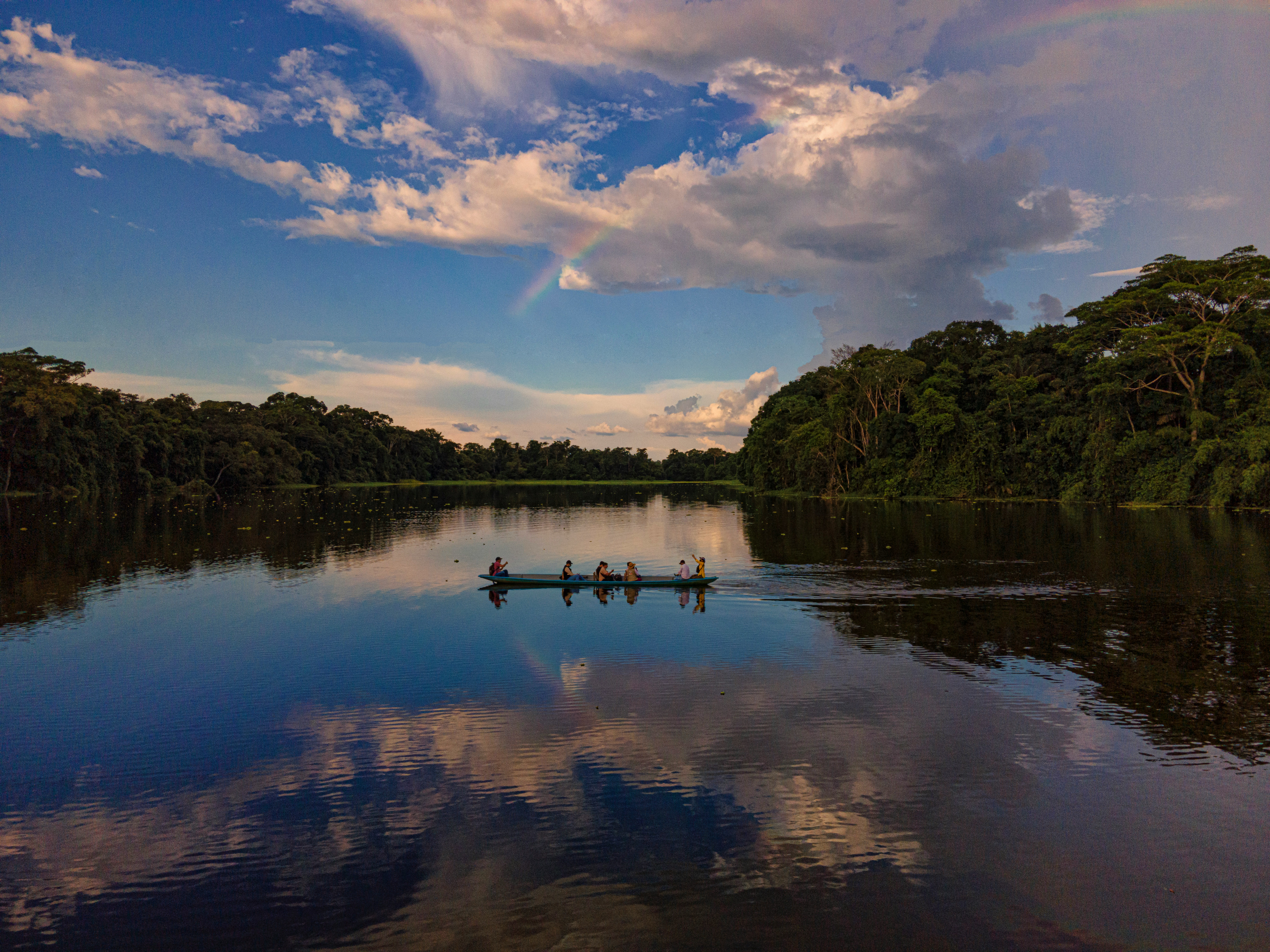 #3179 /100
Deep in the Ecuadorian Amazon, Yasuní is one of the most biodiverse places on the planet, home to more tree species in a single hectare than in all of North America, alongside jaguars, giant otters, harpy eagles and several uncontacted indigenous groups.
Jungle lodges reached by dugout canoe offer guided hikes, canopy towers and night paddles where caiman eyes reflect torchlight across blackwater lagoons.
How does it rate
CrowdsRomanceCash RequiredDangerAccessibilityWhy you should go
Among the most biodiverse places on Earth, reached only by river and largely untouched.
Why you shouldn't go
Remote access means multi-day lodge stays are expensive and require significant travel time.
Plan your visit
Best time to visitDecember–February and June–August, the drier seasons, for easier trail walking.Best time of dayDawn canoe trips, when wildlife is most active before the heat sets in.Getting thereFly from Quito to Coca, then several hours by motorized canoe to a jungle lodge.Entry costMulti-day lodge packages typically €400-900+ including transport, food and guiding.Time needed3–5 days.Insider tip — Choose a lodge with an indigenous-run canopy tower — the platform views over the unbroken jungle canopy are the trip's highlight. -
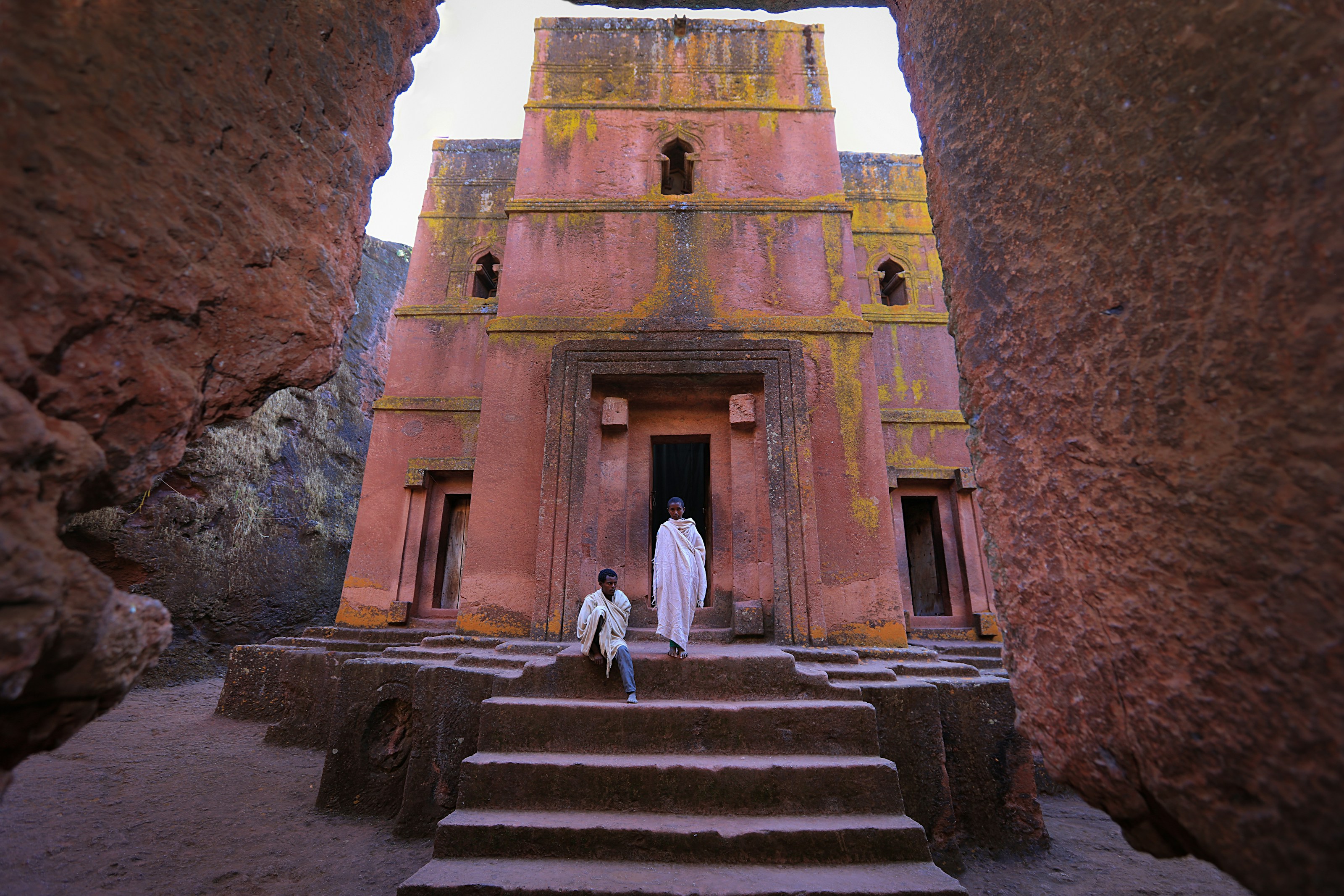 #3279 /100
Ethiopian Orthodox Christians mark the Epiphany with Timkat, when replicas of the Ark of the Covenant, wrapped in cloth and carried by priests, are paraded from every church to a shared body of water the night before.
Crowds in white robes sing and dance through the night, and at dawn the water is blessed and the crowd surges in for a symbolic re-enactment of Christ's baptism.
Lalibela's rock-hewn churches make the most striking backdrop for it.
How does it rate
CrowdsRomanceCash RequiredDangerAccessibilityWhy you should go
Priests parade replica Arks of the Covenant to a shared pool for an overnight vigil and dawn baptism re-enactment.
Why you shouldn't go
Lalibela's Timkat crowds strain the town's limited tourist infrastructure, and accommodation books out far in advance.
Plan your visit
Best time to visit19 January (20 in leap years), Ethiopia's Timkat holiday.Best time of dayOvernight vigil into dawn, when the water blessing and immersion happen.Getting thereFly into Lalibela's small airport, or via Addis Ababa on a connecting domestic flight.Entry costFree to attend as a spectator.Time neededThe overnight vigil plus the following morning.Insider tip — Book Lalibela accommodation many months ahead - the town's small supply of hotels sells out for Timkat well before the date. -
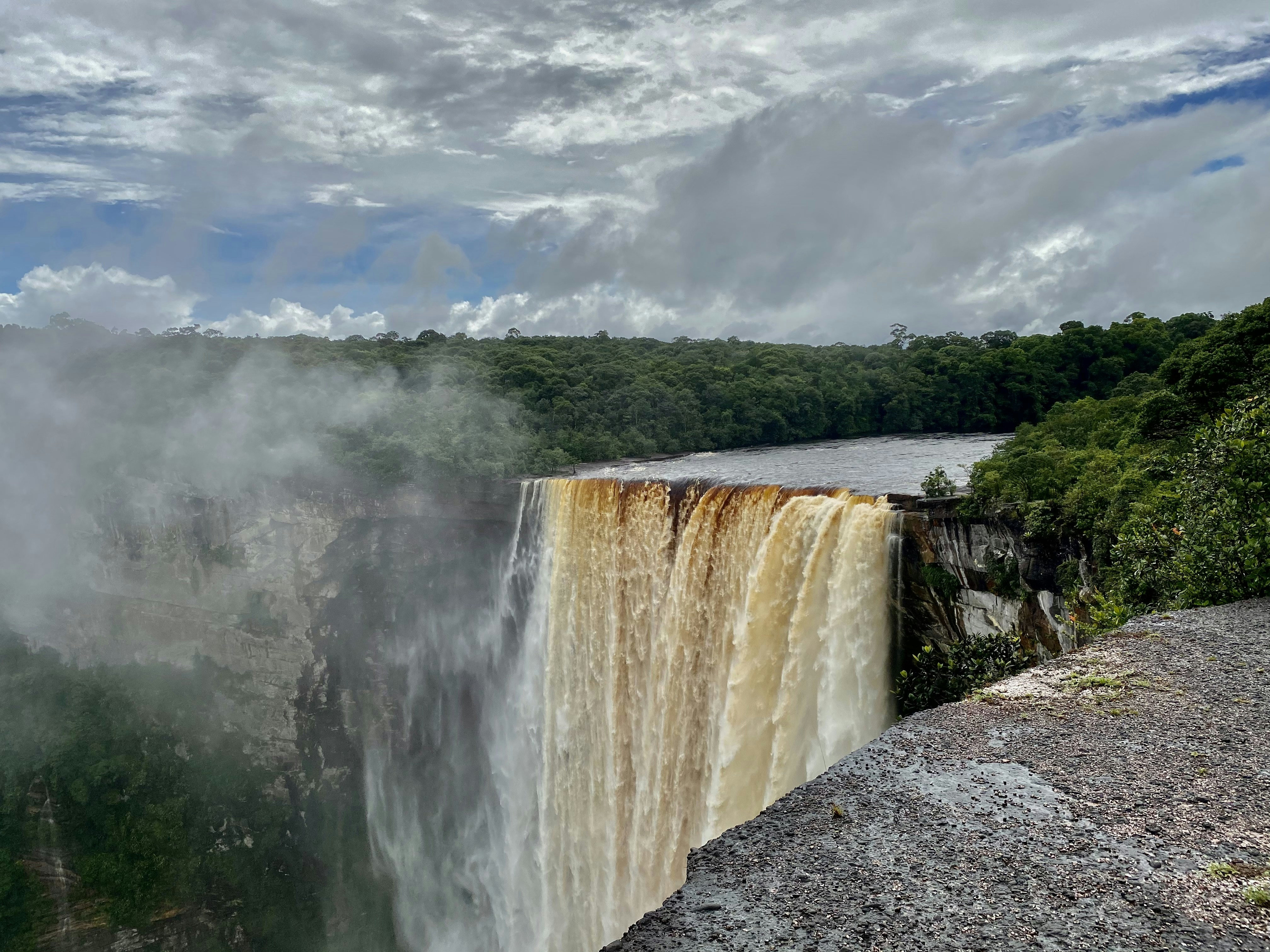 #3379 /100
A single, uninterrupted drop of 226 metres - about four times the height of Niagara - sends the Potaro River over a sandstone cliff into pristine Guyanese rainforest.
Unlike most waterfalls of this scale, it sits inside a protected national park with almost no development and few visitors, so the viewpoints are typically empty.
Rainbow-coloured mist rises from the base most mornings when the light is right.
How does it rate
CrowdsRomanceCash RequiredDangerAccessibilityWhy you should go
One of the world's most powerful single-drop waterfalls, viewed with almost no other visitors around.
Why you shouldn't go
Access is limited to small charter flights, which makes a visit genuinely expensive for what it is.
Plan your visit
Best time to visitMay-August or December-January, the wetter months, for maximum water flow.Best time of dayMorning, for the best chance of mist rainbows and clear flight conditions.Getting thereSmall charter flight from Georgetown (about 45 minutes); no road access to the falls.Entry costIncluded in the charter flight/tour package; no separate entry fee at the falls.Time neededFull day trip from GeorgetownInsider tip — Book the earliest available flight of the day - afternoon cloud over the escarpment can cancel later charters entirely. -
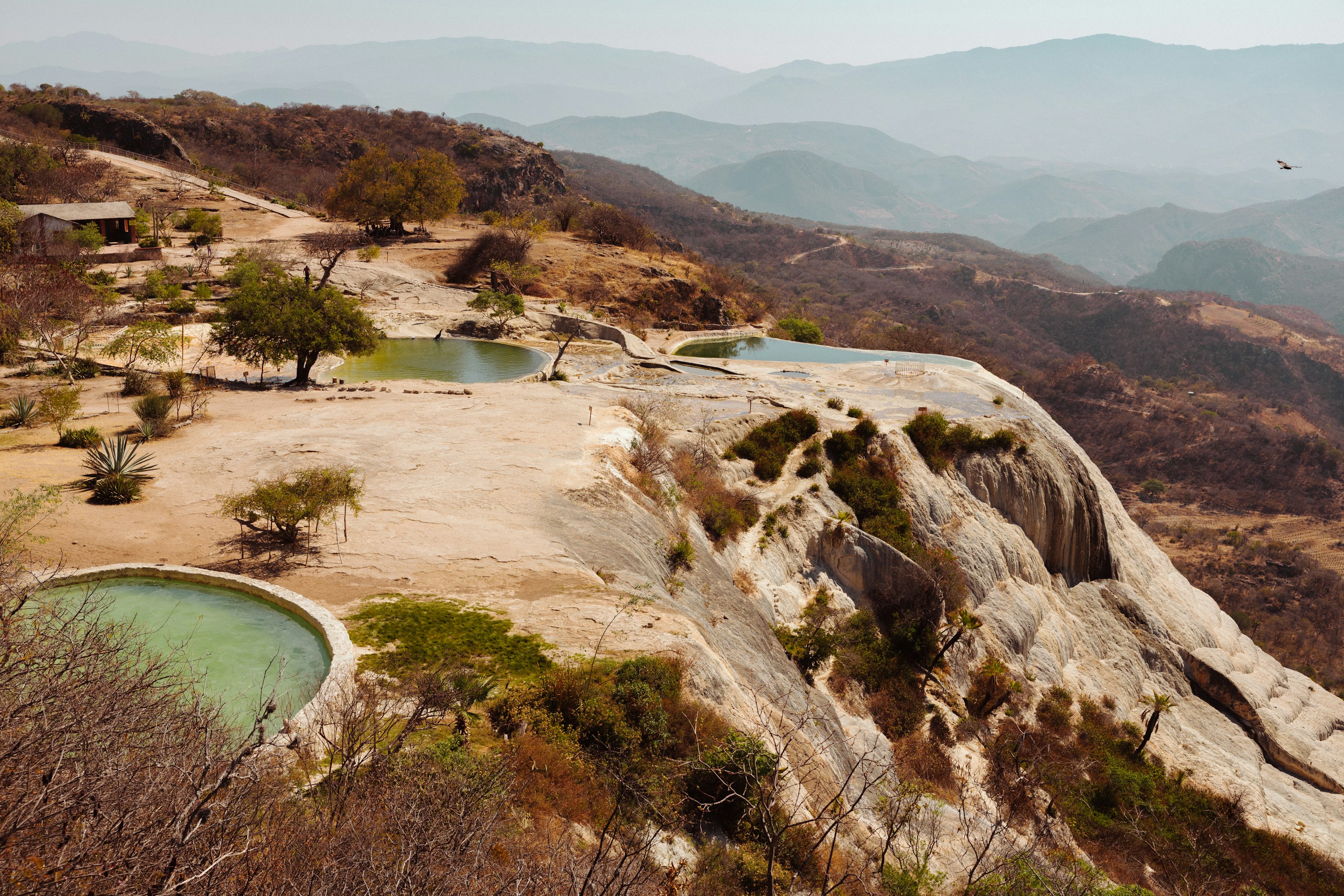 #3479 /100
Hierve el Agua is a set of mineral-rich springs in the hills outside Oaxaca that have calcified over thousands of years into cliffside formations resembling frozen waterfalls.
Two natural infinity pools sit right at the cliff edge, letting swimmers look out over the valley below.
The site is far quieter than Mexico's beach and pyramid destinations, reachable only by a bumpy mountain road.
How does it rate
CrowdsRomanceCash RequiredDangerAccessibilityWhy you should go
Swimming in a natural infinity pool at a cliff edge that looks like a petrified waterfall is unlike anything else in Mexico.
Why you shouldn't go
The access road is rough and the pools' water level can drop noticeably in the dry season.
Plan your visit
Best time to visitNovember–April, dry season, for the fullest pools and easiest road access.Best time of dayMid-morning, arriving before tour groups from Oaxaca City build up through the afternoon.Getting thereFly to Oaxaca City; roughly 1.5–2-hour drive southeast on mostly unpaved mountain roads.Entry costSmall community entry fee, paid locally.Time needed2–3 hoursInsider tip — Combine the trip with the mezcal villages of Santiago Matatlán and San Baltazar Chichicápam along the same road. -
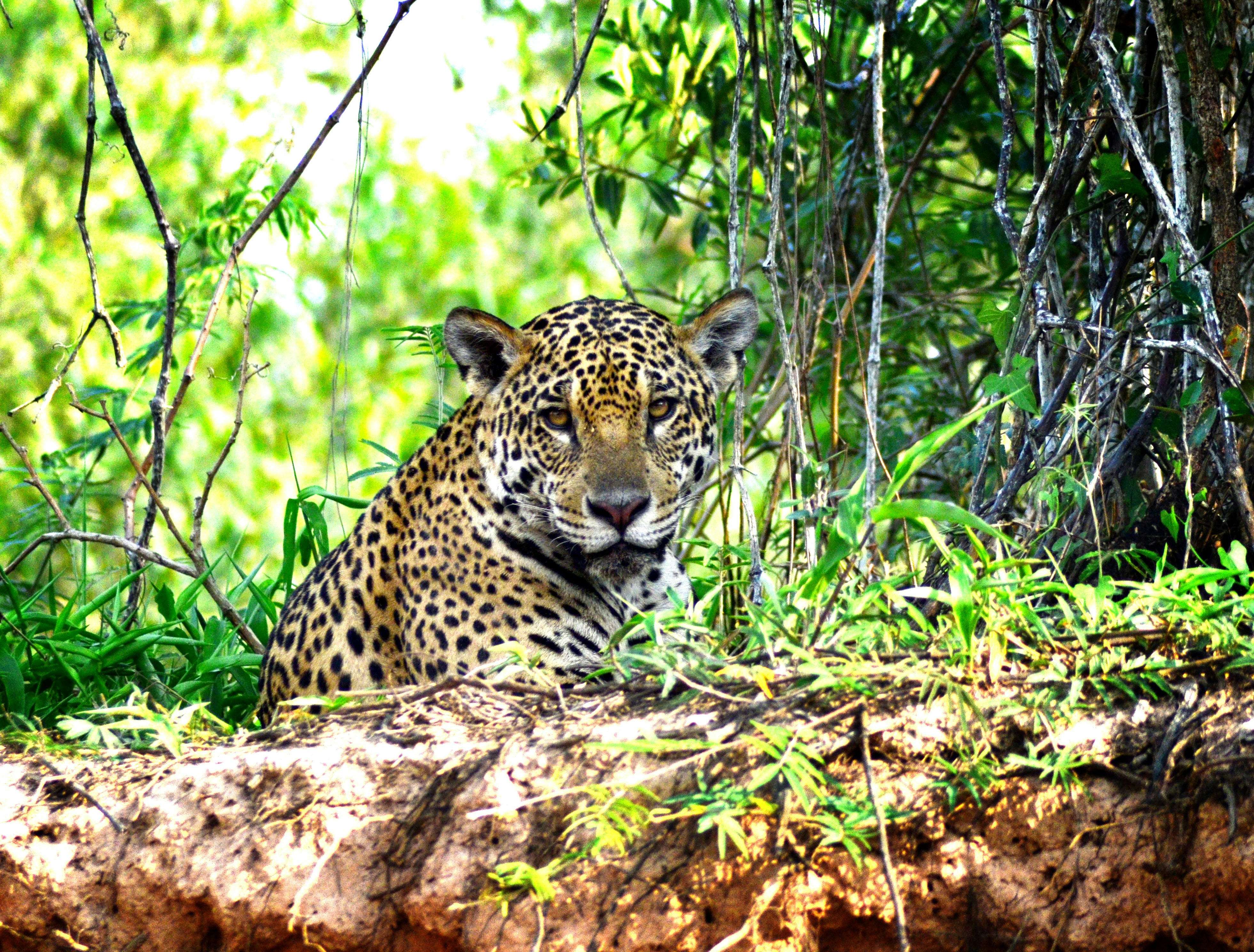 #3578 /100
The world's largest tropical wetland, a mosaic of rivers, lagoons, and gallery forest holding the highest concentration of jaguars, caimans, capybaras, and macaws anywhere in South America.
Guided boat and jeep safaris reveal wildlife far more reliably than the denser Amazon rainforest.
How does it rate
CrowdsRomanceCash RequiredDangerAccessibilityWhy you should go
The world's largest tropical wetland, with the best jaguar-spotting odds and birdlife anywhere in South America.
Why you shouldn't go
Wet season (November–March) brings biting insects and flooded roads; remote lodges require real travel time.
Plan your visit
Best time to visitJune–September (dry season) for concentrated wildlife around shrinking waterholes.Best time of dayEarly morning and late afternoon safaris, when animals are most active.Getting thereFly to Cuiabá, then a 2–4 hour drive south on the Transpantaneira road to lodges.Entry costAll-inclusive lodge packages run roughly $150–300 USD per day.Time needed3–5 days minimum.Insider tip — Book a lodge with guides experienced specifically in jaguar tracking along the Cuiabá or Três Irmãos rivers. Bring binoculars, a telephoto lens, and anti-malarial precautions as advised by a travel clinic. -
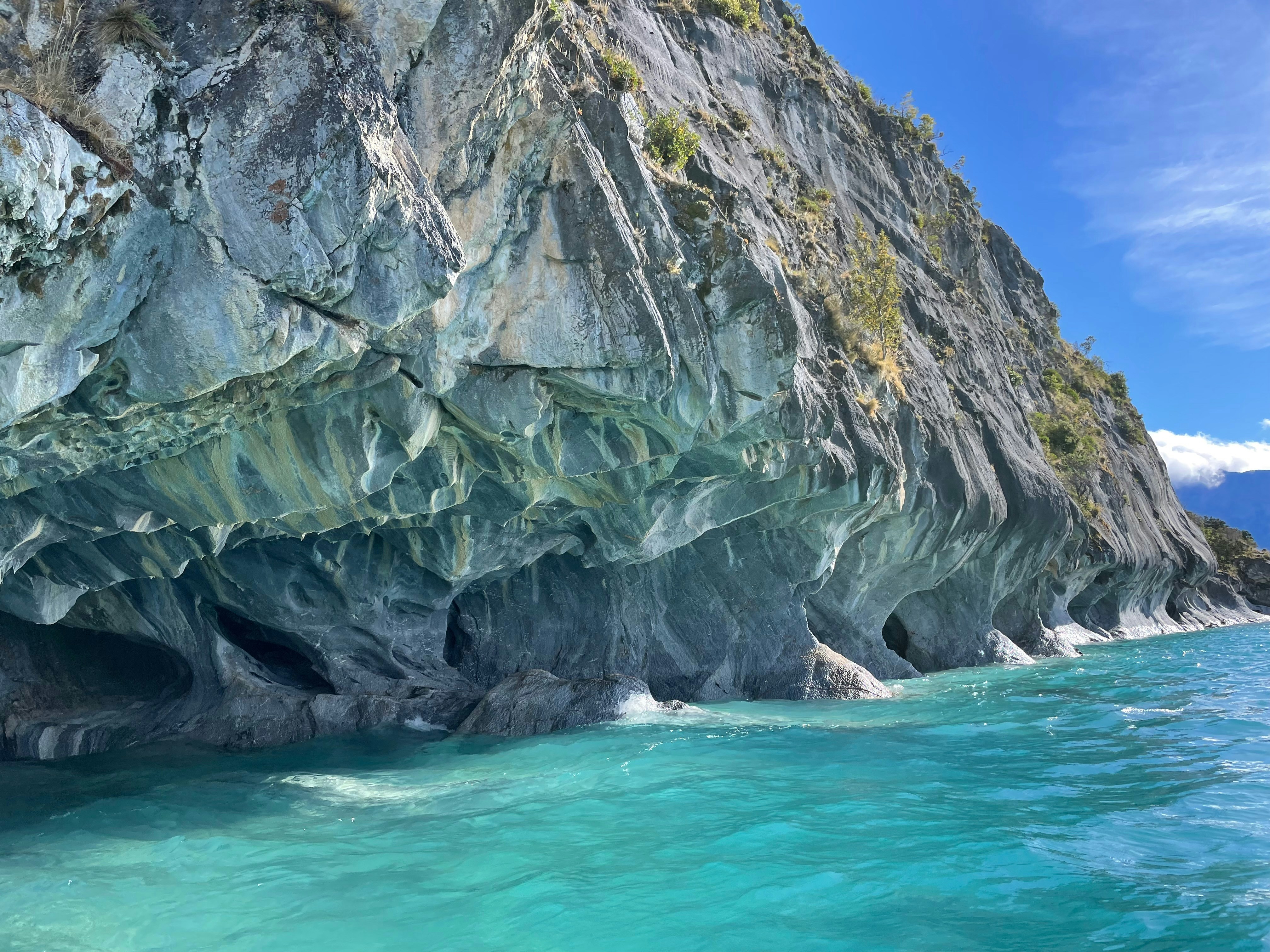 #3678 /100
A labyrinth of marble caverns carved by wave action into a peninsula on Lake General Carrera, forming swirled chambers and arches in white, grey, and cobalt blue.
Accessible only by small boat, with the water's color and the marble's pattern shifting dramatically with the season and light.
How does it rate
CrowdsRomanceCash RequiredDangerAccessibilityWhy you should go
Swirling marble caverns carved into a lake peninsula, with cathedral-like chambers reachable only by boat.
Why you shouldn't go
Access depends on lake conditions and can be cancelled in high winds; the remote location adds significant travel time and cost.
Plan your visit
Best time to visitDecember–February for the lake's lowest water levels, when the caves and swirling patterns are most vivid.Best time of dayMidday sun lights the interior of the caves best; the water is often calmer in early morning.Getting thereDrive the Carretera Austral to Puerto Río Tranquilo, then a short boat tour to the caves.Entry costGuided boat tours roughly CLP 25,000–35,000 (~$28–40 USD).Time needed1.5–2 hours.Insider tip — Go early to avoid afternoon winds that can churn up the lake and cancel tours. A kayak tour, where available, gets you closer to the rock than the larger tour boats. -
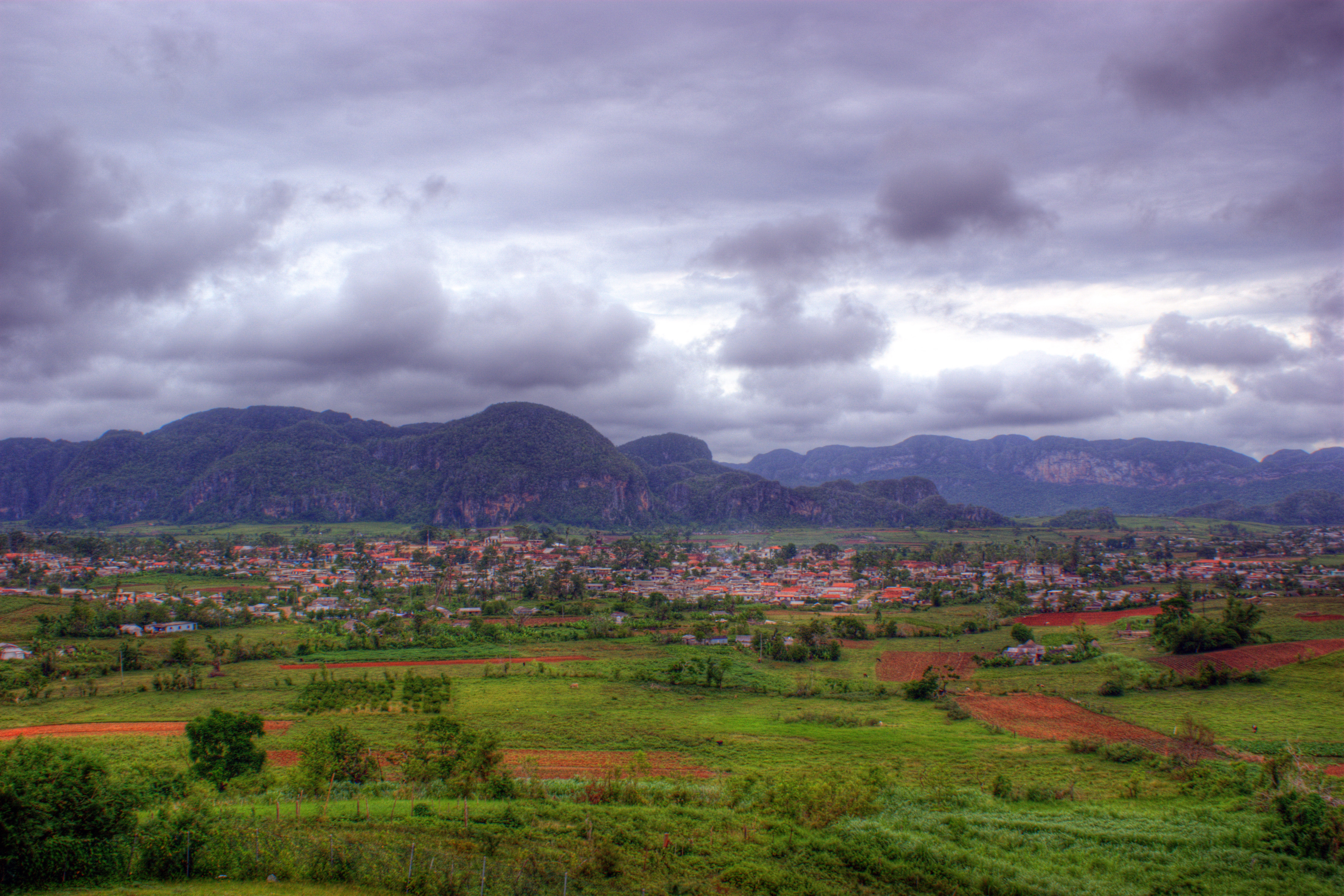 #3778 /100
The Vinales Valley is a UNESCO World Heritage landscape in western Cuba, where massive limestone mogotes rise dramatically from the flat valley floor like green-covered fortresses.
The traditional tobacco farms, red earth roads, royal palm trees, and brilliant blue skies make it one of the Caribbean's most distinctive landscapes.
How does it rate
CrowdsRomanceCash RequiredDangerAccessibilityWhy you should go
The combination of the dramatic mogote karst landscape, the red earth, the royal palms, and the traditional farming methods creates a landscape of extraordinary beauty and cultural richness.
Why you shouldn't go
Vinales requires either a guided excursion from Havana or independent travel which can be challenging to arrange; the valley itself is fairly compact and can be covered in a day.
Plan your visit
Best time to visitNovember-April (dry season)Best time of daySunrise, when mist settles between the limestone mogotesGetting there~2.5-3hr drive from HavanaEntry costFree to viewTime neededFull dayInsider tip — Climb to the Los Jazmines viewpoint hotel terrace for the classic wide shot over the whole valley -
 #3878 /100
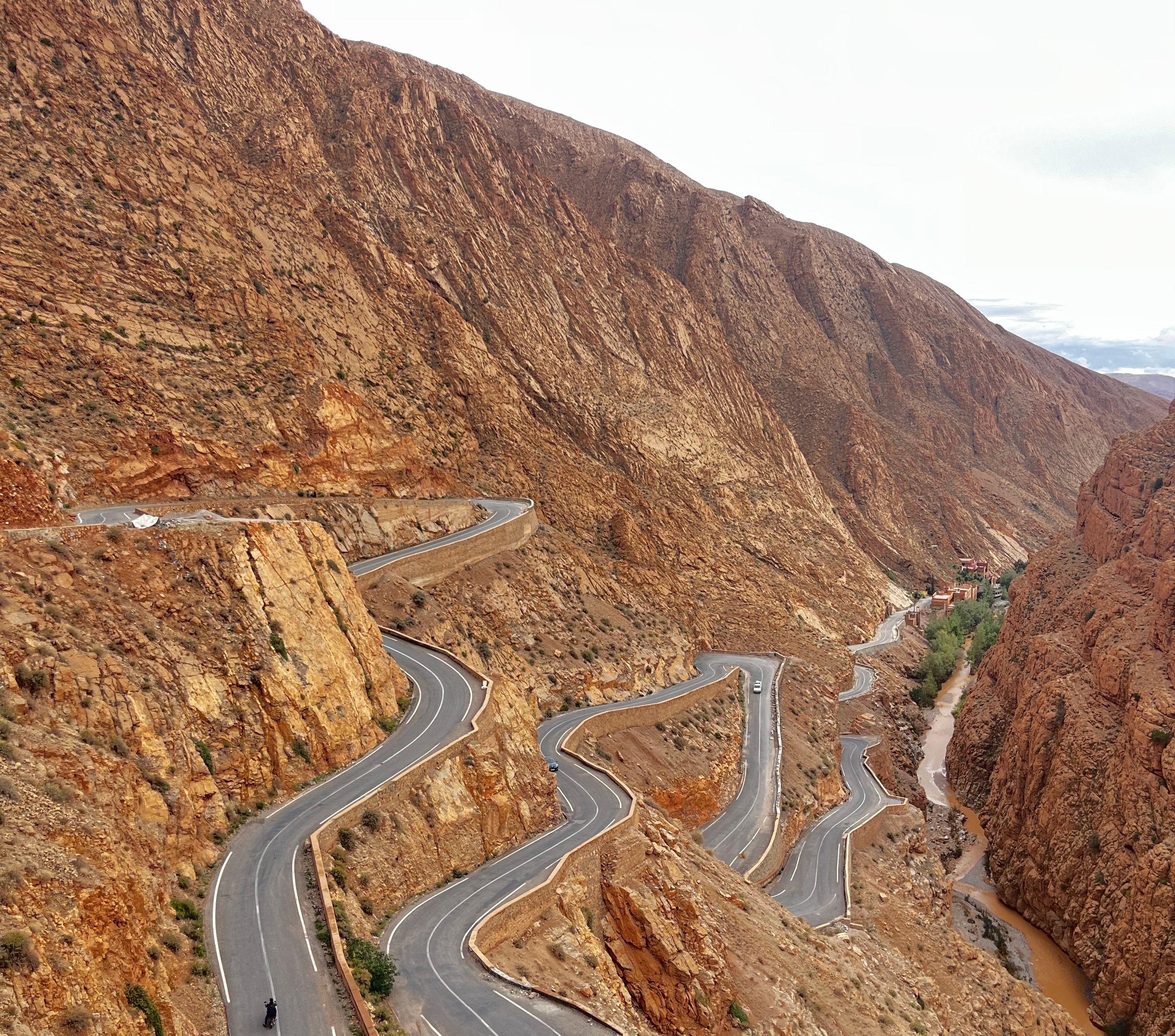
A switchback road climbs through this dramatic red-rock gorge in the High Atlas foothills, past strange wind-eroded rock formations locals call the Monkey Fingers.
Kasbahs and Berber villages built from the same red earth blend almost seamlessly into the canyon walls around them.
The valley floor, planted with almond and fig trees, adds a green ribbon through the otherwise stark rust-coloured landscape.
How does it rate
CrowdsRomanceCash RequiredDangerAccessibilityWhy you should go
A red-rock gorge with a genuinely dramatic switchback road carved into its walls.
Why you shouldn't go
The famous switchback road is narrow and has no barriers - not a relaxing drive for nervous passengers.
Plan your visit
Best time to visitMarch-May or September-November, avoiding summer heat.Best time of dayLate afternoon, when the low sun deepens the red rock's colour.Getting thereDrive from Ouarzazate (about 1.5 hours) as part of a route toward the Sahara.Entry costFree to drive through; kasbah visits charge small entry fees.Time neededHalf a dayInsider tip — Stop at the Monkey Fingers rock formations partway up the switchbacks - most tour buses only stop at the top viewpoint and miss them. -
 #3978 /100
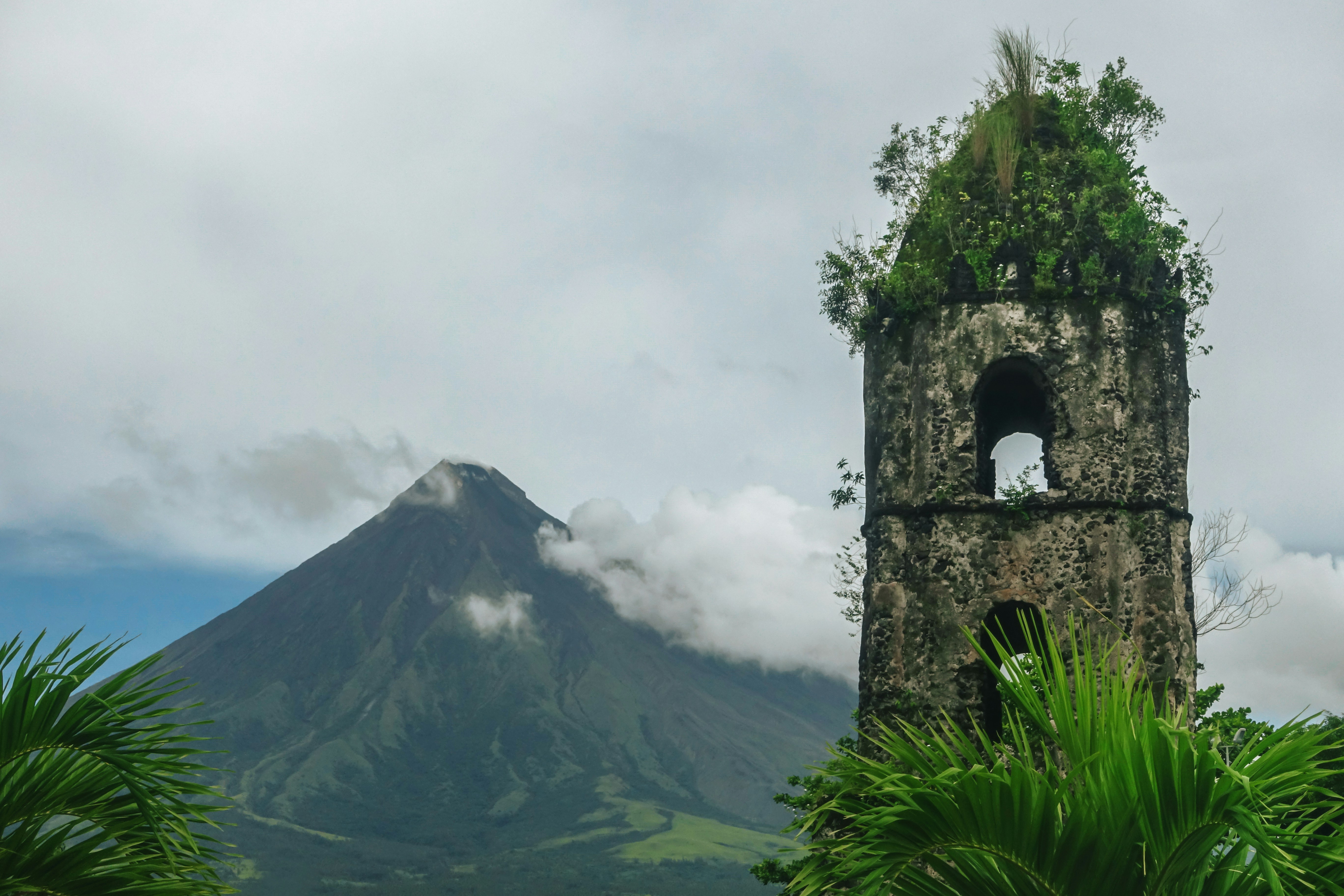
Famous for having the most perfectly symmetrical cone of any volcano on Earth, rising in a flawless triangle above rice paddies and palm groves in the Bicol region.
It remains one of the Philippines' most active volcanoes, with periodic eruptions that occasionally force evacuations from surrounding villages, adding genuine drama to its postcard-perfect profile.
The best views come from a distance - from Daraga Church's ruins or the ATV trails around its lower slopes - rather than any close approach to the crater itself.
How does it rate
CrowdsRomanceCash RequiredDangerAccessibilityWhy you should go
Widely considered the most perfectly symmetrical volcanic cone in the world, framed by rice paddies and church ruins.
Why you shouldn't go
It's genuinely active with a history of sudden eruptions, so close-approach access is often restricted for safety.
Plan your visit
Best time to visitDecember-May (dry season) for the clearest, cloud-free views of the cone.Best time of dayEarly morning, before afternoon cloud typically wraps the summit.Getting thereFly to Legazpi; the classic viewpoints are a short drive from the city.Entry costViewpoint access is generally free; ATV tours on the lower slopes cost around 500-800 PHP.Time neededHalf a day.Insider tip — Cagsawa Ruins is the classic photo spot, but Daraga Church's hilltop churchyard gives the same cone view with a fraction of the tour-bus crowd. -
 #4078 /100
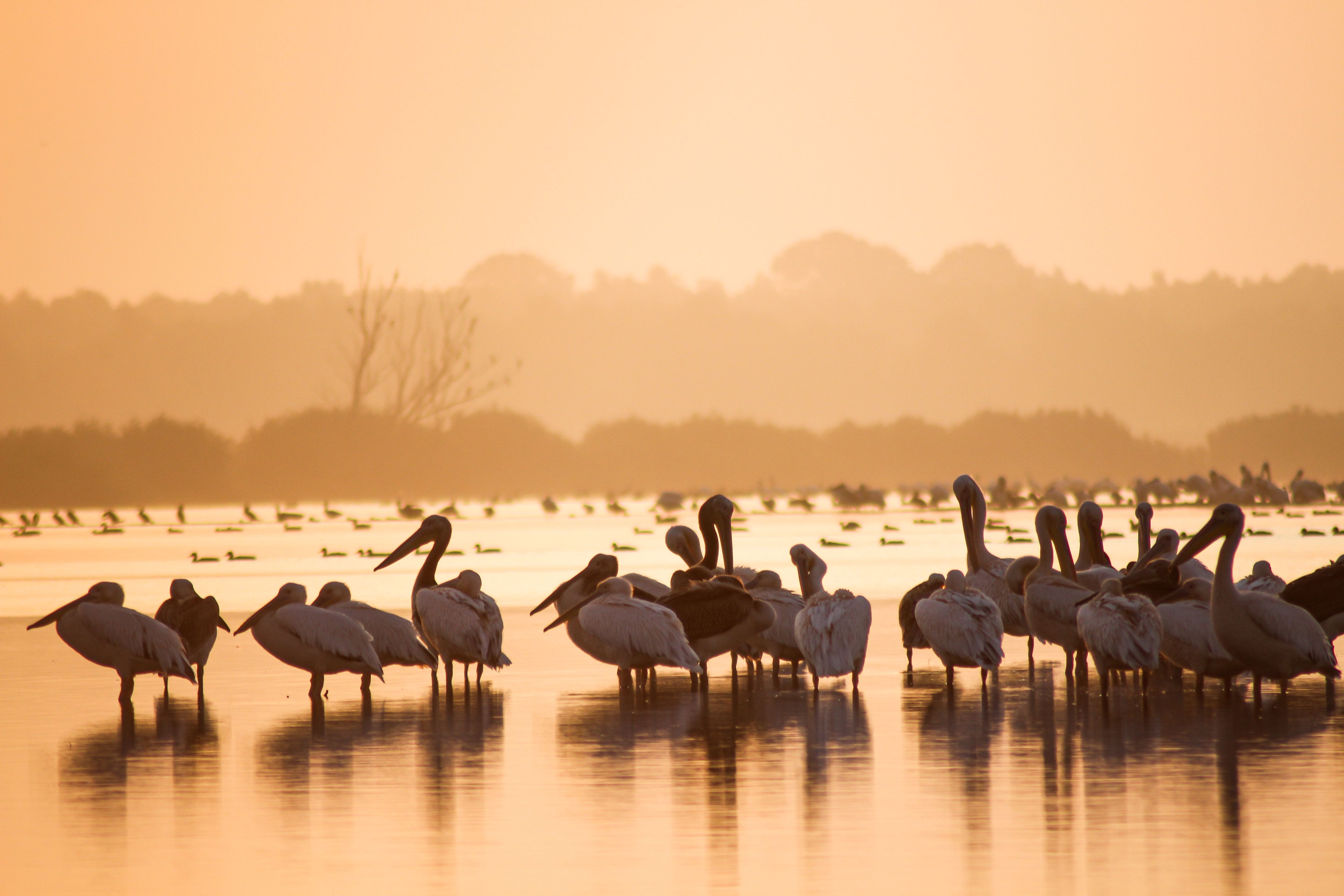
Europe's largest and best-preserved river delta is a maze of reed-lined channels, lakes and marshland where the Danube meets the Black Sea.
Boat trips glide past pelicans, herons and over 300 other bird species in a UNESCO-protected wilderness.
Traditional fishing villages built on stilts add a lived-in texture to the wildlife-watching, and the sheer scale of untouched wetland is rare anywhere in Europe.
How does it rate
CrowdsRomanceCash RequiredDangerAccessibilityWhy you should go
Untouched wetland wilderness with Europe's richest concentration of birdlife.
Why you shouldn't go
Getting deep into the delta requires a guided boat and more than a day trip to do justice.
Plan your visit
Best time to visitMay–June for peak birdlife and mild weather, before summer heat and mosquitoes.Best time of dayEarly morning, when birds are most active and the water is calm.Getting thereFly or drive to Tulcea, then transfer onto a guided boat into the delta channels.Entry costFree to enter; guided boat tours from around €40 per person.Time neededFull day, or 2–3 days to explore properly.Insider tip — Book a small private boat rather than a large tour vessel — it can reach narrower channels where the wildlife actually is. -
 #4178 /100
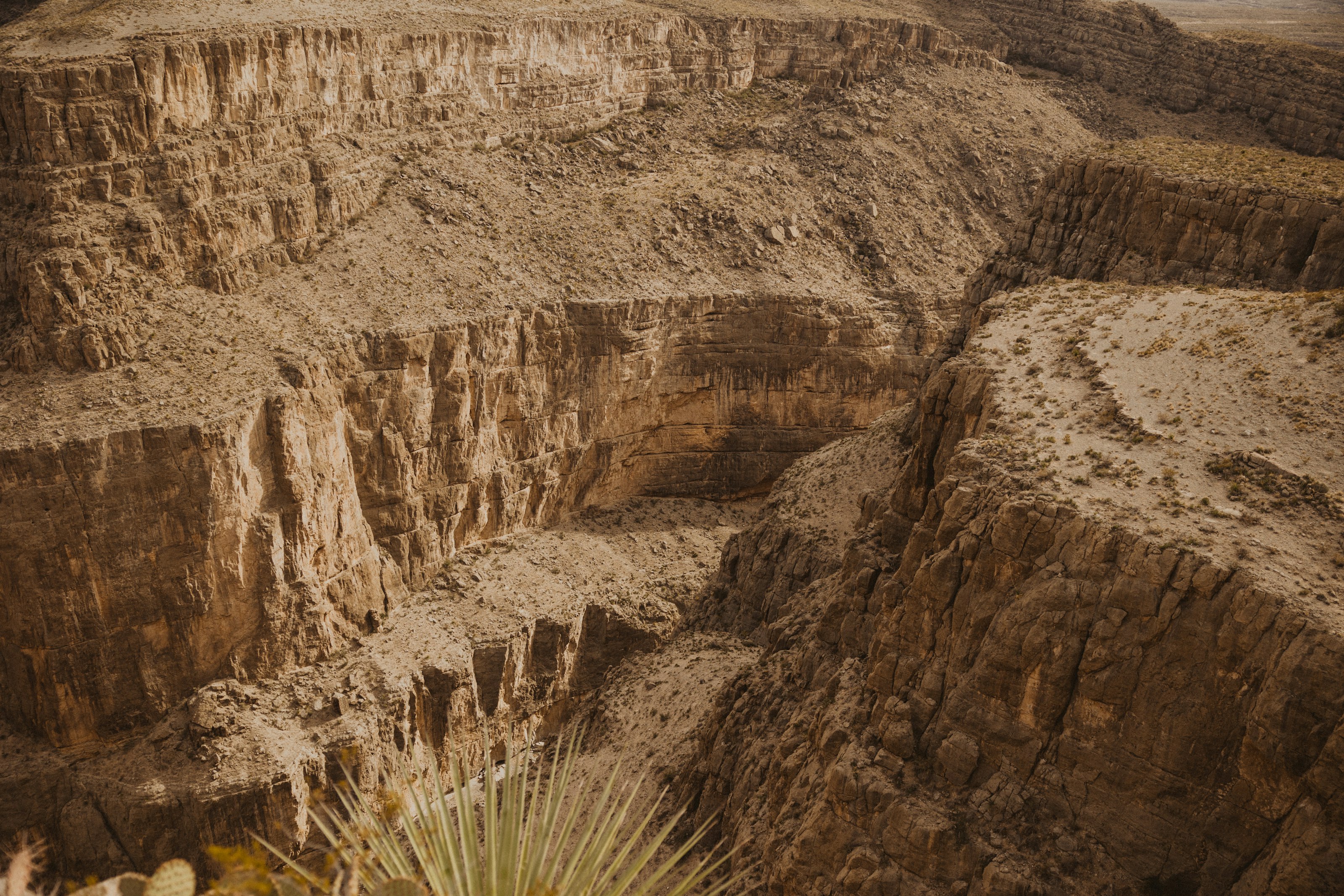
Mexico's Copper Canyon is actually a network of canyons in the Sierra Madre Occidental, several deeper than the Grand Canyon, cut by rivers through pine forest and red rock.
The main way to see it is the Chepe train, which crosses 37 bridges and passes through 86 tunnels on its way between the desert lowlands and the pine-covered rim.
Small Rarámuri (Tarahumara) communities still live within the canyon system.
How does it rate
CrowdsRomanceCash RequiredDangerAccessibilityWhy you should go
The Chepe train ride itself, crossing dozens of bridges and tunnels along the canyon rim, is as much the experience as the views.
Why you shouldn't go
It's a long way from anywhere — reaching the canyon takes a full day of travel each way from most starting points.
Plan your visit
Best time to visitOctober–April, avoiding summer's heat and rainy season.Best time of dayMorning departures on the Chepe train give the best light along the canyon rim.Getting thereFly to Chihuahua or Los Mochis, then take the Chepe train, which runs between both cities through the canyon.Entry costTrain tickets and lodge stays are the main costs; viewpoints themselves are free.Time needed2–3 daysInsider tip — Book a seat on the right-hand side heading from Los Mochis to Chihuahua for the best canyon views. -
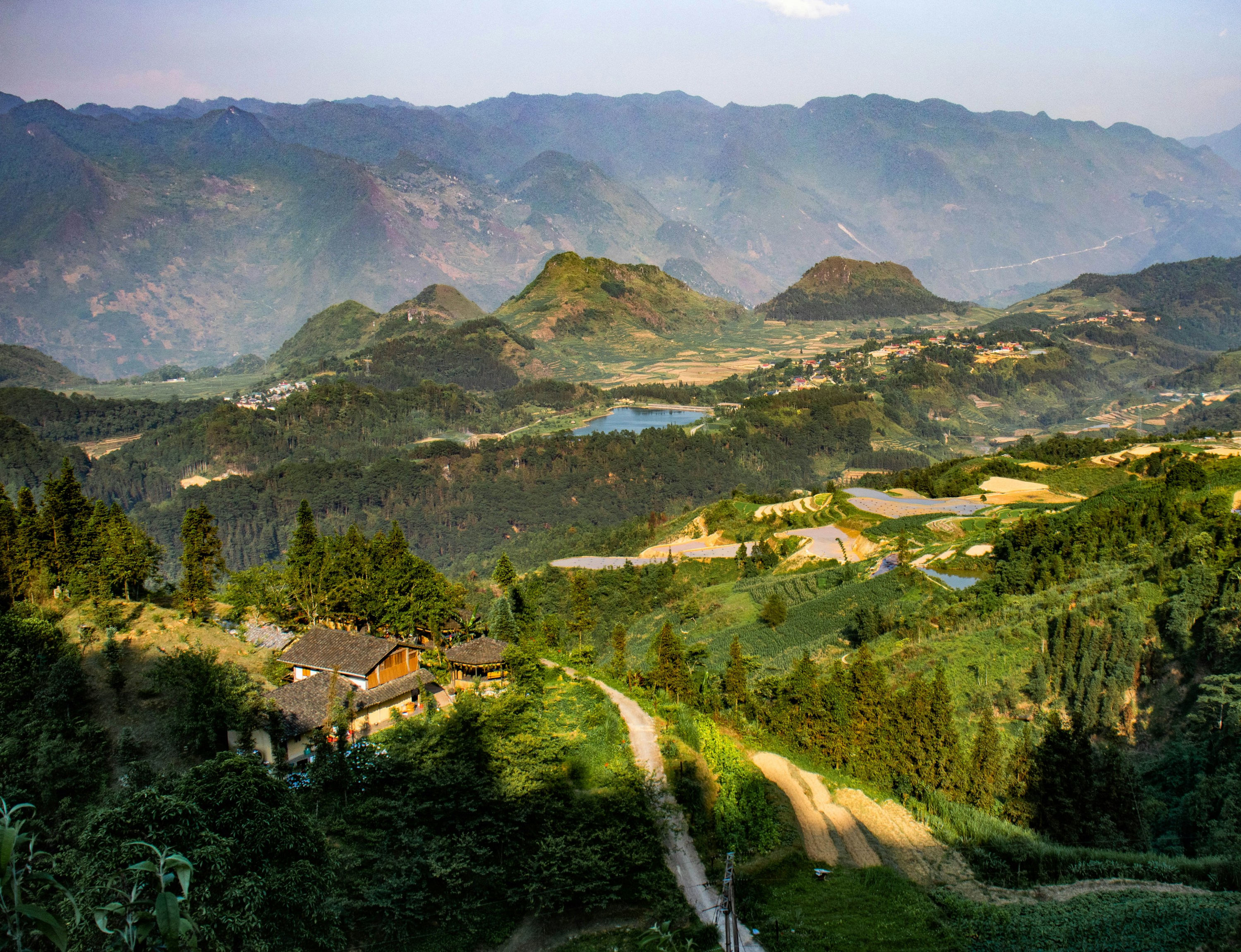 #4278 /100
The Ha Giang Loop is northern Vietnam's classic multi-day motorbike route, threading through the limestone peaks of the Dong Van Karst Plateau past terraced fields, H'mong and Tay villages, and the Ma Pi Leng Pass above the Nho Que River.
Most riders cover the roughly 350km circuit over 3-4 days, self-driving or riding pillion with a local guide.
It's demanding and occasionally hair-raising, but consistently rated among Southeast Asia's best road trips.
How does it rate
CrowdsRomanceCash RequiredDangerAccessibilityWhy you should go
Dramatic karst mountain scenery and one of Asia's great road trips, especially the cliff-hugging Ma Pi Leng Pass.
Why you shouldn't go
Mountain roads are genuinely dangerous for inexperienced riders, and a border-area permit is required for foreign visitors.
Plan your visit
Best time to visitSeptember-November and March-May, for clear skies and dry roads.Best time of dayRide mid-morning to mid-afternoon; mountain fog and cold set in early and late.Getting thereOvernight bus or shared van from Hanoi to Ha Giang city (6-7 hours), where loop rentals and guides start.Entry costFree to ride; motorbike rental or guided tours from roughly $25-50/day, plus a border permitTime needed3-4 daysInsider tip — Arrange a border-area permit and, if you're not an experienced rider, an "easy rider" driver in Ha Giang city before setting off; the Ma Pi Leng Pass viewpoint gets busy by mid-morning with day-tour minivans from Dong Van. -
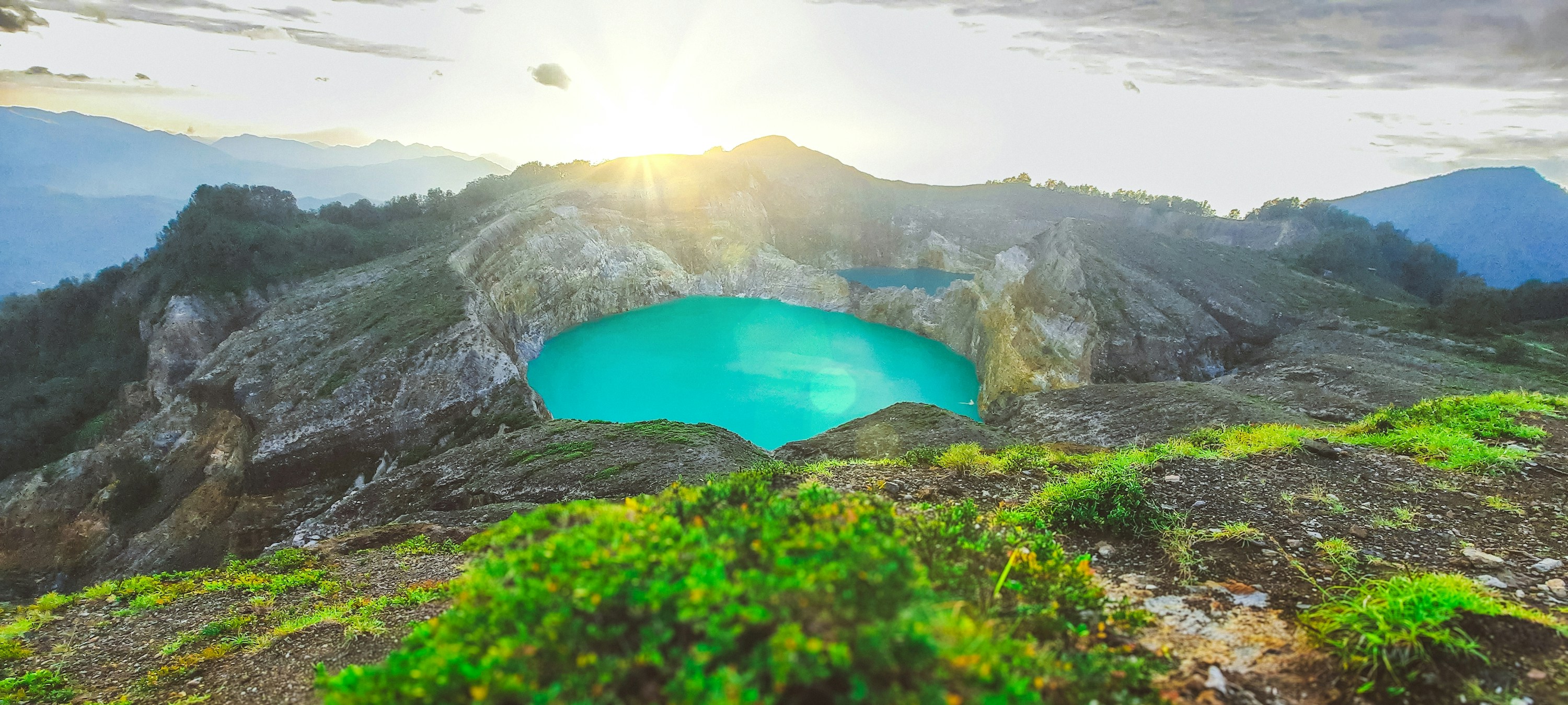 #43
#43Kelimutu volcano holds three crater lakes side by side, each a different color from mineral and gas activity below, ranging through turquoise, teal, and near-black depending on when you visit.
The lakes have shifted hue repeatedly over recorded history, a phenomenon still not fully explained.
Most visitors arrive before dawn to catch sunrise from the rim, then walk a short paved trail between viewpoints overlooking each lake.
How does it rate
CrowdsRomanceCash RequiredDangerAccessibilityWhy you should go
Three crater lakes of different, unexplained colors side by side, best seen glowing at sunrise.
Why you shouldn't go
Getting to remote central Flores takes real effort, and clouds often roll in and hide the lakes by mid-morning.
Plan your visit
Best time to visitMay-September, dry season, for the clearest views and lowest chance of cloud cover.Best time of daySunrise; arrive by 5am before clouds build up later in the morning.Getting thereFly to Ende, Flores; Kelimutu is a 1.5-hour drive, staying overnight in nearby Moni village.Entry cost150,000 IDR weekdays, 250,000 IDR Sundays/holidays (~$9-16)Time needed2-3 hours at the crater rimInsider tip — Stay in Moni the night before and arrange a pre-dawn ojek (motorbike taxi) to the gate; the viewpoint above the two closest lakes is far less crowded than the main platform. -
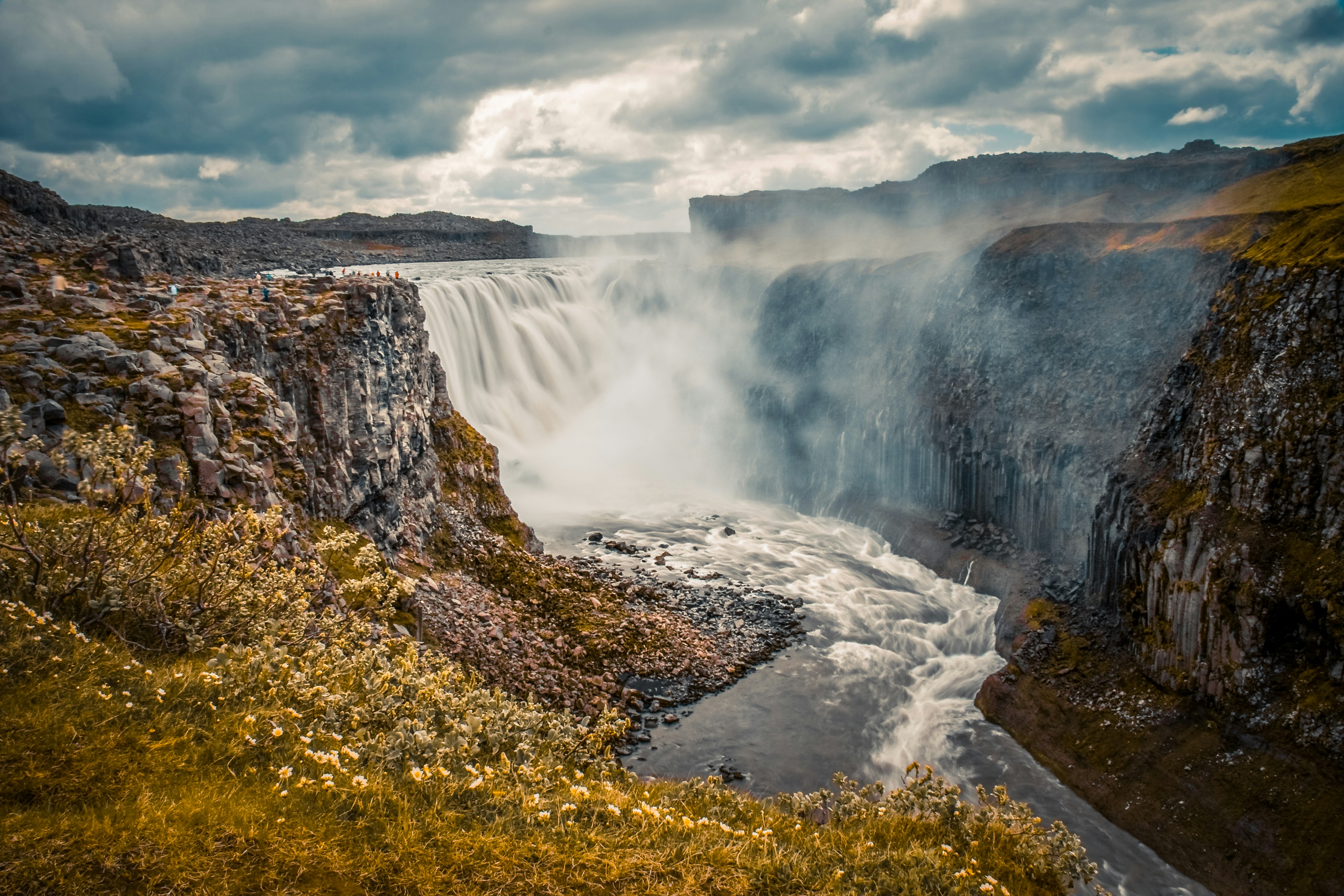 #4477 /100
A dramatic canyon in Vatnajökull National Park, carved by catastrophic glacial floods, home to the thunderous Dettifoss waterfall and the horseshoe-shaped Ásbyrgi depression.
Dark basalt cliffs and moss-covered riverbanks make it one of Iceland's starkest, most powerful landscapes.
How does it rate
CrowdsRomanceCash RequiredDangerAccessibilityWhy you should go
Glacial-flood canyon holding Europe's most powerful waterfall and the horseshoe cliffs of Asbyrgi.
Why you shouldn't go
Can be crowded near Dettifoss in peak season; weather turns quickly with little shelter; unpaved access roads.
Plan your visit
Best time to visitJune–September for accessible roads and stable weather.Best time of dayAfternoon light brings out the canyon's texture and the waterfall's spray-lit rainbows.Getting thereRental car from Reykjavik, 5–6 hour drive northeast, or fly to Akureyri and drive 1.5 hours.Entry costFreeTime neededHalf day to a full day.Insider tip — Approach Dettifoss from the west-side road for the closer, more dramatic view. Wear grip-soled boots — the volcanic rock is loose and sharp in places. -
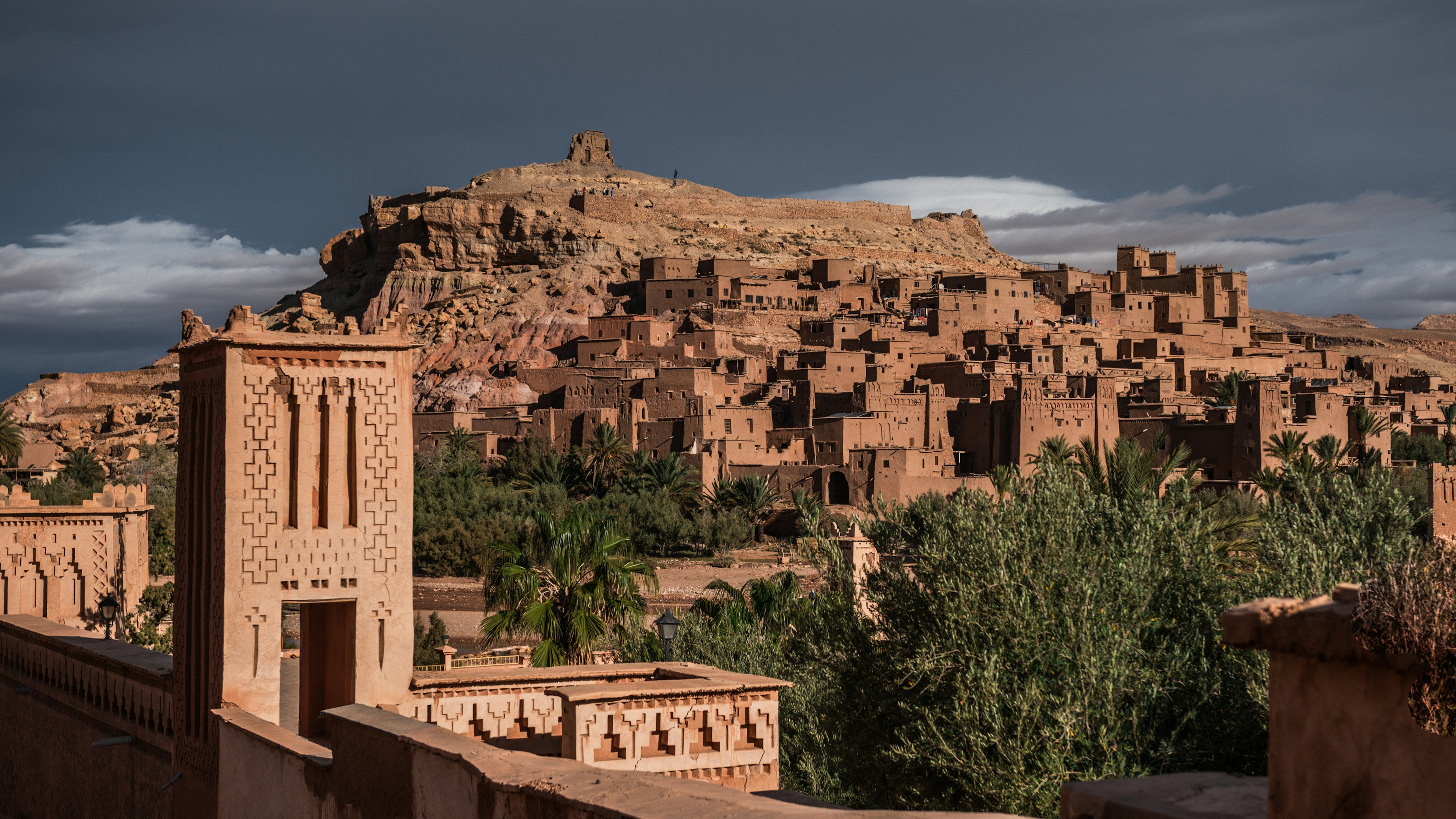 #4577 /100
This fortified clay ksar of tightly clustered earthen buildings has stood on a Saharan trade route for centuries and become one of cinema's favorite backdrops, doubling for ancient settings in Gladiator, Game of Thrones and Lawrence of Arabia.
A handful of families still live within its walls.
Climbing to the top for views over the Ounila Valley shows off both the settlement's defensive logic and its striking desert-earth architecture.
How does it rate
CrowdsRomanceCash RequiredDangerAccessibilityWhy you should go
A genuinely lived-in fortified desert village, familiar from a dozen film backdrops.
Why you shouldn't go
Crossing the river to reach it means wading or a small footbridge, depending on water level.
Plan your visit
Best time to visitMarch–May or October–November for comfortable temperatures.Best time of daySunset, when the earthen walls glow deep orange-red.Getting thereDrive about 30km from Ouarzazate, or stop en route between Marrakech and the Sahara.Entry costSmall entry fee, around 20 MAD (~€2).Time needed1–2 hours.Insider tip — Climb all the way to the ruined agadir (fortified granary) at the top — most visitors stop halfway and miss the best valley view. -
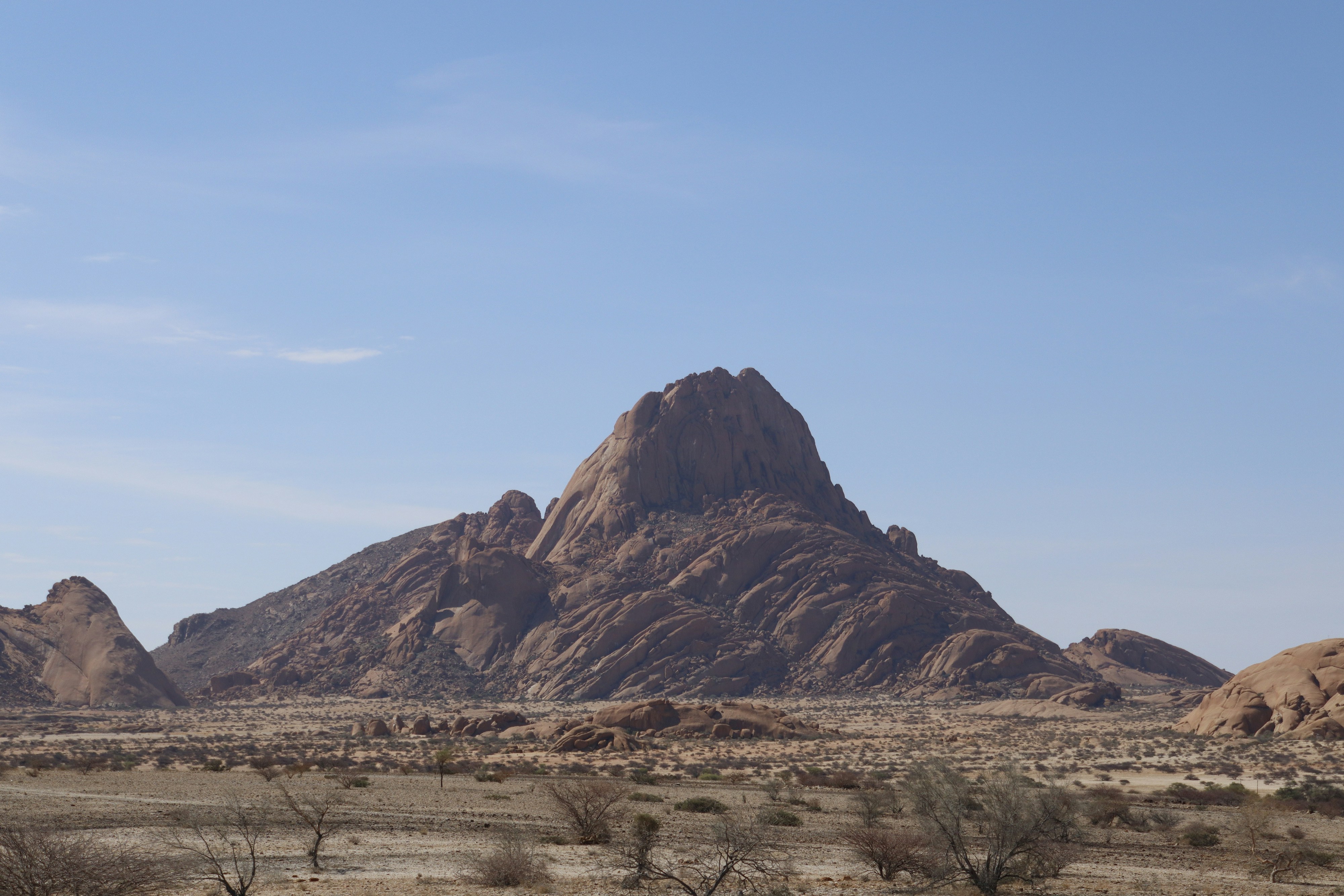 #4677 /100
A bald granite inselberg rises abruptly out of flat Namibian desert, earning it the nickname the Matterhorn of Africa.
Natural rock arches, San rock paintings and easy scrambling routes over the surrounding boulders fill a day, and with almost no light pollution for hundreds of kilometres the night sky is extraordinary.
Facilities amount to a basic community-run campsite and little else.
How does it rate
CrowdsRomanceCash RequiredDangerAccessibilityWhy you should go
A solitary granite peak in empty desert, with some of the darkest night skies in Africa.
Why you shouldn't go
There's little shade and no facilities beyond a basic campsite - bring your own water and supplies.
Plan your visit
Best time to visitMay-September, the cooler, drier months.Best time of daySunset for the silhouette; after dark for star photography.Getting thereSelf-drive from Windhoek (about 3.5 hours) or Swakopmund (about 2.5 hours).Entry costSmall community conservancy entry fee, paid at the gate.Time neededHalf a day; overnight for stargazingInsider tip — Camp overnight at the community campsite - the Milky Way over the rock arch is the shot most day visitors miss entirely. -
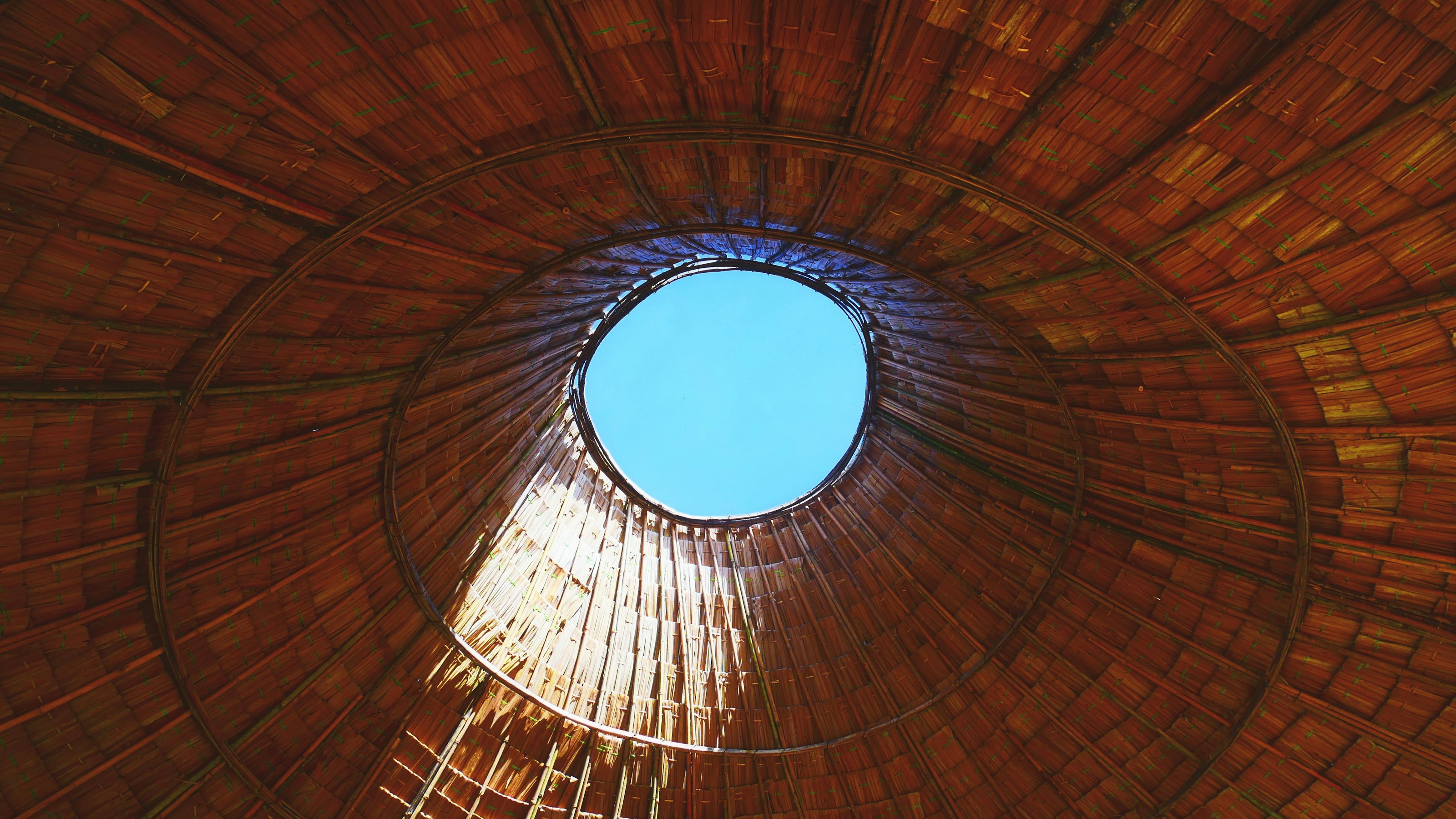 #4777 /100
Held on farmland outside Pattaya each December, Wonderfruit built its reputation on handcrafted bamboo and reclaimed-material stages rather than steel and plywood, with a sustainability ethos running through its food, waste systems, and art.
The multi-day programme mixes global and electronic music with talks, yoga, and farm-to-table dining, drawing a crowd that skews international and design-conscious rather than mainstream.
How does it rate
CrowdsRomanceCash RequiredDangerAccessibilityWhy you should go
A boutique Thai festival built around handcrafted bamboo stages, sustainability, and farm-to-table food alongside the music.
Why you shouldn't go
The farmland site can turn muddy in December showers, and its boutique scale means a higher ticket price than mainstream festivals.
Plan your visit
Best time to visitHeld over several days each December, in Thailand's cool, dry season.Best time of dayLate afternoon into evening, when the bamboo pavilions light up for the night's programme.Getting thereFly into Bangkok, then a shuttle or taxi roughly two hours to the Siam Country Club site near Pattaya.Entry costMulti-day passes run roughly THB 12,000-15,000.Time neededThe full multi-day run for the complete experience.BookingBook ahead →Insider tip — Book on-site glamping early - it sells out well before the festival and beats the long taxi commute from Pattaya hotels. -
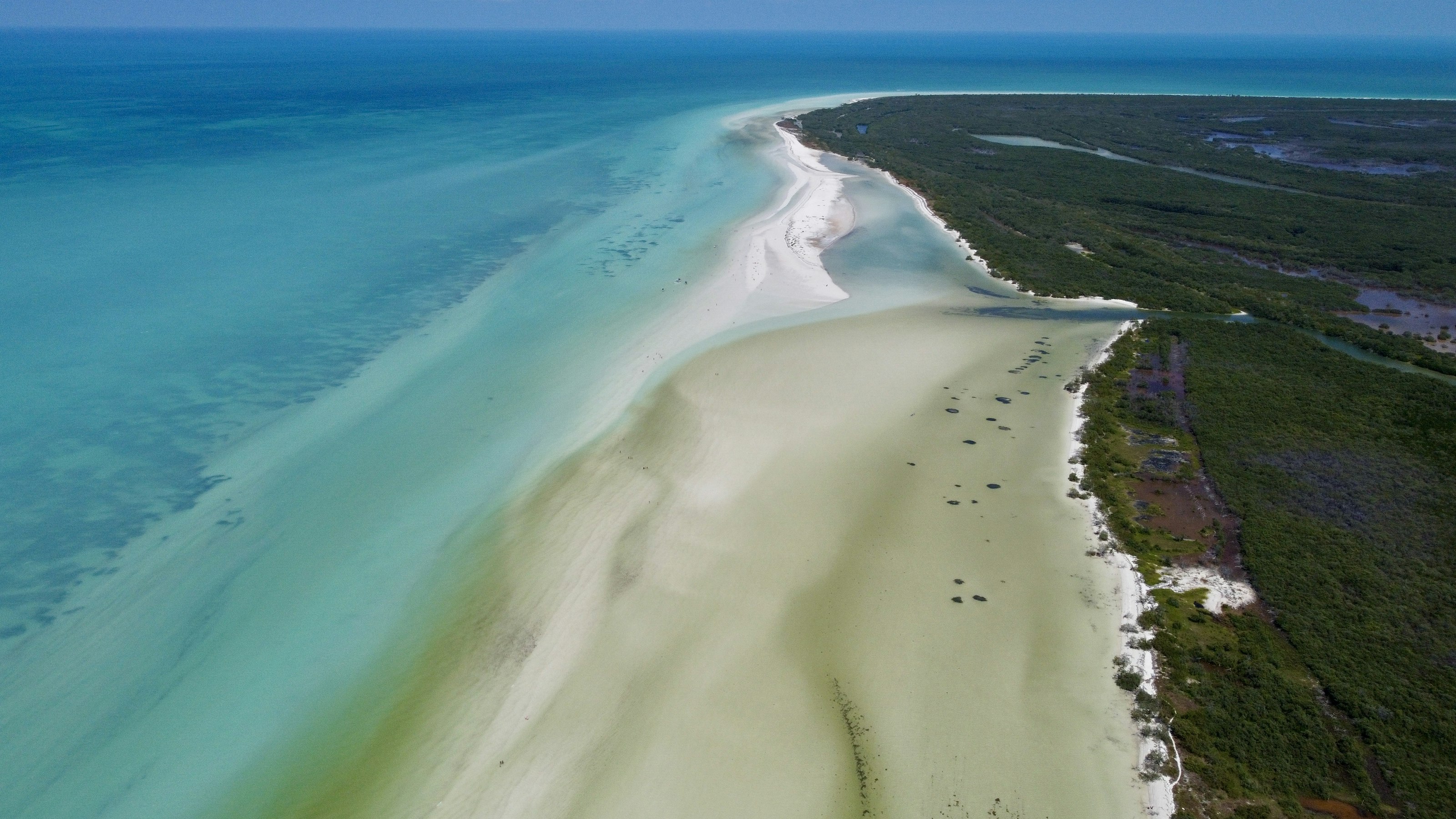 #4877 /100
Isla Holbox is a car-free sandbar island off Mexico's Yucatán coast, reached only by boat, with sandy streets, pastel-painted guesthouses, and a slower pace than the resorts of Cancún.
Whale sharks gather in the surrounding waters from roughly June to September, drawing snorkel trips out to swim alongside them, and the island's shallow lagoon glows with bioluminescent plankton on dark nights.
How does it rate
CrowdsRomanceCash RequiredDangerAccessibilityWhy you should go
Snorkelling alongside whale sharks, the largest fish in the ocean, just offshore is a rare and genuinely gentle wildlife encounter.
Why you shouldn't go
It's seasonal — outside whale shark months and without a clear dark sky for bioluminescence, it's a much quieter draw.
Plan your visit
Best time to visitJune–September for whale sharks; new-moon nights any time of year for bioluminescence.Best time of daySunset on the north beach, and after dark (away from lights) for bioluminescent plankton.Getting thereFly to Cancún; 2-hour drive to Chiquilá, then a 20-minute passenger ferry to the island.Entry costFree to explore; whale shark tours and bioluminescence boat trips are paid extras.Time needed2–3 daysInsider tip — Book whale shark tours directly through a licensed local operator at the pier rather than a resort in Cancún — it's cheaper and the boats are smaller. -
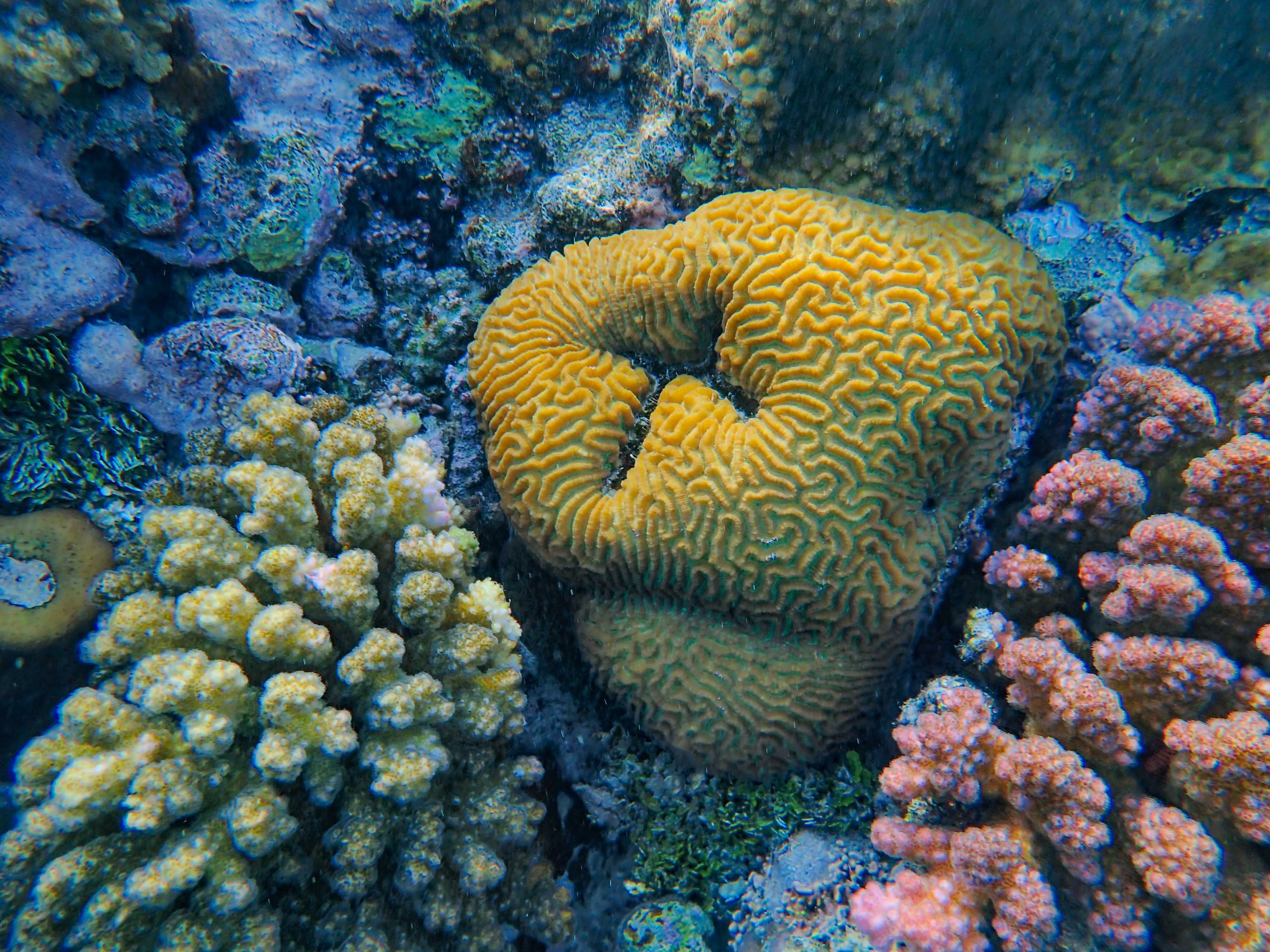 #4977 /100
The Farasan Islands are a low-lying Red Sea archipelago off Saudi Arabia's southern coast, ringed by coral reefs that draw divers and snorkellers to waters that see whale sharks pass through seasonally.
The main island holds crumbling coral-stone merchant houses from an Ottoman-era pearling boom, now mostly abandoned, alongside mangrove channels sheltering gazelles found nowhere else, with ferries from Jazan the only way in.
How does it rate
CrowdsRomanceCash RequiredDangerAccessibilityWhy you should go
Diving reefs that see almost no other visitors, alongside crumbling Ottoman-era pearling houses, makes for a genuinely uncommon combination.
Why you shouldn't go
Ferry schedules are limited and infrastructure is basic, so it takes more planning than a typical island trip.
Plan your visit
Best time to visitOctober–April, avoiding the most intense Red Sea summer heat and humidity.Best time of dayMorning, for the calmest seas for diving and the ferry crossing.Getting thereFly to Jazan; a roughly 1.5–2-hour ferry crosses to the main Farasan island.Entry costFerry ticket plus any diving or snorkelling tour costs.Time needed1–2 daysInsider tip — Arrange diving trips in advance through an operator in Jazan — options on the islands themselves are limited and can sell out. -
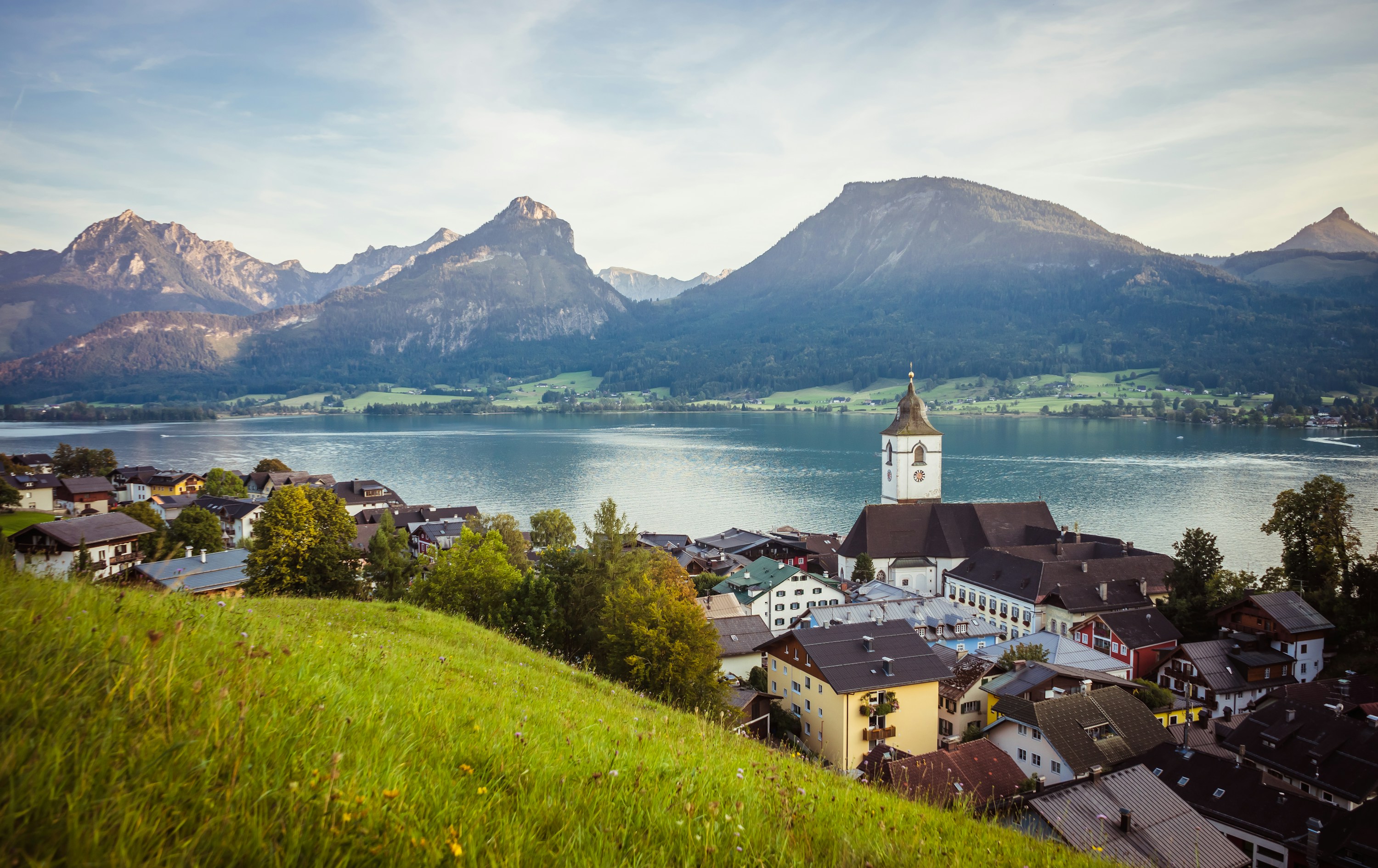 #5077 /100
A narrow alpine lake in Austria's Salzkammergut lake district is ringed by forested peaks and postcard villages, the best-known of which, St.
Wolfgang, grew up around the lakeside White Horse Inn made famous by a 20th-century operetta.
Passenger ferries still cross the lake between villages, a rack railway climbs the Schafberg for panoramic views, and swimming spots line much of the shore in summer.
How does it rate
CrowdsRomanceCash RequiredDangerAccessibilityWhy you should go
One of the Salzkammergut's classic lake-and-mountain villages, quieter and less crowded than Hallstatt.
Why you shouldn't go
No train station serves St. Wolfgang directly — getting there means a bus or ferry connection, which limits spontaneity.
Plan your visit
Best time to visitJune–September for swimming, ferries, and the Schafberg railway running full schedules.Best time of dayEarly evening, when day-trippers head back to Salzburg and the lakefront empties out.Getting thereBus from Salzburg or Bad Ischl to St. Wolfgang, or ferry across the lake from St. Gilgen or Strobl.Entry costFree to walk the lakefront; the Schafberg rack railway and boat rides are separately ticketed.Time needed1 dayInsider tip — Take the Schafberg rack railway up for sunset, then the last ferry back — the crowds thin dramatically after 5pm. -
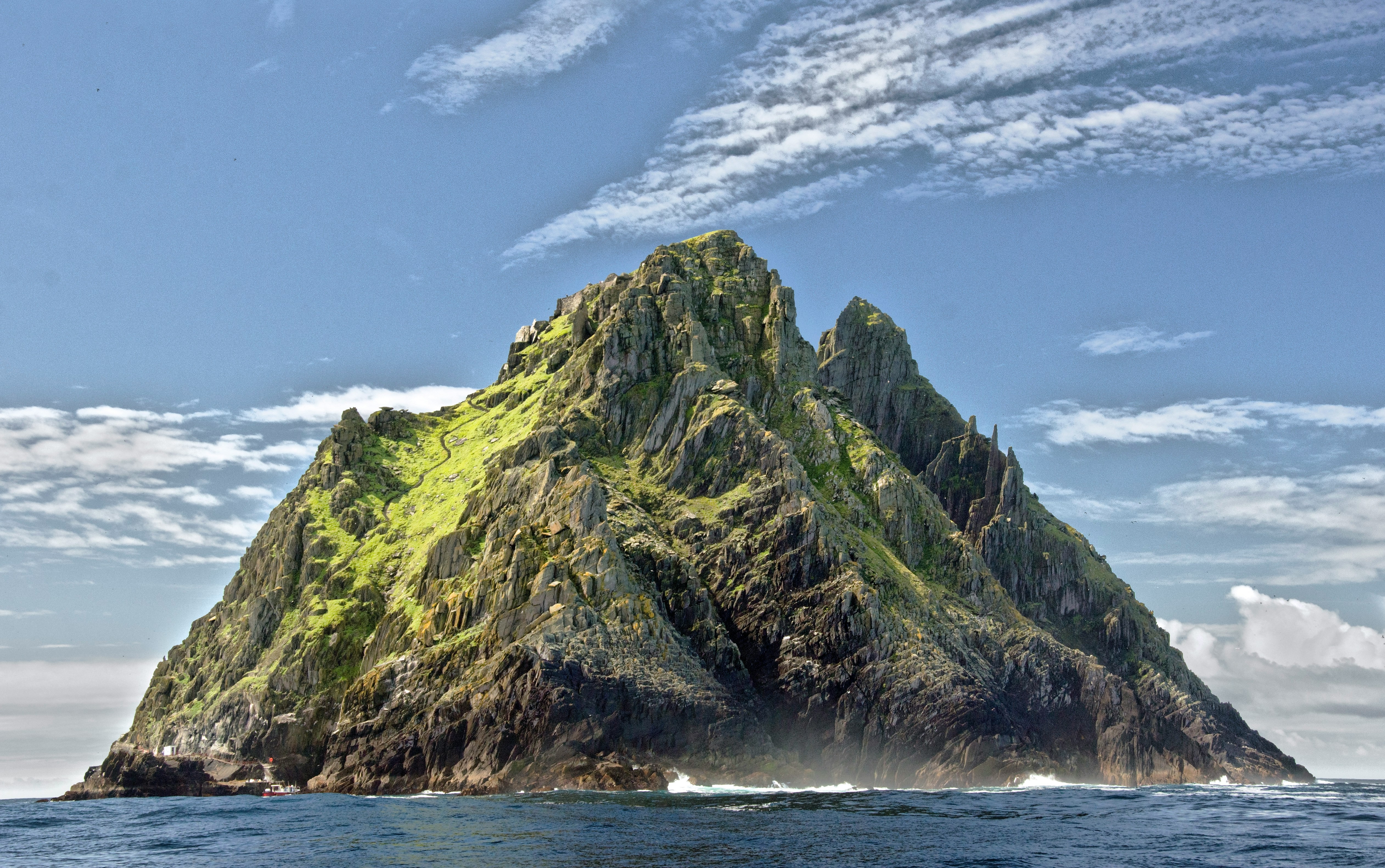 #5176 /100
A dramatic rocky island 12km off the Irish coast, home to a 6th-century monastic settlement perched 200 meters above the Atlantic.
Narrow stone stairways climb to beehive-shaped huts where monks lived in near-total isolation for centuries, and the island later appeared in Star Wars.
How does it rate
CrowdsRomanceCash RequiredDangerAccessibilityWhy you should go
A remote monastic island with 1,400-year-old beehive huts on a rocky Atlantic peak.
Why you shouldn't go
Accessible only by boat and weather-dependent; crossings are frequently cancelled; no facilities on the island.
Plan your visit
Best time to visitMay–September, when the licensed boats operate; even then, rough seas cause regular cancellations.Best time of dayMorning departures are more likely to run before afternoon swells build.Getting thereBase in Portmagee or Ballinskelligs; licensed boat tours depart daily in season, weather permitting.Entry costBoat tour roughly €100 per person, including the landing permit.Time neededHalf a day including the boat crossing.Insider tip — Book well ahead — only a small number of licensed boats are permitted to land each day. The climb involves over 600 uneven stone steps with no railings; sturdy footwear is essential. -
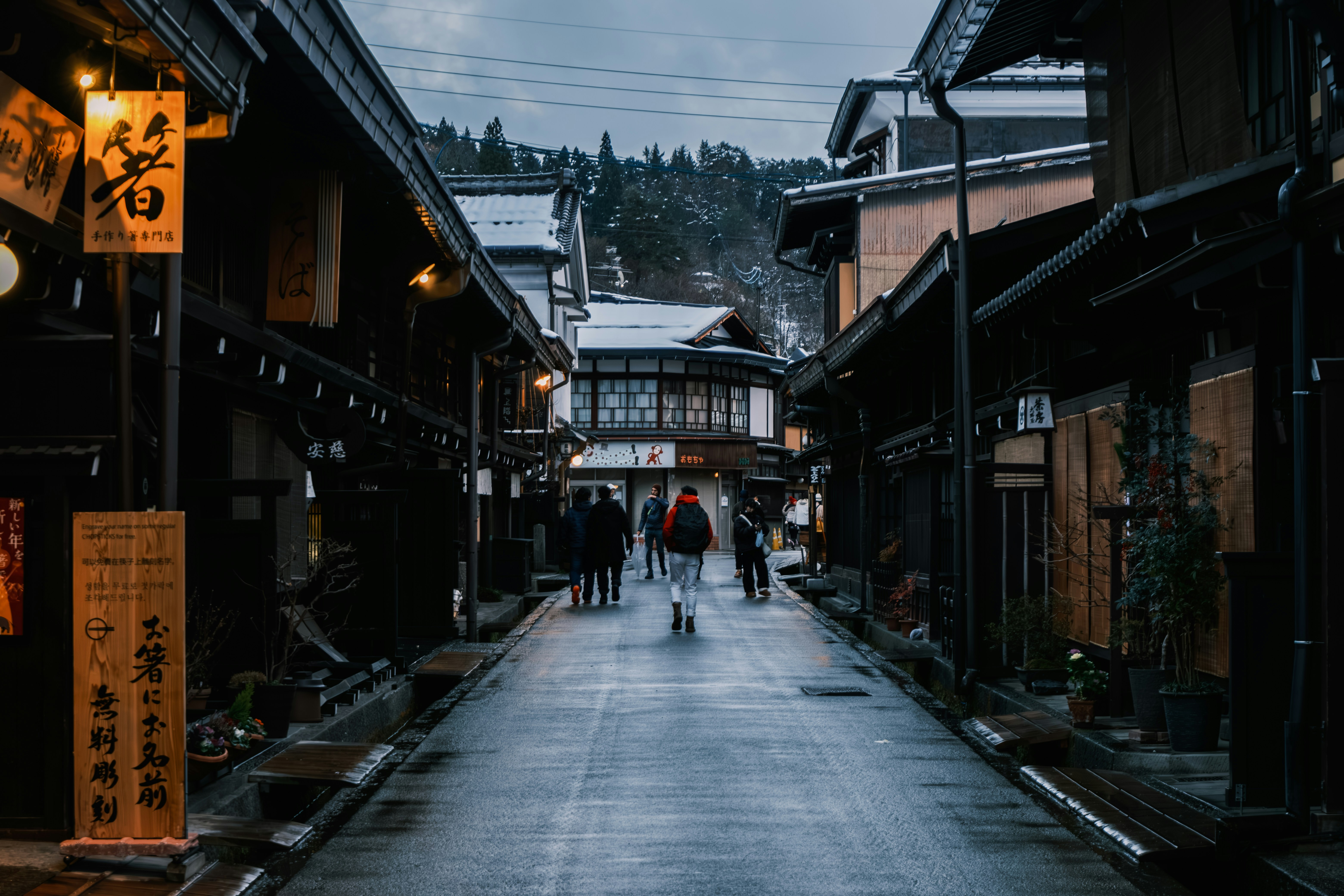 #5276 /100
An intact Edo-period merchant district with preserved wooden machiya townhouses, working sake breweries, and morning markets, set against a backdrop of the Japanese Alps.
One of the country's best-preserved old towns outside Kyoto, and considerably less crowded.
How does it rate
CrowdsRomanceCash RequiredDangerAccessibilityWhy you should go
A pristine Edo-period merchant town with wooden machiya houses, sake breweries, and a mountain backdrop.
Why you shouldn't go
Feels touristy through midday in peak seasons; narrow streets and small shops get congested; limited English outside the tourist core.
Plan your visit
Best time to visitOctober–November for fall colors, or April for cherry blossoms and the spring Takayama Festival.Best time of dayEarly morning (7–8am), before day-trippers arrive and while the morning markets are freshest.Getting thereTrain from Nagoya (roughly 2.5 hours) or Toyama (1.5 hours) direct to Takayama Station.Entry costFree to walk the streets; individual museums and sake tastings ¥300–500 each.Time needed1–2 days.Insider tip — Stay overnight to see the old town after the day-trip crowds clear out in the evening. Sample Hida beef and local sake — several breweries offer tastings right on the main street. -
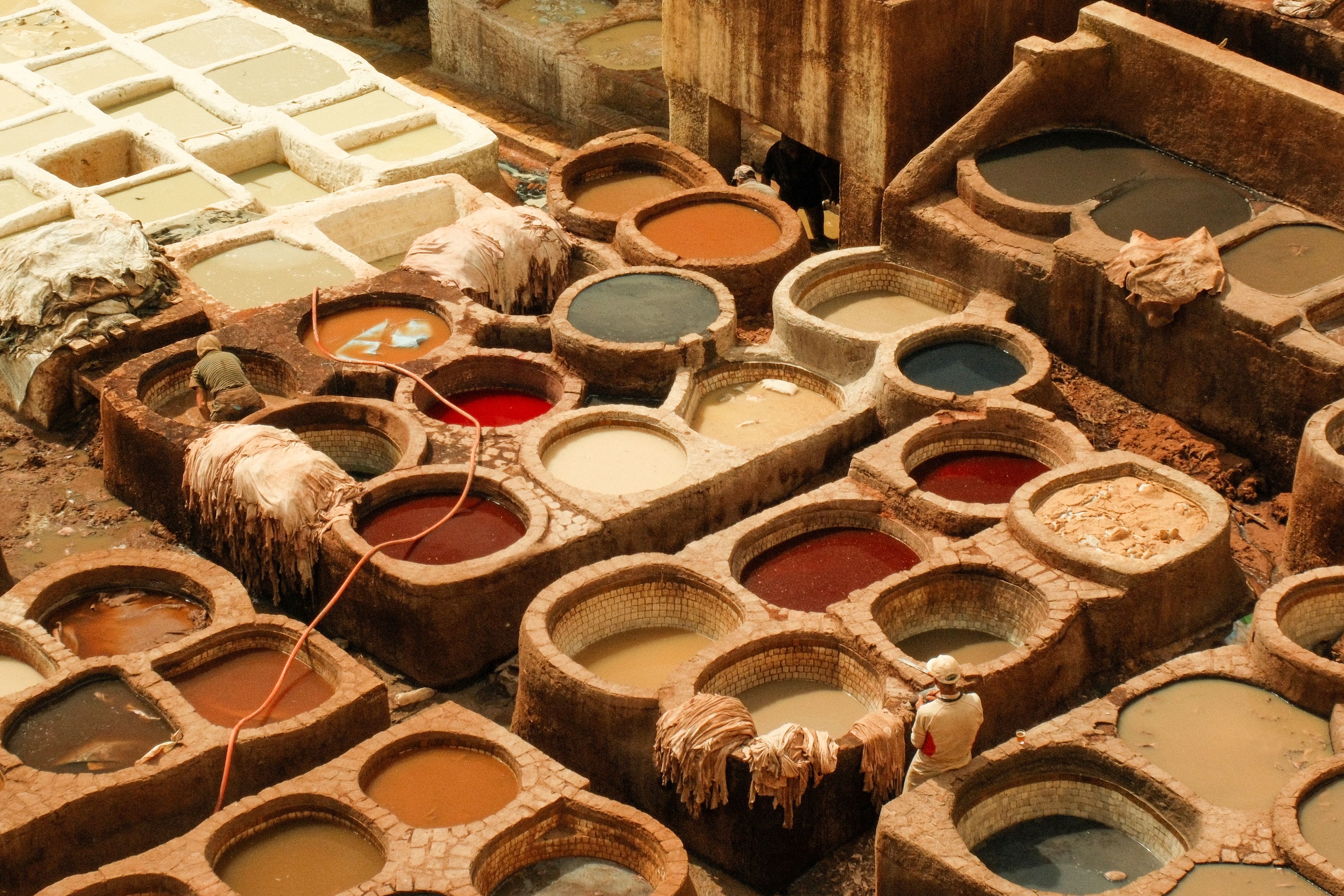 #5376 /100
The old walled medina of Fes is the world's largest car-free urban area, a dense 9th-century labyrinth of over 9,000 narrow lanes where mules still haul goods past tanneries, madrasas and workshops largely unchanged for centuries.
The Chouara Tannery's terraced dye pits are the best-known sight, but the real experience is the medina itself — genuinely functioning, with artisans working leather, brass and textiles the same way for generations.
How does it rate
CrowdsRomanceCash RequiredDangerAccessibilityWhy you should go
The world's largest car-free medina, still a genuinely working craft city, not a tourist stage set.
Why you shouldn't go
Extremely easy to get lost in, and touts posing as guides are a persistent nuisance near the entrances.
Plan your visit
Best time to visitMarch–May or September–November for mild weather to explore on foot.Best time of dayMorning, when the tanneries and workshops are in full operation.Getting thereFly to Fes-Saïss Airport, 20 minutes from the medina, or train from Marrakech or Casablanca.Entry costFree to enter the medina; official guides around 300-400 MAD (~€30-38) for a half day.Time neededFull day.Insider tip — Hire an official guide from the tourist office rather than accepting one on the street — the only reliable way to avoid the leather-shop steering scams. -
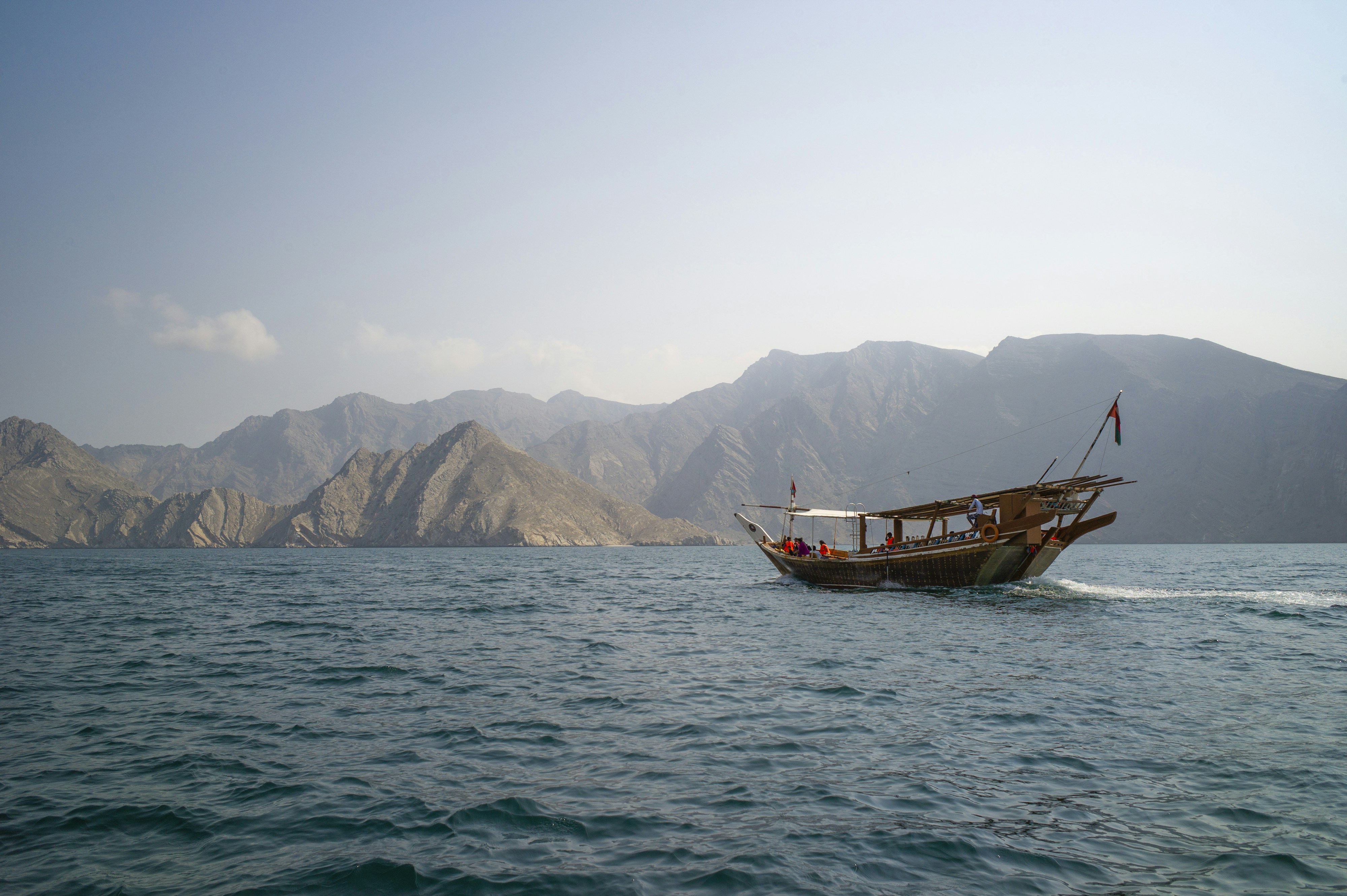 #5476 /100
Steep, arid mountains drop straight into the sea along this remote Omani exclave, earning the nickname the Norway of Arabia for its fjord-like inlets.
Traditional wooden dhows cruise between the peninsula's narrow channels, where dolphins are a near-daily sighting.
Fishing villages built into the base of sheer cliffs remain reachable only by boat.
How does it rate
CrowdsRomanceCash RequiredDangerAccessibilityWhy you should go
Fjord-like inlets between desert mountains, cruised by traditional wooden dhows with dolphins alongside.
Why you shouldn't go
Musandam is physically cut off from the rest of Oman by UAE territory, adding a border crossing to most routes.
Plan your visit
Best time to visitOctober-April, avoiding the extreme summer heat.Best time of dayMorning, for the calmest water and best chance of dolphin sightings.Getting thereFly to Dubai, then drive across the UAE border to Khasab (about 3 hours), or fly directly to Khasab.Entry costDhow cruise tours typically $40-60 per person.Time neededFull dayInsider tip — Book a full-day dhow cruise rather than a short one - the most dramatic fjord scenery and best dolphin sightings are further out than the shorter tours reach. -
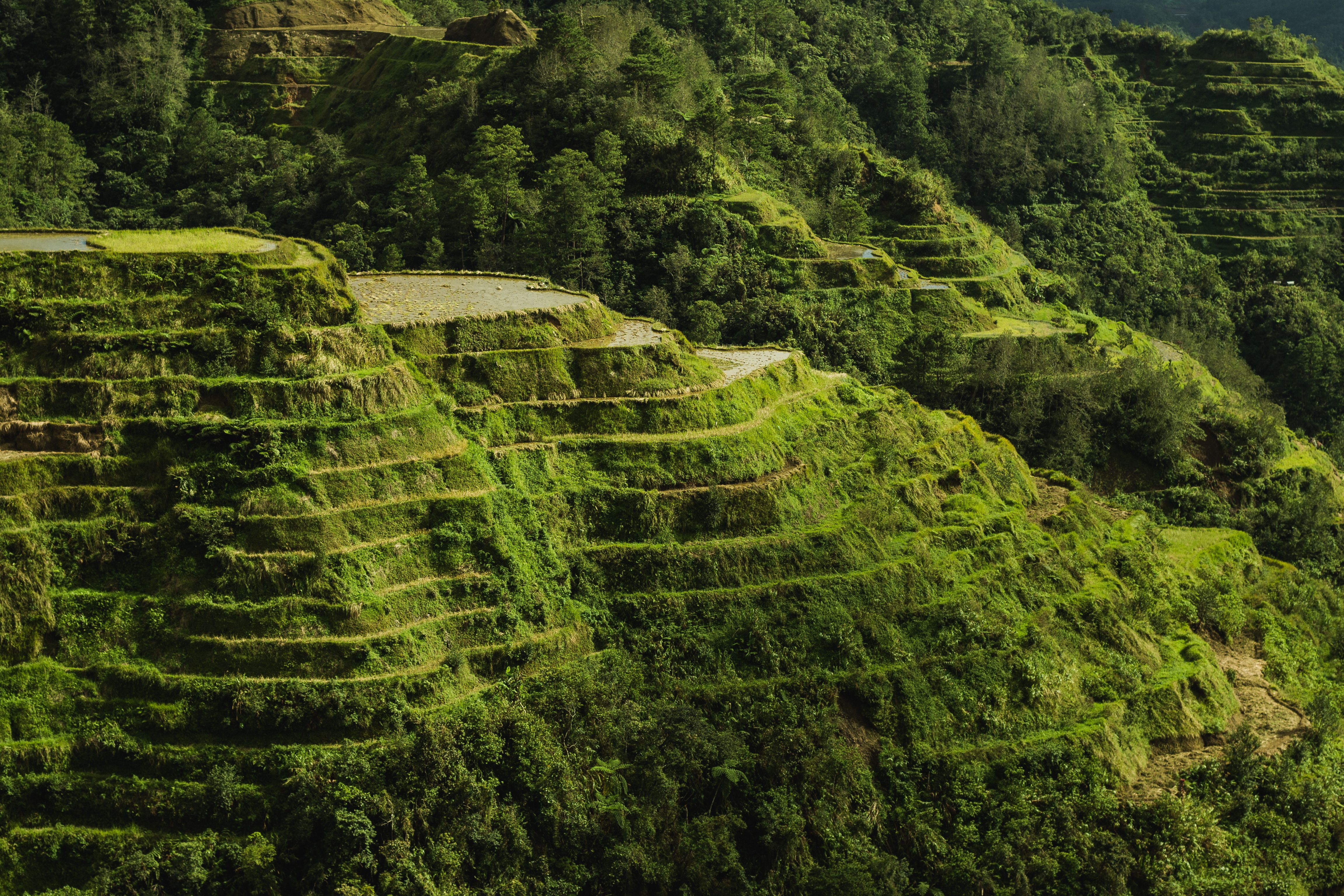 #5576 /100
Carved into the Cordillera mountains some 2,000 years ago by the Ifugao people using only hand tools, these terraces climb the hillsides in contour lines that follow the land, still irrigated by an ancient engineered system fed from the forests above.
Locals still farm rice here, so the terraces are a living agricultural landscape rather than a preserved relic — often called the 'eighth wonder of the world.
'
How does it rate
CrowdsRomanceCash RequiredDangerAccessibilityWhy you should go
A 2,000-year-old engineered landscape still actively farmed the same way today.
Why you shouldn't go
The core Banaue viewpoint area is well-touristed; reaching the more dramatic Batad terraces needs a further hike.
Plan your visit
Best time to visitMarch–May for lush green terraces before typhoon season; June–September brings rain.Best time of daySunrise, when mist often sits in the valley below the terraces.Getting thereOvernight bus from Manila (about 9 hours) to Banaue town, then jeepney to the viewpoints.Entry costFree to view; small fees at specific lookout points.Time needed1–2 days, more if hiking to Batad.Insider tip — Hire a local Ifugao guide to hike down into Batad's amphitheater terraces — a far less-visited experience than the roadside Banaue viewpoint. -
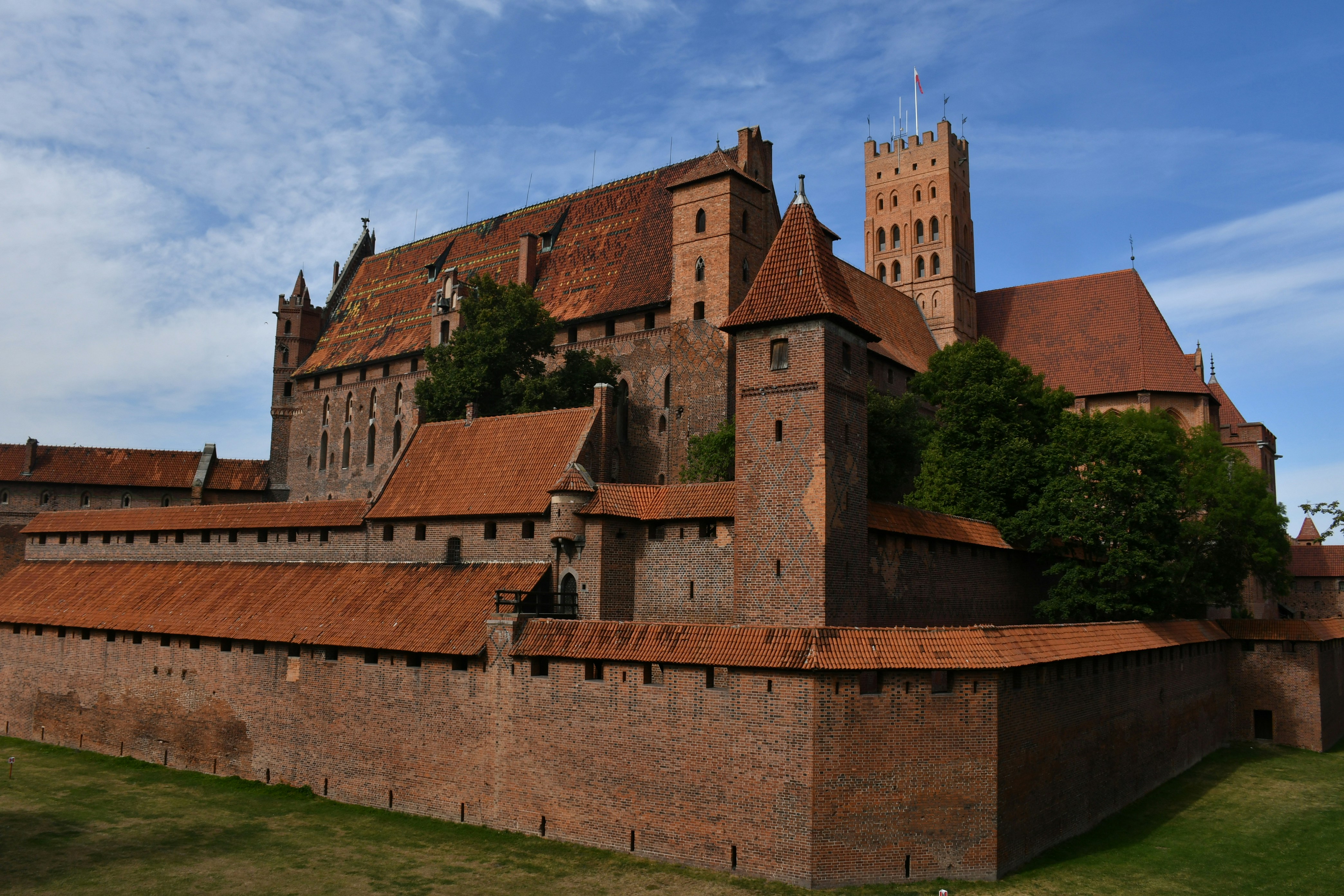 #5676 /100
The largest castle in the world by land area, a vast red-brick Gothic fortress built by the Teutonic Knights on the banks of the Nogat River.
Its scale is genuinely disorienting up close - a walled complex of courtyards, halls, and towers that took over a century to complete and still functioned as a working fortress-monastery for 200 years.
Reflected in the river at dusk, its brick towers and battlements make for one of Northern Europe's most striking medieval skylines.
How does it rate
CrowdsRomanceCash RequiredDangerAccessibilityWhy you should go
The largest castle on Earth by area, a red-brick Gothic fortress-monastery reflected in the river it was built to defend.
Why you shouldn't go
It's less internationally famous than it deserves, so information and English-language signage can be patchy without a guide.
Plan your visit
Best time to visitMay-September for good weather and full access to all sections.Best time of daySunset, viewed from across the Nogat River for the classic reflection shot.Getting thereTrain from Gdansk (about 30-40 minutes) to Malbork, then a short walk to the castle.Entry costAround 90 PLN for adult entry with a guided route.Time neededHalf a day.BookingBook ahead →Insider tip — Walk across the bridge to the far riverbank for the classic full-castle reflection photo - most visitors never leave the castle side. -
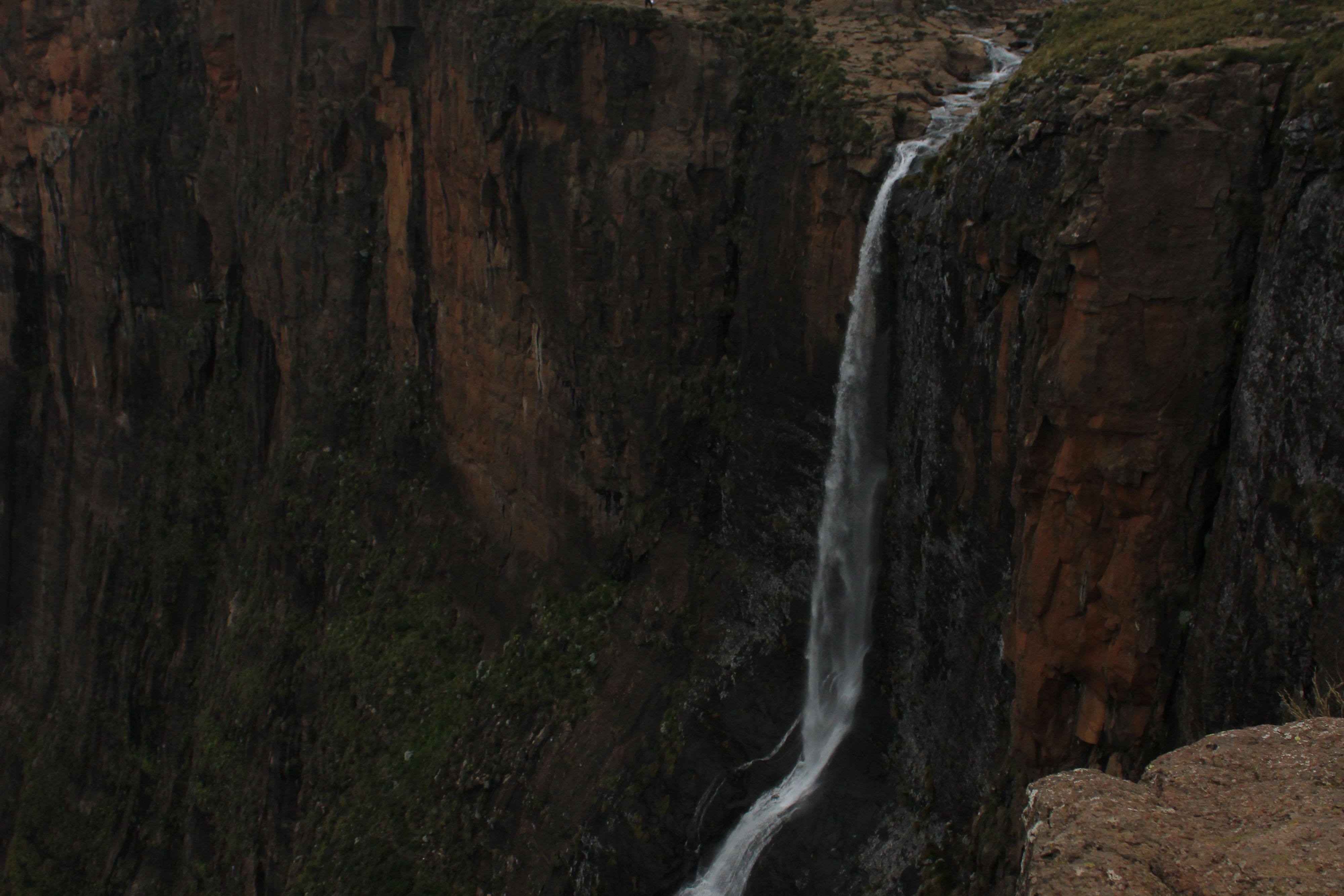 #5776 /100
The world's second-tallest waterfall drops in five free-falling stages down the Drakensberg escarpment, deep in the Royal Natal National Park.
Reaching the top requires a full-day hike including a stretch up two connected chain ladders bolted to the cliff face.
On a clear day after rain, the full 948-metre drop is visible from the valley floor without any hiking at all.
How does it rate
CrowdsRomanceCash RequiredDangerAccessibilityWhy you should go
The world's second-tallest waterfall, visible in full from the valley floor on a clear day.
Why you shouldn't go
The top-of-the-falls hike involves exposed chain ladders that aren't for anyone uneasy with heights.
Plan your visit
Best time to visitOctober-March (wet season) for the strongest flow.Best time of dayMorning, before afternoon Drakensberg cloud typically rolls in.Getting thereDrive to Royal Natal National Park (about 4 hours from Johannesburg); park at the Tendele trailhead.Entry costPark entry fee, a few dollars per person.Time neededFull day for the summit hike; 1 hour for the valley-floor viewInsider tip — Skip the chain-ladder hike and drive instead to the Amphitheatre viewpoint for a full, satisfying view of the falls without the climb. -
 #5876 /100
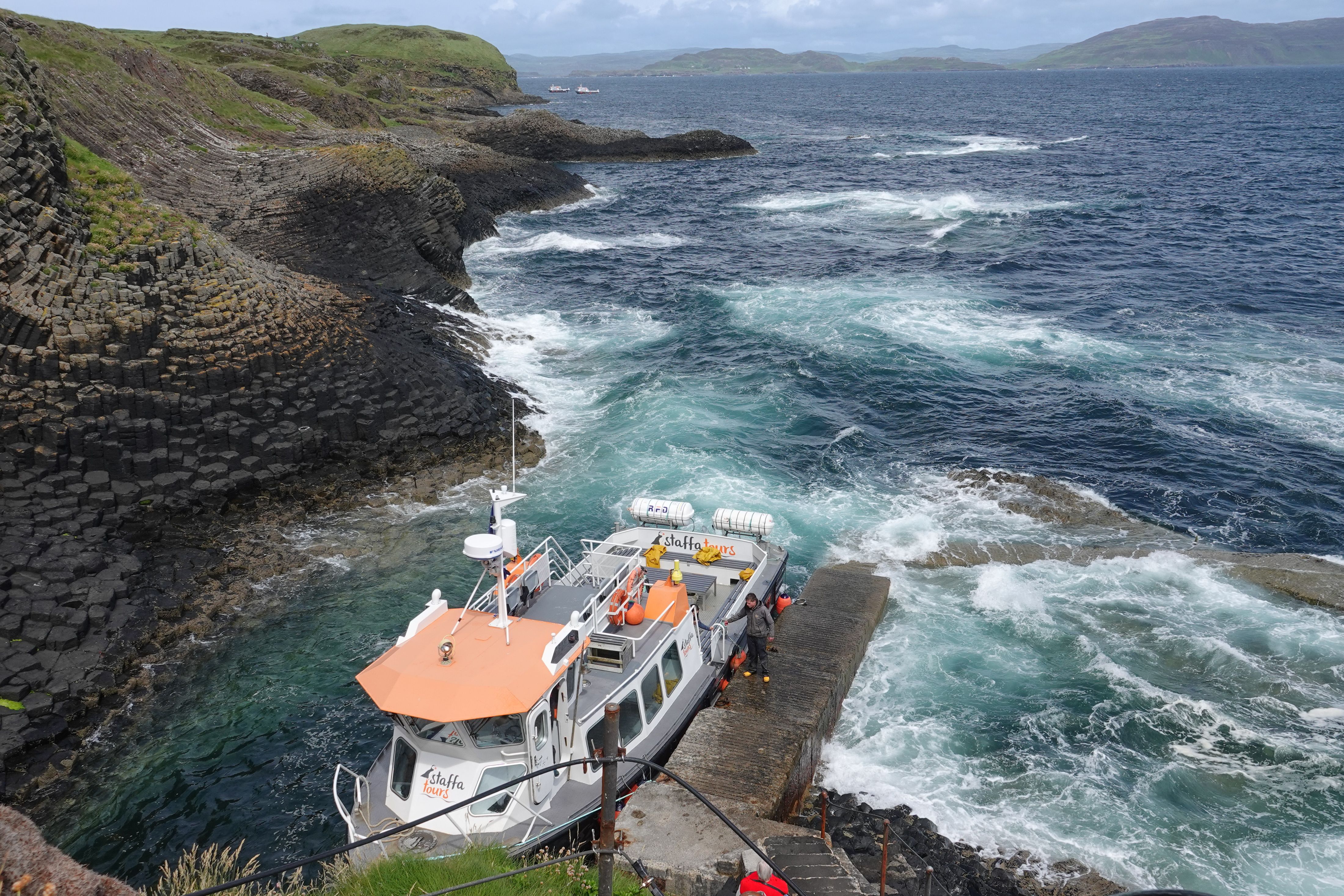
Hexagonal basalt columns, formed the same way as the Giant's Causeway, arch into a natural sea cave on the uninhabited island of Staffa.
The cathedral-like interior, with waves echoing off the columned walls, inspired Mendelssohn's Hebrides Overture.
Reaching it requires a boat crossing through open water, which keeps the cave far quieter than its Northern Irish cousin.
How does it rate
CrowdsRomanceCash RequiredDangerAccessibilityWhy you should go
A natural basalt-column sea cave dramatic enough to have inspired a symphony.
Why you shouldn't go
Boat access depends entirely on weather and sea conditions - trips are cancelled often.
Plan your visit
Best time to visitApril-September, when boat tours run most reliably.Best time of dayMidday, for the best light penetrating the cave's interior.Getting thereFerry to Mull, then a boat tour from Fionnphort or Iona out to Staffa.Entry costBoat tour fare, typically $35-50.Time neededHalf a day, including the boat crossingInsider tip — Book an afternoon sailing when possible - calmer seas later in the day mean a better chance of actually landing rather than just circling. -
 #5975 /100
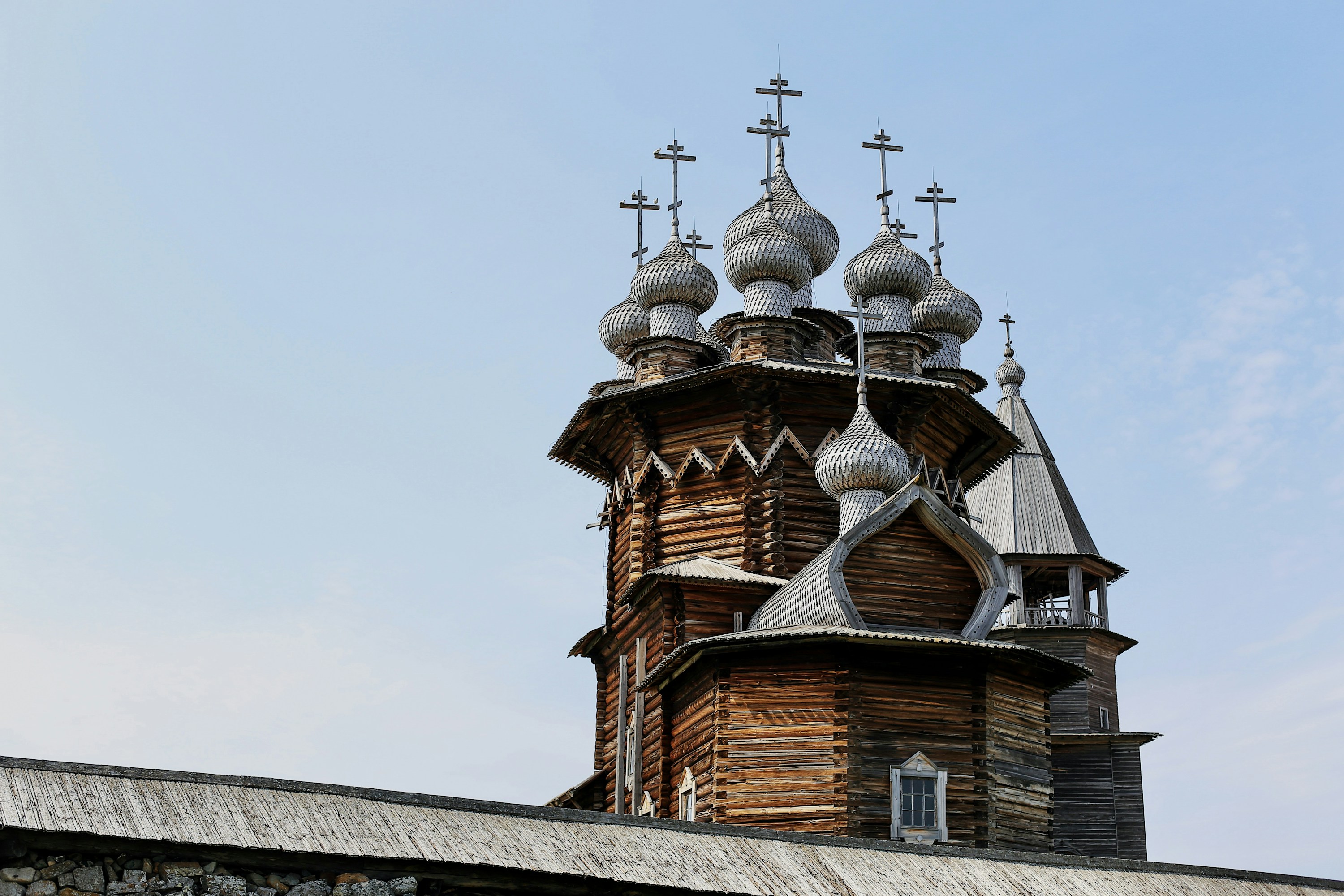
Kizhi Pogost is an open-air ensemble of wooden churches on a small island in Lake Onega, built with traditional log construction and no iron nails in the original structure.
The 22-domed Church of the Transfiguration, raised in 1714, is the centrepiece of a wider museum-reserve of relocated wooden chapels, houses and windmills from across Karelia.
It's reachable only by boat in summer or over ice in winter, keeping it genuinely quiet.
How does it rate
CrowdsRomanceCash RequiredDangerAccessibilityWhy you should go
A 22-domed wooden church built without iron nails, on a remote island in Lake Onega.
Why you shouldn't go
Only reachable by hydrofoil or winter ice transport — no roads, and the easy-access season is short.
Plan your visit
Best time to visitJune–August, when hydrofoils run from Petrozavodsk and the restored church interior is openBest time of dayLate morning, once the first hydrofoil crowd has spread out across the islandGetting thereFly or train to Petrozavodsk; hydrofoil to Kizhi Island takes about 1.5 hours and only runs mid-May to mid-October.Entry costAround 1,000 RUB museum entry, plus the hydrofoil fare (several thousand RUB return)Time needed3–4 hours, matching the standard hydrofoil round tripInsider tip — Book the hydrofoil ticket a day ahead in peak summer, since sailings sell out, and check which chapels are open — some of the museum's wooden buildings rotate through restoration. -
 #6075 /100
The largest continuous sand desert on Earth, an ocean of dunes covering an area bigger than France across the southern Arabian Peninsula.
Some dunes rise over 250 metres, their ridgelines shifting constantly and revealing fossilised lakebeds and ancient artefacts as the sand moves.
Overnight desert camps run by Bedouin-guided outfitters, mostly out of Saudi Arabia's Empty Quarter fringes, are the realistic way to experience its scale without a full expedition crossing.
How does it rate
CrowdsRomanceCash RequiredDangerAccessibilityWhy you should go
The largest sand desert on Earth, with dunes over 250 metres high and almost no infrastructure to break the horizon.
Why you shouldn't go
Access is genuinely limited - most of the interior requires a specialised expedition operator, and summer heat makes travel dangerous.
Plan your visit
Best time to visitNovember-February, the only realistically comfortable window.Best time of daySunrise or sunset, when the dune ridgelines throw long shadows across the sand.Getting thereFly to Riyadh or Najran; overnight camps near the desert's edge are reached by 4x4 from either city.Entry costGuided overnight desert camp trips typically run USD150-300+ per person.Time neededOvernight, or 3+ days for a deeper expedition.Insider tip — Stick to an edge-of-desert camp near Najran or Sharurah unless you're booking a proper multi-day expedition - the true interior is not for casual visitors. -
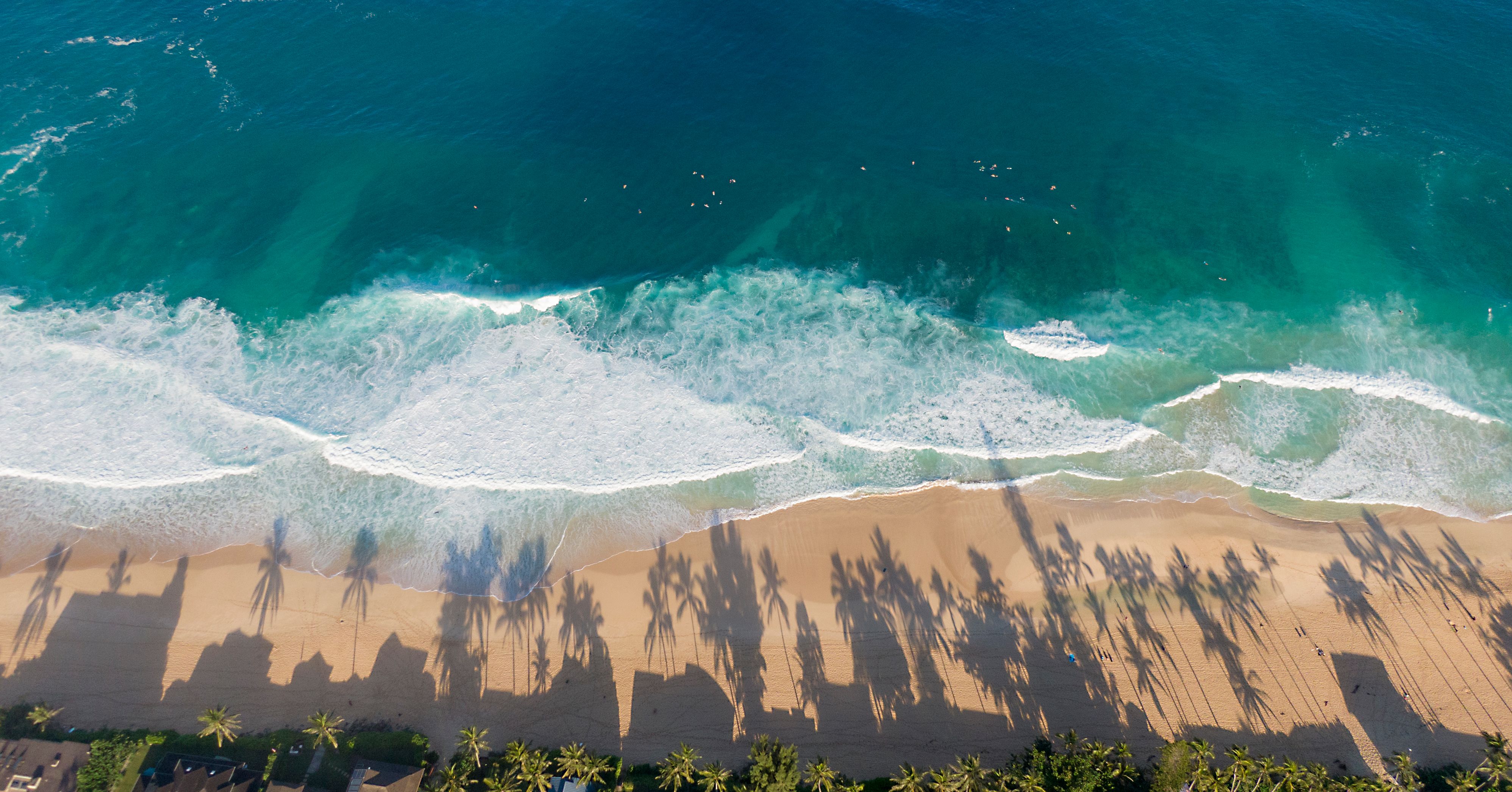 #6175 /100
A long, wide stretch of soft white sand on Oahu's windward coast, with the Ko'olau mountain range rising green and jagged directly behind it.
It's popular with locals rather than tour buses, so it stays uncrowded even close to Honolulu, and the water is generally calmer than the island's surf-famous North Shore.
Bellows Beach next door adds a second, quieter option within the same bay.
How does it rate
CrowdsRomanceCash RequiredDangerAccessibilityWhy you should go
Wide white sand backed directly by the jagged Ko'olau range, with far fewer tourists than Oahu's famous North Shore beaches.
Why you shouldn't go
Facilities are basic, and being a local favourite means weekends can bring heavy beach-park traffic.
Plan your visit
Best time to visitApril-October for calmer, warmer water.Best time of dayEarly morning, when the mountains catch the sunrise light.Getting thereFly to Honolulu; a 40-minute drive around the southeast coast to Waimanalo.Entry costFree.Time needed2-3 hours.Insider tip — Bellows Field Beach Park next door is open to the public on weekends and is usually quieter still. -
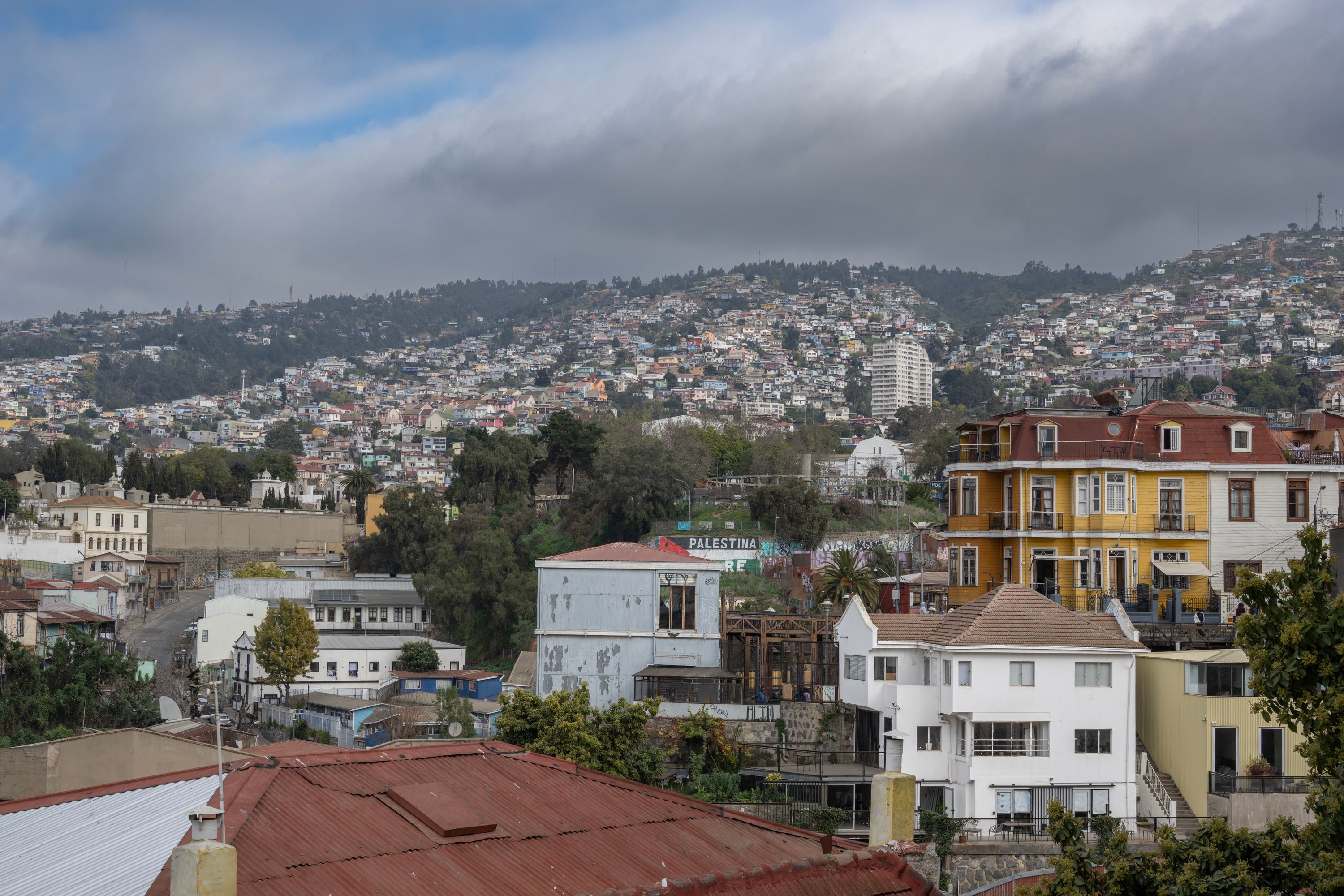 #6275 /100
Chile's main historic port climbs steep hills above the Pacific, linked by century-old funiculars and dense with painted houses and street art.
UNESCO listed the old quarter for its unplanned layout, and wandering the stairways of Cerro Alegre and Cerro Concepción, plus Pablo Neruda's clifftop house La Sebastiana, is the main activity.
Parts of the city have visibly declined, and the port is still working, not polished.
How does it rate
CrowdsRomanceCash RequiredDangerAccessibilityWhy you should go
A maze of hillside stairways, funiculars and street art with no real equivalent elsewhere in Chile.
Why you shouldn't go
Parts of the city have declined and pickpocketing is a real risk - stick to the touristed hills after dark.
Plan your visit
Best time to visitSeptember-November or March-May, for mild weather and thinner crowds than summer.Best time of dayDaytime for exploring the hills; sunset from Paseo Gervasoni or Paseo Atkinson.Getting thereFly to Santiago, then about a 90-minute bus or drive west to Valparaíso.Entry costFree to explore; funiculars ~CLP 300-800 each wayTime neededHalf a day to a full dayInsider tip — Ride the Ascensor Concepción, Chile's oldest funicular, up to Paseo Gervasoni for the classic hillside-and-harbour view, then walk down through Cerro Alegre. -
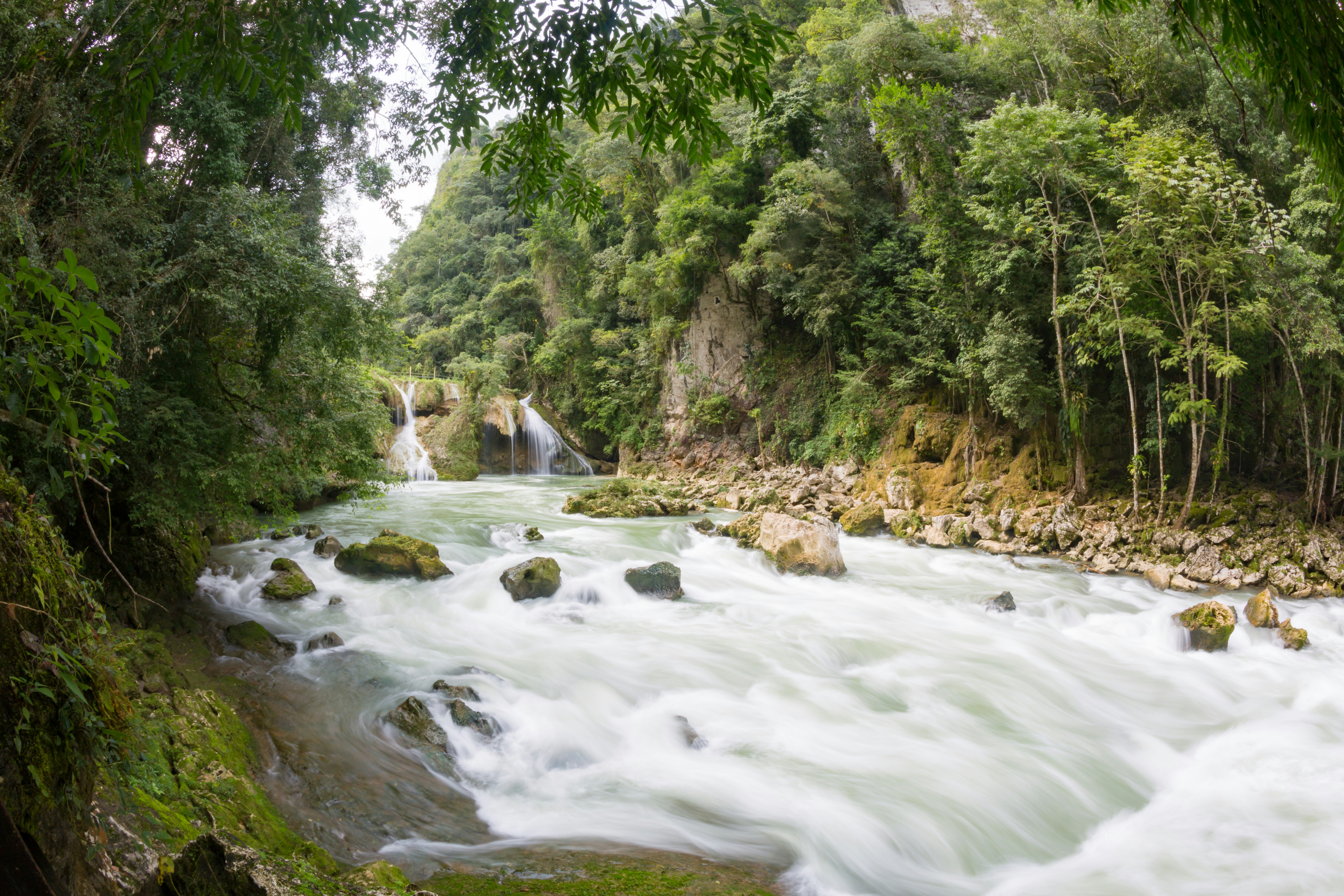 #6374 /100
A series of turquoise limestone pools cascades down a natural stone bridge above the rushing Cahabón River, which vanishes underground beneath the pools before reemerging downstream.
Swimming from one pool to the next, framed by dense jungle on all sides, feels remote in a way that matches the effort of reaching it — the last stretch of road is famously rough.
A steep viewpoint hike above gives the classic aerial view of the stacked terraces.
How does it rate
CrowdsRomanceCash RequiredDangerAccessibilityWhy you should go
Stacked turquoise swimming pools on a natural stone bridge above a river that vanishes underground.
Why you shouldn't go
The final approach road is notoriously rough, and the site itself is remote from major towns.
Plan your visit
Best time to visitNovember–April, the dry season, when the river is clearer and pools less silty.Best time of dayMorning, before day-trip crowds from Lanquín arrive.Getting thereAbout 1 hour by rough road from the town of Lanquín, itself several hours from Guatemala City or Antigua.Entry costAround Q50 (~€6) entry fee.Time neededFull day.Insider tip — Climb to the El Mirador viewpoint first thing in the morning before swimming — the classic aerial photo is best in early, angled light. -
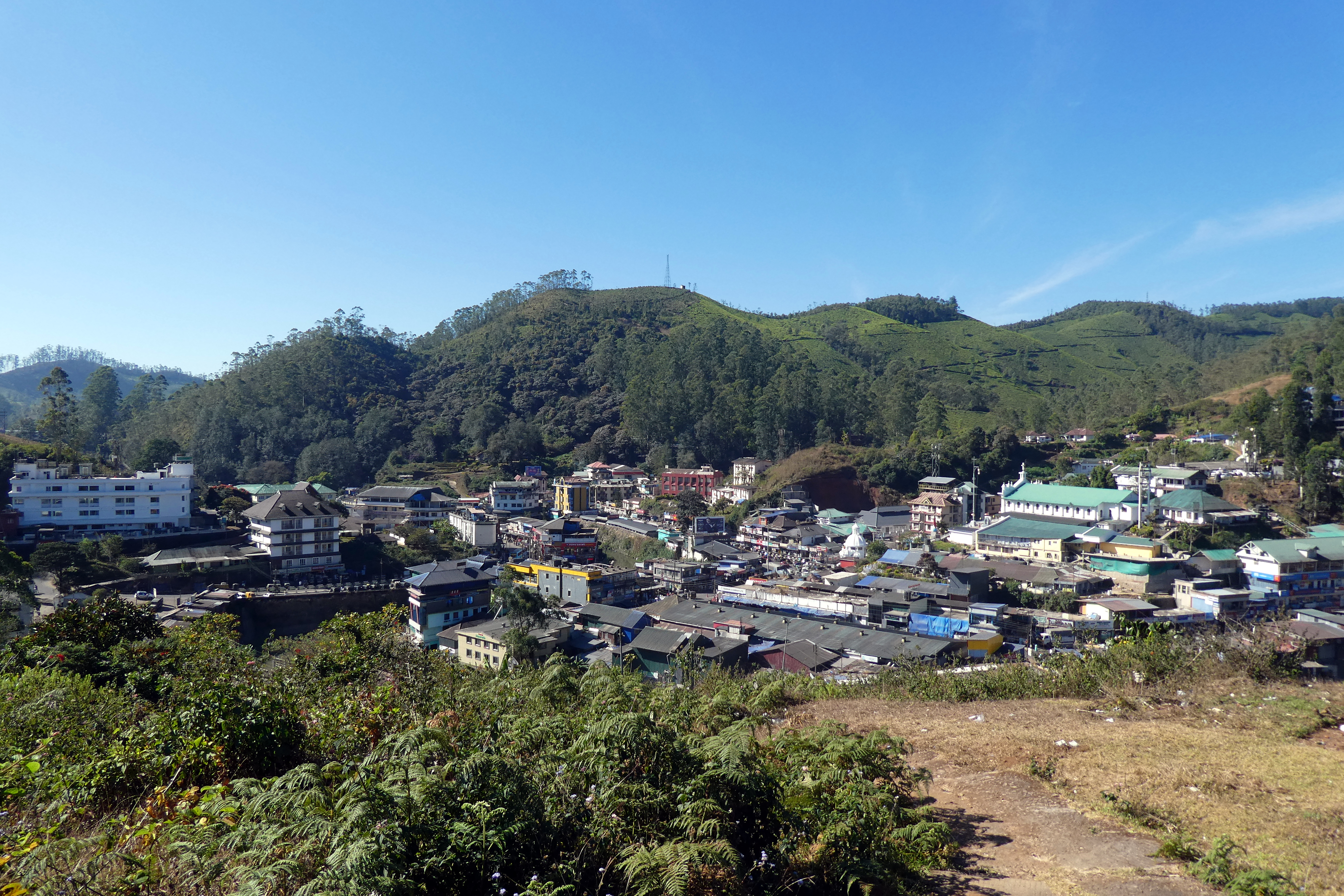 #6474 /100
Munnar is a hill station in the Western Ghats of Kerala renowned for its rolling tea plantations, which cover the mountain slopes in an unbroken carpet of vivid green.
Set at around 1,600 metres, the cool mist-covered landscape of tea gardens, colonial plantation buildings, and wildlife sanctuaries offers a striking contrast to Kerala's tropical coast.
How does it rate
CrowdsRomanceCash RequiredDangerAccessibilityWhy you should go
The sight of the undulating bright green tea plantations stretching to the horizon in every direction, often draped in morning mist, creates a landscape of extraordinary tranquility.
Why you shouldn't go
Munnar's roads are narrow and extremely congested during Indian holidays; the mist that creates the mystical atmosphere can also obscure views for days at a time.
Plan your visit
Best time to visitSeptember-March (post-monsoon, cooler)Best time of dayEarly morning mist over the tea plantationsGetting there~4hr drive from KochiEntry costFree to view; some estates charge for toursTime needed2-3 daysInsider tip — The tea plantation viewpoints are best just after sunrise, before the mist burns off -
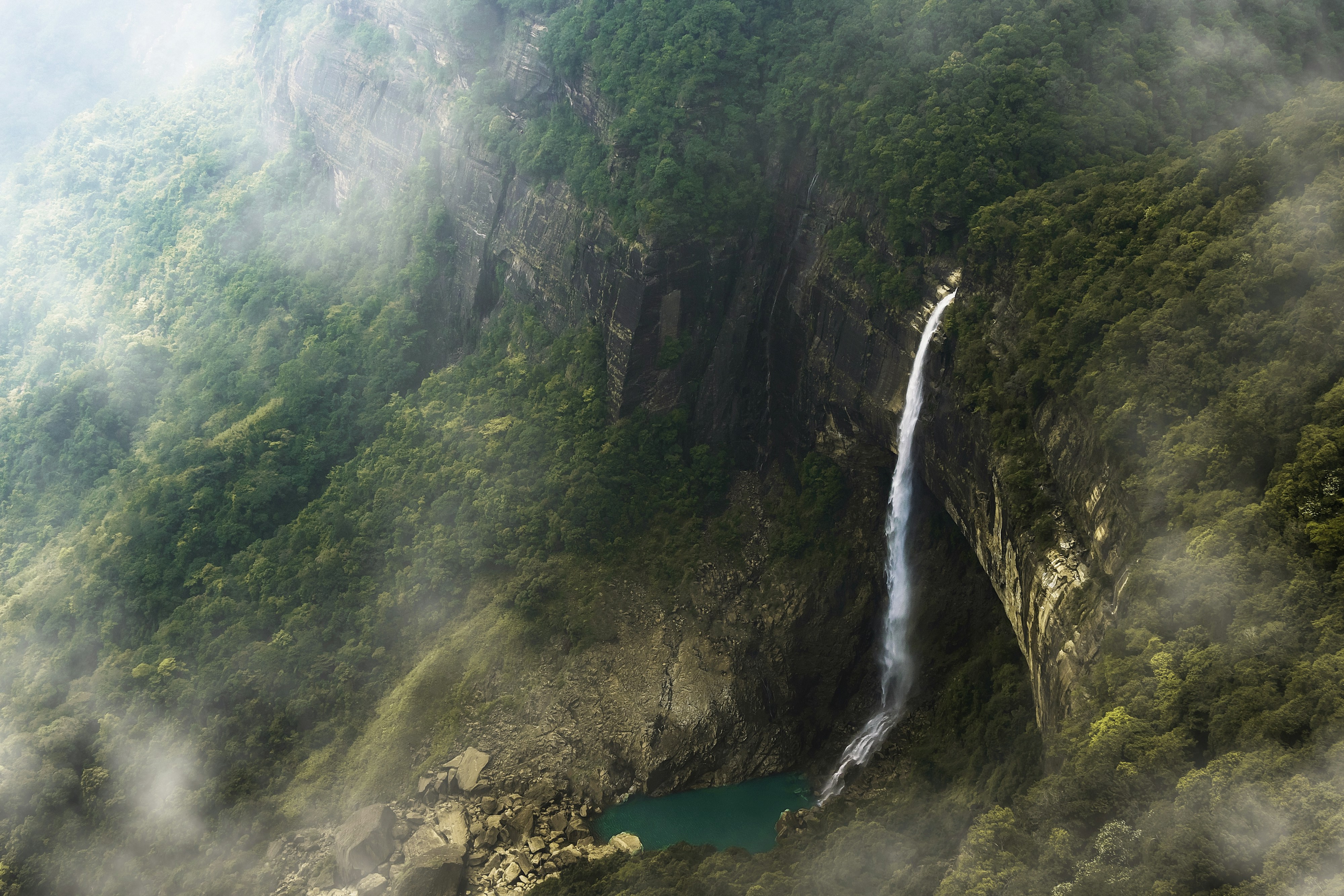 #6574 /100
India's tallest plunge waterfall drops in a single sheer fall into a striking turquoise pool at the base of the Khasi Hills, near Cherrapunji - one of the wettest places on Earth.
Monsoon season turns it into a thunderous wall of water visible from a paved viewpoint without any hiking required.
A local legend about a mother's grief gives the falls their name and a somber backstory repeated by every guide.
How does it rate
CrowdsRomanceCash RequiredDangerAccessibilityWhy you should go
India's tallest plunge waterfall, viewable from a paved lookout with zero hiking involved.
Why you shouldn't go
During the dry winter months the flow drops to a fraction of its monsoon-season power.
Plan your visit
Best time to visitJune-September, monsoon season, for maximum water flow.Best time of dayMorning, before monsoon cloud typically thickens over the valley.Getting thereDrive to Cherrapunji (Sohra) from Shillong, about 1.5 hours; the viewpoint is a short walk from the car park.Entry costSmall entry fee, a few dollars.Time needed1 hourInsider tip — Combine the visit with Cherrapunji's living root bridges nearby - most visitors do both in a single day trip from Shillong. -
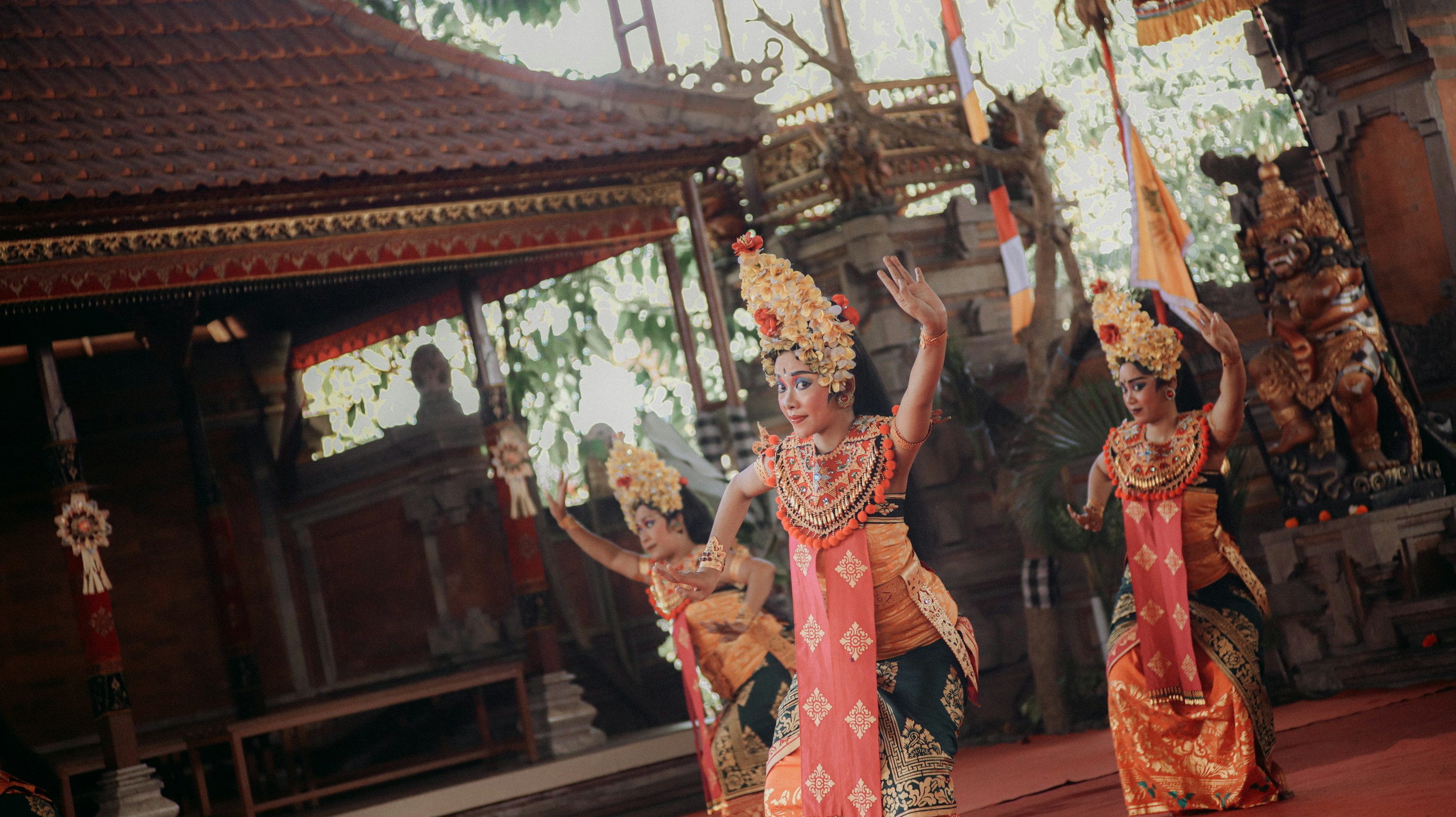 #6674 /100
Held over a full month each summer in Denpasar, the Bali Arts Festival gathers traditional dance, gamelan orchestras, shadow puppetry, and crafts from villages across the island into one showcase, opened with a parade of regional delegations in ceremonial dress.
Unlike festivals built around foreign headline acts, this one exists to keep Balinese Hindu performing arts alive for local audiences, with tourists welcome as spectators.
How does it rate
CrowdsRomanceCash RequiredDangerAccessibilityWhy you should go
A month-long showcase of traditional Balinese dance, gamelan, and puppetry, opened with a parade of villages in ceremonial dress.
Why you shouldn't go
Performances and schedules are mostly in Indonesian and Balinese with limited English signage, geared to local audiences rather than tourists.
Plan your visit
Best time to visitA full month from mid-June into July each year.Best time of dayEvening for the main dance and gamelan performances at the Denpasar arts centre.Getting thereFly into Ngurah Rai International Airport near Denpasar; the festival venue is a short drive from the airport.Entry costEntry to most performances is free or a nominal fee.Time neededOne evening for a sample; the full programme runs a month.Insider tip — Check the printed daily schedule at the venue gate each morning - performance line-ups shift daily and aren't reliably posted online. -
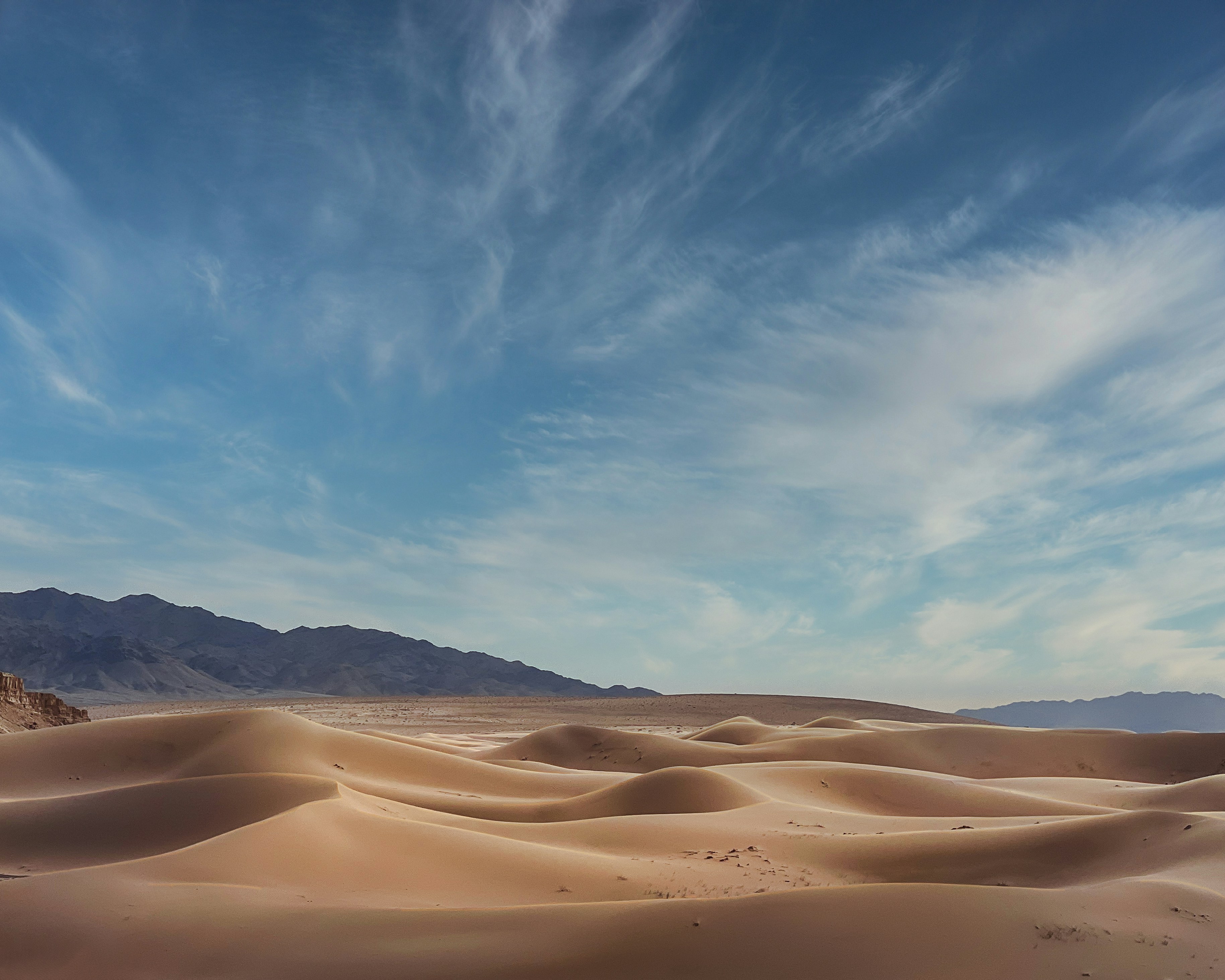 #6774 /100
A vast, sparsely populated expanse of rock desert and singing sand dunes stretching across southern Mongolia, home to the towering Khongoryn Els dunes, dinosaur fossil beds at the Flaming Cliffs, and nomadic families still living in traditional gers.
The scale is almost incomprehensible - days of driving between landmarks across open steppe with barely another vehicle in sight.
It rewards travellers looking for genuine remoteness over polished infrastructure.
How does it rate
CrowdsRomanceCash RequiredDangerAccessibilityWhy you should go
Days of empty steppe, 300-metre singing sand dunes, and dinosaur fossil cliffs, with almost no other tourists in sight.
Why you shouldn't go
There's essentially no tourist infrastructure - trips require a guide, a 4x4, and multi-day overland travel between sights.
Plan your visit
Best time to visitJune-September, avoiding the brutal winter and unpredictable spring sandstorms.Best time of daySunset at the Khongoryn Els dunes, when the sand glows gold against the darkening steppe.Getting thereFly to Ulaanbaatar, then a multi-day 4x4 tour south into the Gobi (no scheduled public transport reaches most sites).Entry costMulti-day guided tours typically run USD60-120 per person per day, all-inclusive.Time needed3+ days.Insider tip — Climb Khongoryn Els at sunset rather than midday - the dunes genuinely "sing" as sand shifts underfoot once the heat breaks. -
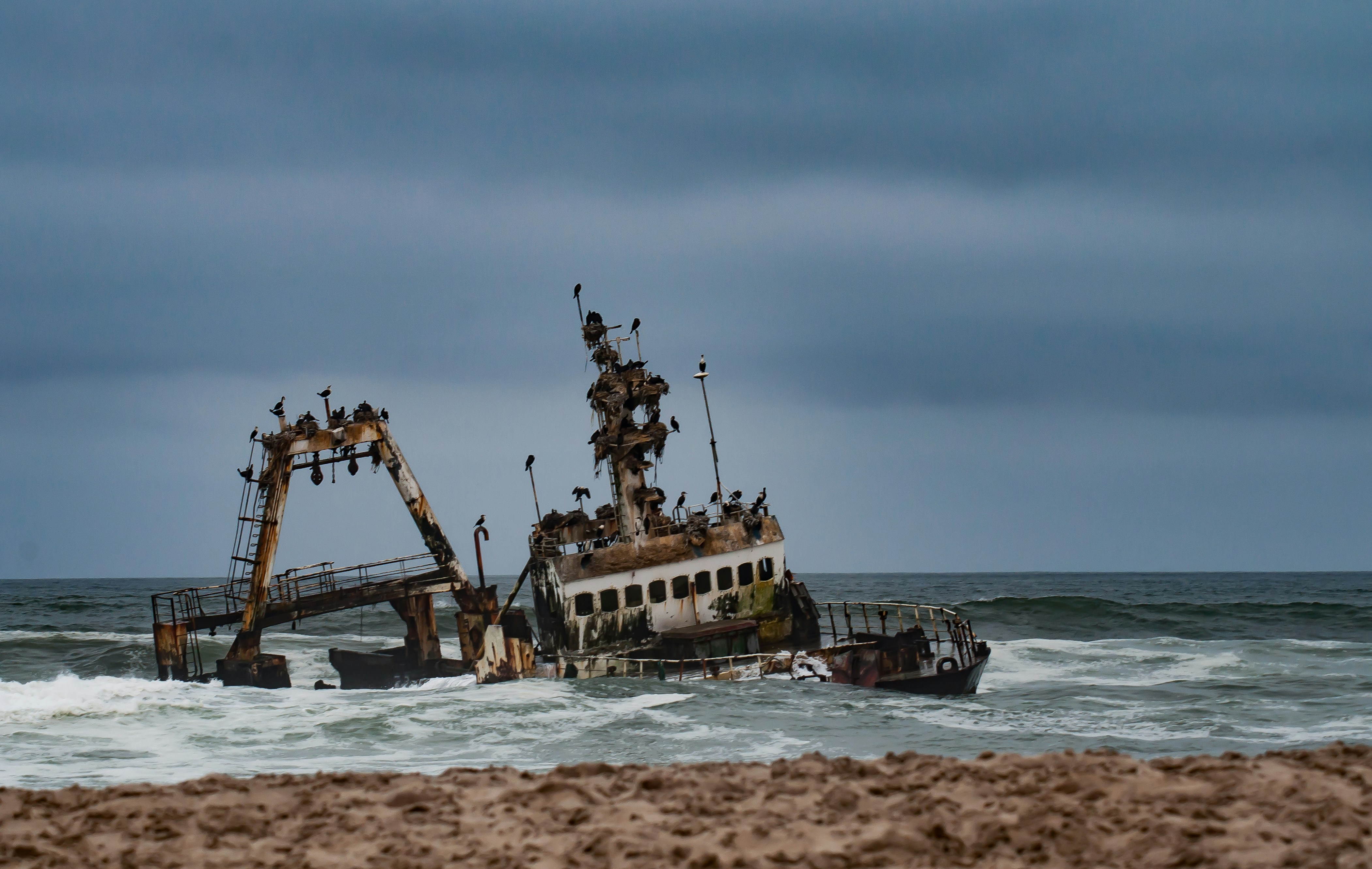 #6874 /100
Named for the whale bones once littering its shore and the shipwrecks still rusting in its surf, this remote stretch of Atlantic coastline is where the Namib Desert's dunes meet a cold, fog-shrouded ocean in a landscape that feels genuinely otherworldly.
Seal colonies numbering in the thousands gather at Cape Cross, while the fog sustains desert-adapted wildlife found nowhere else, including elephants that wander dry riverbeds toward the coast.
How does it rate
CrowdsRomanceCash RequiredDangerAccessibilityWhy you should go
A starkly beautiful, genuinely remote desert coastline littered with shipwrecks and desert-adapted wildlife.
Why you shouldn't go
It's extremely remote, with long distances between fuel, services and any settlement.
Plan your visit
Best time to visitMay–October (dry season) for the clearest access along desert tracks.Best time of dayMorning, before the coastal fog typically burns off.Getting thereSelf-drive or fly-in safari from Swakopmund, several hours north along the coast.Entry costPark permits typically N$80-150 depending on the section visited.Time needed2–3 days for a proper exploration.Insider tip — Visit Cape Cross seal colony early in the morning — both the smell and the sheer noise are much more manageable before midday heat intensifies both. -
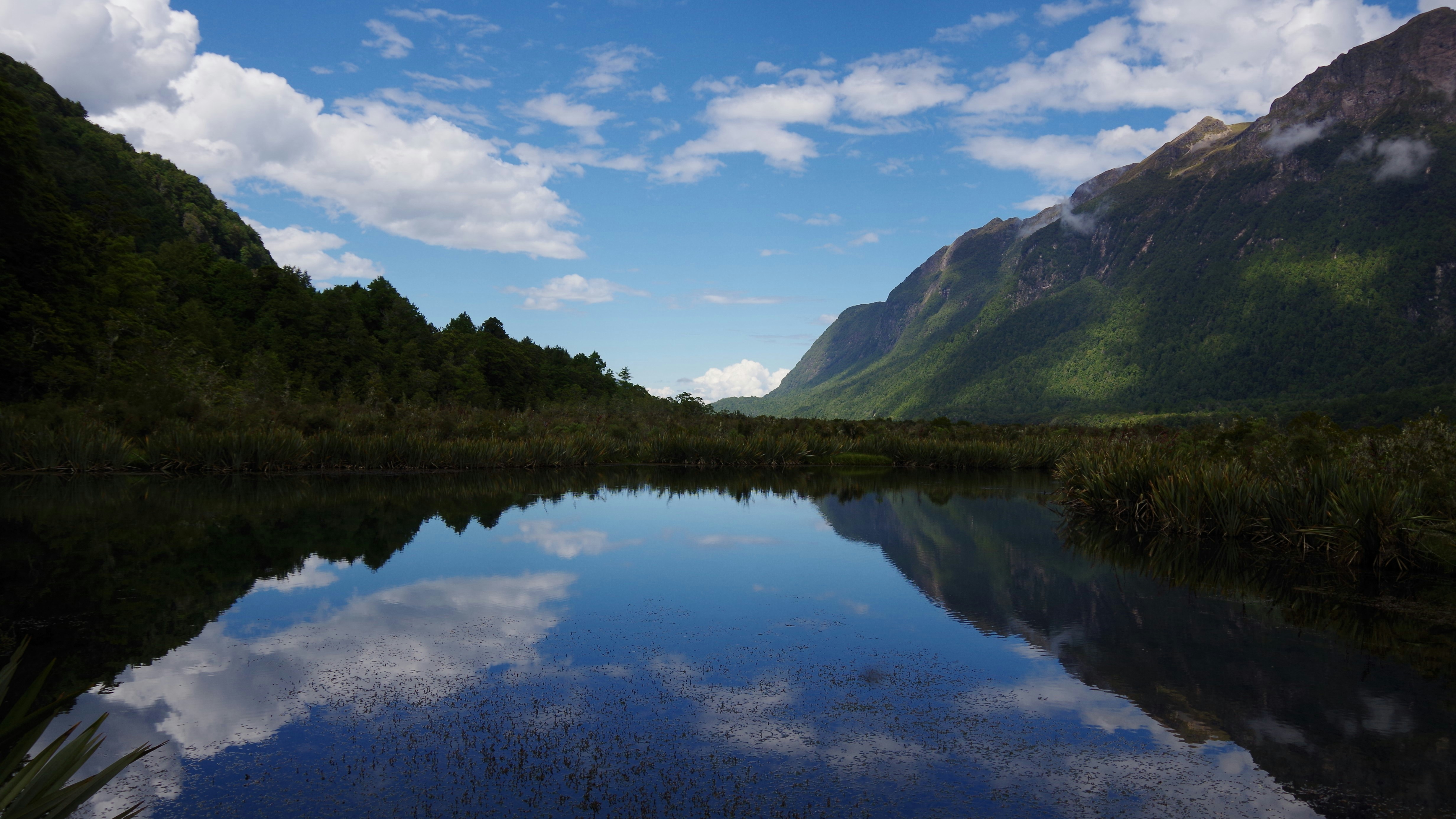 #6974 /100
A pair of small roadside lakes on the drive to Milford Sound that reflect the surrounding peaks and tussock grassland with near-perfect clarity on calm mornings.
A short boardwalk loop makes them one of the easiest stops on the whole Fiordland route.
How does it rate
CrowdsRomanceCash RequiredDangerAccessibilityWhy you should go
Roadside lakes that mirror the Fiordland peaks perfectly on a calm morning — a five-minute stop with a big payoff.
Why you shouldn't go
Reflection quality depends entirely on wind — many visitors arrive to a rippled, unremarkable lake.
Plan your visit
Best time to visitNovember–March (summer) for the best chance of calm, clear mornings.Best time of dayEarly morning before wind picks up, ideally right after sunrise.Getting thereOn the Milford Road (SH94), about 1 hour north of Te Anau; signposted roadside car park.Entry costFree.Time needed15–30 minutes.Insider tip — Check conditions the night before if possible — a still forecast morning is worth adjusting your itinerary for. The boardwalk loop takes only a few minutes. -
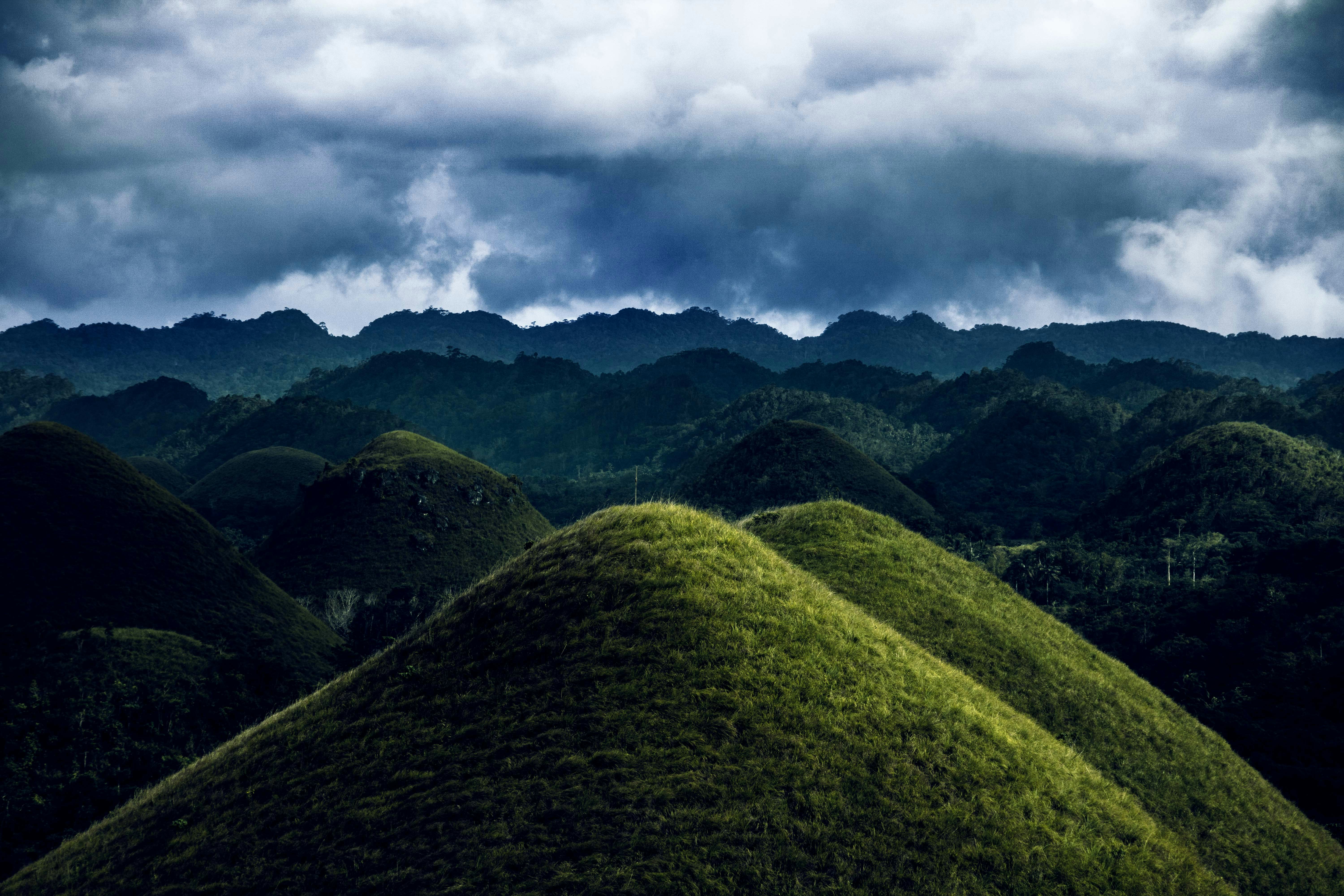 #7074 /100
Over 1,200 near-perfectly conical grass-covered hills spread across Bohol island, turning chocolate-brown in the dry season.
A geological oddity of uncertain origin, best appreciated from the Chocolate Hills Complex viewing deck at sunrise or sunset.
How does it rate
CrowdsRomanceCash RequiredDangerAccessibilityWhy you should go
Over 1,200 symmetrical grassy hills that turn chocolate-brown in dry season, a geological one-of-a-kind.
Why you shouldn't go
The famous "chocolate" brown color only appears in dry season (Dec–May); green the rest of the year.
Plan your visit
Best time to visitMarch–May (dry season) for the brown hue the hills are named for.Best time of dayEarly morning for cooler temperatures and softer light on the viewing deck.Getting thereFly to Tagbilaran, Bohol; 1-hour drive to Carmen town viewing complex.Entry costPHP 50 (~$1) entrance fee.Time needed1–2 hoursInsider tip — Combine with a Loboc River cruise and the nearby tarsier sanctuary the same day. Climb the 214 steps to the deck for the full panorama. -
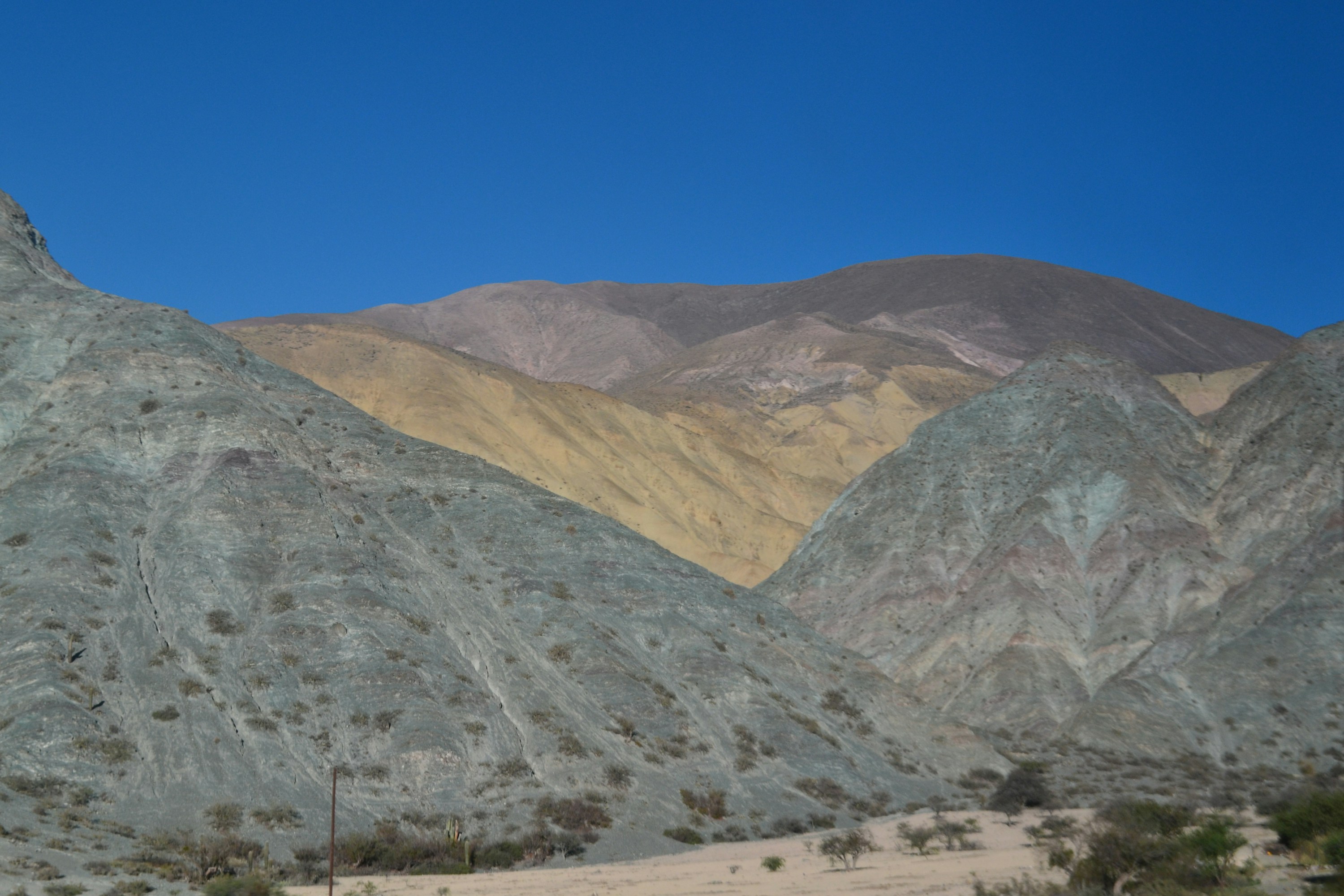 #7174 /100
This 155-kilometre gorge in Argentina's arid northwest has been a travel corridor since long before the Inca, its adobe villages and banded red-and-ochre rock now UNESCO-listed.
Purmamarca sits beneath the striped Cerro de los Siete Colores, while Humahuaca and Tilcara keep colonial churches and pre-Columbian ruins within walking distance.
It rewards slow travel along Ruta 9, not a single stop.
How does it rate
CrowdsRomanceCash RequiredDangerAccessibilityWhy you should go
Multicolored mountain geology and centuries-old adobe villages, without the crowds of Salta's sights.
Why you shouldn't go
It's remote - a long drive or bus ride from Salta, and services thin out fast outside the main villages.
Plan your visit
Best time to visitApril-October (dry season); winter nights are cold at this altitudeBest time of dayLate afternoon, when low sun deepens the colors in the rockGetting thereFly to Salta or San Salvador de Jujuy, then drive or bus north on Ruta Nacional 9Entry costFree to drive through and visit villages; some sites charge small entry feesTime needed1-2 daysInsider tip — Stop in Tilcara rather than only Purmamarca - its pre-Inca pucara hilltop fort ruins get a fraction of the visitors. -
 #72
#72A tiny medieval town entirely enclosed by 14th-century walls an hour north of Lisbon, Óbidos was once a traditional wedding gift from Portuguese kings to their queens.
A single cobbled main street runs between whitewashed, bougainvillea-draped houses to a hilltop castle, and the full circuit of the ramparts can be walked in under an hour for views over the surrounding countryside.
How does it rate
CrowdsRomanceCash RequiredDangerAccessibilityWhy you should go
A complete, walkable walled town — castle, ramparts, and cobbled streets — that takes half a day, not a full trip.
Why you shouldn't go
It's genuinely small: one main street and the walls are most of the sight, so it can feel thin without a wine-tasting stop.
Plan your visit
Best time to visitSpring or autumn for mild weather; October's chocolate festival and July's medieval fair draw big crowds.Best time of dayLate afternoon, after day-trip coach groups from Lisbon head back.Getting thereAbout an hour's drive or bus ride north of Lisbon; no train station in town.Entry costFree to enter and walk the walls.Time needed2–4 hoursInsider tip — Try ginjinha (cherry liqueur) served in an edible chocolate cup from one of the small stalls along the main street. -
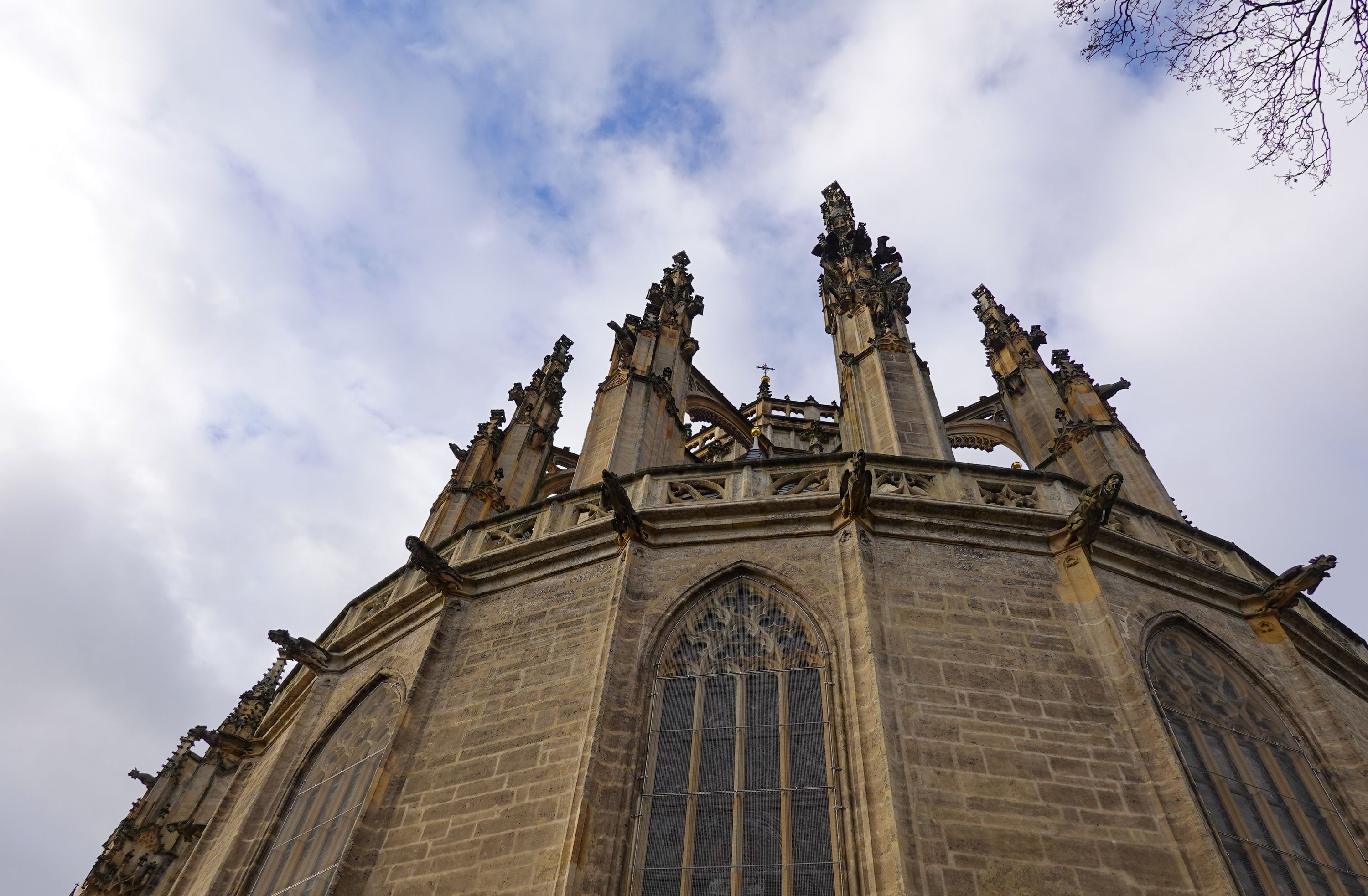 #7374 /100
St Barbara's Church rises over Kutná Hora, a UNESCO-listed medieval silver-mining town an hour from Prague.
Building began in 1388 and dragged on for five centuries, leaving a soaring Gothic nave ringed by flying buttresses and gargoyles, with faded frescoes of miners and moneyers inside.
It shares the skyline with Baroque terraces and the Jesuit College, making the old town worth a half-day wander.
How does it rate
CrowdsRomanceCash RequiredDangerAccessibilityWhy you should go
Central Europe's finest Gothic cathedral exterior, dense with flying buttresses and pinnacles, without Prague's crowds.
Why you shouldn't go
Interior frescoes have faded badly in places, and the surrounding old town shuts down early outside peak season.
Plan your visit
Best time to visitApril-October, when full opening hours apply; roads and the cathedral interior close earlier in winter.Best time of dayMorning, before Prague day-trip coach groups arrive around midday.Getting thereDirect train from Prague hlavní nádraží to Kutná Hora hl.n. (~1hr), then a connecting local train or 25-min walk to the old town.Entry cost180 CZK adult, 140 CZK concession, 60 CZK childTime needed1–2 hours, or half a day with the old townBookingBook ahead →Insider tip — Buy the combined ticket with the Italian Court and Hrádek museum if spending the day; coach-tour groups arrive in a rush around 11am-1pm, so aim for opening time instead. -
 #7473 /100
High in the Bolivian Andes, Oruro's carnival is built around the Diablada, an elaborate devil dance performed by dancers in ornate horned masks and embroidered costumes depicting the battle between good and evil.
UNESCO recognised the event in 2001 for how deeply its folklore and costume-making traditions are woven into the city's identity.
How does it rate
CrowdsRomanceCash RequiredDangerAccessibilityWhy you should go
An Andean devil-dance carnival, danced in ornate horned masks along a 20-hour processional route at high altitude.
Why you shouldn't go
Oruro sits at over 3,700m altitude, so altitude sickness is a real risk for visitors arriving without acclimatisation.
Plan your visit
Best time to visitFebruary or March, the weekend before Ash Wednesday (exact dates shift yearly).Best time of dayMorning, when the main Diablada procession begins along its fixed route.Getting thereFly into La Paz, then a bus or train roughly 3-4 hours south to Oruro.Entry costGrandstand seating along the route runs roughly USD15-40.Time neededA full day for the main procession.Insider tip — Spend a day or two in La Paz beforehand to acclimatise to the altitude before travelling on to Oruro. -
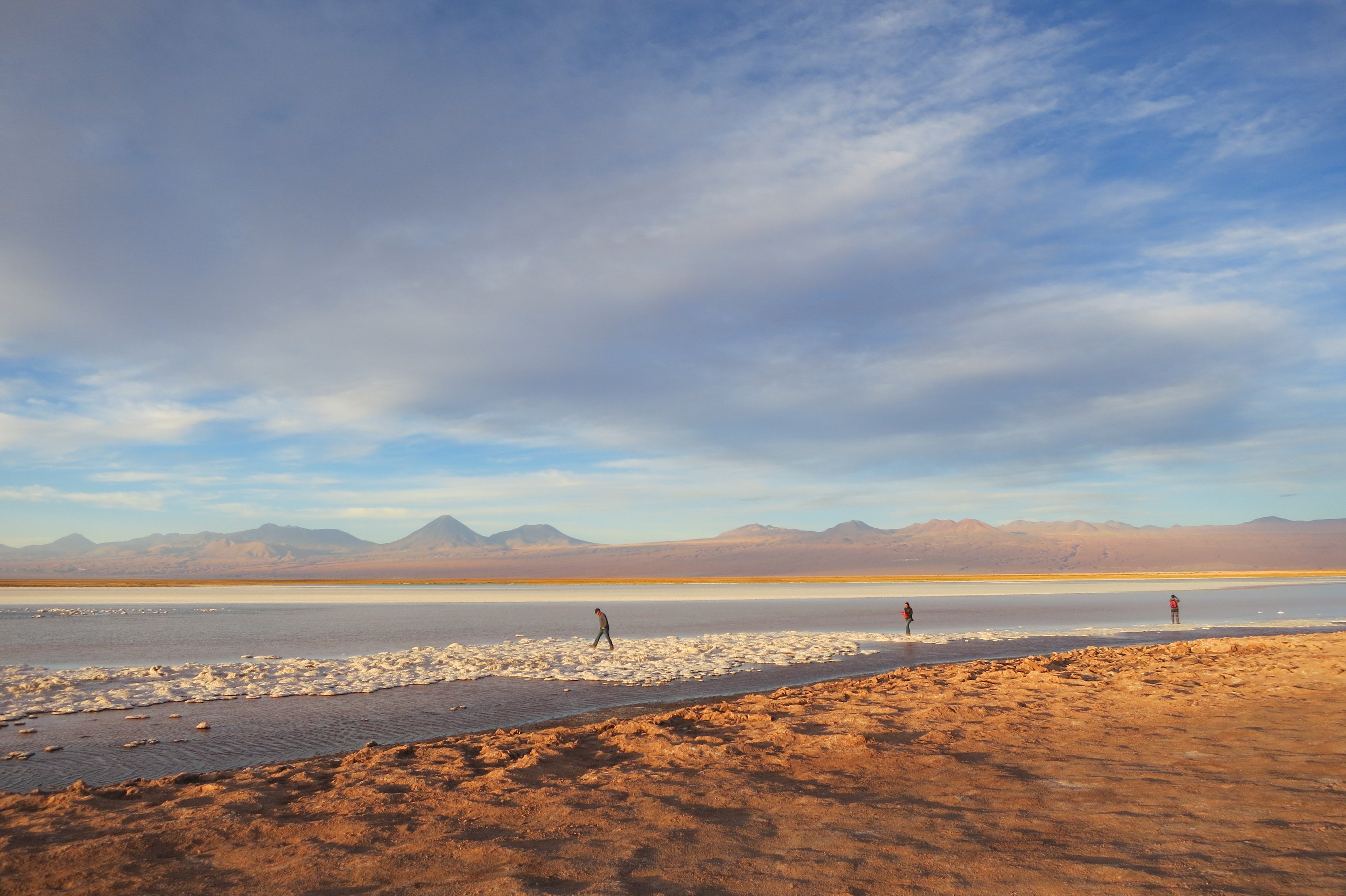 #7573 /100
A hypersaline lagoon in the Atacama salt flat, dense enough with dissolved minerals that swimmers float effortlessly, Dead Sea-style.
Ringed by pale salt crust and distant volcanoes, it's a strange, buoyant swim in one of the driest places on Earth, best paired with a freshwater rinse straight after.
How does it rate
CrowdsRomanceCash RequiredDangerAccessibilityWhy you should go
A hypersaline lagoon where you float effortlessly, ringed by salt crust and desert emptiness.
Why you shouldn't go
Popular with tour groups despite the remote setting; the salt water stings any small cuts or irritates eyes; strong midday sun.
Plan your visit
Best time to visitOctober–April (dry season); visit outside the busiest midday tour window if possible.Best time of dayLate afternoon for softer light and slightly thinner crowds.Getting thereTours depart from San Pedro de Atacama, roughly a 40-minute drive.Entry costIncluded in guided tour price, typically $40–60 USD.Time needed3–4 hours including transport.Insider tip — Bring a swimsuit and old clothes — the brine is hard on fabric. Freshwater rinse-off pools are available right next to the lagoon. -
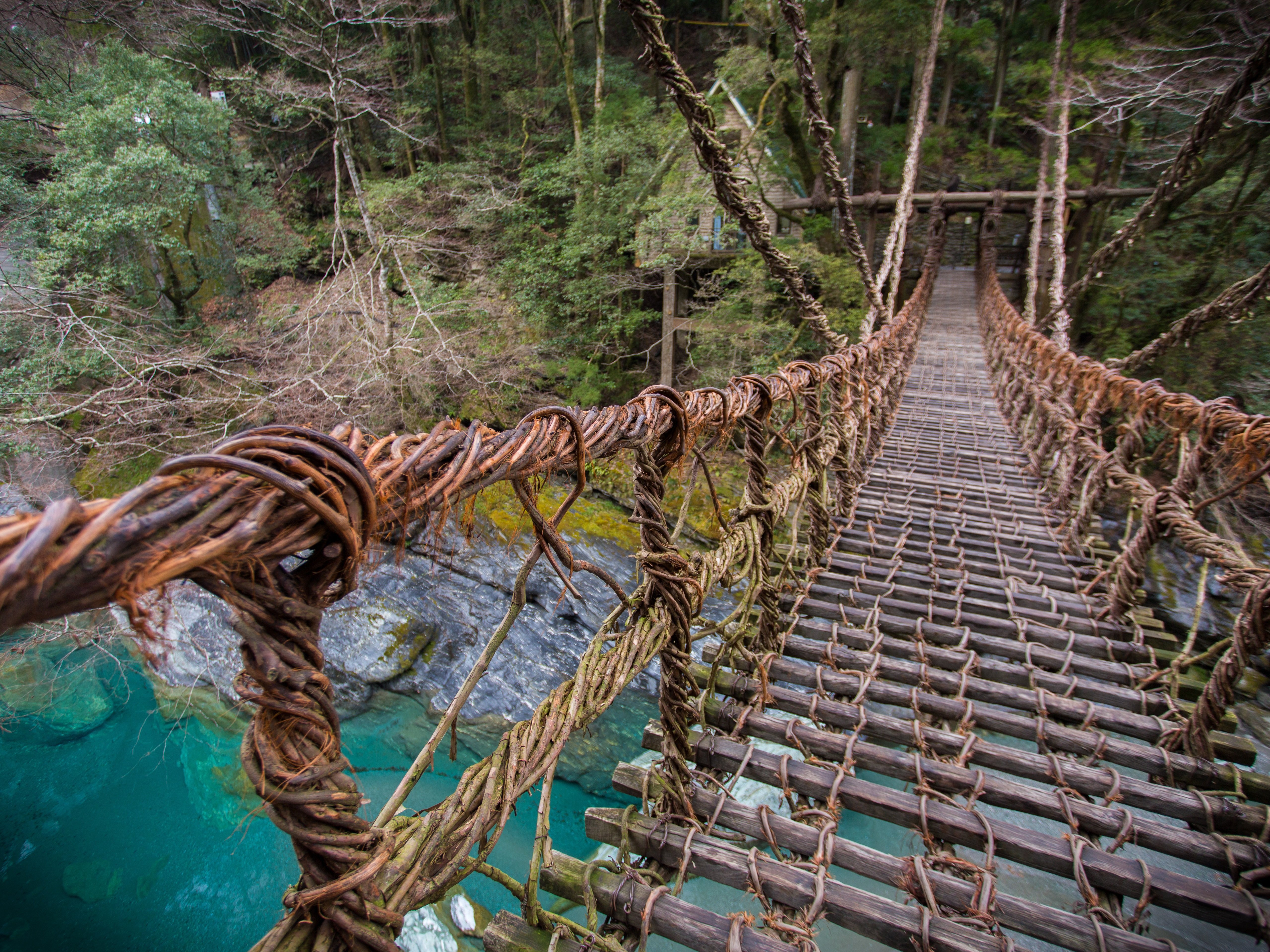 #7673 /100
A remote mountain valley on Shikoku island with deep gorges, near-vertical hillside villages, and a historic vine bridge that once let residents cut off pursuing enemies.
One of Japan's most dramatic and least-visited landscapes, especially vivid under autumn foliage.
How does it rate
CrowdsRomanceCash RequiredDangerAccessibilityWhy you should go
Remote mountain valley with a historic vine bridge and some of Japan's most dramatic autumn foliage.
Why you shouldn't go
Very remote with limited public transport; roads are narrow and winding; little English signage.
Plan your visit
Best time to visitLate October–November for peak fall colors; April–May for fresh green and mild weather.Best time of dayAfternoon light picks out the gorge colors; mist often fills the valley at dawn.Getting thereTrain to Oboke Station, then local bus or rental car into the valley.Entry costVine bridge crossing ¥550 (~$4); otherwise free.Time needed1–2 days to explore properly.Insider tip — A rental car is far more practical than public transport here. The vine bridge (Iya Kazurabashi) is rebuilt every few years using real vines — cross it early to avoid queues. -
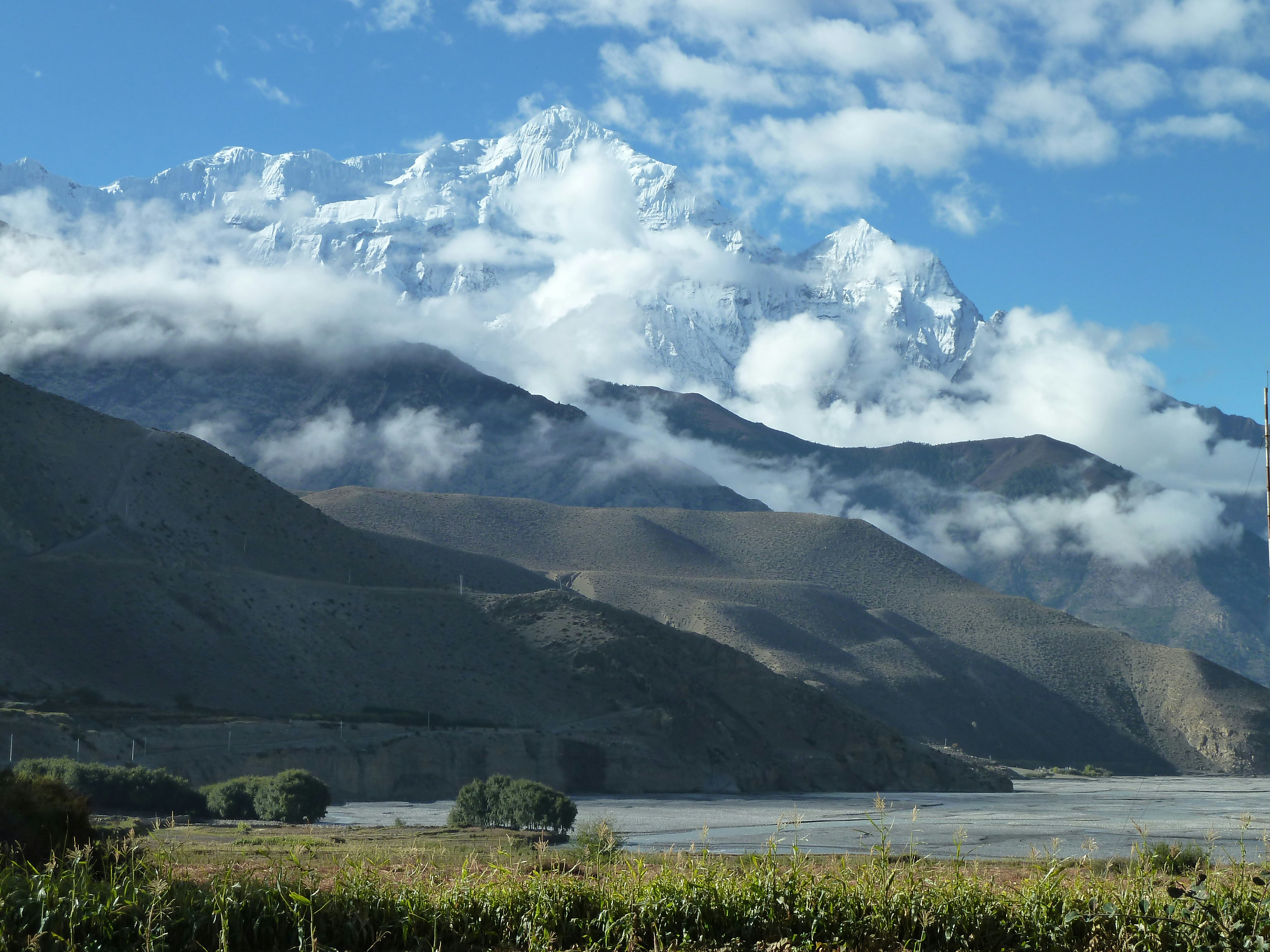 #7773 /100
Ranked among the world's deepest gorges, this Himalayan valley squeezes between two 8,000-metre peaks, Annapurna and Dhaulagiri, with a river running far below.
Ancient salt-trading routes and Tibetan Buddhist villages still line the gorge's upper reaches, largely unchanged for centuries.
Fossilised ammonites called shaligrams, sacred in Hinduism, are still found in the riverbed here.
How does it rate
CrowdsRomanceCash RequiredDangerAccessibilityWhy you should go
A gorge deep enough to sit between two Himalayan giants, walked by traders for centuries.
Why you shouldn't go
Reaching the most dramatic stretches means several days of trekking at altitude.
Plan your visit
Best time to visitMarch-May or September-November, for clear mountain views.Best time of dayMorning, before afternoon wind funnels strongly through the gorge.Getting thereFly or drive to Pokhara, then trek via Jomsom (reachable by a short flight from Pokhara).Entry costAnnapurna Conservation Area permit required.Time needed4-7 days as part of a wider trekInsider tip — Fly into Jomsom rather than trekking the lower valley - it skips several unremarkable days and drops you straight into the gorge's most dramatic section. -
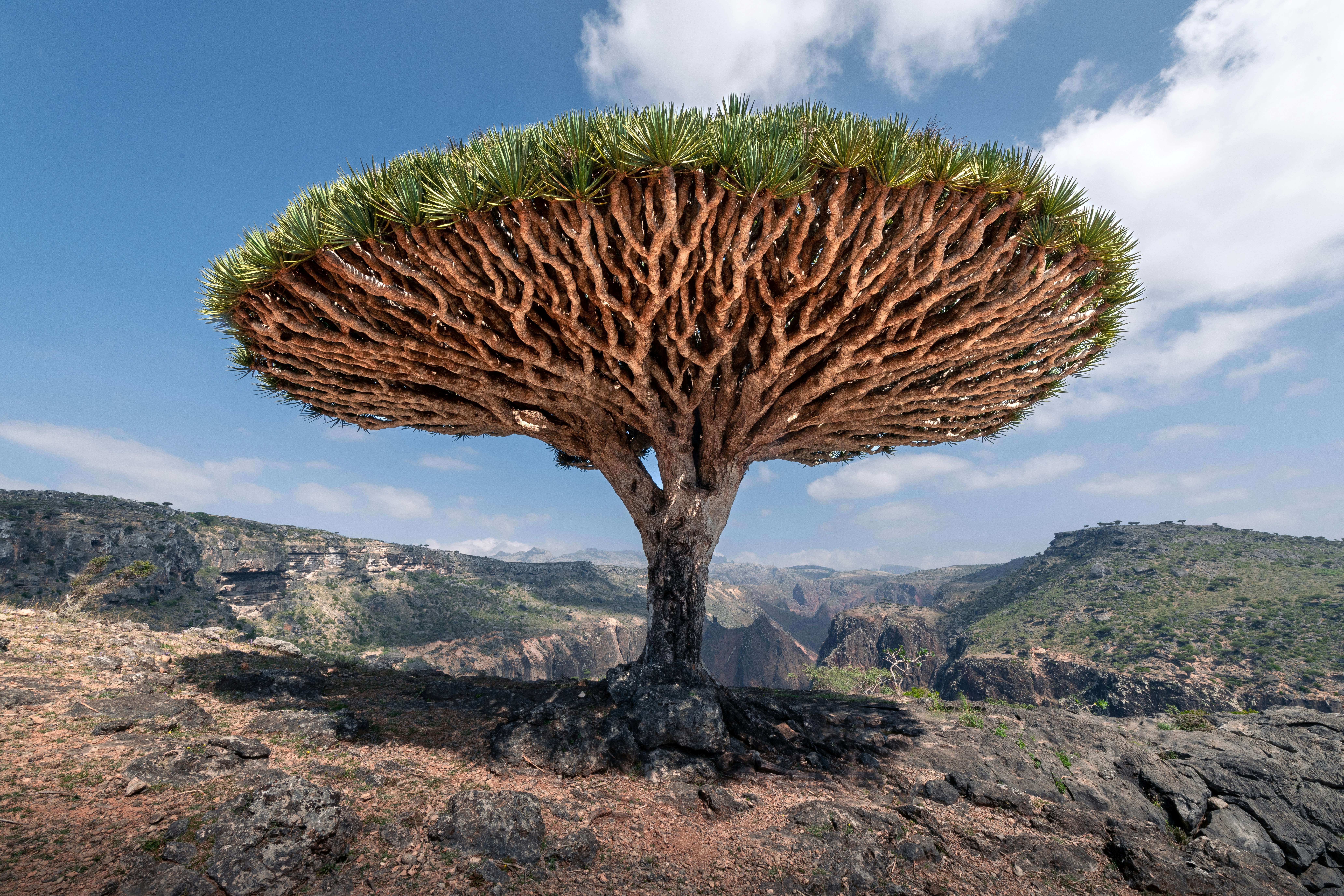 #7873 /100
A remote island in the Arabian Sea, isolated for millions of years, home to the umbrella-shaped dragon's blood trees found nowhere else on Earth.
Pristine beaches, alien-looking flora, and a culture largely untouched by mass tourism define one of the world's most singular landscapes.
How does it rate
CrowdsRomanceCash RequiredDangerAccessibilityWhy you should go
Otherworldly dragon's blood trees and pristine beaches on one of the most isolated inhabited islands on Earth.
Why you shouldn't go
Extremely remote with limited services; ongoing regional instability affects access and safety — check current travel advisories carefully.
Plan your visit
Best time to visitOctober–April for stable weather; access can be intermittent due to political conditions.Best time of daySunset light brings out the color of the dragon's blood trees and dunes.Getting thereFlights from Abu Dhabi or Cairo operate intermittently depending on political conditions; check current routes before booking.Entry costVisa, flights, and guided accommodation run roughly $150–250 USD per day.Time needed3–5 days.Insider tip — Independent travel is not advisable — go through a specialist operator with a local guide. Verify the current political and safety situation immediately before travel, as it changes frequently. -
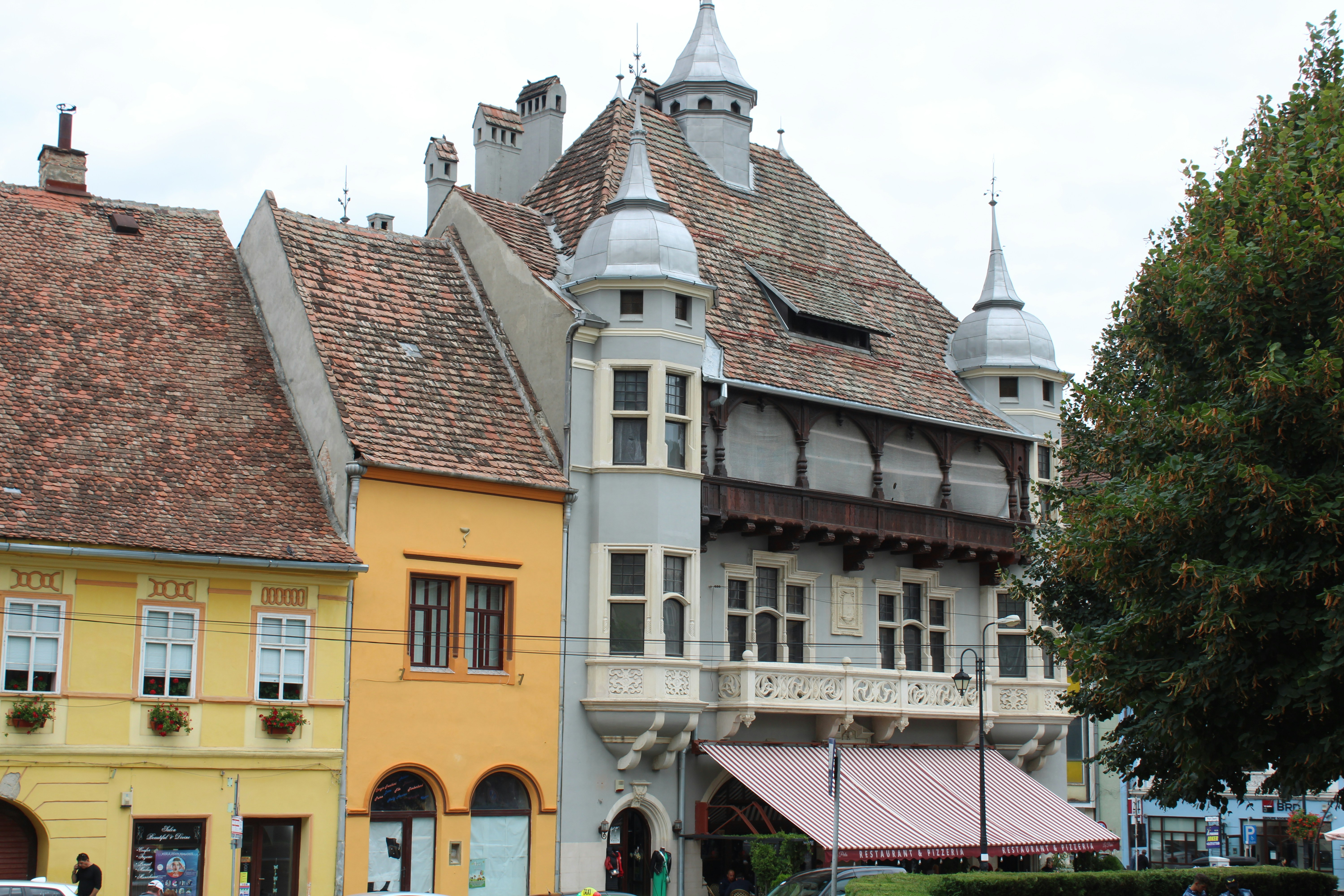 #7973 /100
This UNESCO-listed citadel is one of the last inhabited medieval walled towns in Europe, its cobbled lanes lined with pastel-colored burgher houses beneath nine surviving watchtowers.
Vlad the Impaler was reportedly born here, and the citadel's Gothic clock tower and covered stairway give it a genuinely lived-in medieval atmosphere rather than a restored film set.
Locals still run shops and cafés inside the walls.
How does it rate
CrowdsRomanceCash RequiredDangerAccessibilityWhy you should go
A real, still-inhabited medieval citadel, not a reconstruction.
Why you shouldn't go
Small enough that a couple of hours covers the whole old town.
Plan your visit
Best time to visitMay or September for pleasant weather without peak-summer crowds.Best time of dayEvening, once day-tripping coach groups have left.Getting thereDirect train from Brașov or Bucharest to Sighișoara station, then a 10-minute walk uphill.Entry costFree to walk the citadel; Clock Tower museum around 15 RON.Time needed2–4 hours.Insider tip — Climb the Covered Stairway (all 175 steps) to the Church on the Hill for the best rooftop views, away from the main square crowds. -
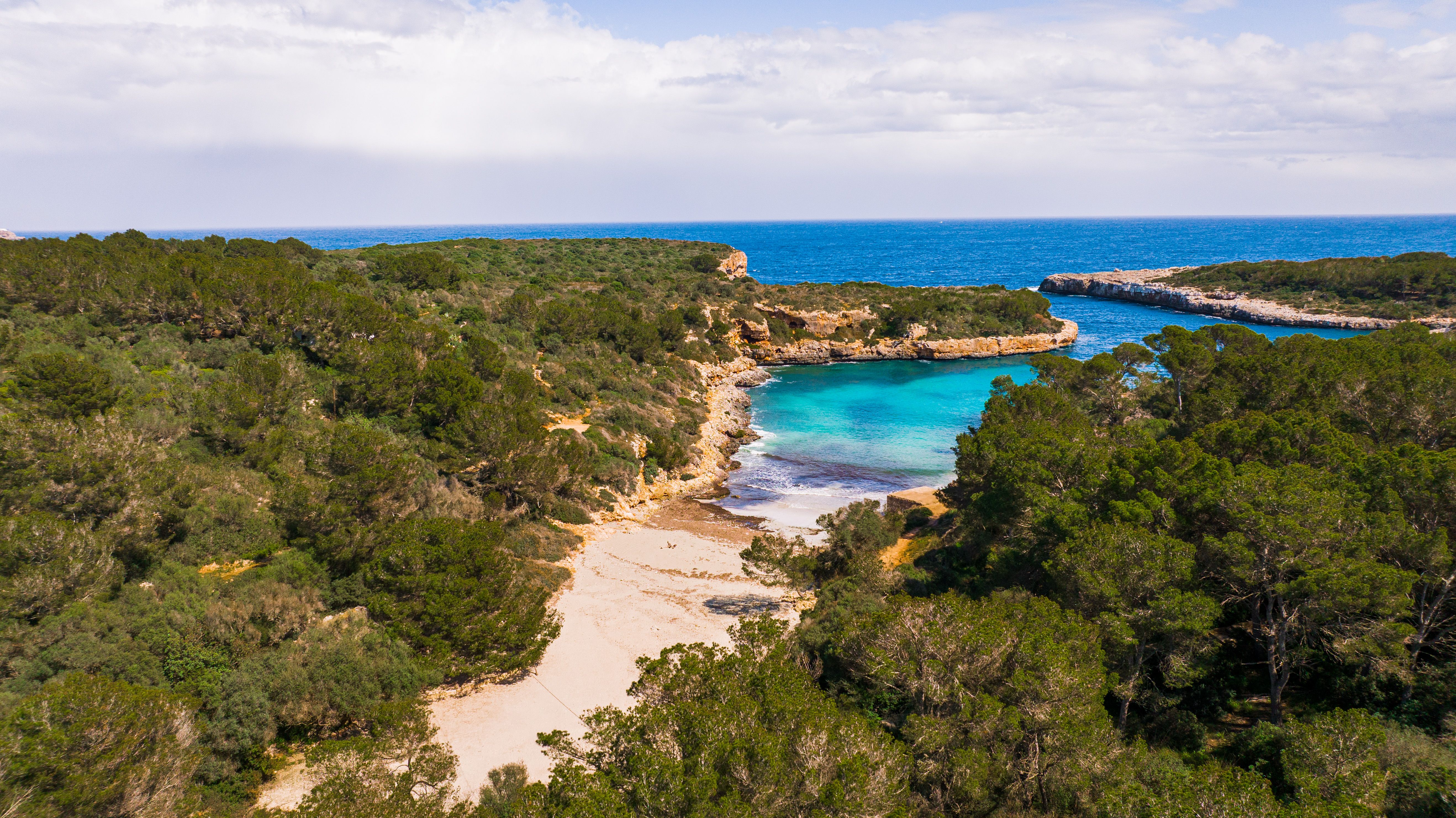 #8073 /100
A small, pine-fringed cove inside a protected natural park on Mallorca's southeast coast, with shallow, startlingly clear turquoise water that stays calm most of the year.
Because it sits within Mondrago Natural Park, development around the cove is deliberately limited, which keeps it looking much like the rest of the island did before mass tourism.
It's a short walk from the car park through scrub pine, which filters out casual visitors.
How does it rate
CrowdsRomanceCash RequiredDangerAccessibilityWhy you should go
Clear, calm turquoise water inside a protected natural park, with none of the high-rise development found elsewhere on the island.
Why you shouldn't go
Parking fills early in summer, and there are no facilities beyond a small beach bar.
Plan your visit
Best time to visitJune or September for warm water and thinner crowds than July-August.Best time of dayMorning, before the day-trip crowds from nearby resorts arrive.Getting thereFly to Palma; a 45-minute drive southeast to Mondrago Natural Park.Entry costFree; parking has a small daily fee in summer.Time needed2-3 hours.Insider tip — The second, smaller cove just south (Cala Mondrago's twin inlet) is usually quieter than the main beach. -
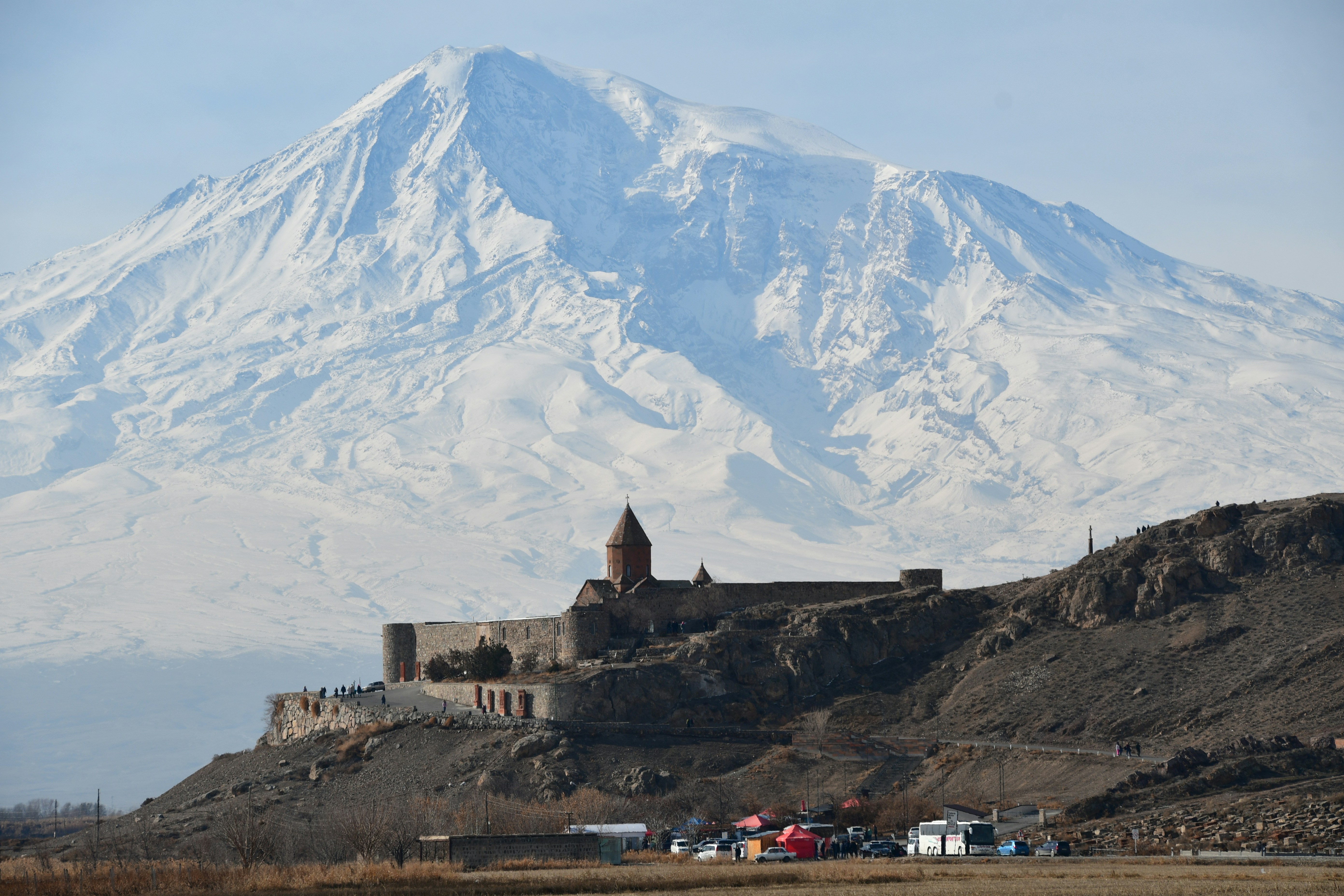 #8172 /100
An Armenian monastery on a hilltop with Mount Ararat rising dramatically behind it just across the Turkish border.
Founded on the pit where Saint Gregory the Illuminator was imprisoned for years, it's one of the most recognisable religious sites in the Caucasus.
How does it rate
CrowdsRomanceCash RequiredDangerAccessibilityWhy you should go
An ancient monastery with Mount Ararat as a dramatic backdrop, plus a saint's underground prison pit to descend into.
Why you shouldn't go
Mount Ararat is frequently obscured by haze or cloud, especially in summer afternoons; few amenities on site.
Plan your visit
Best time to visitSeptember–November or April–May for the clearest Ararat views and mild weather.Best time of dayEarly morning, when Ararat is most likely to be cloud-free.Getting thereRoughly a 45-minute drive south of Yerevan; day tours are widely available.Entry costFree.Time needed1–2 hours.Insider tip — The descent into Saint Gregory's pit is via a very narrow, steep ladder — not for the claustrophobic. Combine with a stop at the nearby Armash fish ponds for birdwatching. -
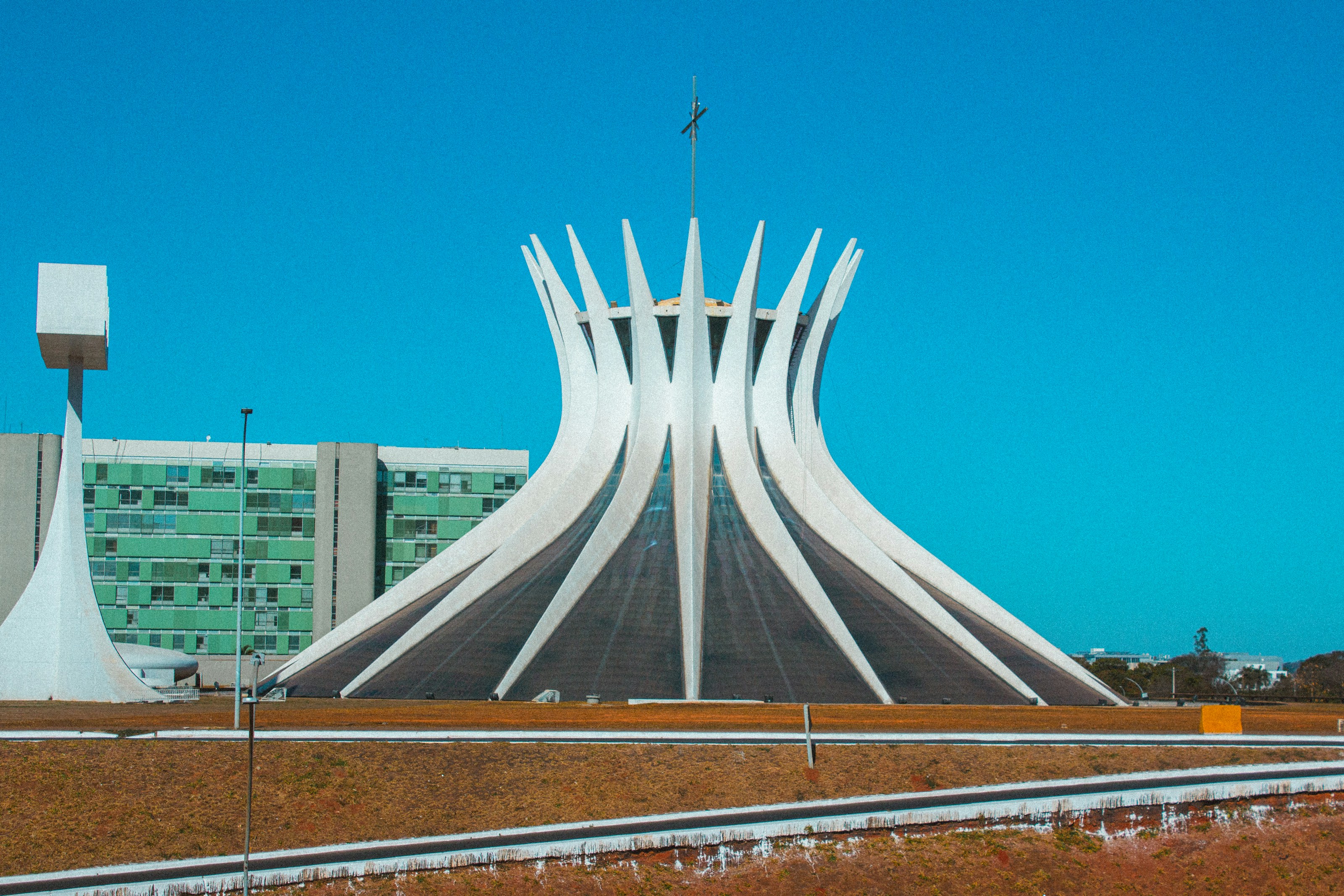 #8272 /100
Oscar Niemeyer's hyperboloid of sixteen concrete columns, opened in 1970, that reads from outside as a crown and from inside as a sky of blue and green glass.
Visitors descend a dark ramp and emerge under the light, a sequence Niemeyer designed deliberately.
Three bronze angels hang suspended from the roof above the nave.
How does it rate
CrowdsRomanceCash RequiredDangerAccessibilityWhy you should go
One of the few modernist churches whose interior genuinely lifts you as you walk in.
Why you shouldn't go
Brasilia's monumental axis is built for cars, so moving between sights is a slog on foot.
Plan your visit
Best time to visitMay-September, during Brasilias dry seasonBest time of dayLate afternoon, when the low sun saturates the stained glassGetting thereOn the Eixo Monumental in central Brasilia; taxi or rideshare is the practical optionEntry costFreeTime needed1 hourInsider tip — Go inside before photographing the exterior - the dark entry ramp is what makes the burst of coloured light work. -
 #8372 /100
Basel's carnival opens at exactly 4am with the Morgestraich: every streetlight in the old town switches off, and thousands of costumed marchers set out through darkness lit only by hand-painted lanterns worn on their heads.
Three days of fife-and-drum cliques and satirical floats follow, built around a different secret theme each year.
UNESCO listed it as intangible heritage in 2017; it remains a local event run by the same societies.
How does it rate
CrowdsRomanceCash RequiredDangerAccessibilityWhy you should go
A carnival that opens in total darkness at 4am, when Basel's streetlights switch off for thousands of hand-painted lanterns to lead the parade.
Why you shouldn't go
It runs for exactly 72 hours, Monday 4am to Thursday 4am, so mistiming a visit by even a day means missing it entirely.
Plan your visit
Best time to visitThe Monday-Wednesday after Ash Wednesday, in February or March; exact dates shift yearly.Best time of day4am on the opening Monday for the Morgestraich lantern procession, the event's signature moment.Getting thereFly into EuroAirport Basel, or take a direct train from Zurich, Geneva, or Paris; the old town is walkable from Basel SBB station.Entry costFree to watch on the streets; grandstand seats for the daytime Cortege parade can be booked ahead.Time neededA full day covers the highlights; the complete experience takes the full 72 hours.Insider tip — Claim a spot on Marktplatz well before 4am for the Morgestraich - the lights cut out on the exact minute with no countdown, and the best viewing spots fill early. -
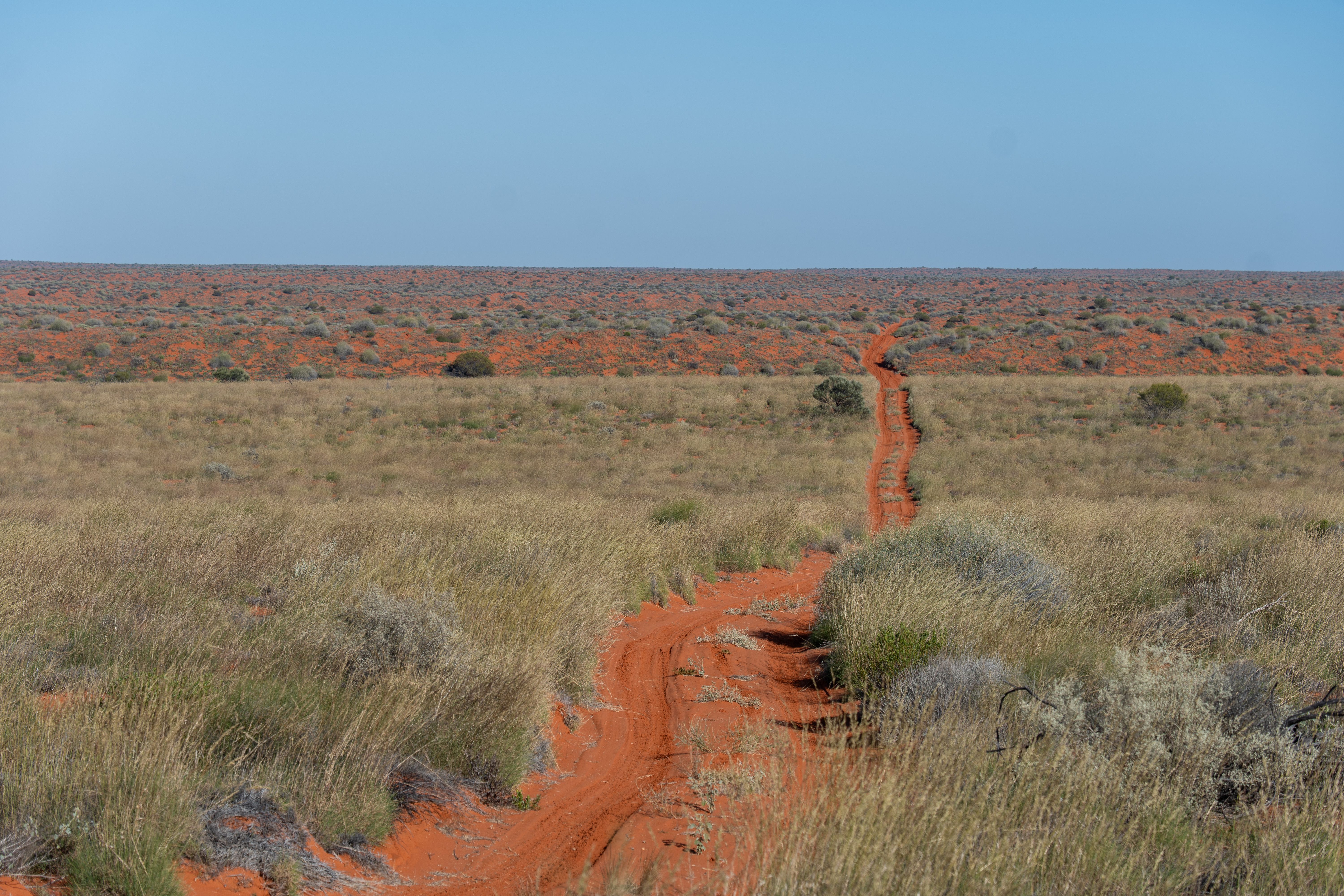 #8471 /100
A vast field of parallel red sand dunes stretching across central Australia's outback, crossed by one of the country's classic 4x4 adventure routes via the notoriously steep Big Red dune outside Birdsville.
The dunes run in improbably straight lines for hundreds of kilometres, turning deep crimson at sunset against a sky with almost zero light pollution.
Crossing it is a genuine expedition, not a casual day out - self-sufficiency and proper 4x4 preparation are essential.
How does it rate
CrowdsRomanceCash RequiredDangerAccessibilityWhy you should go
Hundreds of parallel red dunes crossing the outback, capped by the legendary Big Red climb near Birdsville.
Why you shouldn't go
Crossing requires serious 4x4 experience, full self-sufficiency, and permits - this is not a casual detour.
Plan your visit
Best time to visitApril-September (the cooler dry season); the desert is dangerously hot and largely impassable in summer.Best time of dayLate afternoon at Big Red, when convoys gather to watch the sunset over the dune field.Getting thereFly to Birdsville (via Brisbane or Adelaide) or self-drive a 4x4 from Alice Springs or South Australia with full desert preparation.Entry costDesert crossing permits cost a small fee; most visitors join or book a guided 4x4 tour.Time needed3+ days for a full crossing.Insider tip — Time your visit around the Birdsville Races or Big Red Bash festival if you want company - otherwise this is one of the emptiest places in Australia. -
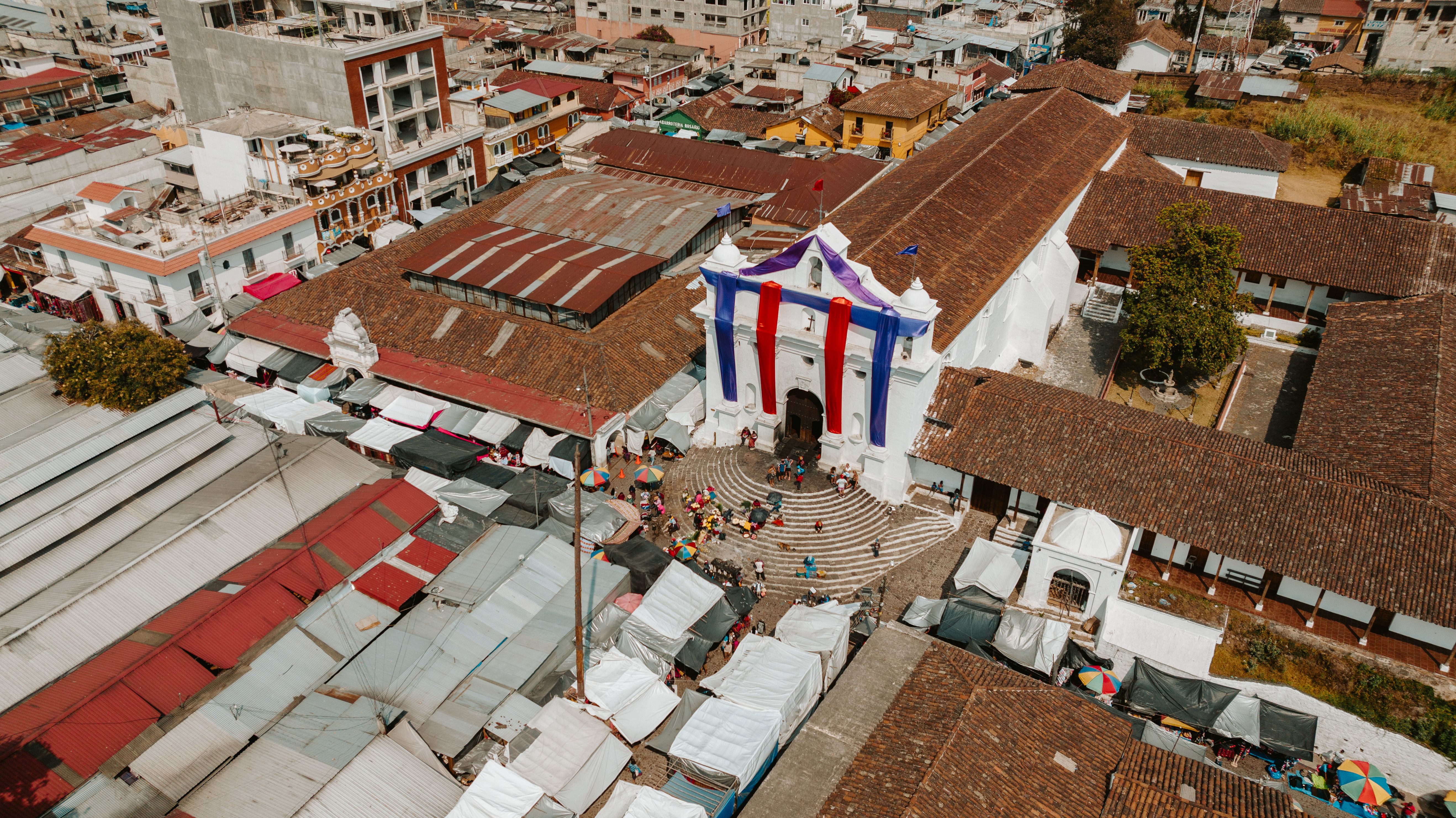 #8571 /100
Twice a week, the highland town of Chichicastenango fills with Maya K'iche' vendors from surrounding villages selling hand-woven textiles, wooden masks and pottery in one of Central America's most vividly colourful markets.
The steps of Santo Tomas church, where Maya rituals still take place alongside Catholic worship, form the market's unofficial centrepiece.
How does it rate
CrowdsRomanceCash RequiredDangerAccessibilityWhy you should go
A highland Maya textile market held twice weekly on the steps of a colonial church still used for indigenous ritual.
Why you shouldn't go
The town's mountain roads and altitude make it a genuine day trip from Guatemala City or Antigua, not a quick stop.
Plan your visit
Best time to visitThursday or Sunday, the market's only two trading days.Best time of dayMid-morning, once vendors are fully set up but before tour buses arrive.Getting thereDrive or take a shuttle roughly 2.5-3 hours from Guatemala City or Antigua.Entry costFree to browse; textiles and crafts are negotiable, typically GTQ50-300.Time needed2-4 hours.Insider tip — Watch (respectfully, without photographing up close) the Maya rituals on Santo Tomas church's steps rather than just browsing the stalls below them. -
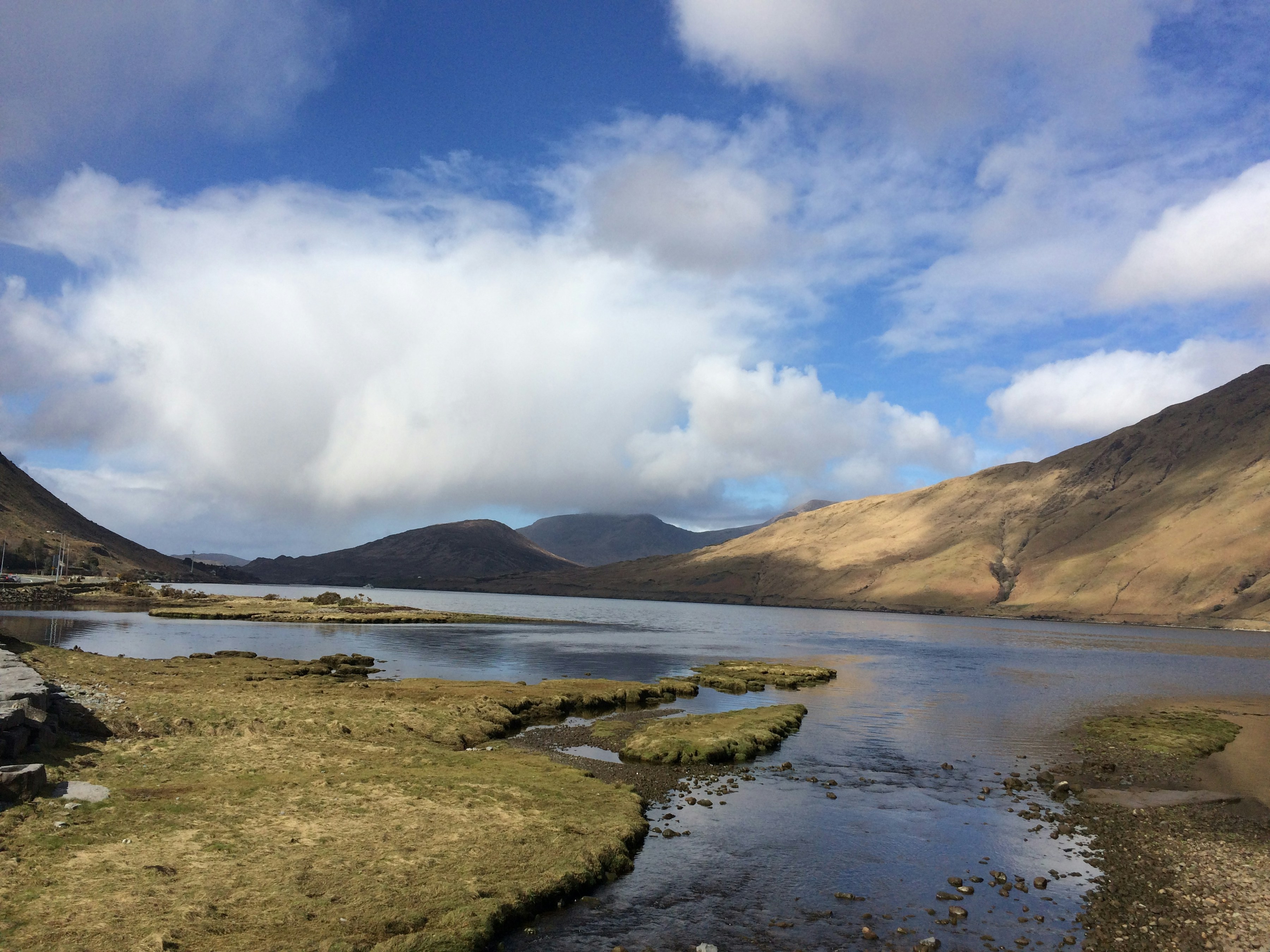 #8671 /100
This wild stretch of County Galway packs bog, mountain, lake and rugged Atlantic coastline into one thinly populated region, its landscape barely touched since the days it inspired painters and poets.
Connemara National Park's quartzite peaks, the Sky Road's cliff-edge drive out of Clifden, and Kylemore Abbey beside its own lake are the anchor points, but much of the appeal is simply driving or hiking through empty, dramatic terrain.
How does it rate
CrowdsRomanceCash RequiredDangerAccessibilityWhy you should go
Ireland's wildest, least-crowded landscape — bog, mountain and coastline with barely another car in sight.
Why you shouldn't go
Public transport is sparse; a car is close to essential to see more than one village.
Plan your visit
Best time to visitMay–June or September for good weather without peak-season crowds.Best time of dayLate afternoon, when low light catches the mountains and lakes.Getting thereDrive from Galway city, about 1–1.5 hours to Clifden, the region's main town.Entry costFree to drive and hike; Connemara National Park and Kylemore Abbey each charge small entry fees.Time needed1–2 days.Insider tip — Drive the Sky Road loop out of Clifden at sunset — it's free, takes under an hour, and has better views than several paid attractions. -
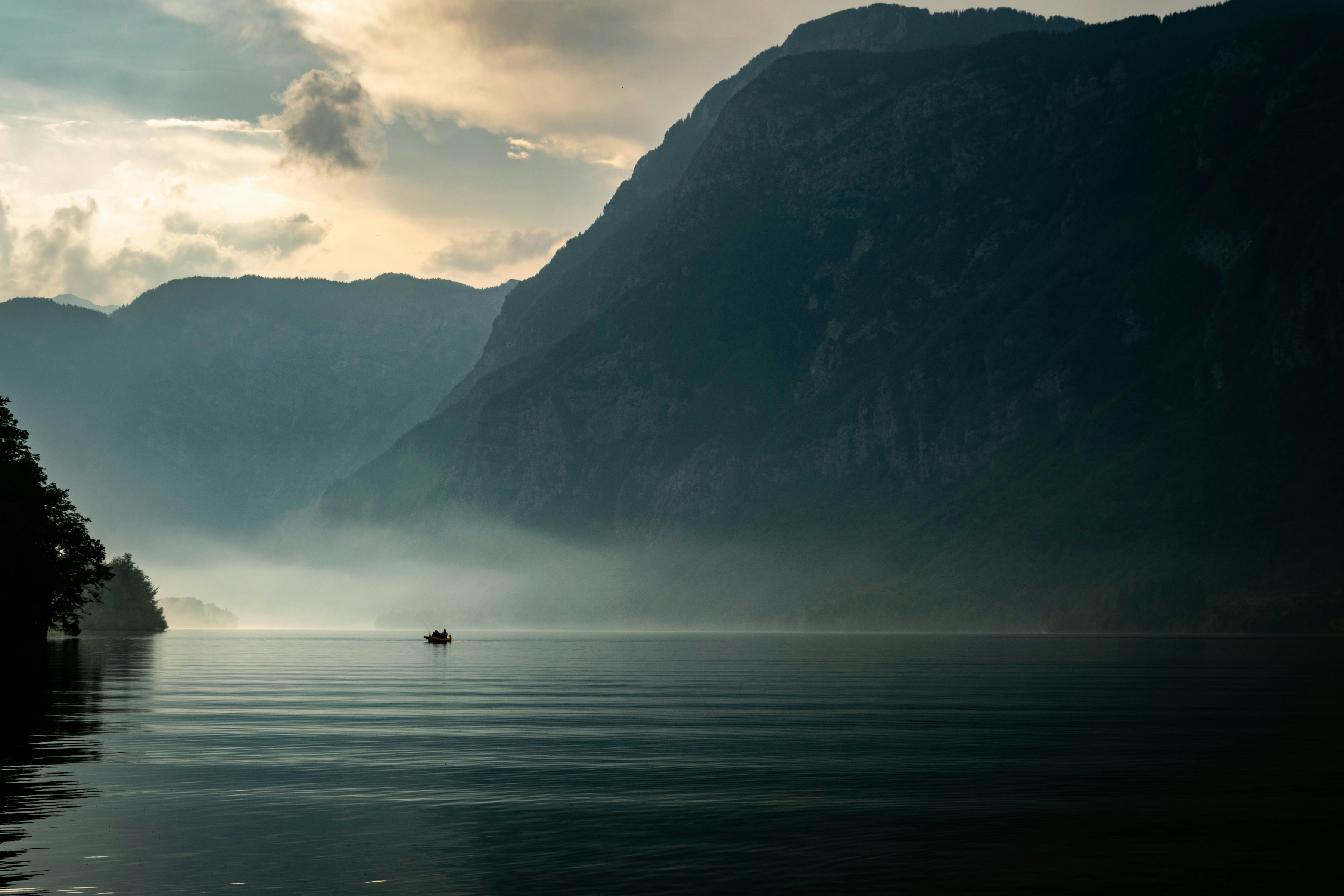 #8771 /100
Slovenia's largest permanent lake sits deeper inside Triglav National Park than its more famous neighbor Lake Bled, ringed by steep alpine peaks and largely free of the castle-and-island crowds that draw most day-trippers to Bled instead.
A cable car climbs to the Vogel ski area for panoramic views over the lake and surrounding mountains, while the Savica Waterfall trailhead sits at the lake's western end.
How does it rate
CrowdsRomanceCash RequiredDangerAccessibilityWhy you should go
Bled's calmer, wilder alpine sibling, with fewer crowds and a genuine mountain-wilderness feel.
Why you shouldn't go
It lacks Bled's island and castle centerpieces, so the appeal is scenery over singular landmarks.
Plan your visit
Best time to visitJune–September for swimming and hiking in warm weather.Best time of dayEarly morning for still, mirror-calm water and quiet trails.Getting thereAbout 30 minutes' drive beyond Lake Bled, or a connecting bus from Bled.Entry costFree to visit the lake; Vogel cable car around €18-20 round trip.Time neededHalf a day to a full day.Insider tip — Take the Vogel cable car up for the classic postcard view over the lake — most visitors never leave the shoreline. -
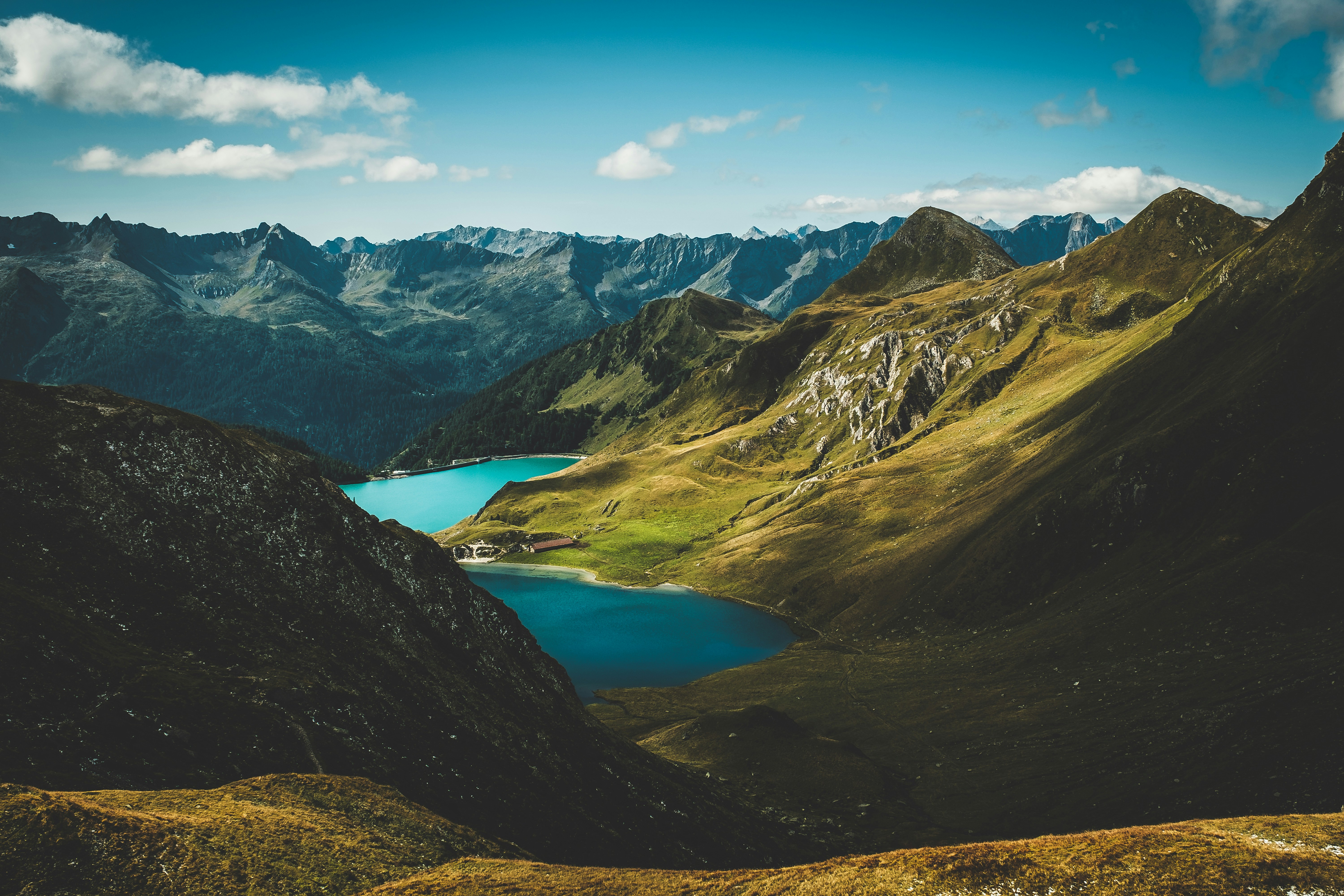 #8871 /100
A quiet alpine reservoir in Ticino reached by one of Europe's steepest funicular railways, climbing to a plateau ringed by peaks and pine forest.
Far quieter than the Bernese Oberland lakes, with hiking trails that see only a fraction of the region's tourists.
How does it rate
CrowdsRomanceCash RequiredDangerAccessibilityWhy you should go
A hidden alpine reservoir reached by one of Europe's steepest funicular railways — virtually unknown to tourists.
Why you shouldn't go
Limited services at the top; the funicular has restricted operating hours and seasonal closures; cold water year-round.
Plan your visit
Best time to visitJuly–September, when the funicular runs on its full schedule and wildflowers bloom.Best time of dayMorning for calm-water reflections; late afternoon for warm light on the surrounding peaks.Getting thereTrain to Piotta on the Gotthard line, then the Ritom funicular up to the lake plateau.Entry costFunicular round trip roughly CHF 20–25.Time needed3–4 hours including the funicular ride and a lakeside walk.Insider tip — Check the funicular's seasonal timetable before travelling — it doesn't run year-round. The Ritom funicular is itself a highlight: one of the steepest standard-gauge funiculars in Europe. -
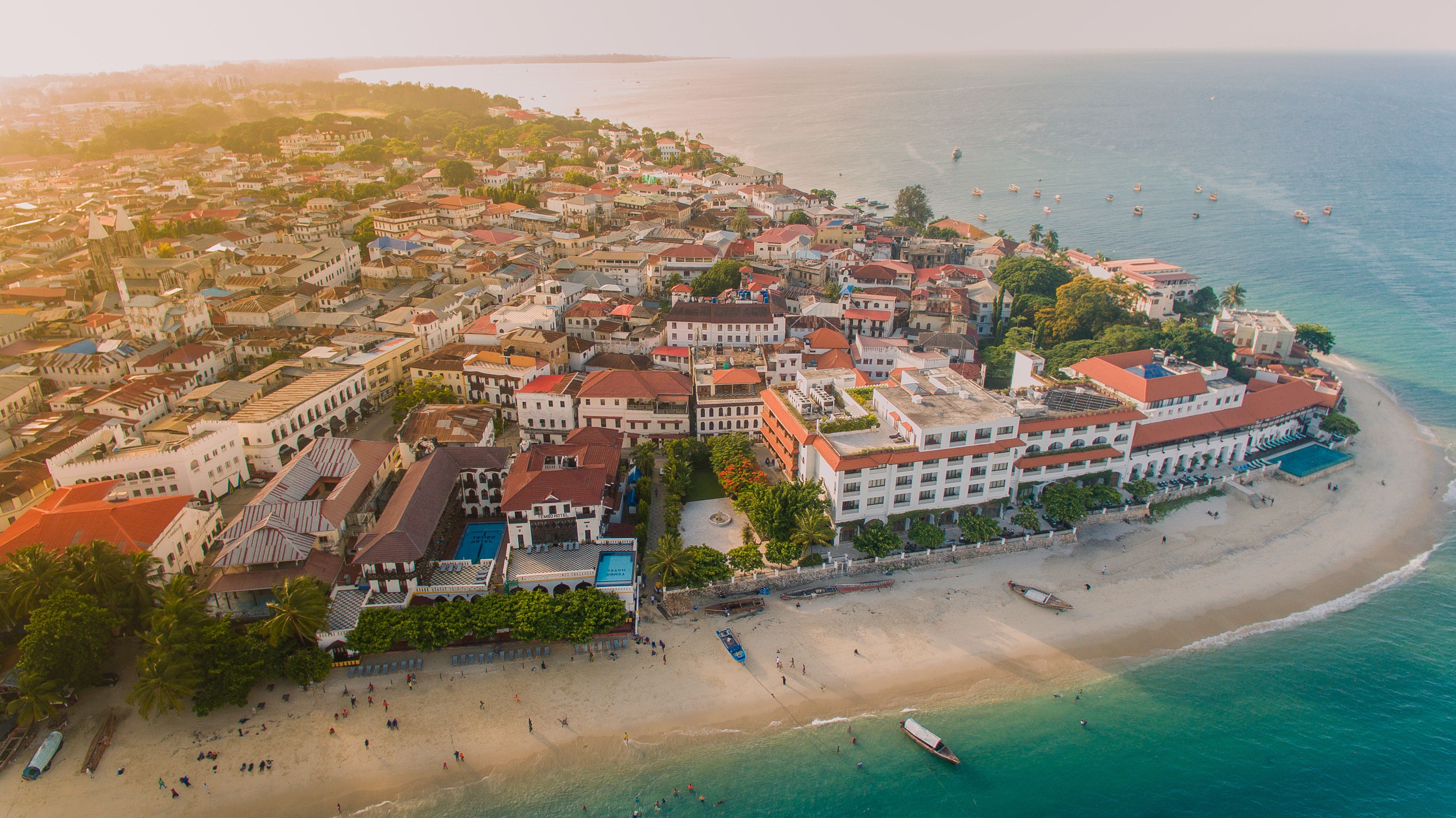 #8971 /100
The historic heart of Zanzibar City is a dense maze of coral-stone buildings, carved wooden doors and narrow alleys shaped by centuries of Swahili, Arab, Persian and Indian trade and, more darkly, its role as East Africa's largest slave-trading port.
The old fort, sultan's palace and spice markets reflect that layered history, while rooftop restaurants and the Forodhani Gardens night market give it a genuinely lively present-day pulse.
How does it rate
CrowdsRomanceCash RequiredDangerAccessibilityWhy you should go
A UNESCO old town with genuinely intricate carved-door architecture and a complex, layered trading history.
Why you shouldn't go
The old town's alleys are a labyrinth, and the slave-trade history sites can be a heavy, sobering visit.
Plan your visit
Best time to visitJune–October, Zanzibar's dry season.Best time of dayEvening at Forodhani Gardens, when the night food market opens along the waterfront.Getting thereFly to Zanzibar's Abeid Amani Karume Airport, or ferry from Dar es Salaam (about 2 hours).Entry costFree to walk; museum and fort entries typically $5-10.Time needed1–2 days.Insider tip — Take a guided walking tour focused on the carved doors — each style signals the original owner's trading origin, invisible without explanation. -
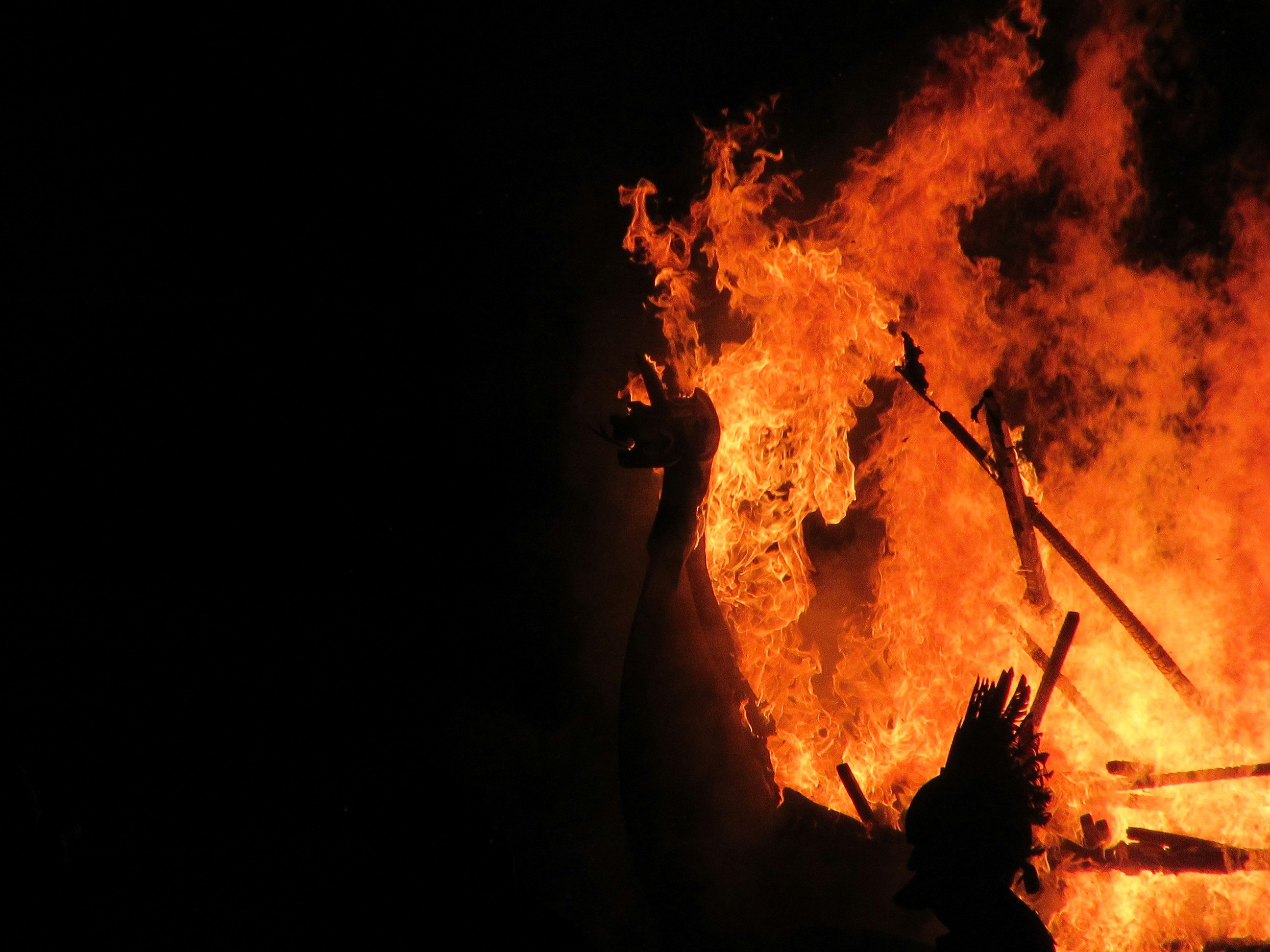 #9071 /100
On the last Tuesday of January, Shetland's capital Lerwick stages Europe's largest fire festival, when nearly a thousand costumed 'guizers' march a Viking longship through torch-lit streets before ceremonially burning it in a floodlit square.
The night continues with guizer squads touring local halls performing sketches and dances until dawn, a marathon of hospitality unique to Shetland's Norse heritage.
How does it rate
CrowdsRomanceCash RequiredDangerAccessibilityWhy you should go
Nearly a thousand costumed guizers march a Viking longship through torch-lit streets before burning it in Shetland's biggest festival.
Why you shouldn't go
It's held in the depths of a Shetland January, so expect cold, dark, and often wild North Atlantic weather.
Plan your visit
Best time to visitThe last Tuesday of January each year.Best time of dayEvening into night, when the torchlit procession and longship burning happen.Getting thereFly into Sumburgh Airport or take the overnight ferry from Aberdeen to Lerwick.Entry costFree to watch the procession and burning from the street.Time neededOne evening for the main procession and burning.Insider tip — Book Shetland accommodation many months ahead - the island's limited beds sell out fast for the one night of the year everyone wants to be there. -
 #9170 /100
Recognised by UNESCO as a Masterpiece of Oral and Intangible Heritage, Binche's carnival centres on the Gilles, several hundred local men who don wax masks, ostrich-feather hats and bell-covered costumes to dance through the small Belgian town on Shrove Tuesday, throwing blood oranges into the crowd for luck.
The tradition is fiercely protected, passed down through families.
How does it rate
CrowdsRomanceCash RequiredDangerAccessibilityWhy you should go
UNESCO-listed Gilles in wax masks and towering ostrich-feather hats, dancing through a small Belgian town while throwing oranges.
Why you shouldn't go
Binche is a small town with limited accommodation, so day-tripping from Brussels or Mons is usually the practical option.
Plan your visit
Best time to visitFebruary or March, on Shrove Tuesday itself (exact date shifts yearly with Easter).Best time of dayAfternoon, when the Gilles parade through the town centre in full costume throwing oranges.Getting thereTake a train from Brussels or Mons to Binche station, a short walk from the town centre.Entry costFree to watch in the streets.Time neededA full day.Insider tip — Stand well back from the Gilles or catch the oranges deliberately, since they're thrown with real force and considered good luck to receive. -
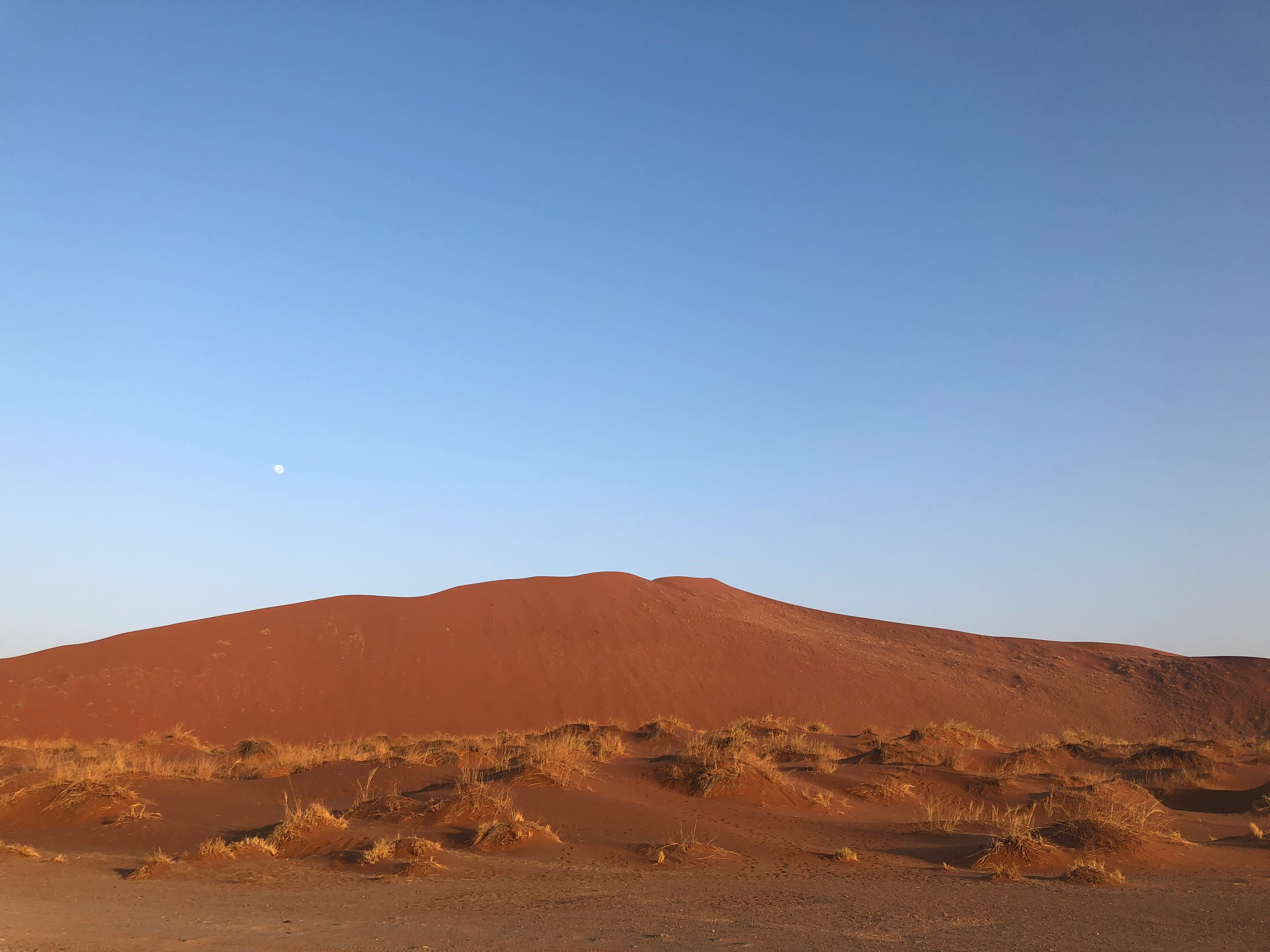 #9270 /100
A semi-arid expanse of red sand and scrubby grassland covering much of Botswana, home to the Central Kalahari Game Reserve's black-maned lions, meerkats, and San Bushmen communities with millennia-old tracking traditions.
It lacks the dune drama of the Sahara or Namib, but its vast, flat horizons and dark, unpolluted skies make for some of the best stargazing safaris in Africa.
Wildlife encounters here feel genuinely remote rather than staged.
How does it rate
CrowdsRomanceCash RequiredDangerAccessibilityWhy you should go
Red-sand plains with black-maned Kalahari lions and some of the darkest, clearest night skies for safari stargazing in Africa.
Why you shouldn't go
It's expensive and logistically demanding to reach - most lodges require a light aircraft transfer from Maun or Gaborone.
Plan your visit
Best time to visitJune-October (dry season), when wildlife concentrates around remaining waterholes.Best time of dayDawn game drives, before the heat sets in and animals retreat to shade.Getting thereFly to Maun, then a light aircraft or 4x4 transfer into the Central Kalahari Game Reserve.Entry costLodge and safari packages typically run USD300-700+ per person per night, all-inclusive.Time needed3+ days.Insider tip — Ask your guide about a San Bushmen walking tour - several community-run options teach traditional tracking and plant knowledge firsthand. -
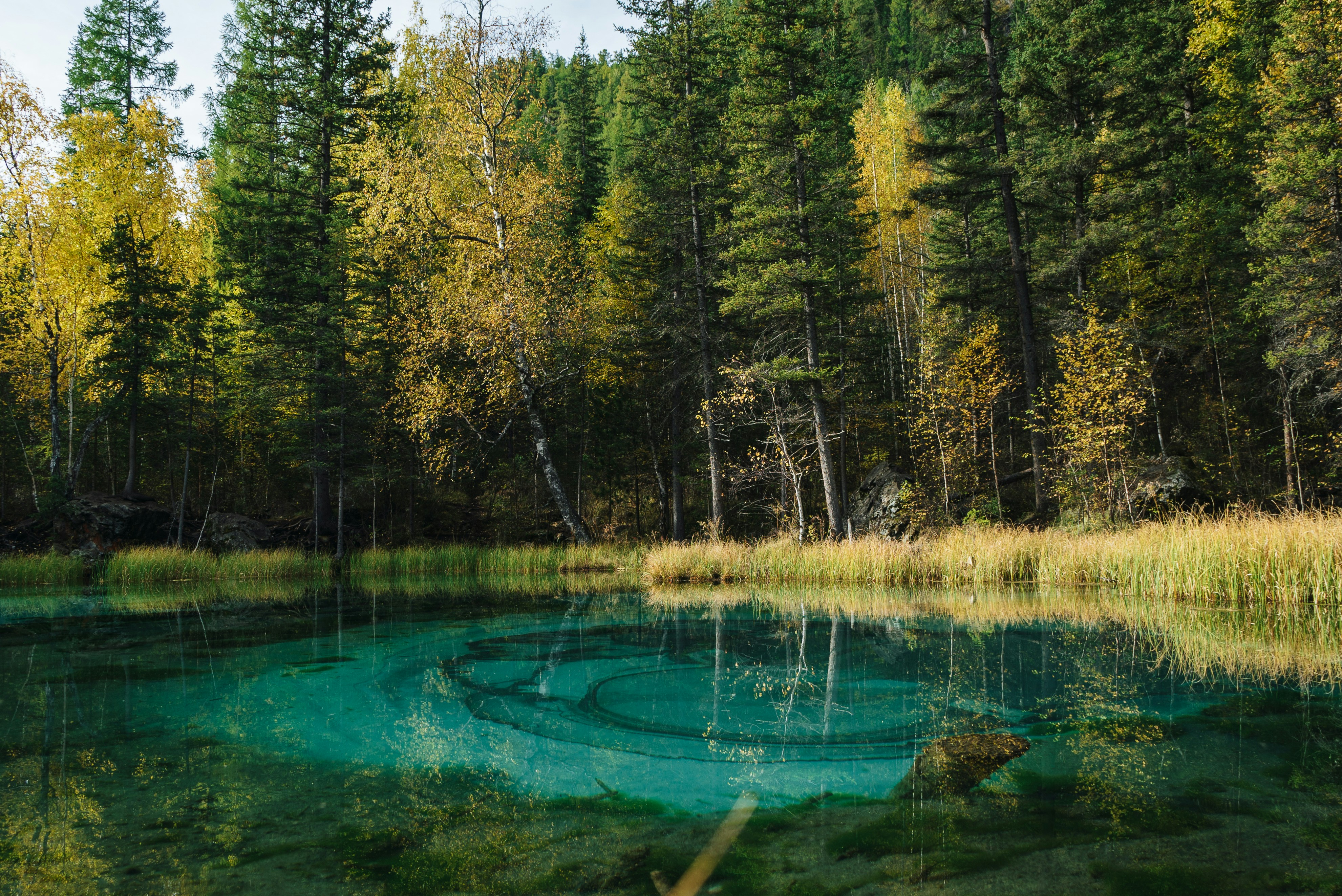 #9370 /100
A small thermally-warmed lake in the Altai Mountains, where underground springs stir blue clay into constantly shifting turquoise swirls against a backdrop of pine forest.
Never freezes even in the Siberian winter, staying an otherworldly warm turquoise year-round.
How does it rate
CrowdsRomanceCash RequiredDangerAccessibilityWhy you should go
A small forest lake where underground springs swirl blue clay into constantly shifting turquoise patterns.
Why you shouldn't go
Genuinely remote with a long overland journey; minimal signage or facilities; limited English on the ground.
Plan your visit
Best time to visitJune–September for accessible roads; the lake itself is visitable year-round since it doesn't freeze.Best time of dayMidday sun brings out the turquoise color most vividly.Getting thereFly to Gorno-Altaysk, then a multi-hour drive along the Chuysky Trakt into the Altai Republic.Entry costFree; guided tours from nearby villages roughly $30–50 USD.Time neededHalf day including travel from the nearest village.Insider tip — Hire a local guide — the lake is easy to miss without one, and road conditions vary by season. It sits right beside the road, so it's an easy stop if you're already driving the Chuysky Trakt. -
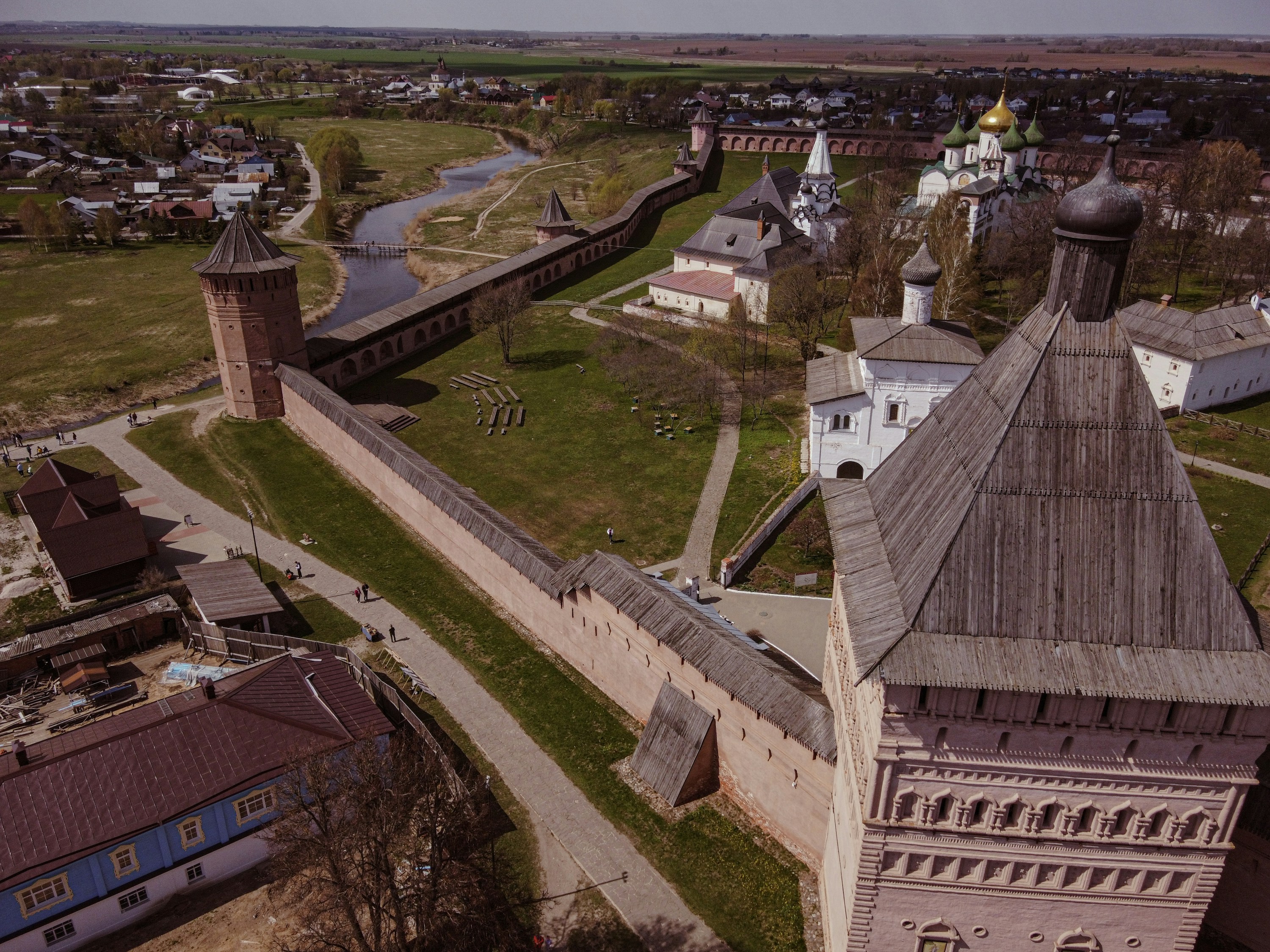 #9470 /100
Suzdal is a Golden Ring town that never industrialised, leaving a skyline of onion domes and log houses largely unchanged since the 18th century.
Its walled kremlin, the Nativity Cathedral's blue star-studded domes and a wooden Church of St Nicholas moved here from another village sit alongside a working monastery and open-air museum.
No building rises above two storeys, so the whole town reads as one continuous historic scene.
How does it rate
CrowdsRomanceCash RequiredDangerAccessibilityWhy you should go
An entire pre-industrial Russian town, kremlin and monasteries intact, with no modern skyline to break it.
Why you shouldn't go
No train station of its own — every route in involves a bus or taxi transfer from Vladimir or a long drive from Moscow.
Plan your visit
Best time to visitMay–September for warm weather and local festivals; snow adds its own appeal in winterBest time of dayEarly morning along the river, before day-trip coach groups from Moscow arriveGetting thereTrain from Moscow's Kursky station to Vladimir (about 2.5hrs), then a local bus or taxi (40km) to Suzdal; no direct rail into town.Entry costFree to walk the town; kremlin and monastery museums charge small separate feesTime neededFull day trip, or overnight to see it without the coach groupsInsider tip — Climb the Kremlin's bell tower or the Monastery of Saint Euthymius walls for a view over the whole town at once — most day-trippers never look up from ground level. -
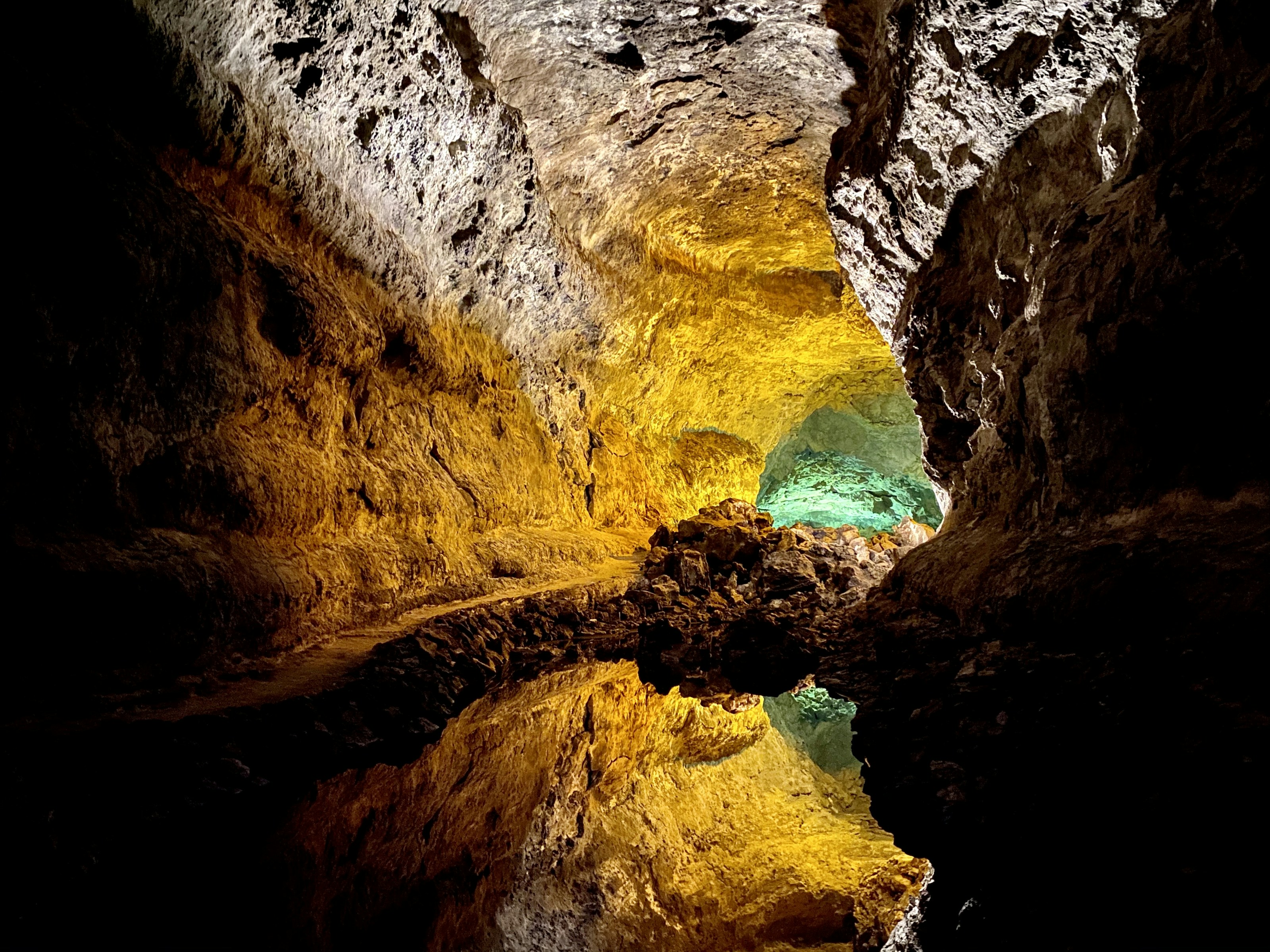 #9570 /100
A lava tube on Lanzarote formed when the Corona volcano erupted around 3,000 years ago, running six kilometres down towards the sea.
A kilometre of it is open, lit in ochre and green by the artist Jesus Soto, and the tour ends with an optical illusion so convincing that most visitors refuse to believe it until it is explained.
How does it rate
CrowdsRomanceCash RequiredDangerAccessibilityWhy you should go
The lighting turns a volcanic tunnel into something closer to an art installation than a cave.
Why you shouldn't go
Guided only, on a fixed Spanish and English rotation, so you move at the pace of the group.
Plan your visit
Best time to visitYear-round; Lanzarote is mild in every seasonBest time of dayLate morning, once the first tour groups have clearedGetting thereDrive from Arrecife on Lanzarote, about 25 minutes towards HariaEntry costAround EUR 12Time needed1-2 hoursBookingBook ahead →Insider tip — Do not drift off before the last chamber - the illusion at the end of the tour is the entire point and it is genuinely startling. -
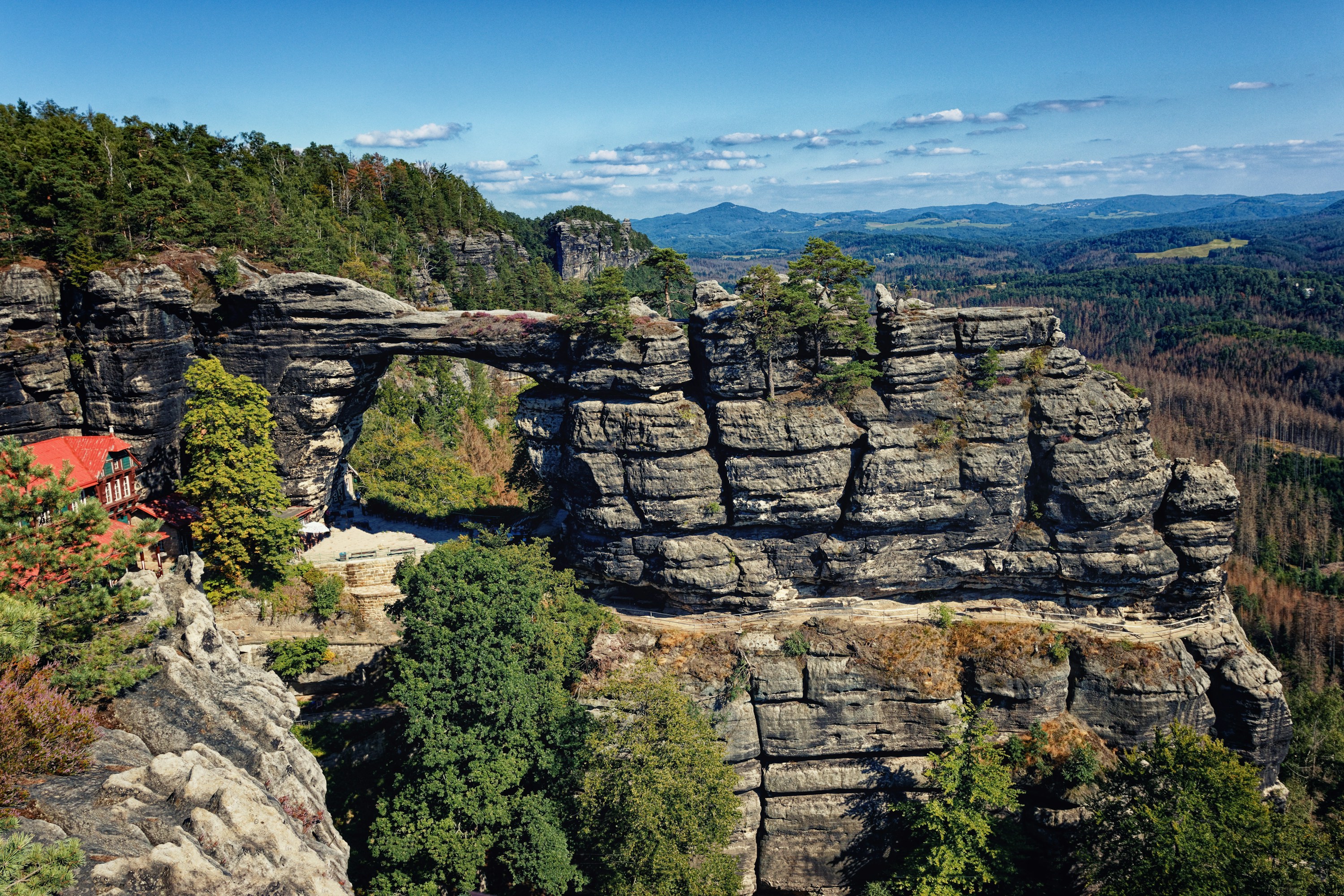 #9670 /100
Pravčická brána is the largest natural sandstone arch in Europe, a 16-metre stone bridge rising from the forested plateau of Bohemian Switzerland National Park near the German border.
Closed to walkers since 1982 to halt erosion, it's instead viewed from three platforms and the 19th-century Sokolí hnízdo chalet built into the rock beneath it.
Reaching it means a steady uphill hike from Hřensko.
How does it rate
CrowdsRomanceCash RequiredDangerAccessibilityWhy you should go
The largest natural sandstone arch in Europe, framed by a historic chalet restaurant built right beneath it.
Why you shouldn't go
The arch itself is off-limits to walk on, and the approach hike is steep enough to rule out a casual visit.
Plan your visit
Best time to visitApril-October for reliable trail conditions; the path can be icy or closed after snow.Best time of dayEarly morning to beat weekend crowds on the narrow viewing platforms.Getting thereTrain or bus to Děčín, then a local bus to Hřensko, followed by a 1-1.5 hour uphill hike (or a longer loop from Mezní Louka).Entry cost75 CZK adult, 25 CZK concession, for the viewpoint areaTime needed3–4 hours round trip including the hikeInsider tip — The classic view is from the lower platform looking up through the arch; climb to the upper terrace by the chalet for the wider valley panorama instead. -
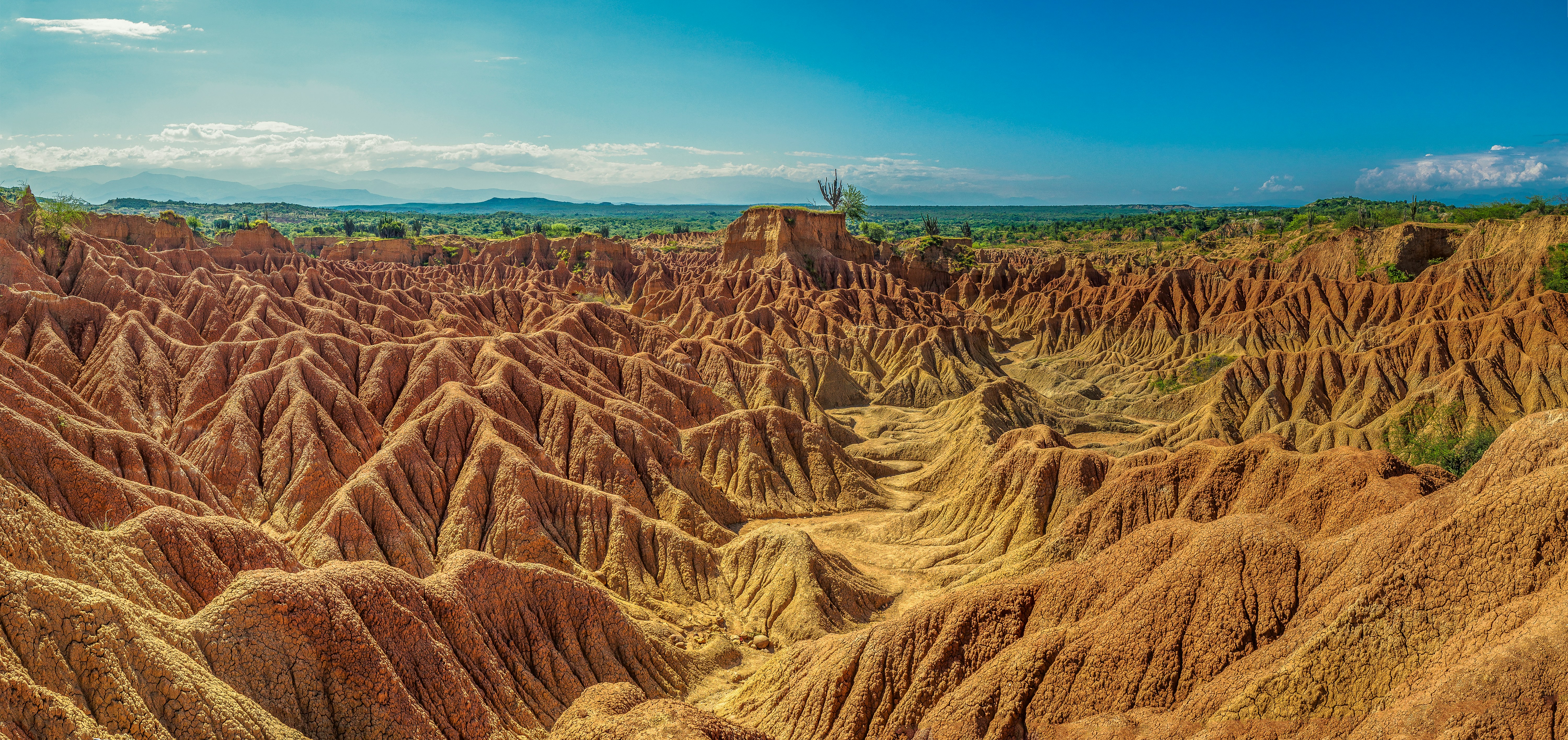 #9769 /100
A dry tropical forest turned badlands, its grey and red-clay canyons carved into labyrinths of eroded pinnacles that look more like Utah than South America.
Split into a red zone (Cuzco) and a grey zone (Los Hoyos), it's one of the best stargazing spots in Colombia thanks to an astronomical observatory built specifically to take advantage of its clear, unpolluted skies.
Walking trails wind between the formations without requiring any technical hiking experience.
How does it rate
CrowdsRomanceCash RequiredDangerAccessibilityWhy you should go
Grey and red badland canyons that look transplanted from the American Southwest, with some of Colombia's clearest night skies.
Why you shouldn't go
There's very little shade and no real infrastructure between the two colour zones, and midday heat is intense.
Plan your visit
Best time to visitDecember-March or July-August (Colombia's dry seasons).Best time of dayLate afternoon light on the red-clay Cuzco zone, or after dark at the observatory.Getting thereFly or bus to Neiva, then a 30-40 minute drive or shared taxi to the desert entrance villages.Entry costFree to enter; observatory stargazing sessions cost a small fee.Time neededA full day, or overnight for stargazing.Insider tip — Book the night-time observatory session at Hoyos - it's inexpensive and pairs the desert's badland scenery with genuinely excellent telescope views. -
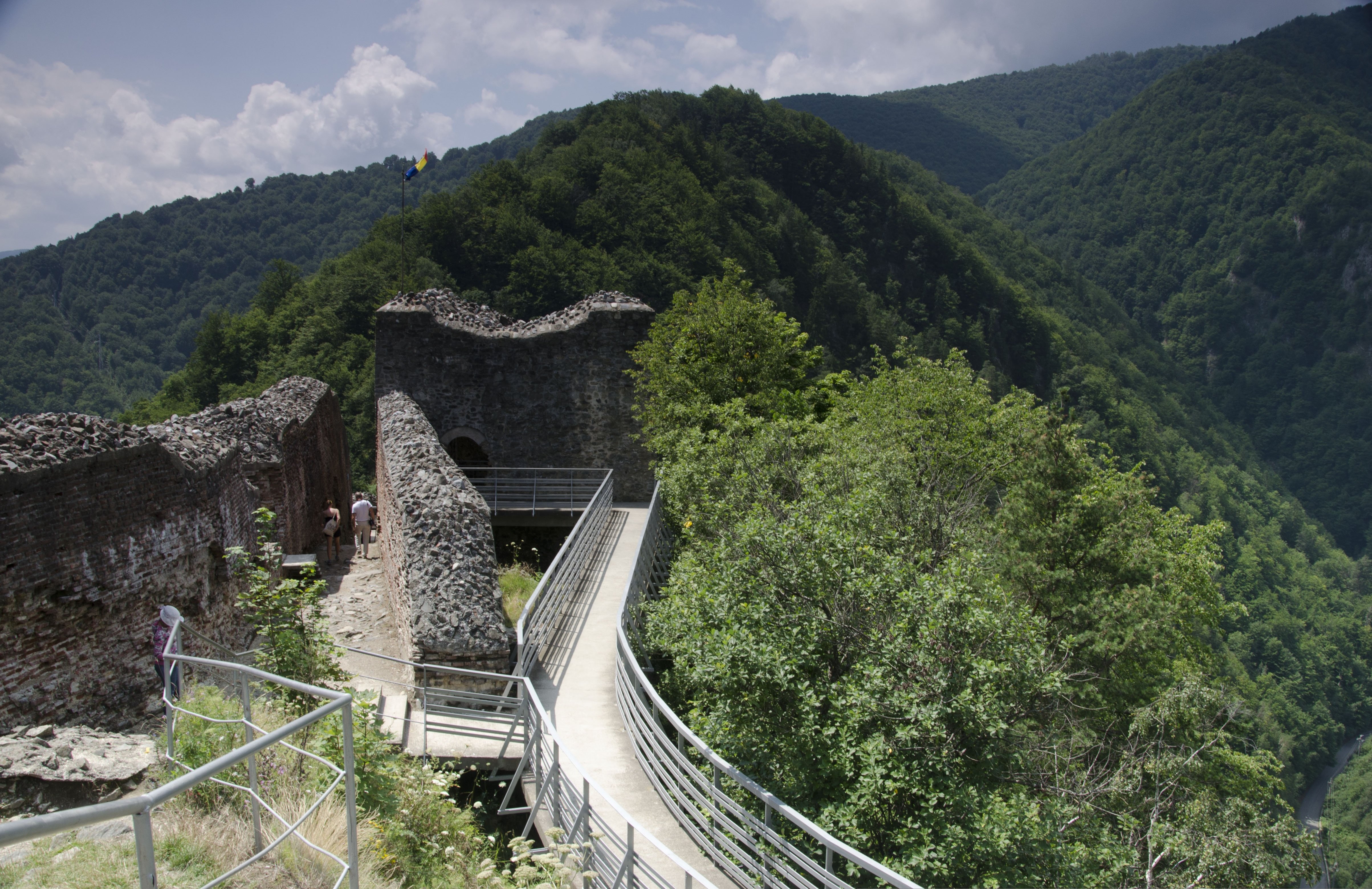 #9869 /100
The real mountaintop fortress of Vlad the Impaler, reached by climbing over 1,400 steps up a steep ridge above the Argeș River valley.
Less restored and far less visited than Bran Castle, its crumbling stone walls and sweeping Făgăraș Mountains views feel genuinely earned.
How does it rate
CrowdsRomanceCash RequiredDangerAccessibilityWhy you should go
Vlad the Impaler's real mountaintop fortress, reached via a brutal 1,400-step climb with sweeping Carpathian views.
Why you shouldn't go
The climb is genuinely strenuous with uneven, exposed steps; very limited facilities; can close in bad weather.
Plan your visit
Best time to visitMay–September for dry steps and clear mountain views.Best time of dayMorning, to climb before the day heats up and while the light is soft on the valley.Getting thereDrive the Transfăgărășan road from Curtea de Argeș (roughly 45 minutes); car park at the base of the steps.Entry costRON ~10 (~$2) entrance fee.Time needed2–3 hours including the climb.Insider tip — Wear proper hiking shoes — the steps are steep, uneven, and often wet. Combine with a drive along the Transfăgărășan, one of Europe's great mountain roads, on the same trip. -
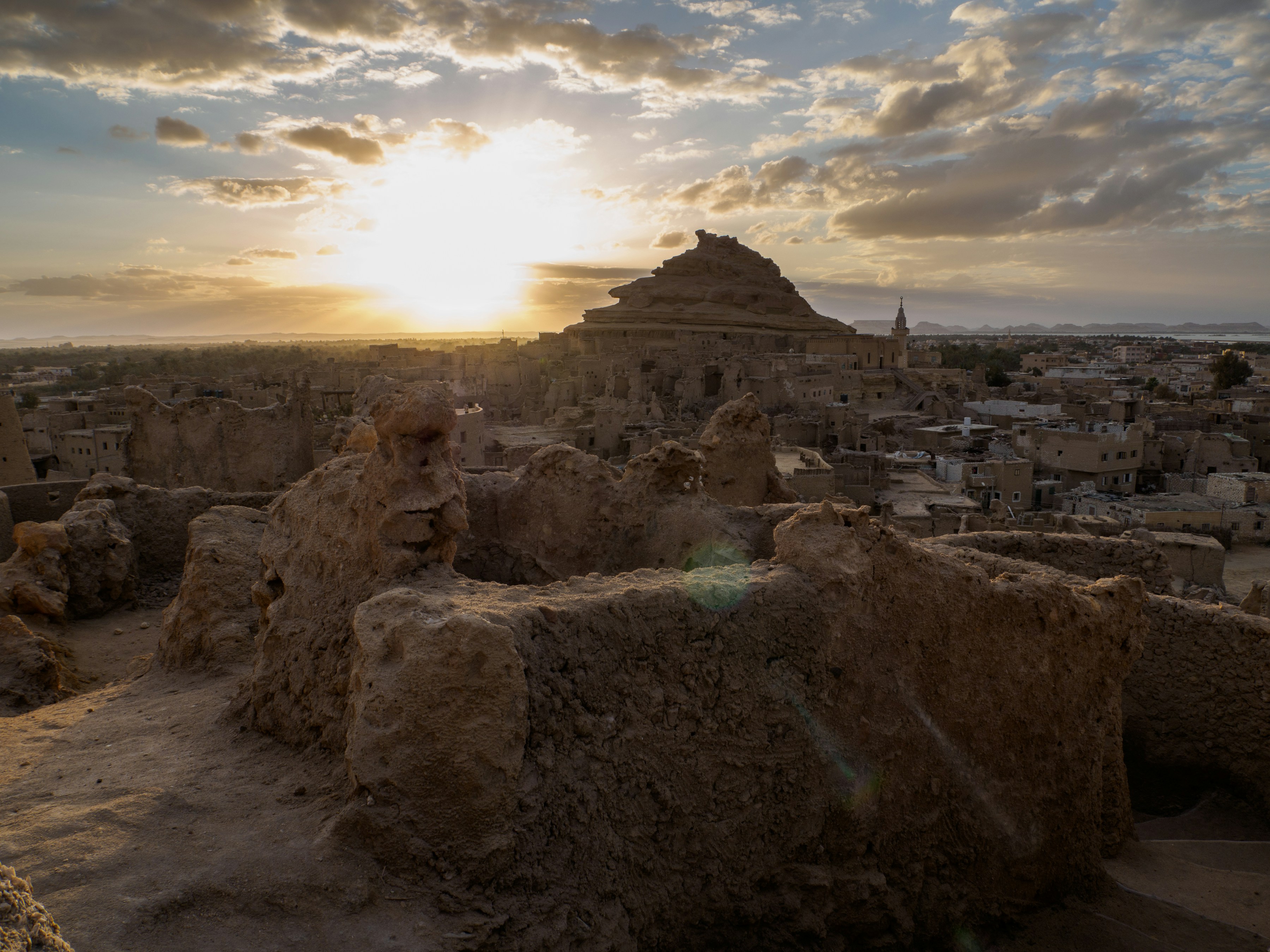 #9968 /100
Isolated deep in Egypt's Western Desert near the Libyan border, Siwa is a genuine oasis town of mudbrick ruins, freshwater springs and palm groves surrounded by dunes, significant enough that Alexander the Great made the arduous journey to consult its oracle temple.
The ruined hilltop fortress of Shali, built entirely from local salt-clay, dominates the town, while nearby salt lakes and hot and cold springs offer a stark contrast.
How does it rate
CrowdsRomanceCash RequiredDangerAccessibilityWhy you should go
A remote desert oasis with its own distinct culture, salt-clay ruins and a temple Alexander the Great once visited.
Why you shouldn't go
It's a long, remote journey — roughly 8-10 hours' drive from Cairo, with limited onward transport options.
Plan your visit
Best time to visitOctober–April, avoiding extreme summer desert heat.Best time of daySunset from the top of the Shali fortress ruins, overlooking the palm groves and desert beyond.Getting thereAbout 8-10 hours' drive from Cairo, or a shorter route via Marsa Matruh on the coast.Entry costFree to explore the town; Shali fortress and springs have small entry fees.Time needed2–3 days.Insider tip — Float in one of the salt lakes outside town at sunset — like the Dead Sea, the water's density makes swimming effortless, and it's far quieter than the main springs. -
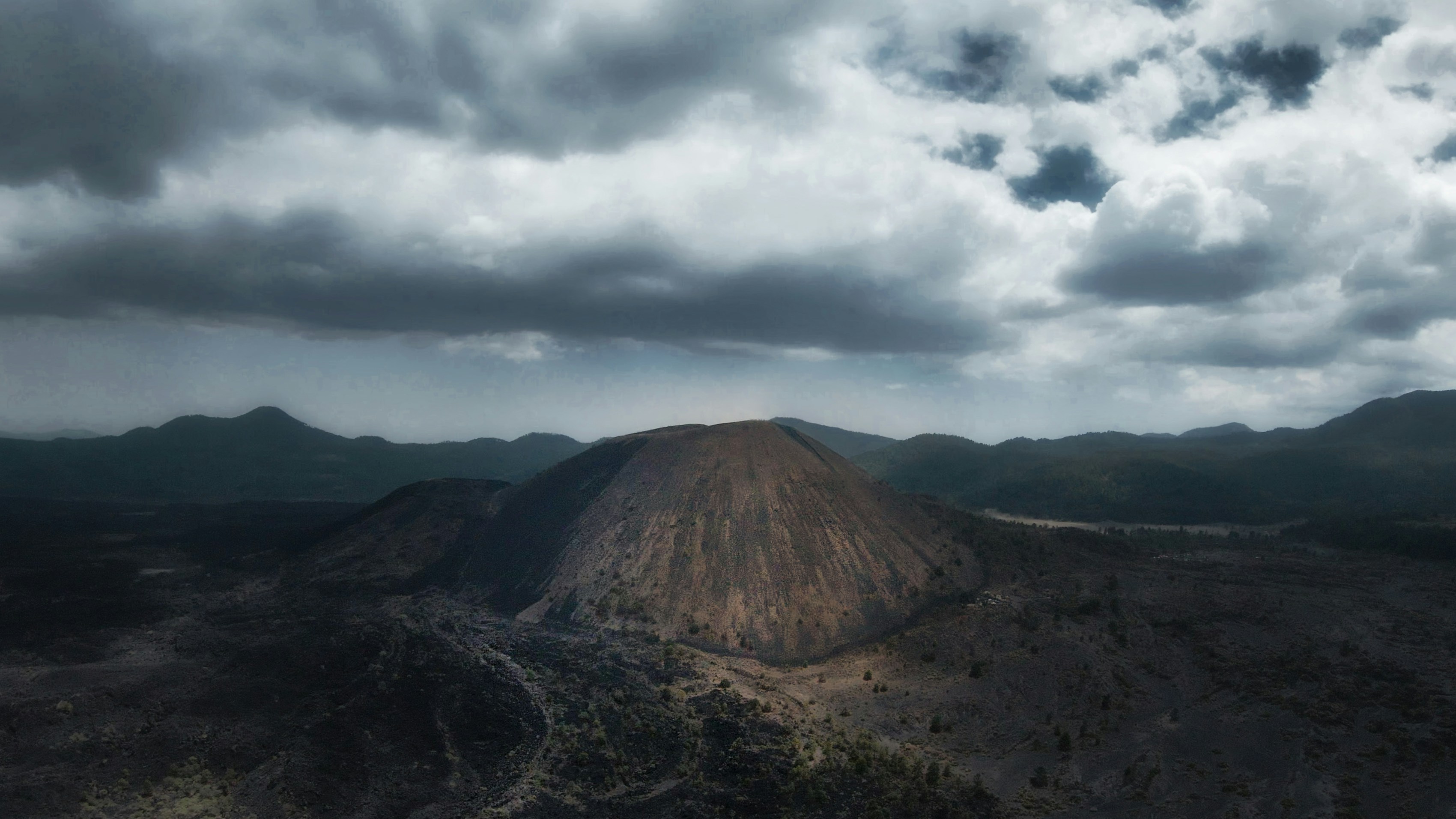 #10068 /100
A cinder cone volcano that famously erupted from a level cornfield in 1943, growing to over 400 metres within a decade and burying two villages under lava - one of the few volcanoes in the world whose entire life cycle has been documented from birth.
The half-buried bell tower of San Juan Parangaricutiro's church still protrudes from the hardened lava field, an eerie, singular sight.
Horseback rides across the black lava field to the church ruins, followed by a hike up the cinder cone itself, make for a genuinely unusual full day out.
How does it rate
CrowdsRomanceCash RequiredDangerAccessibilityWhy you should go
The only volcano whose entire birth and growth was scientifically documented - and a church tower still rising from its lava field.
Why you shouldn't go
It's a fairly remote day trip from Mexico City or Guadalajara, and the summit hike across loose cinder is tiring.
Plan your visit
Best time to visitNovember-April (dry season) for firmer trail conditions.Best time of dayMorning, to allow a full day for the horseback ride and cinder-cone hike combined.Getting thereA 3.5-4 hour drive from Guadalajara or Morelia to the town of Angahuan, the main trailhead.Entry costHorse rental and guide typically cost around 400-600 MXN per person.Time neededA full day.Insider tip — Hire a local Purepecha guide in Angahuan rather than booking ahead online - it directly supports the community whose ancestors were displaced by the eruption.


More from The World
-
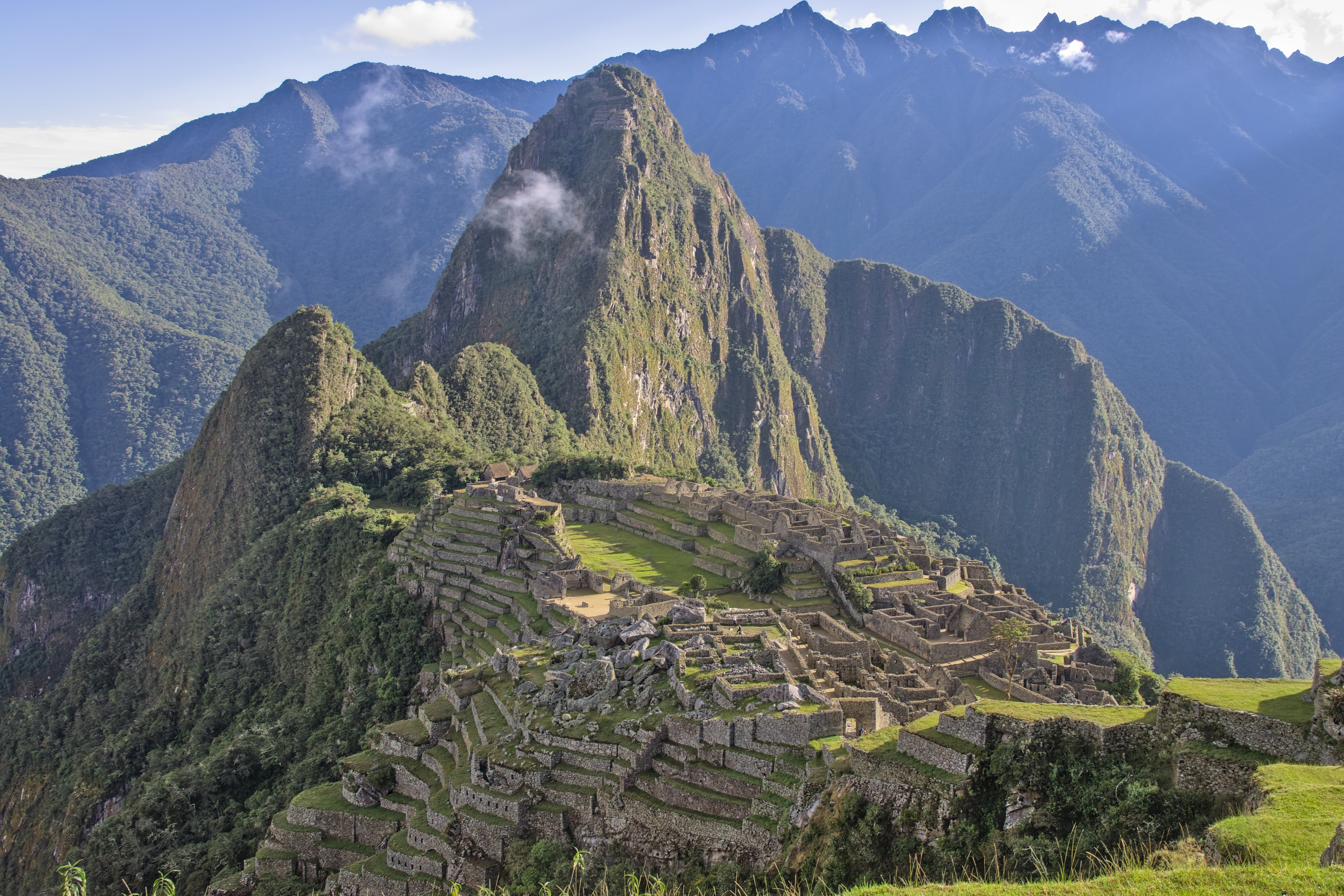

More Hidden Gems spots
-

How a score is built
One score out of 100, five criteria behind it
Every place is rated 1–5 on each of the criteria below, then combined into a single score out of 100. It's calculated by us, the same way every time — not an average of traveller reviews or social votes.
Crowds
How many people you'll be sharing it with, and at what time of day.
Romance
How well it suits a couple, a proposal, or a quiet moment together.
Cash required
Entry fees, permits, guides, rentals — what it actually costs to do it.
Danger
Physical risk involved, from a slippery viewpoint to genuine hazard.
Accessibility
How far off the beaten path it is, and how hard it is to actually reach.

